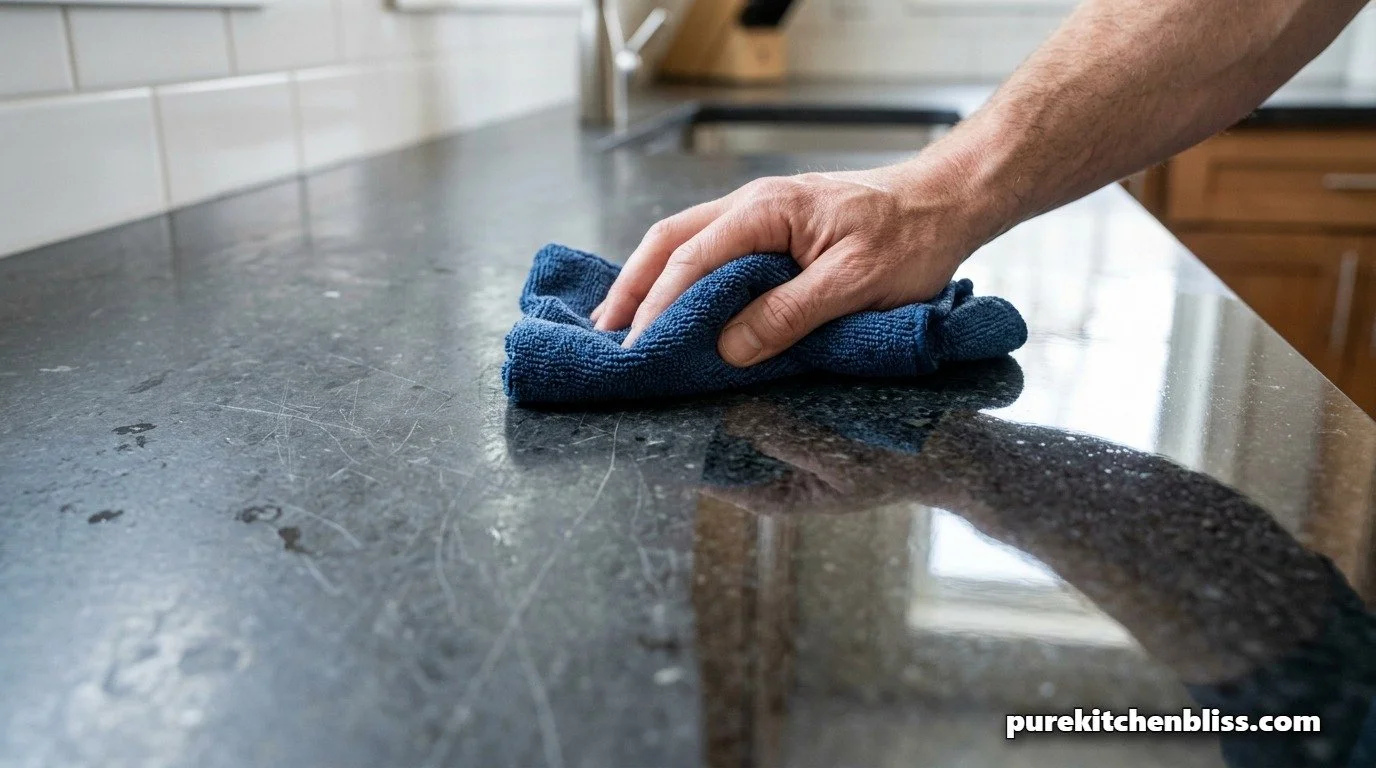
Beyond Paint: The Technical Guide to Updating Laminate
Laminate countertops are the "legacy infrastructure" of millions of homes. While they were the height of 1980s engineering, they eventually succumbed to delamination, edge-chipping, and surface dullness. Most homeowners are told their only options are a $200 paint kit or a full replacement with sintered stone.
But, we have a third option: Technical Restoration. This isn't about covering the problem; it's about chemically and mechanically reinforcing the existing surface to turn it into a high-performance kitchen sanctuary.

Beyond the Slab: The Real Cost of Kitchen Island Infrastructure
In most home-improvement guides, the kitchen island is discussed in terms of cabinetry and countertops. But for the modern homeowner, the "island" is a multi-functional command center that requires more engineering than any other part of the house.
When you see a "National Average" cost of $4,000 to $6,000, you are seeing the price for a hollow box with a piece of granite on top. If you want an island that supports a workstation sink, an invisible induction cooktop, and a massive stone overhang, your budget needs to reflect the Invisible Infrastructure.
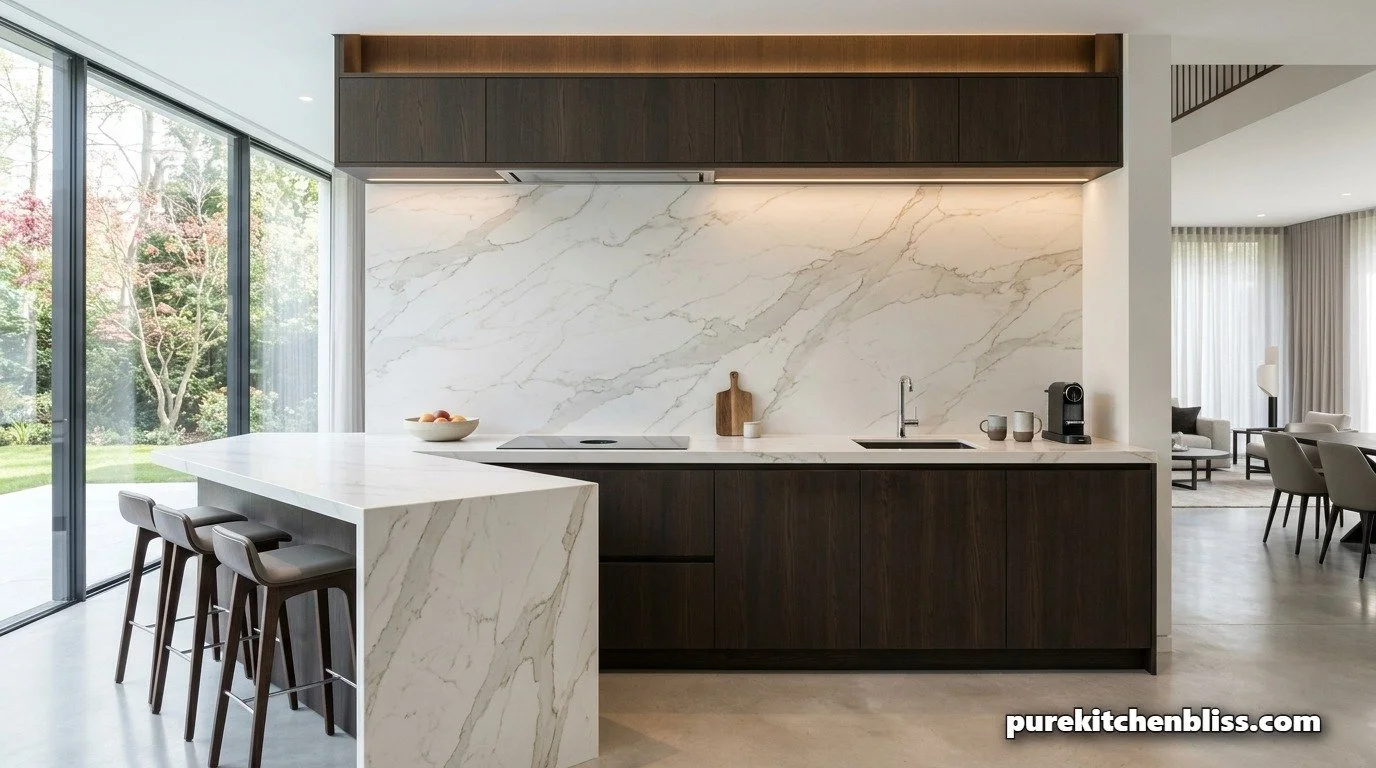
The Death of Subway Tile: Why Full-Height Slabs are the 2026 Standard
For the last two decades, white subway tile was the "safe" default, the builder-grade block of the vertical world. But as we move into 2026, the demand for a home sanctuaryhas made the "busy" look of tile grids obsolete. The new architectural standard is the Full-Height Monolithic Slab.
This shift isn't just about "Quiet Luxury" aesthetics. It is a fundamental change in how we view kitchen hygiene. Traditional tile backsplashes rely on grout, a porous, cement-based material that acts as a magnet for vaporized cooking oils and bacteria. By extending your countertop material vertically to the cabinets (or the ceiling), you create a seamless, non-porous shield that is technically superior to any tiled surface.
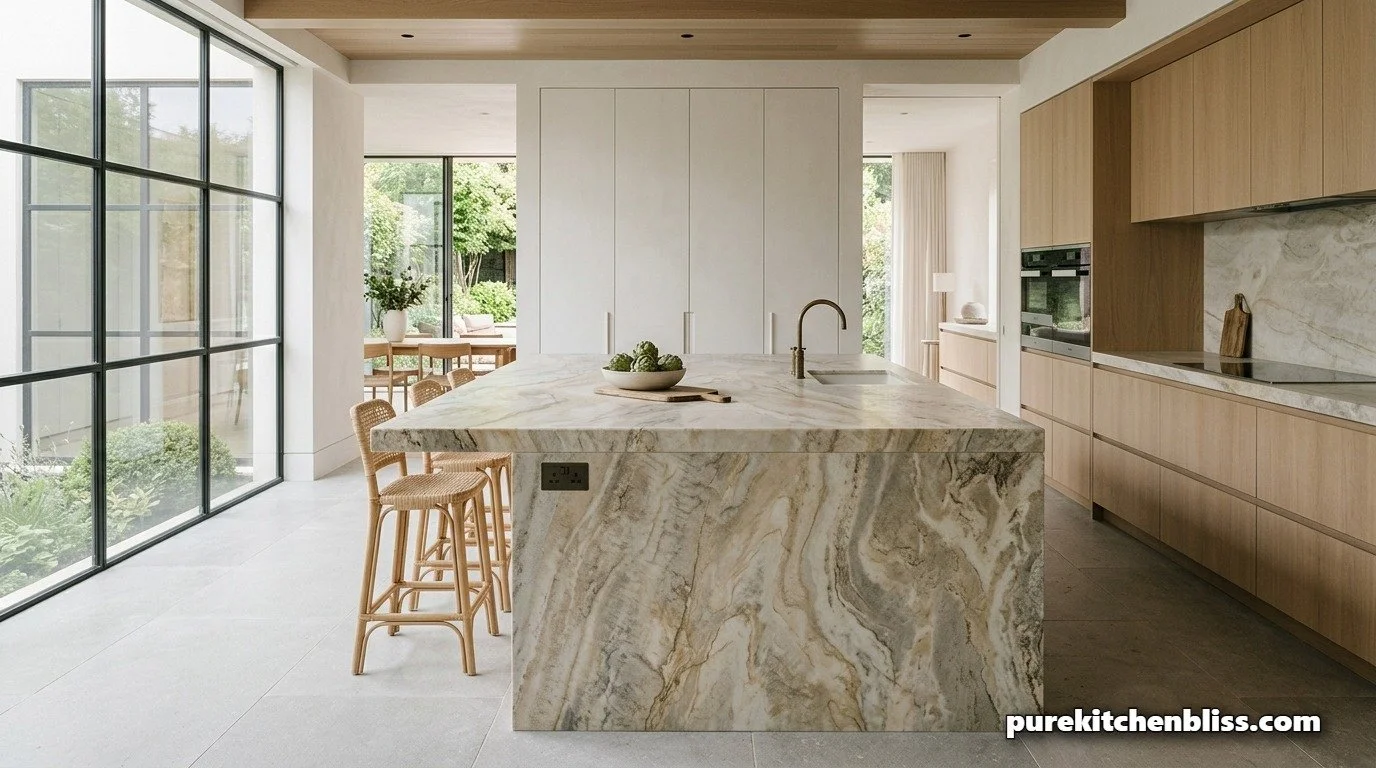
Leathered Countertops: The Engineering of the 2026 Tactile Kitchen
For the last decade, the high-gloss, mirrored finish was the undisputed king of the kitchen. But as we move toward the Disappearing Kitchen, the demand for "Quiet Luxury" has shifted the focus from reflection to texture. Enter the Leathered Finish.
Unlike a polished surface that hides the stone’s character behind a glass-like sheen, or a honed finish that can look flat and "chalky," a leathered finish is a mechanical evolution of the stone itself. It is achieved by running diamond-tipped brushes over the slab, whisking away the softer minerals and leaving the harder ones behind. The result is a surface that mimics the feel of fine leather, warm, organic, and technically superior for a home sanctuary.
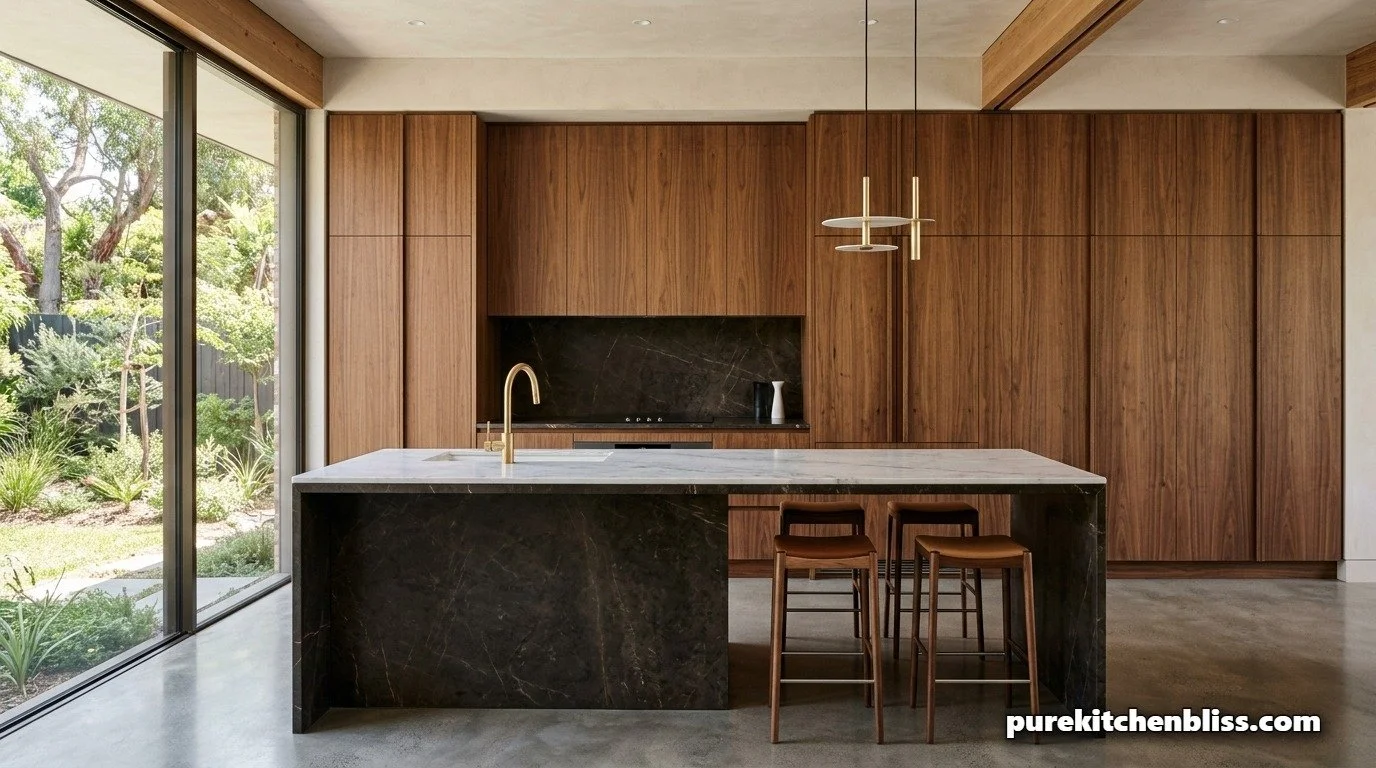
The Disappearing Kitchen: Why Integrated Appliances Are the New Standard
For decades, the "Status Kitchen" was defined by the gleam of oversized stainless steel appliances. A massive, industrial-looking refrigerator was the centerpiece of the room. But as we move into May 2026, the trend has flipped entirely. The goal of a high-performance kitchen sanctuary is now invisibility.
Welcome to the era of the Disappearing Kitchen.
This isn't just about aesthetics; it’s about Infrastructure Cohesion. By utilizing panel-ready appliances and "Appliance Garages," we are removing the visual "noise" of the kitchen, allowing the cabinetry and the sintered stone surfaces to take center stage. The kitchen no longer looks like a laboratory; it looks like a curated extension of the home’s living space.

From Pour-Over to Pro: How the Breville Bambino Transformed My Kitchen Sanctuary
In my journey of documenting kitchen and bath design, my goal has been to slowly transform these rooms into sanctuaries, spaces that don't just function, but provide a genuine sense of enjoyment. These aren't overnight renovations; they are incremental upgrades made as the budget allows. As a carpenter and a father of four, I know that every square inch of our home has to work hard, but it should also feel like a reward.
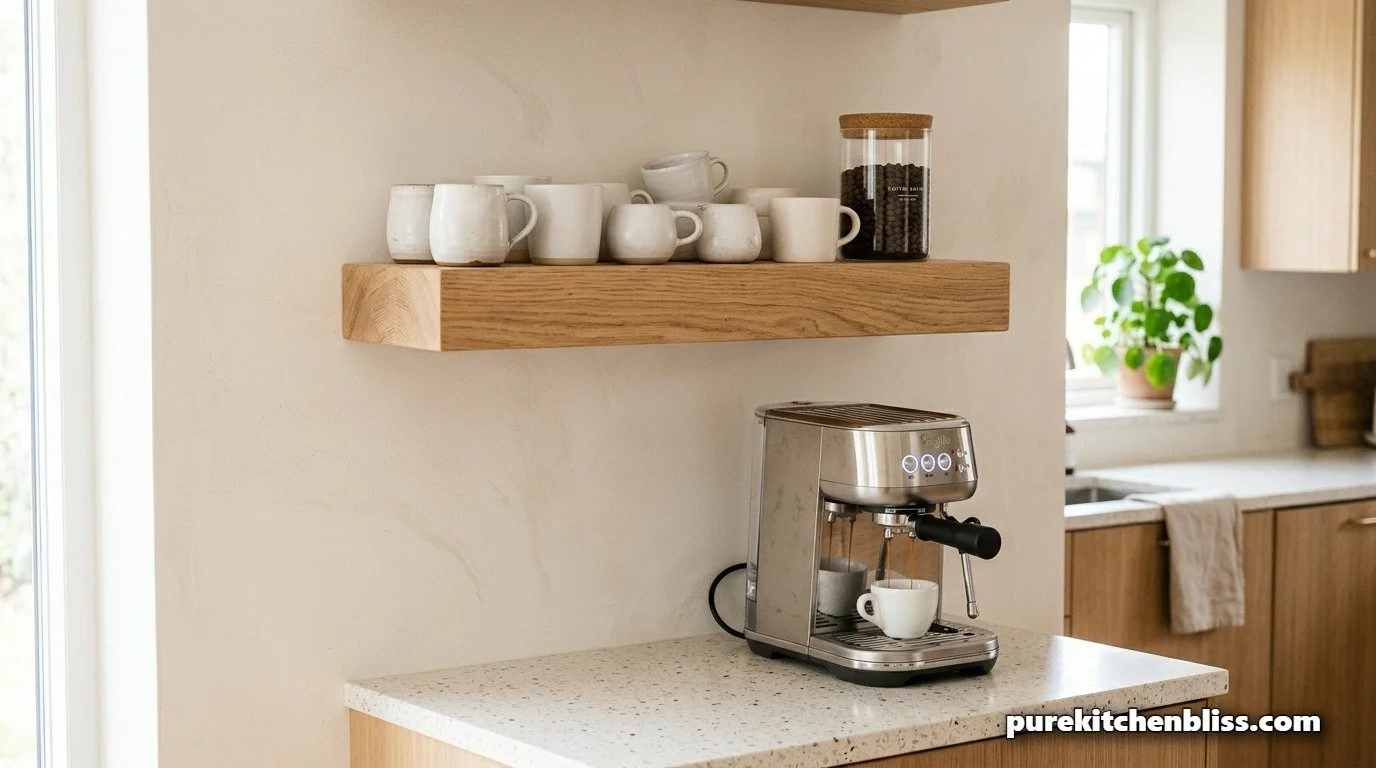
Recently, the "sanctuary" focus shifted to our morning ritual. For years, we were a pour-over household. It was a reliable, low-tech system, but as we began developing our dedicated coffee niche, I decided it was time to upgrade our daily infrastructure to espresso.
I chose the Breville Bambino. I wanted a "starter" machine that I hoped could rival the $30,000 commercial setups I use at my own coffee shop. In the two months since its installation, it hasn’t just met expectations, it has fundamentally outperformed them. My wife loves it, and for a father of four, that is the ultimate seal of approval.
The Dedicated Coffee Niche: 2026’s Most Essential Kitchen Infrastructure
In the legacy kitchen layout, the coffee maker was an afterthought, a bulky appliance competing for space on the main counter, usually tucked under a cabinet where steam could eventually damage the wood finish. But in 2026, we are seeing a definitive shift toward the Dedicated Coffee Niche.
This isn't just a "decor trend"; it is a response to the "Morning Traffic Jam." By creating a secondary zone for coffee, you separate the beverage ritual from the meal-prep infrastructure. Whether it’s a recessed alcove, a hidden "appliance garage," or a plumbed-in espresso station, the coffee nook is the new heart of the high-performance kitchen.
Magnetic Knife Strips: The Hygiene Case for Open Storage
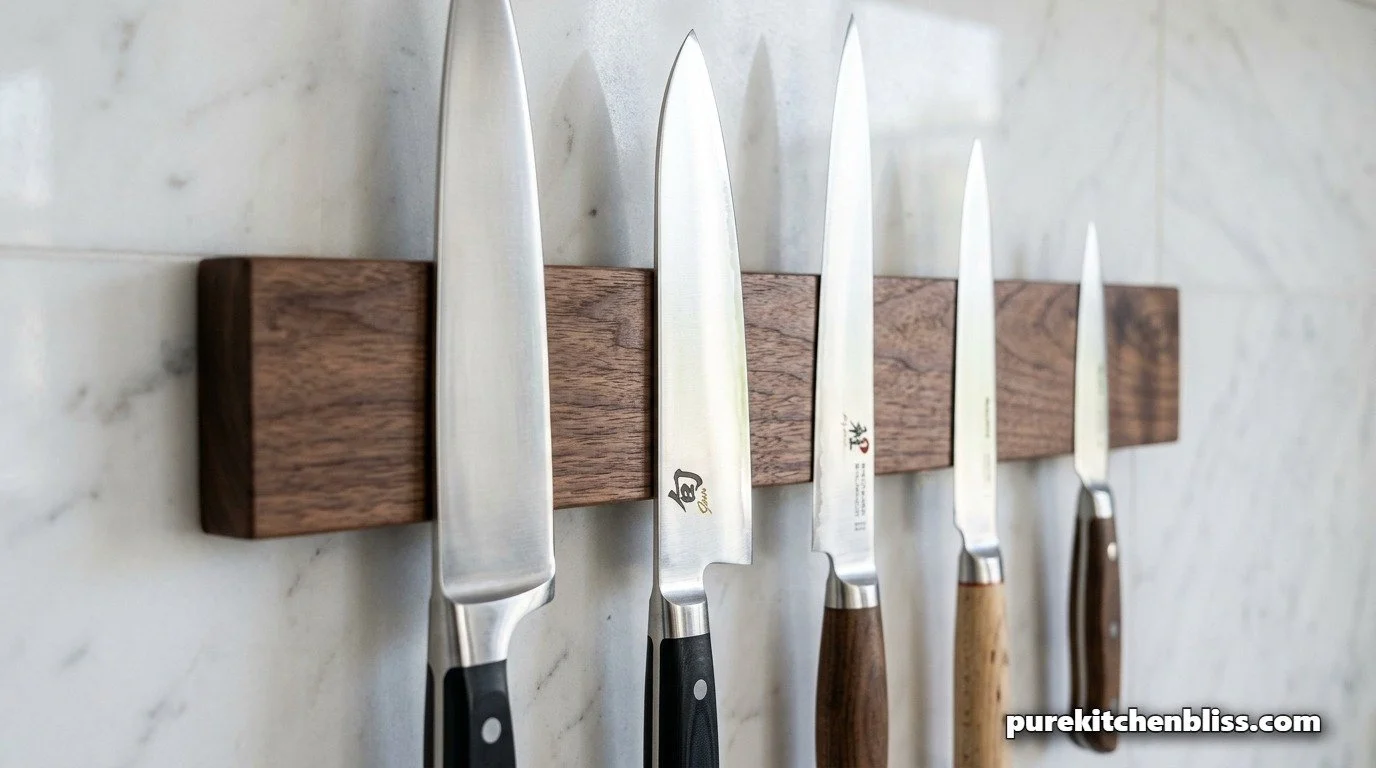
In the world of professional kitchen design, the traditional wooden knife block is increasingly viewed as a legacy failure. While it provides a convenient place to dock your cutlery, the interior of those narrow wooden slots is a dark, unventilated environment where moisture from "mostly dry" knives can settle. Over time, this creates a hidden breeding ground for yeast and mold, a "bacteria box" sitting right on your counter.
For a high-performance kitchen, the solution is the Magnetic Knife Strip. By moving your blades to an open-air, vertical surface, you aren't just saving counter space; you are upgrading your kitchen’s sanitization infrastructure. When your blades are exposed to the ambient airflow of the room, they dehydrate instantly, breaking the biological cycle that leads to cross-contamination.
8 Small Kitchen Summer Decor Ideas: A Functional Design Guide
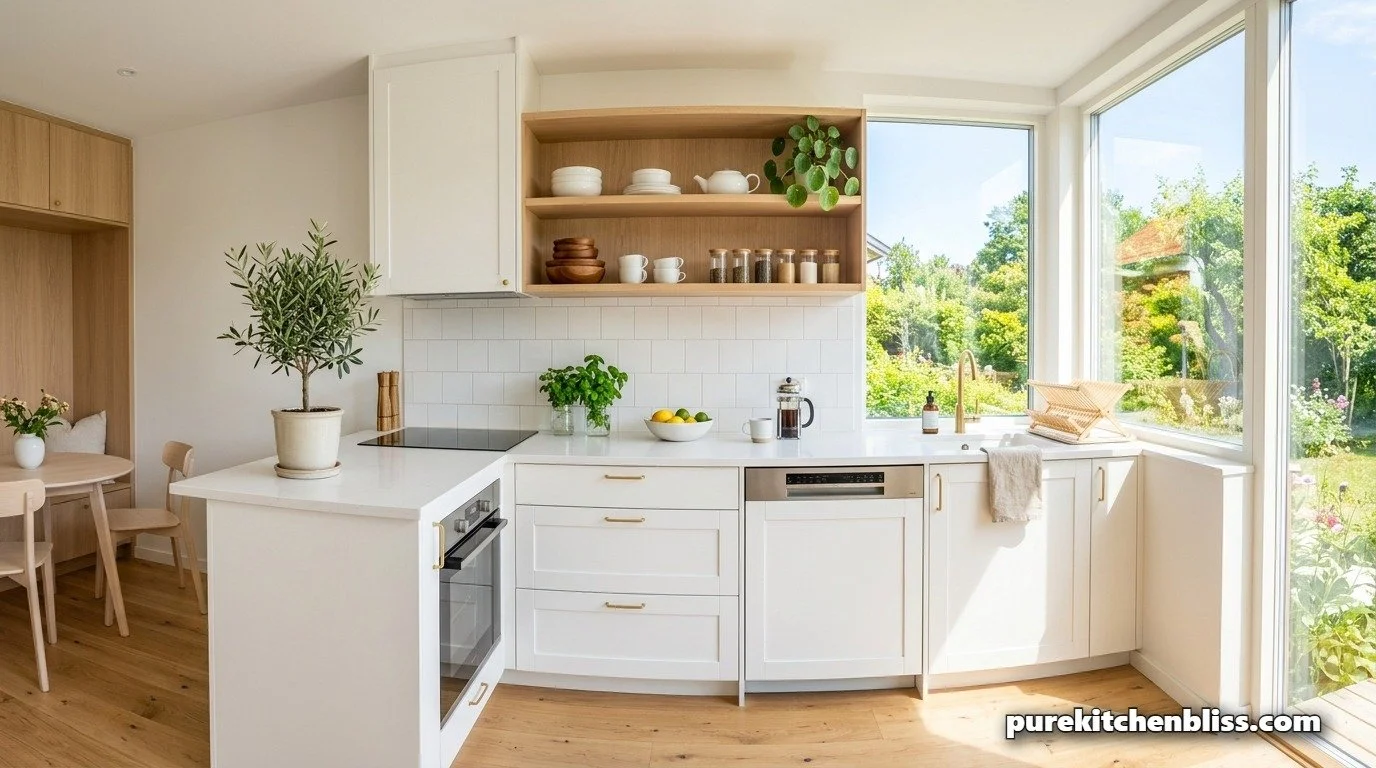
In a compact kitchen, "decor" can quickly become "clutter" if it doesn't serve a secondary purpose. During the summer months, the goal of your interior styling should be two-fold: maximizing the natural light reflecting off your sintered stone and maintaining a sense of "visual coolness" in a high-heat environment.
To upgrade your space for 2026, we are moving away from purely ornamental "trinkets" and focusing on functional aesthetics. Here are 8 small kitchen summer decor ideas that optimize your infrastructure while embracing the season.
The Green Dust: How to Clean and Prevent Moldy Lemons
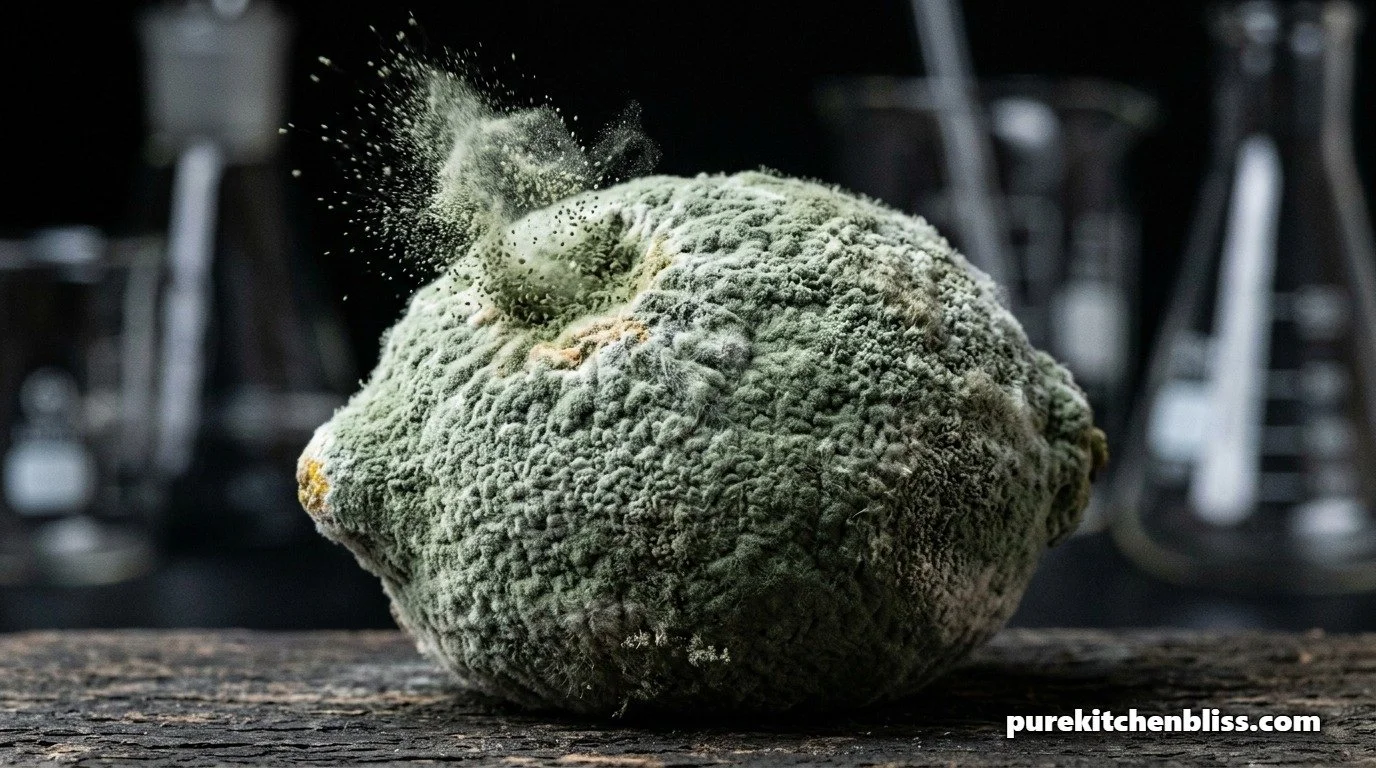
It starts as a small, white fuzzy patch, but within 48 hours, a single lemon can transform into a pressurized vessel of green spores. If you’ve ever picked one up only to have it release a fine, "smoke-like" dust everywhere, you’ve experienced a spore-dispersal event.
In a high-performance kitchen, this is a serious maintenance hurdle. That green dust isn't just "dirt"; it is a colony of Penicillium looking for its next host. If those spores settle into the porous wood of a fruit bowl or the gaskets of your refrigerator, they can remain dormant for months, waiting to ruin the next batch of groceries. To protect your culinary sanctuary, you need a protocol that captures the dust before it migrates.
The Simple Swap That Finally Made Me Quit Paper Towels for Good
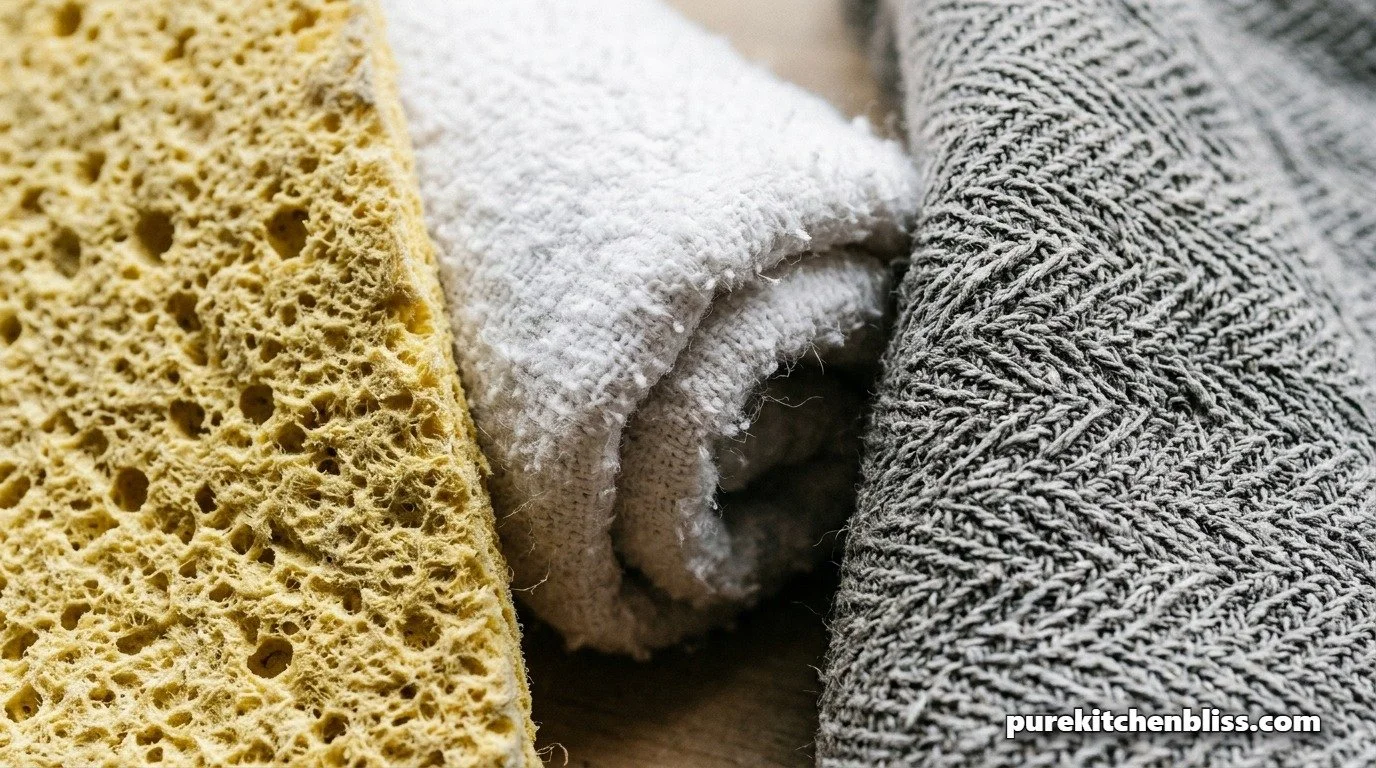
For years, I was stuck in the "disposable loop." I believed the myth that a truly clean kitchen required a never-ending supply of white, perforated paper towels. I was convinced that any reusable alternative would inevitably lead to a pile of soggy, sour-smelling rags sitting on my counter. But in a high-performance kitchen, the goal isn’t just to move a mess around, it’s to remove it.
The breakthrough didn't come from finding one "magic" towel. It came from realizing that a paper towel is a generalist tool trying to do specialized jobs. By matching specific high-performance textiles to specific kitchen tasks, I was able to retire my paper towel roll for good. This isn't just an eco-hack; it’s a systematic upgrade to your kitchen’s active infrastructure.
Why Your Dishwasher Smells Like Eggs: The Professional Reset
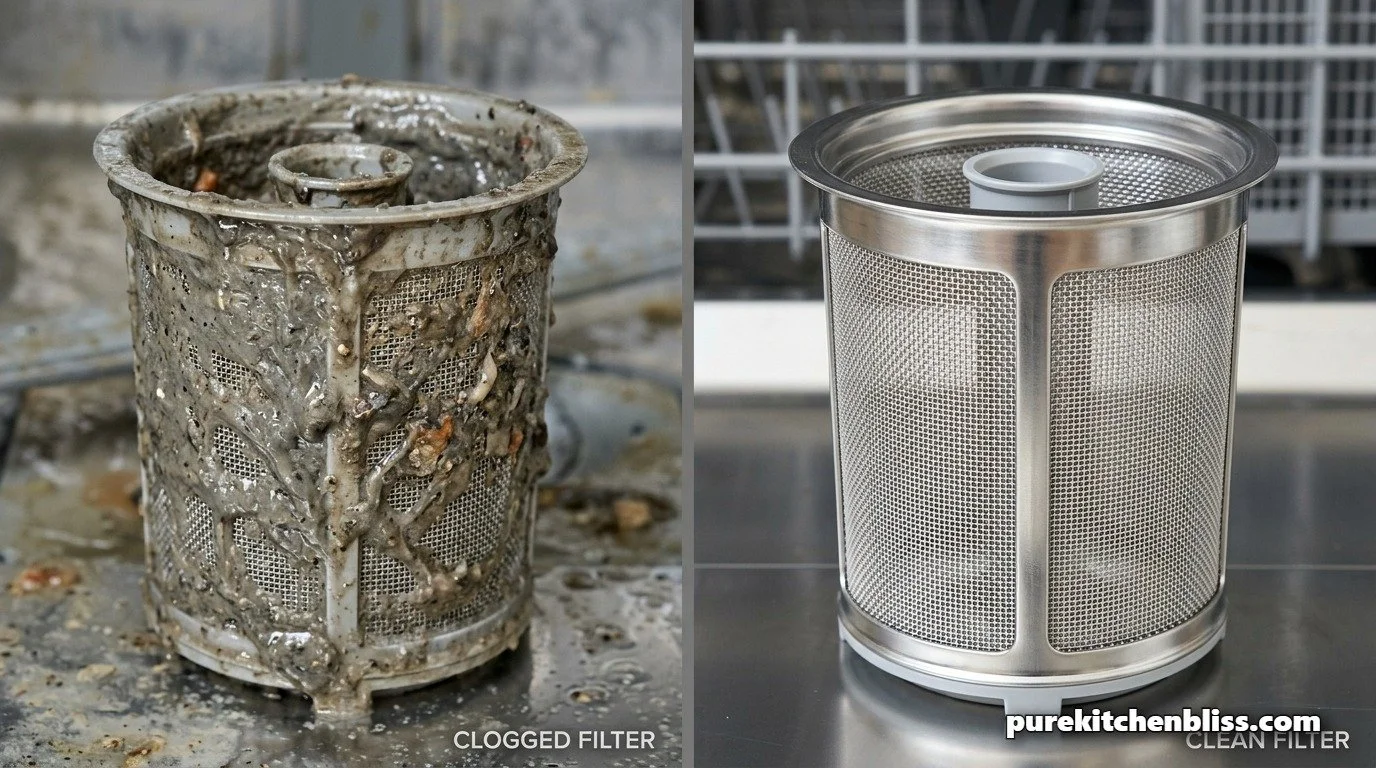
In a modern kitchen, the dishwasher is a silent workhorse, but it is also the most complex intersection of water, food waste, and heat in your home. When you start noticing a "sulfur" or "rotten egg" smell emanating from the machine, the standard advice is often to simply run a cycle with a bowl of vinegar.
The problem is that vinegar is a surface-level solution for a structural issue. If your dishwasher smells, the cause is almost always buried in the Invisible Infrastructure: the filter, the spray arms, or the stagnant water trapped in the drainage "high loop." To truly eliminate the odor and protect your non-toxic kids' dishes, you need to perform a mechanical reset of the system.

How to Get Rid of "Gnats" in the Kitchen: The Diagnostic Guide
There is nothing that ruins the feel of a high-performance kitchen faster than a cloud of tiny, hovering insects. The immediate reaction for most homeowners is to go online, find a gnat hack and set out a bowl of apple cider vinegar. But after three days, many people find the bowl empty and the "gnats" still swarming.
The reason DIY "hacks" often fail is simple: you are likely fighting the wrong bug. In the world of kitchen infrastructure, "gnat" is a generic term for three very different pests: Fruit Flies, Fungus Gnats, and Drain Flies. Each one breeds in a different location, eats different organic matter, and requires a completely different elimination strategy. To reclaim your space, you must move past the "one-size-fits-all" trap and perform a biological audit of your kitchen.

Stop the Scout: Non-Toxic Ant Hacks for Your Kitchen
The first summer I spent in my current home, I quickly learned a frustrating reality: ants don’t just stay outside. My first instinct was the standard homeowner response, I called a professional pest control company. But as I watched them spray heavy, pungent chemicals around my baseboards and near my workstation sink, I had a realization. I didn't want my kitchen, the heart of my home's wellness, smelling like a science lab. I have 4 kids and did not want this in my house again.
I realized that "brute force" pesticides are often a temporary fix for a structural problem. Since then, I’ve moved away from the chemicals and mastered a set of "Builder-Grade" hacks that keep my kitchen ant-free by targeting their biology and their entry points. To beat the cycle, you don't need poison; you need to disrupt their Pheromone Infrastructure.
Why Your White Cabinets Are Turning Yellow (And the Non-Toxic Fix)
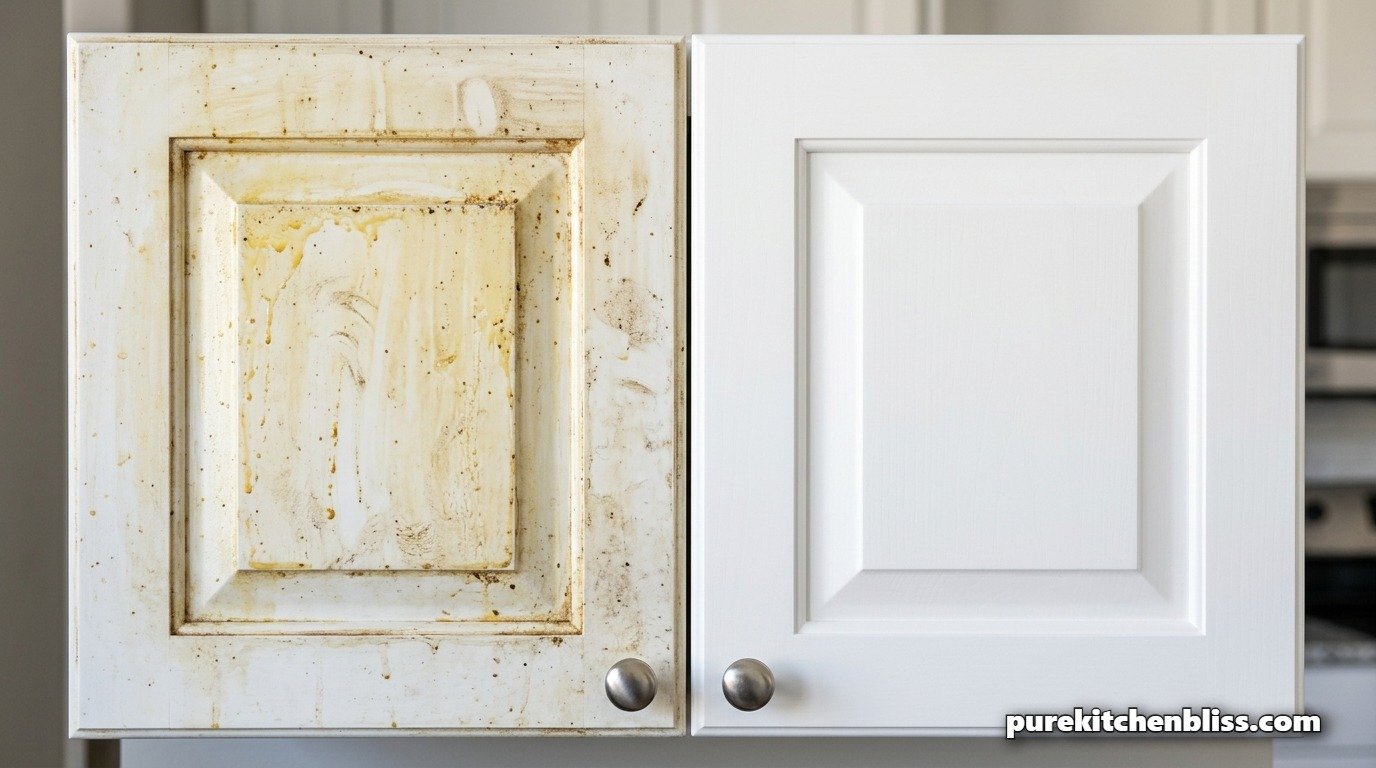
There is nothing more frustrating than investing in a crisp, white kitchen only to notice a dingy yellow hue creeping across the cabinet doors three years later. Most "hack" sites will tell you to scrub them with bleach or heavy abrasives, but if you want to protect your cabinetry's infrastructure, those are the last things you should reach for.
Yellowing isn't just "dirt"; it’s usually a chemical reaction. It’s either chromophore development from cooking grease that has polymerized under your range hood, or it's the breakdown of the topcoat due to UV exposure. To outshine the competition, we aren't just going to clean the surface, we’re going to perform a pH-balanced "Brightening Reset."
How to Clean Broken Glass on Hardwood Floors
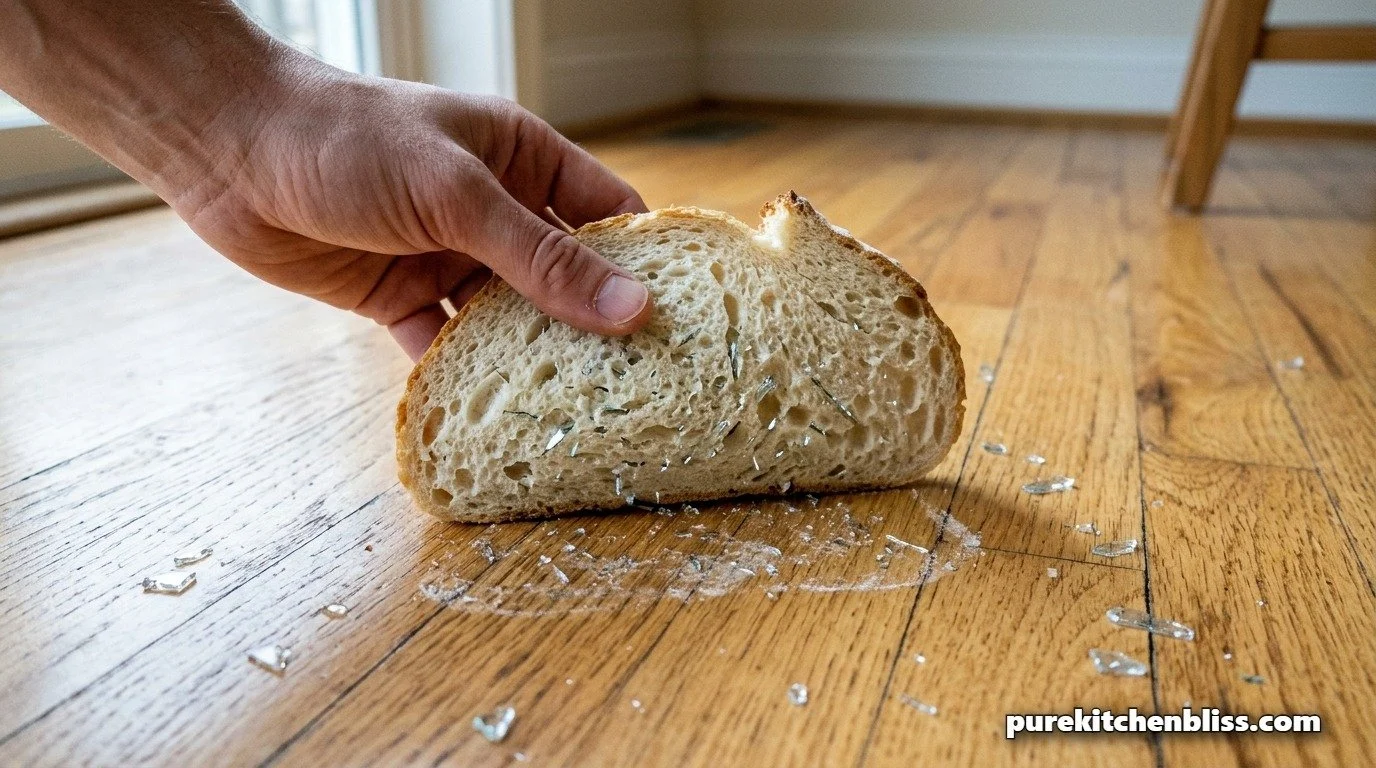
While a glass breaking on a workstation sink is a mess, a glass shattering on a hardwood kitchen floor is a structural challenge. Unlike porcelain or sintered stone, hardwood is a relatively soft, organic material. When glass impacts wood, the shards don't just scatter; the force can drive microscopic slivers into the wood grain or the gaps between the planks.
To maintain the integrity of your floor’s finish and the safety of your home, you cannot simply sweep and move on. You must use a systematic approach that extracts glass from the "texture" of the wood without scratching the protective topcoat.
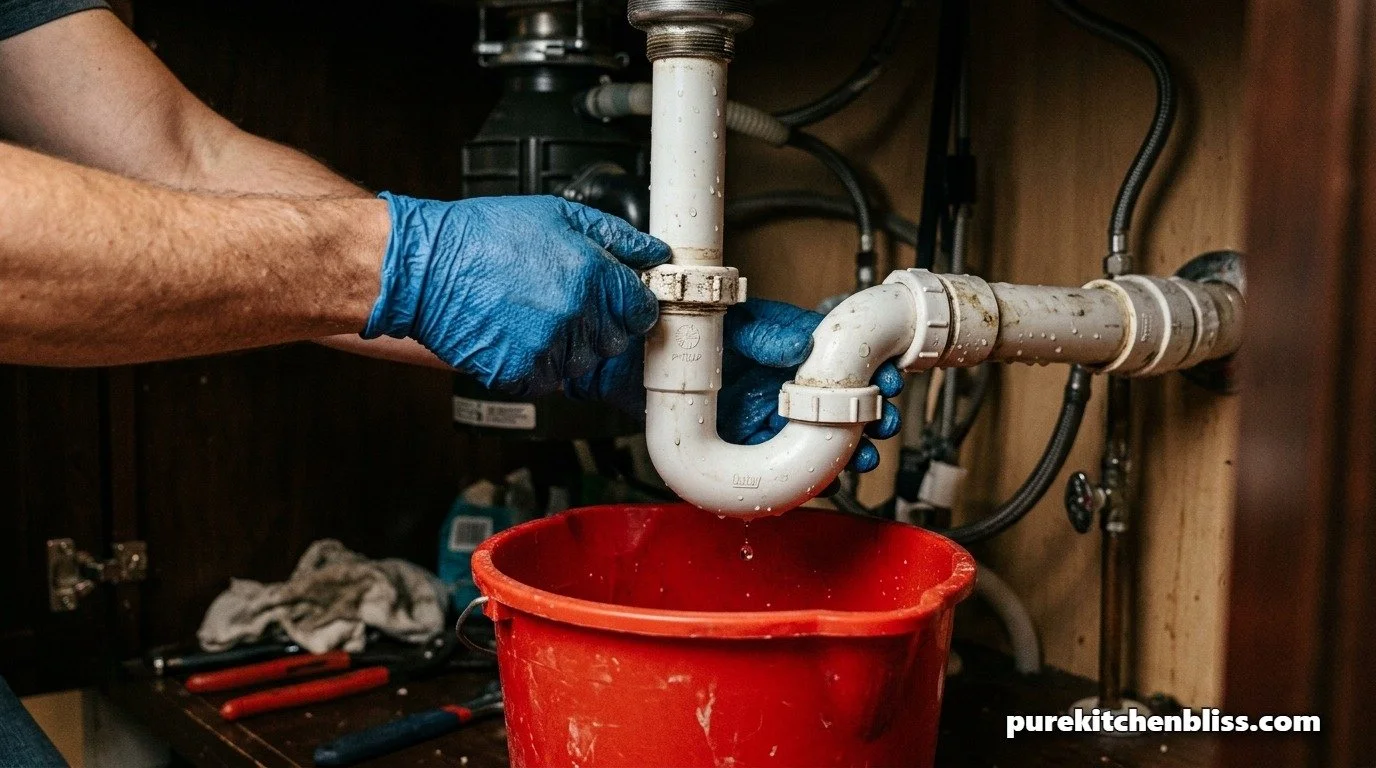
Accidentally Poured Cooking Oil Down the Sink? Here’s the Emergency Fix
It happens in a split second: a pan slips, or a well-meaning guest pours a tray of bacon grease directly into the basin. In a modern kitchen, the drainage system is a sensitive piece of invisible infrastructure. Unlike water, cooking oil is a liquid that "thinks" it is a solid. The moment it hits the cold standing water in your pipes, it begins to polymerize, sticking to the PVC walls and creating a foundation for a "fatberg."
If you have spilled oil down your drain, your reaction in the first five minutes determines whether you have a 10-minute cleanup or a $1,500 visit from a rooter service. To save your plumbing, you must move beyond the "hot water" myth and use an emulsification strategy that breaks the molecular bond of the grease.
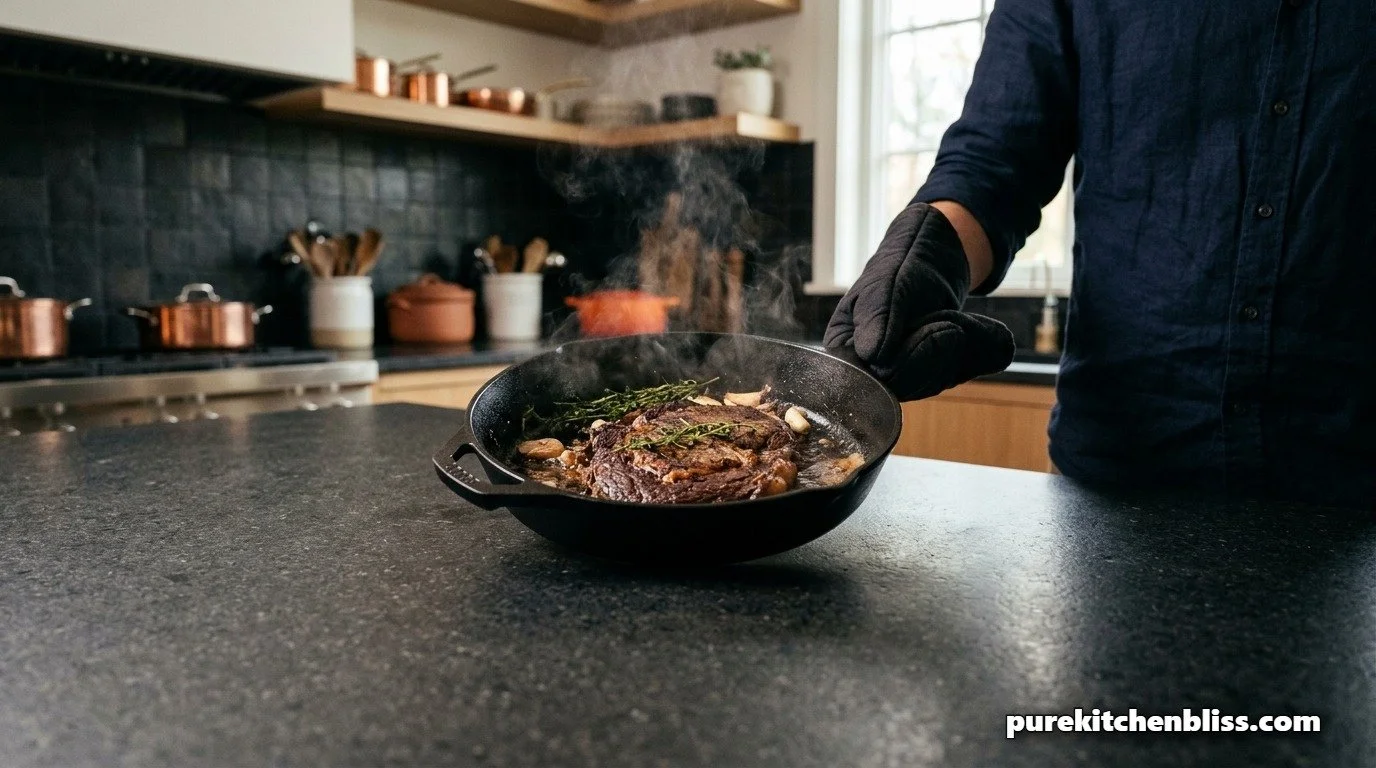
Sintered Stone vs. Porcelain: The Battle of Ultra-Compact Surfaces
In the current landscape of kitchen design, the demand for surfaces that can withstand professional-grade use without the maintenance of natural stone has led to the rise of "ultra-compact" materials. Two names dominate this category: Sintered Stone and Porcelain. To the casual observer, they appear identical—thin, large-format slabs with hyper-realistic veining. However, from a structural and fabrication perspective, the differences are significant.
Choosing between these two isn't just about aesthetics; it’s about the underlying infrastructure of your kitchen. Whether you are planning for an invisible induction system or a heavy-duty prep zone, understanding the mineral composition and the firing process of these slabs is essential for a long-lasting installation.
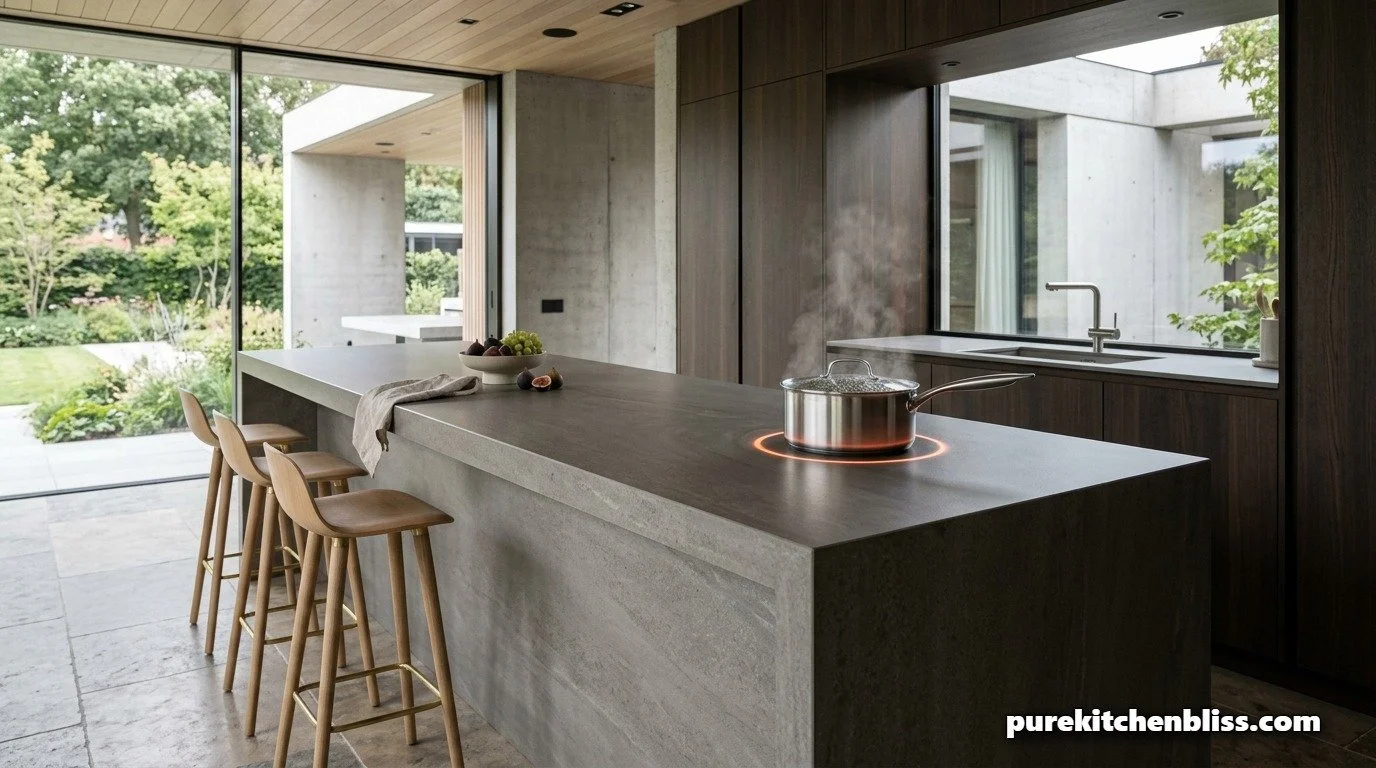
The Rise of Invisible Induction: Cooking Under Stone Surfaces
In the evolution of the high-performance sanctuary, the ultimate goal has always been the seamless integration of technology and aesthetics. For years, the sleek glass surface of a standard induction cooktop was considered the peak of minimalism. However, in 2026, the "Builder" community has pushed the boundaries further with Invisible Induction, a system where the cooking elements are mounted entirely beneath the countertop slab.
This technology allows your kitchen island to function as a seamless piece of stone for prep, dining, and entertaining, only revealing its culinary capabilities when a magnetic pan is placed on the surface. But "Invisible Induction" is not a simple plug-and-play upgrade; it is a complex intersection of physics, material science, and precision fabrication. To implement this infrastructure, one must understand how magnetic fields interact with stone and the thermal management required to prevent slab failure.
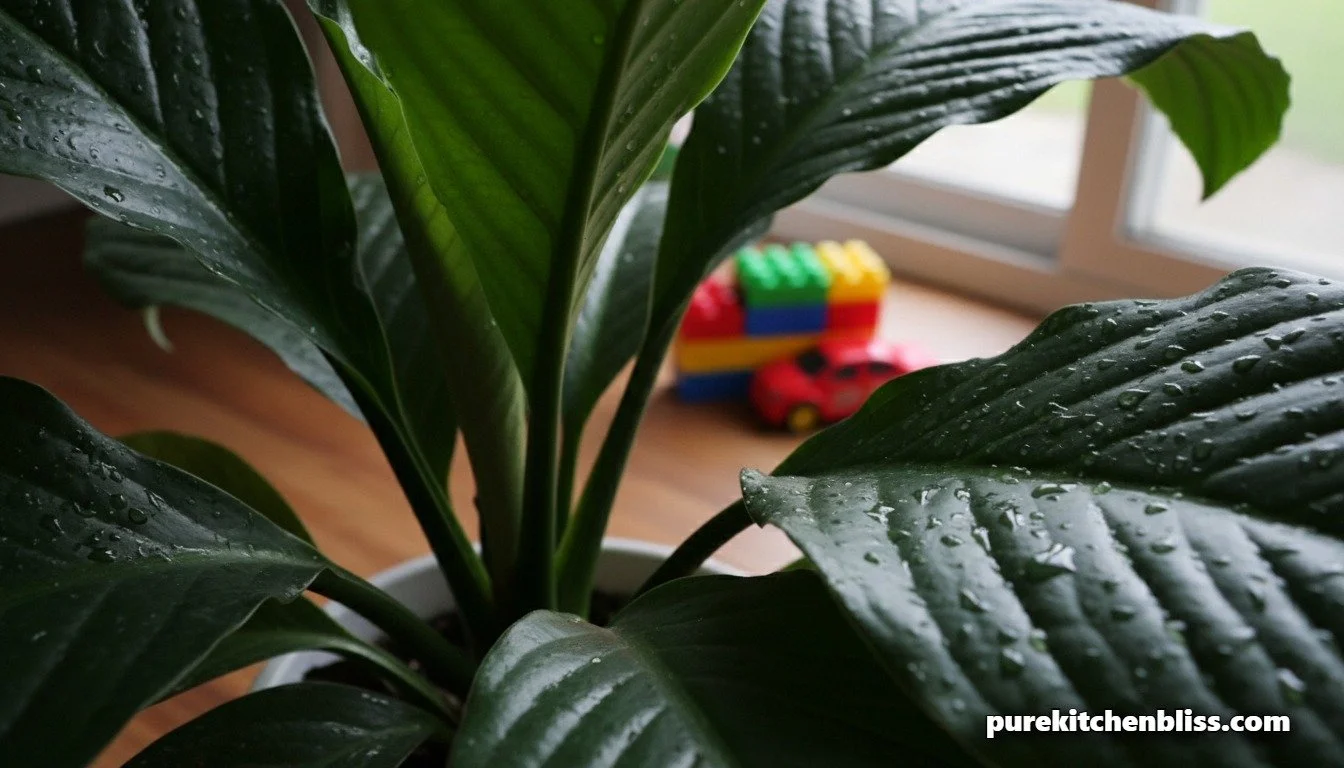
Cast Iron Plant Mastery: The Indestructible Foundation for Your Kitchen
In the world of home building, we look for materials that can withstand anything, heavy foot traffic, temperature swings, and years of use. In the botanical world, that material is the Cast Iron Plant. Its name isn't an accident; this plant was a staple in Victorian-era homes because it was the only thing that could survive the soot, heat, and dim light of coal-burning stoves.
As a father of four, I appreciate the Cast Iron Plant for its sheer "structural" presence. It doesn't trail or climb; it stands its ground with broad, leathery leaves that bring a sense of permanence to a room. If you have a corner in your kitchen or dining area that feels empty or "cold," this is the indestructible living furniture you’ve been looking for.