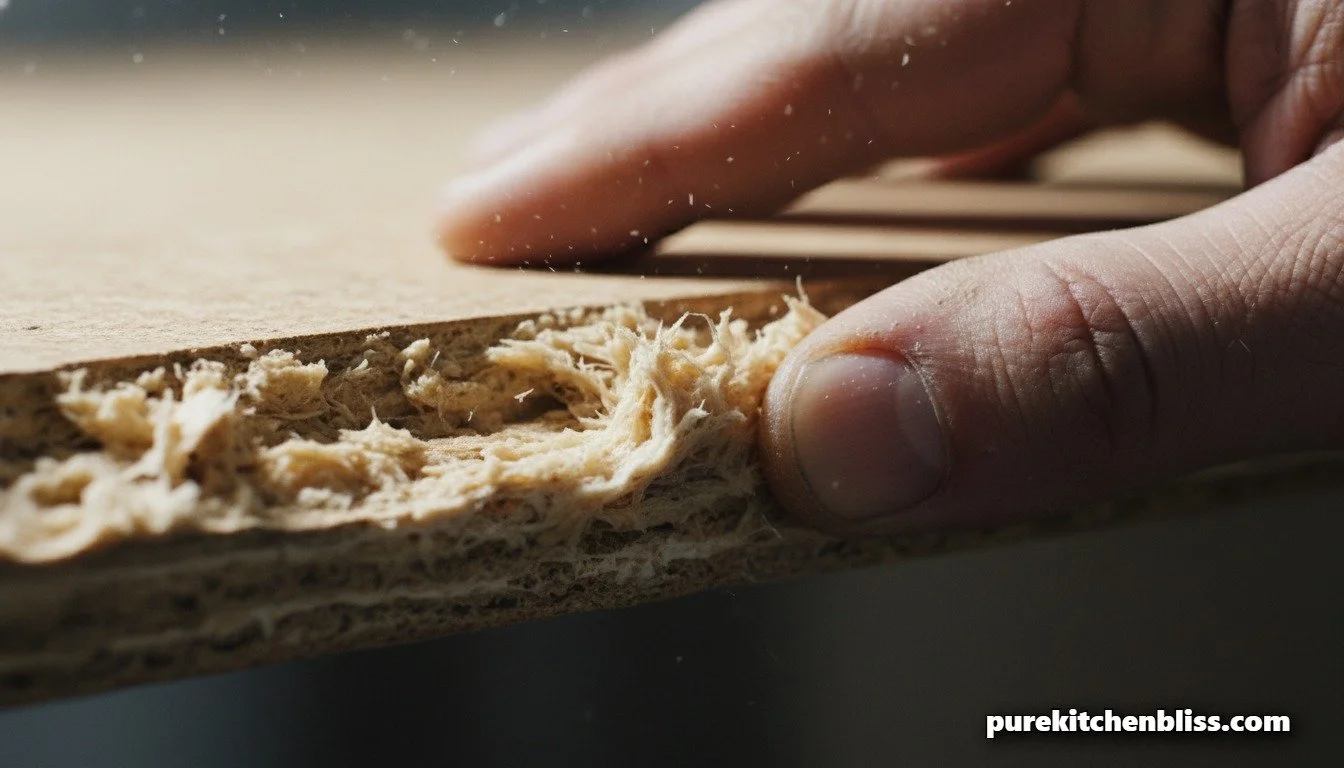
Why I Refuse to Use Particleboard in My Kitchen Builds (And What I Use Instead) 🪵
I have spent more than twenty years running a custom carpentry shop and cutting apart old, failing kitchens. Over that time, I have seen exactly what happens to a home when you build a room out of cheap, mass-market materials.
If you walk into a big-box store or look at a budget cabinet line online, the sales pitch always focuses on the outside. They show you a beautiful, flawless Cloud Dancer porcelain color palette or a clean shaker door style. But as a carpenter, I don’t care about a pretty veneer face if the core skeleton of the cabinet box is garbage.
The biggest culprit in modern home construction is particleboard (sometimes dressed up with fancy names like "furniture board" or "compressed engineered wood"). It is the undisputed choice for cheap, mass-produced cabinetry.
But in my shop, I have a strict, non-negotiable rule: I completely refuse to run particleboard through my saws for a kitchen build. In a house with four kids, our kitchen handles constant physical impact, high humidity, and heavy weight loads. Building a long-term kitchen on a foundation of particleboard is a recipe for structural failure. Today, I’m giving you my unfiltered carpenter’s warning on why this material is a ticking time bomb, and the two heavy-duty alternatives I use instead to build a kitchen that lasts 20 years.
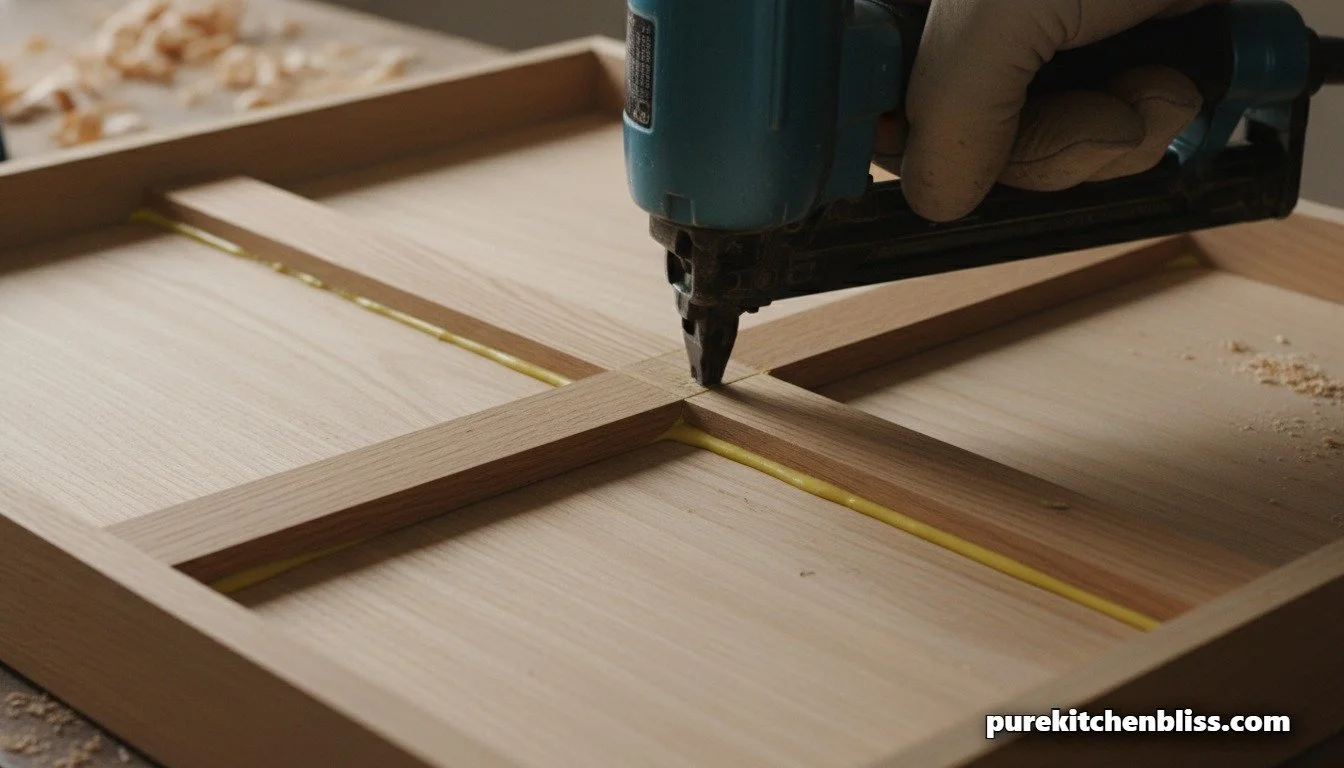
How I Fix a Sagging Kitchen Drawer That Was Built with Cheap Hardware 🛠️🧰
In a house with four kids, my kitchen cabinetry doesn't get treated with gentle, showroom respect. Drawers don't get smoothly slid open, they get yanked by toddlers using the handles as climbing steps, leaned on by teenagers looking for snacks, and routinely overloaded with heavy cast-iron pans and baking gear.
Last week, my family finally hit the breaking point with our main baking drawer. Every time we tried to pull it open, it shuddered, screeched, and got stuck halfway on its tracks. When I pulled the drawer box completely out of the cabinet frame to look at it on my workshop bench, the problem was instantly obvious: the thin, 1/4-inch particleboard bottom panel had completely bowed downward under the weight of the flour bins, pulling out of its side grooves and bending the cheap, factory-installed side slides out of alignment.
If you search online for "how to fix a stuck drawer," a generic AI search result will tell you to spray WD-40 on the tracks or rub a candle along the wood. As a professional carpenter, I am telling you that advice is useless nonsense. If the structural integrity of the box is compromised, no amount of lubricant will fix it. You need to reinforce the load-bearing bones of the drawer.
Today, I’m walking you through my exact, first-person workshop blueprint to rebuild and reinforce a sagging kitchen drawer box so it handles heavy daily abuse without ever catching or sticking again.
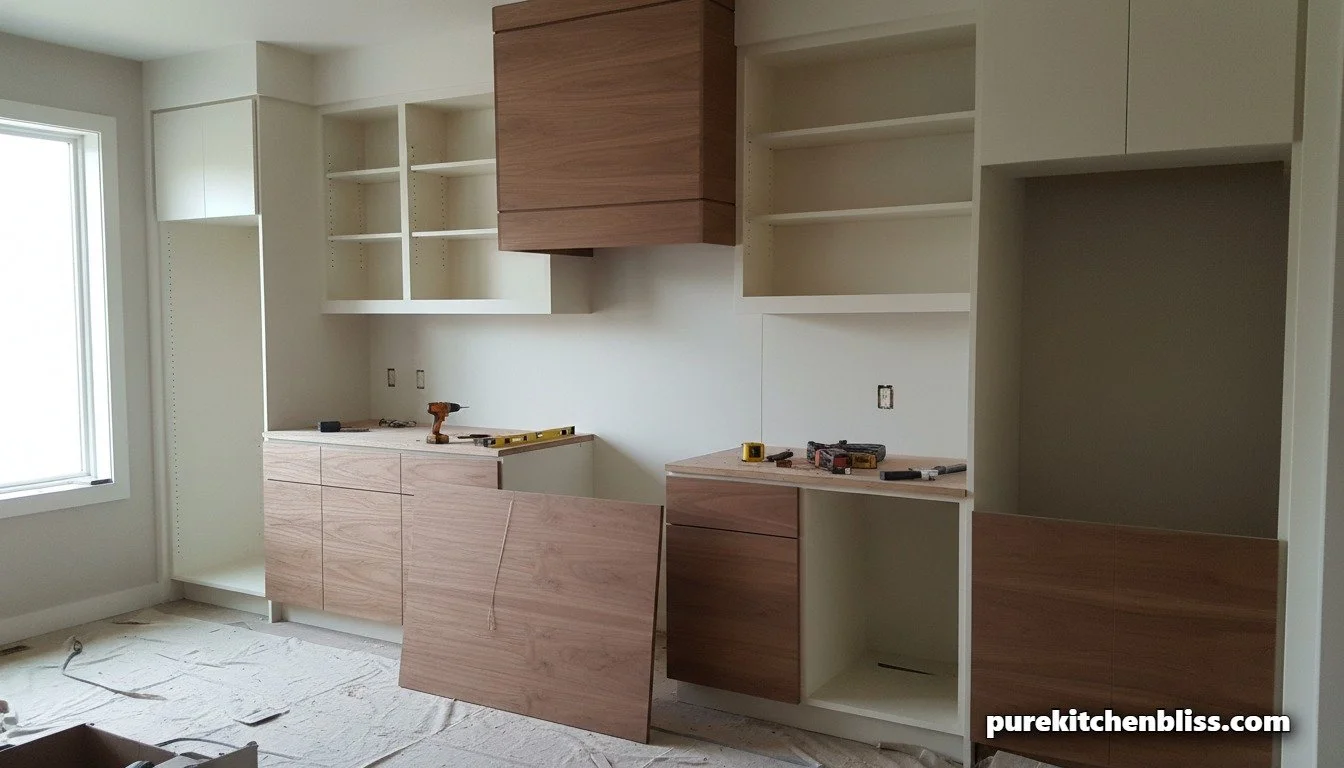
Plywood vs. Wheatstraw: The Truth About Toxic Cabinet Off-Gassing 🪵🛑
Whenever a client walks into a freshly finished kitchen remodel, the first thing they usually do is take a deep breath and say, "Wow, love that new kitchen smell!"
As a carpenter and a business owner, I hate to ruin the moment, but that "new kitchen smell" is actually a chemical soup. It’s the sound of millions of microscopic VOCs (Volatile Organic Compounds) escaping from the glues, binders, and sealants used to build the cabinets.
In a house with four kids, indoor air quality isn't some abstract environmental concept, it’s a direct safety metric. If we are spending time crafting a kitchen sanctuary, we can’t build it on top of materials that actively emit toxic fumes into our homes.
For decades, custom builders have treated structural plywood as the undisputed champion of cabinet construction. But in 2026, a massive shift is happening. A new competitor called Wheatstraw Agrifiber is challenging the throne, promising to eliminate toxic off-gassing entirely. Let’s look behind the finished veneer and break down the raw science of what you’re putting in your home.
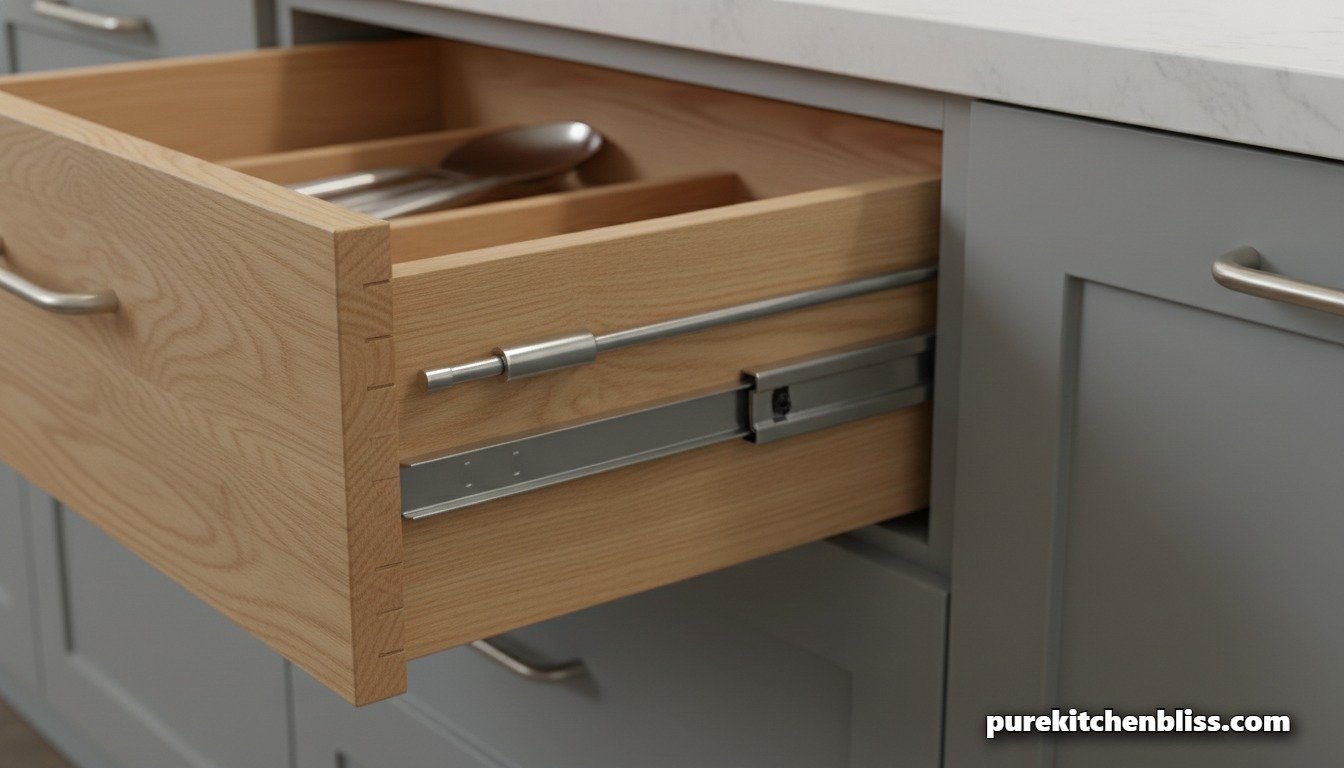
Silent Architecture: How to Soundproof Your Kitchen Against the "Dinner Chaos" 🤫
If you’ve got a house full of kids like I do, you know that the "heart of the home" is often the loudest room in the house. Between the clatter of pots, the hum of the dishwasher, and the echo of four kids talking over each other, a modern open-concept kitchen can quickly feel less like a sanctuary and more like a construction site. 🏗️
In 2026, we are finally addressing the one thing most designers ignore: Acoustics.
As a coffee shop owner, I’ve learned that the "vibe" of a room is determined as much by what you hear as what you see. We use "Acoustic Architecture" to keep the shop feeling cozy even when the espresso machine is screaming. Bringing those same builder secrets into your home is the final step in achieving Pure Kitchen Bliss. Here is how to silence the chaos and find your quiet.
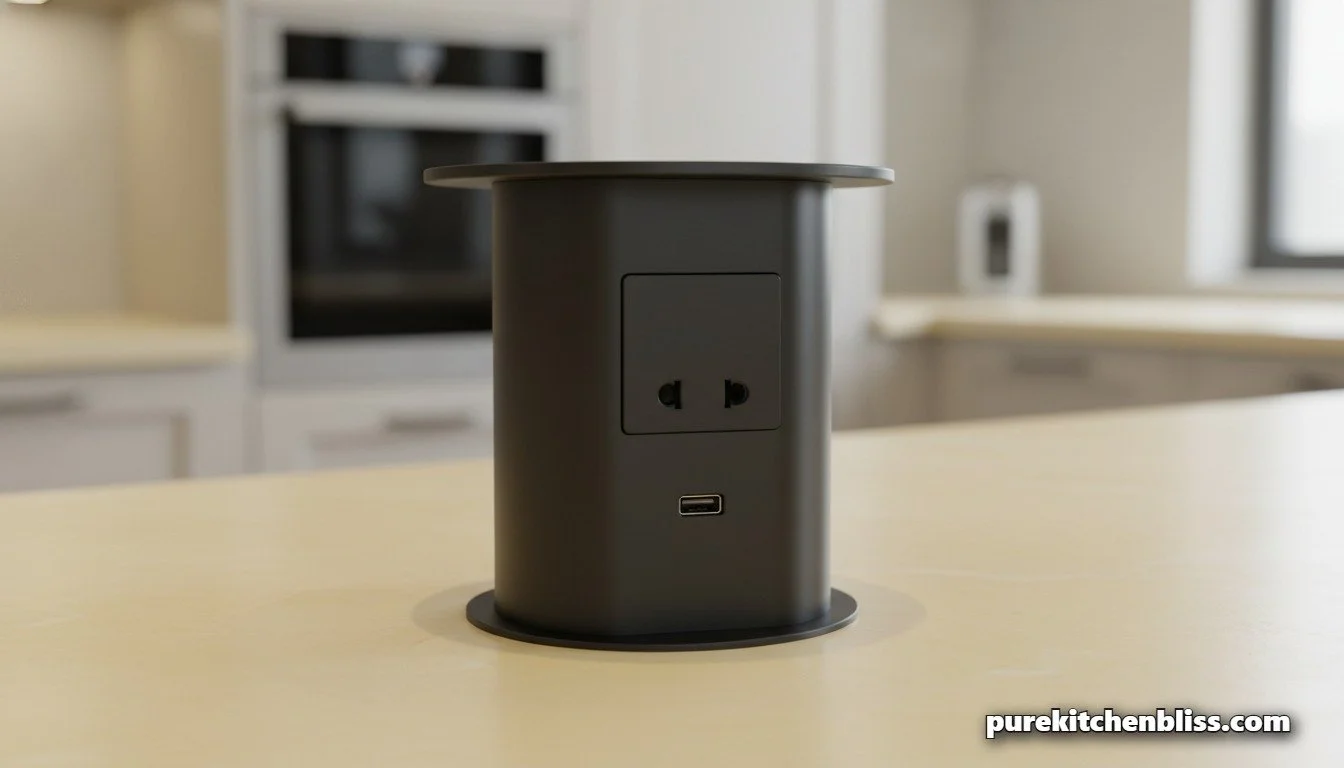
The "Hidden" Kitchen: Why Integrated Pop-Up Outlets are the New Gold Standard! 🔌✨
If you’ve been following our Kitchen Sanctuary journey, you know I’m obsessed with "clearing the deck." We’ve talked about magnetic storage and alternative countertops, but there is one "hidden" enemy that ruins even the most beautiful design: The Cord Jungle. 🐍
In 2026, the traditional wall outlet is officially a relic. Between the kids' tablets, my coffee shop laptops, and the endless stream of appliances we use at the beverage hub, we need power everywhere. But mounting outlets on the side of a beautiful kitchen island is no longer just "ugly", it’s actually becoming a code violation in many areas because of safety risks with dangling cords.
As a builder, I’ve switched entirely to Integrated Pop-Up Outlets. They stay hidden until you need them, they’re safer for the kids, and they keep your "Sanctuary" vibe pristine. Here is why this infrastructure shift is the "gold standard" for 2026.
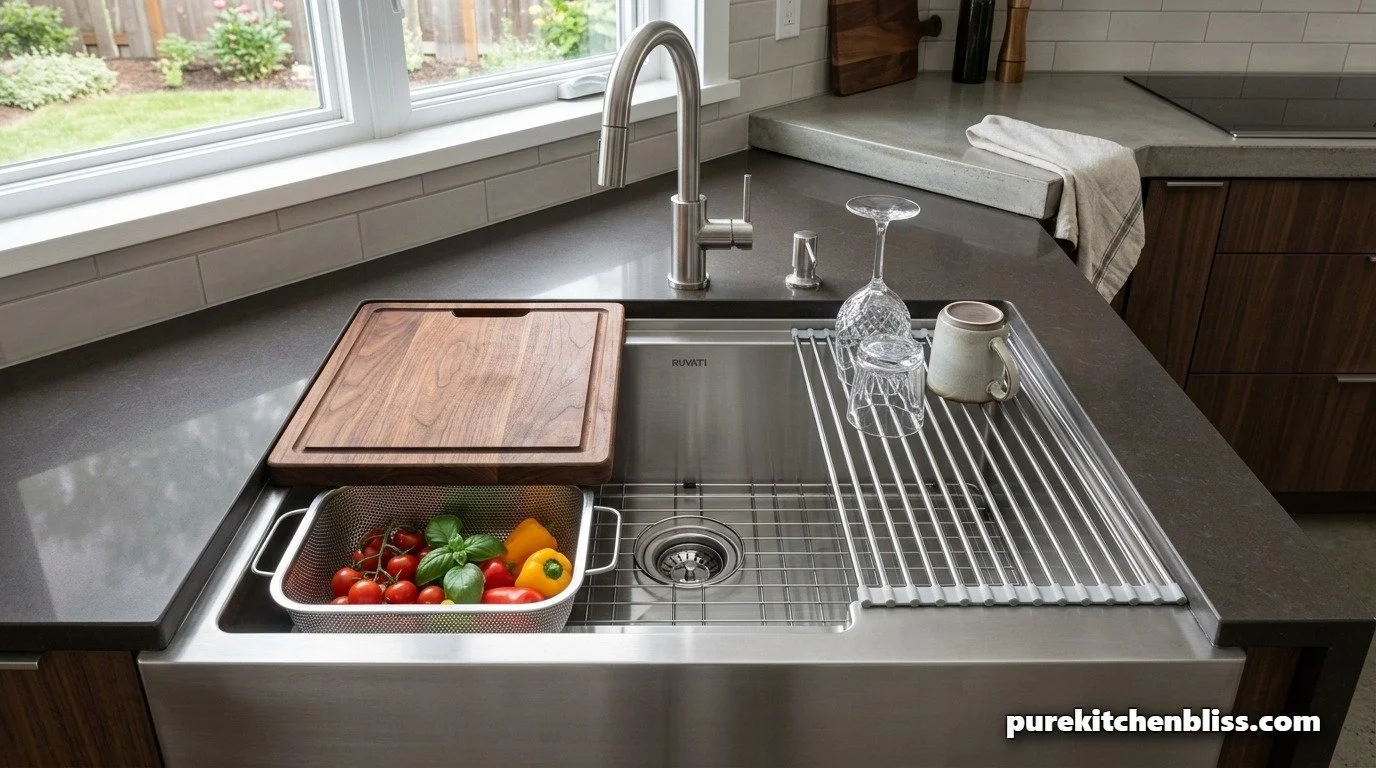
Why the "Workstation Sink" is the Ultimate Kitchen Command Center! 🏗️
If you’re still using a standard, hollowed-out "hole in the counter" sink, you are missing out on the biggest kitchen upgrade of the decade. 🤯 In 2026, the sink isn't just a place to dump dirty dishes, it’s the Command Center of the entire home.
As a dad with four kids, my biggest struggle is the "prep mess." You know the one: onion skins on the counter, water dripping everywhere, and zero space to actually move. But the Workstation Sink fixes all of that by moving the work into the sink basin. It’s high-efficiency, it’s satisfyingly organized, and it’s a total game-changer for your kitchen sanctuary. Here is why this is the one infrastructure upgrade you actually need!
The Best Charcoal Bags: Engineering Your Scent Defense 🖤
If you’ve already read my guide on why you need charcoal bags, you know that I treat air quality like a mechanical rough-in. In my shop and my kitchen, "masking" a smell is a failure. We want to eliminate it.
But here’s the problem: Amazon is flooded with generic "bamboo charcoal" that is basically just burnt wood in a cheap mesh bag. 🤨 As a builder, I look for structural integrity and adsorption surface area. You need a bag that actually works through the humid summer months. After testing dozens in my own coffee shop and home with four kids, here are the three that actually meet the Standard.
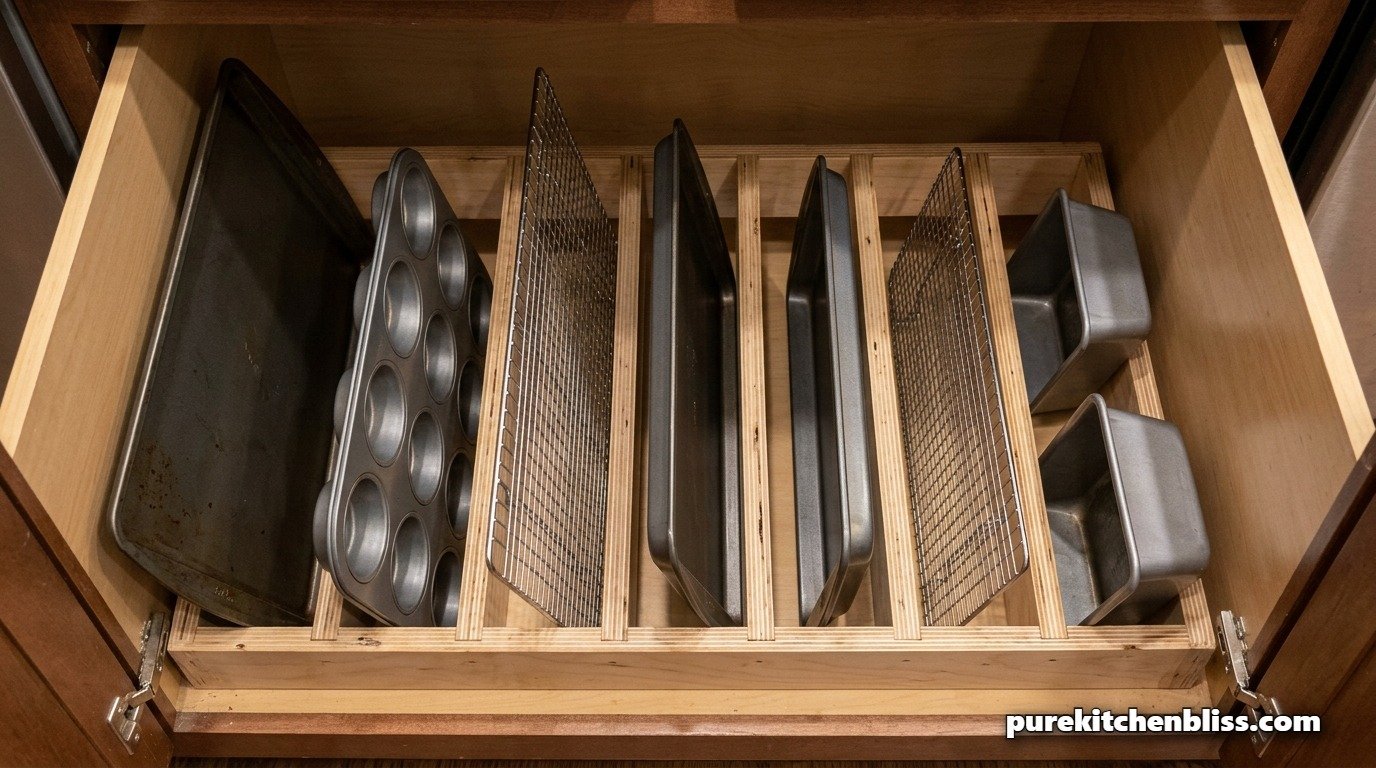
Re-Engineering Cabinet Efficiency: The Vertical Baking Sheet Hack
In a high-performance kitchen sanctuary, the "pile" is the enemy of efficiency. We’ve all been there: reaching for a heavy roasting pan only to have a stack of baking sheets clatter onto the floor, potentially damaging your full-height slab backsplash or scratching your pristine stainless steel.
Standard builder-grade cabinets often lack the internal "rough-in" for vertical storage. Generalist sites like Hunker often suggest using a basic shoe rack as a workaround for this storage deficit. From a builder’s perspective, this isn't just a "hack", it is a mechanical reorganization of space. By utilizing the slats of a two-tier shoe organizer, you can create a vertical filing system that protects the finish of your pans and restores the quiet order of your cabinetry.
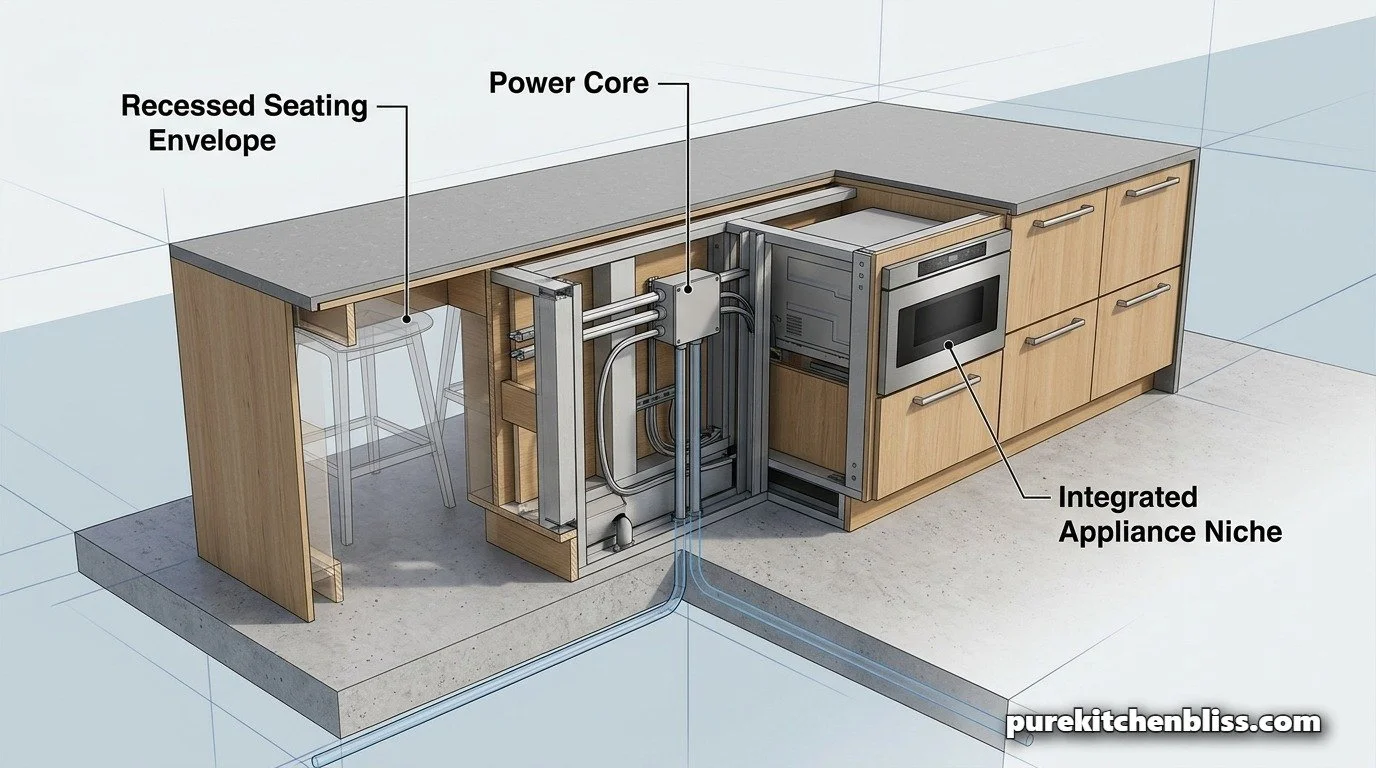
The Multipurpose Island: Integrating Tech, Seating, and Storage
In a high-performance kitchen sanctuary, the island has evolved from a simple prep surface into the home’s primary "Super Hub." To truly master this space, we have to look beyond the countertop and view the island as a complex piece of mechanical infrastructure. Engineering a single zone that functions as a home office, a dining table, and a professional cooking station simultaneously is a structural challenge that begins at the sub-floor.
When you ask an island to serve multiple masters, you increase the "load" on the space, not just the physical weight on the floor joists, but the electrical and thermodynamic demand on the room. A true multipurpose island requires a sophisticated rough-in strategy to ensure your digital workflow never interferes with your culinary extraction.
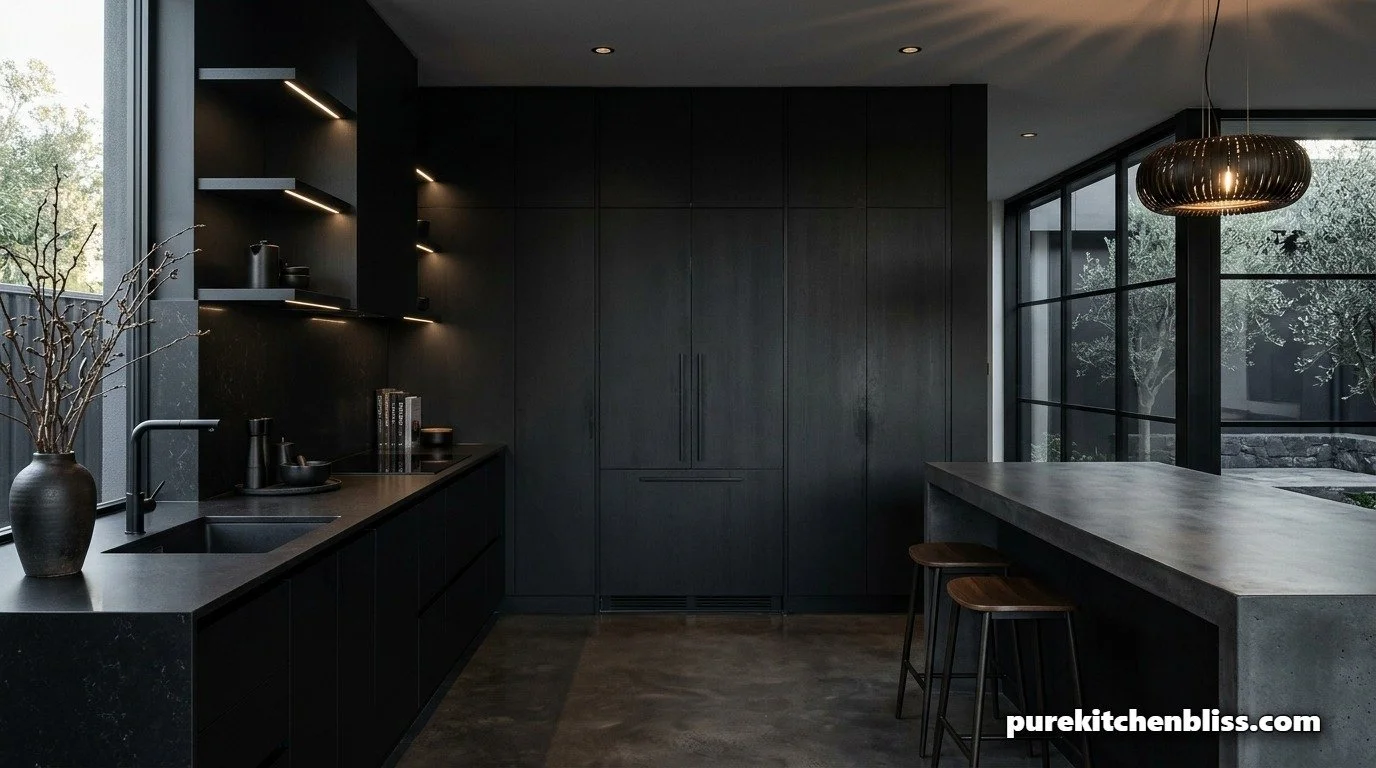
The Zero-Clearance Flush: Refrigerator Ventilation & Rough-In Guide
In the design of a kitchen sanctuary, the visual "clutter" of a refrigerator protruding three inches past the cabinetry is a structural failure. Achieving a true flush, "built-in" look requires more than just a counter-depth unit; it requires a mastery of zero-clearance mechanicals and specialized ventilation rough-ins.
Unlike the generic advice found on most DIY sites, a master carpenter knows that "flush" is a dangerous game. If you don't account for the pivot point of the hinge and the BTU output of the compressor, you are essentially building a thermal tomb for a $10,000 appliance.

From Pour-Over to Pro: How the Breville Bambino Transformed My Kitchen Sanctuary
In my journey of documenting kitchen and bath design, my goal has been to slowly transform these rooms into sanctuaries, spaces that don't just function, but provide a genuine sense of enjoyment. These aren't overnight renovations; they are incremental upgrades made as the budget allows. As a carpenter and a father of four, I know that every square inch of our home has to work hard, but it should also feel like a reward.
Recently, the "sanctuary" focus shifted to our morning ritual. For years, we were a pour-over household. It was a reliable, low-tech system, but as we began developing our dedicated coffee niche, I decided it was time to upgrade our daily infrastructure to espresso.
I chose the Breville Bambino. I wanted a "starter" machine that I hoped could rival the $30,000 commercial setups I use at my own coffee shop. In the two months since its installation, it hasn’t just met expectations, it has fundamentally outperformed them. My wife loves it, and for a father of four, that is the ultimate seal of approval.
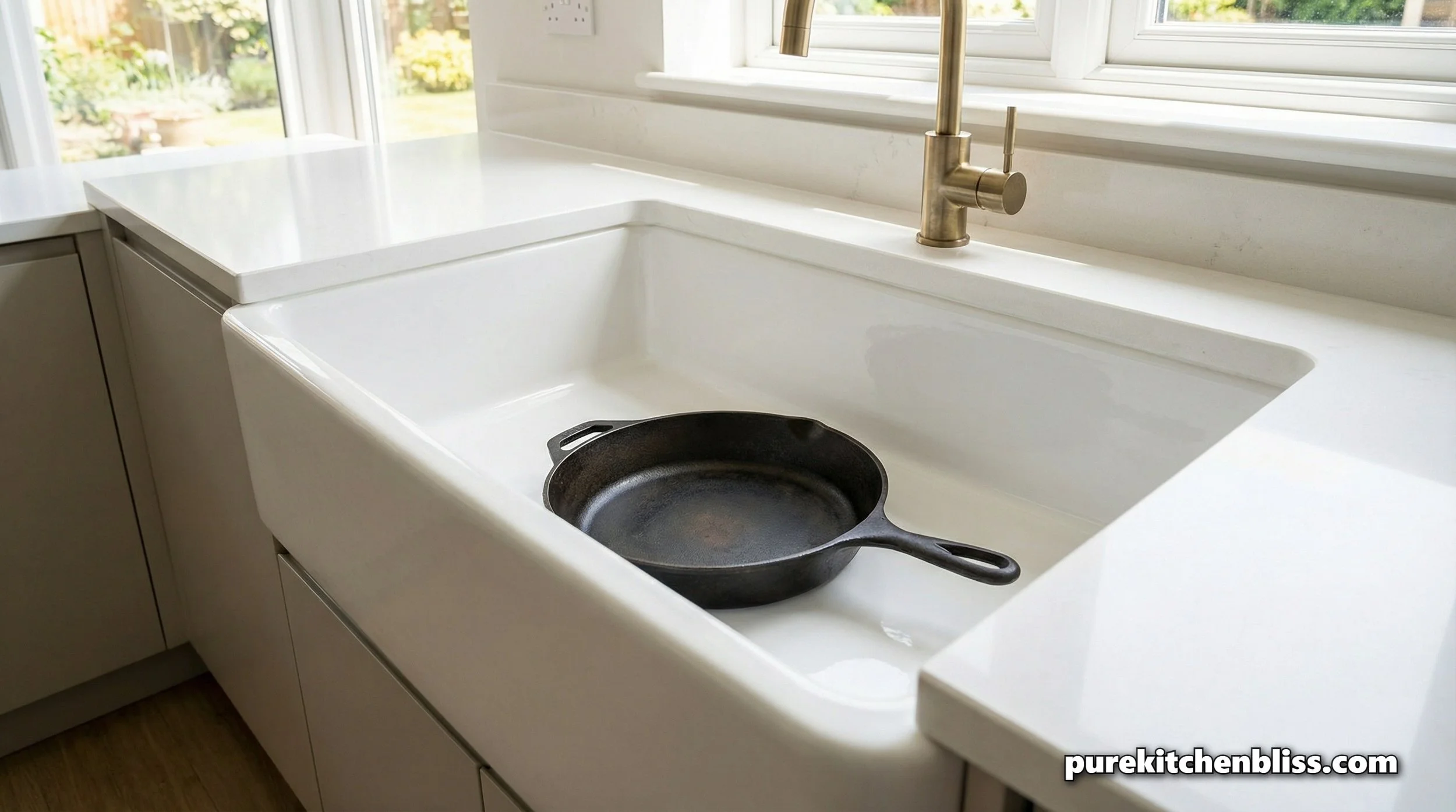
Do You Really Need a Double Sink?
In a busy home with four daughters, the kitchen sink is the most used piece of mechanical equipment you own. It’s the primary station for prepping organic meals, washing out DIY Glass Jars, and tackling the Sunday Night Countertop Reset.
The traditional double sink (the "50/50 split") was designed for a pre-dishwasher era when one side held the soapy water and the other held the rinse water. But in a modern kitchen equipped with a high-efficiency dishwasher and a Stone Dish Drying Mat, that middle divider often becomes a structural hurdle rather than a help. As a Red Seal Carpenter, I look at the sink as the "engine room" of your kitchen. If the engine isn't sized right, the whole system stalls.