Sintered Stone vs. Porcelain: The Battle of Ultra-Compact Surfaces
In the current landscape of kitchen design, the demand for surfaces that can withstand professional-grade use without the maintenance of natural stone has led to the rise of "ultra-compact" materials. Two names dominate this category: Sintered Stone and Porcelain. To the casual observer, they appear identical—thin, large-format slabs with hyper-realistic veining. However, from a structural and fabrication perspective, the differences are significant.
Choosing between these two isn't just about aesthetics; it’s about the underlying infrastructure of your kitchen. Whether you are planning for an invisible induction system or a heavy-duty prep zone, understanding the mineral composition and the firing process of these slabs is essential for a long-lasting installation.
1. The Manufacturing Process: Sintering vs. Traditional Firing
The primary difference between these two materials lies in how they are born. Both start as a blend of clay, feldspar, and silica, but the "pressing" phase is where they diverge.
Porcelain: This is essentially a highly refined ceramic. It is pressed at high pressure and fired in a kiln at temperatures around 1200°C. It is incredibly dense and non-porous, making it an excellent upgrade from standard tile.
Sintered Stone: This material takes the process a step further by mimicking the way metamorphic rock is formed deep within the earth. Brands like Dekton or Neolith use a process called "Sinteringized Particle Tech." This involves a 25,000-ton press (the weight of two Eiffel Towers) and a proprietary firing process that causes the minerals to bond at a molecular level without the need for resins or binders.
2. Full-Body Veining vs. Printed Surfaces
This is the most visible difference and the one that usually dictates the "high-end" feel of a kitchen.
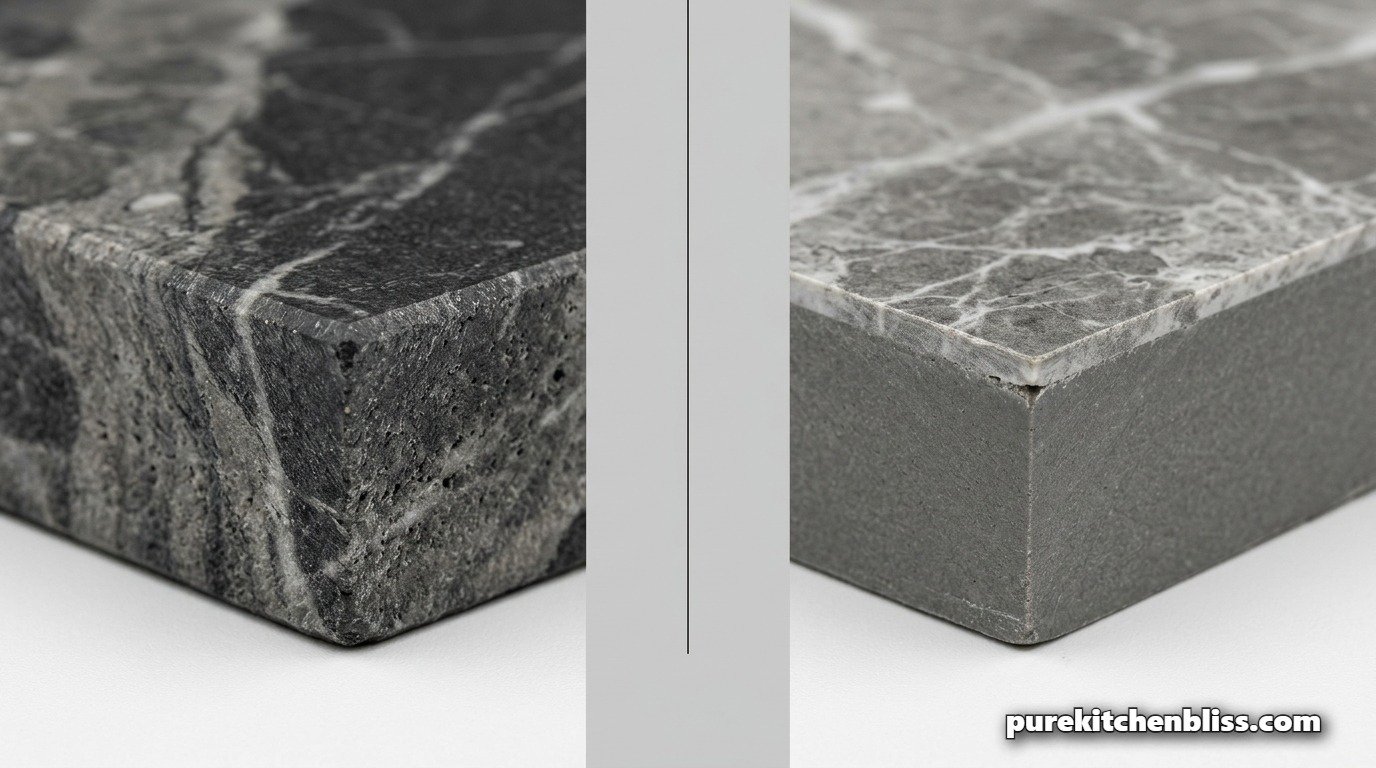
Porcelain Printing: Most porcelain slabs utilize high-definition inkjet printing. While the surface looks exactly like Calacatta marble, the "vein" is only skin-deep. If you choose a mitered edge for your island, the pattern will stop at the corner, revealing the solid-colored core of the slab.
Sintered Stone Depth: High-performance sintered stone often features "Full-Body" technology. The minerals that create the veining are mixed into the raw material before it is pressed. This means if the stone is chipped or carved, the pattern continues all the way through the material. This is a critical requirement for a workstation sink where the edges of the sink cutout are visible.
3. Durability: The Heat and Scratch Audit
Both materials are significantly harder than granite or quartz, but they have different breaking points.
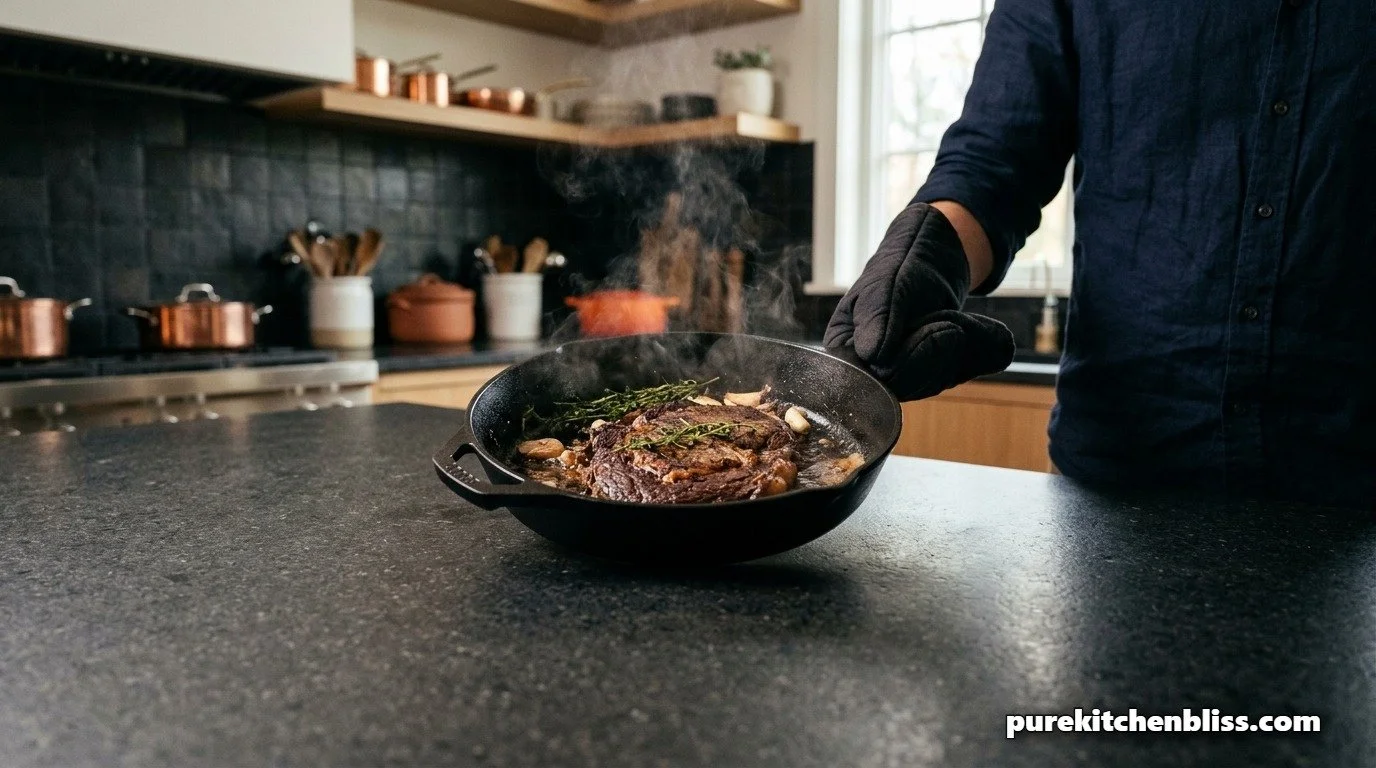
Heat Tolerance: Sintered stone is effectively fireproof. Because it contains zero petroleum-based resins, it can withstand extreme thermal shock. You can move a pot from a high-heat induction burner directly onto the slab without a trivet. Porcelain is also heat-resistant, but lower-quality porcelain can occasionally crack if subjected to extreme, localized "thermal shock."
Scratch Resistance: You can theoretically use a sintered stone countertop as a cutting board. It is harder than stainless steel, meaning knives will dull before they scratch the stone. Porcelain is nearly as hard, but because the pattern is often printed on the surface, a deep scratch can reveal the contrasting core color beneath, making the damage much more visible.
4. The Fabrication Challenge: Tension and Cracking
This is the "Builder's Secret" that often explains the price gap between these materials. Sintered stone and porcelain are under immense internal tension because they are so dense.
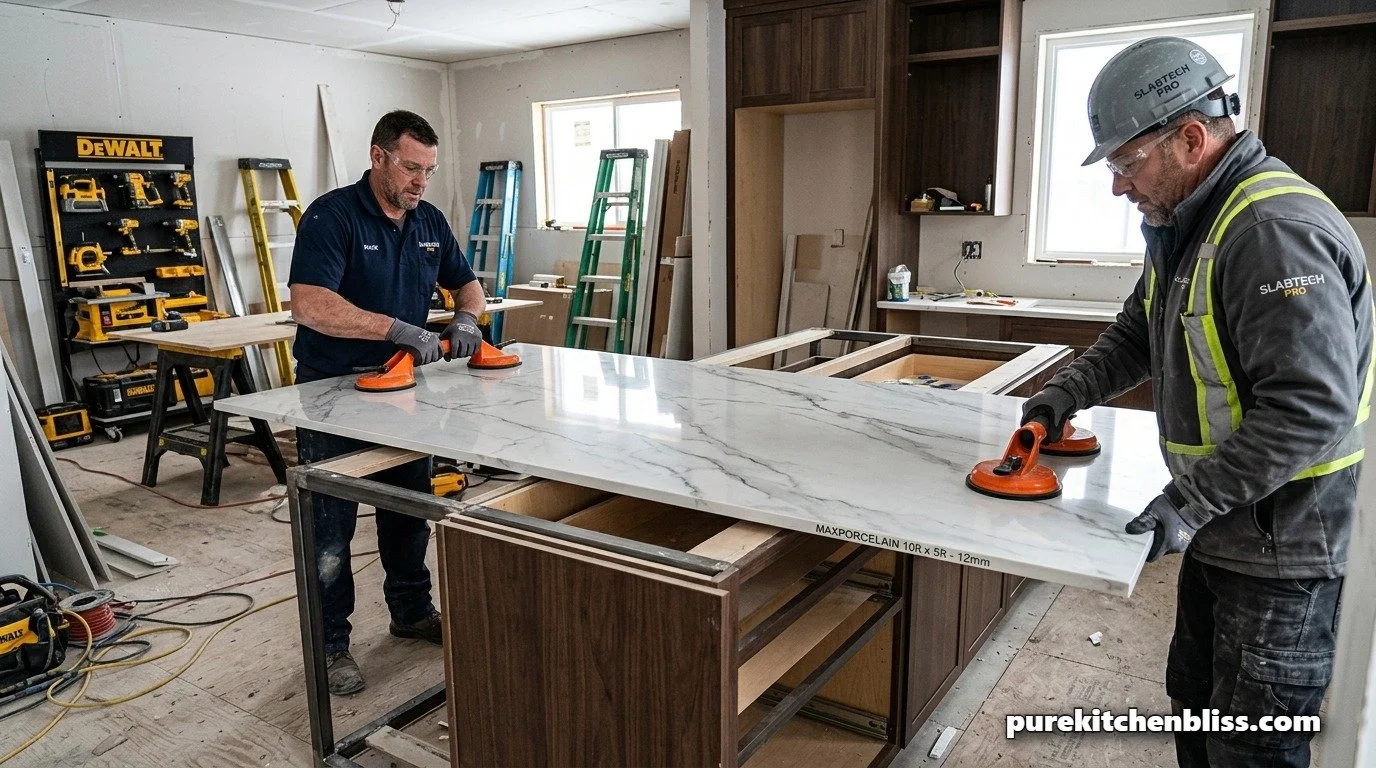
The "Snap" Risk: During fabrication, if the stone is not "tension-relieved" by a master sawyer, the slab can literally snap like glass when being cut for a cooktop or sink.
Edge Chipping: Because these materials are so hard, they can be brittle on the edges. A "Builder-Grade" installation should always include a small "Eased Edge" or "Micro-Bevel." A sharp 90-degree corner in porcelain is far more likely to chip if hit with a heavy pot than a slightly rounded edge.
5. Technical Comparison Table
| Feature | Porcelain Slabs | Sintered Stone |
|---|---|---|
| Manufacturing | Pressed & Kiln-Fired | Ultra-High Pressure Sintering |
| Pattern Depth | Inkjet Printed (Surface Only) | Full-Body Veining Available |
| UV Resistance | Excellent (Indoor/Outdoor) | 100% UV Stable |
| Repairability | Difficult (due to printing) | Moderate (Full-body hides chips) |
Conclusion: Which Material Wins? For the average residential kitchen, porcelain offers an incredible balance of beauty and cost-effectiveness. However, for a true high-end project, especially one involving invisible induction cooking or integrated stone sinks, sintered stone is the superior choice. Its full-body composition and absolute thermal stability make it the most advanced architectural surface available in 2026.
Next Up: Maintain your new surfaces with the right chemistry in our guide to The Ammonia Cleaning Myth.