How to Deep Clean Your Dishwasher and Fix Common Issues
In a high output kitchen, the dishwasher is a critical piece of infrastructure. It is designed to circulate high-temperature water, break down food particles, and pump waste out through a drain line. When this process works efficiently, it is a closed-loop hydraulic system. When it fails, it manifests as water stagnation, poor cleaning performance, and the eventual failure of the internal pump assembly.
Most dishwasher failures are not sudden "catastrophes." They are the result of gradual neglect. Calcium deposits, mineral scale, and organic buildup accumulate in the filtration system, forcing the pump to work against resistance. This creates heat, causes premature bearing wear, and forces the motor to operate outside of its design specifications. This guide outlines the professional steps to maintain this system at peak operational efficiency.
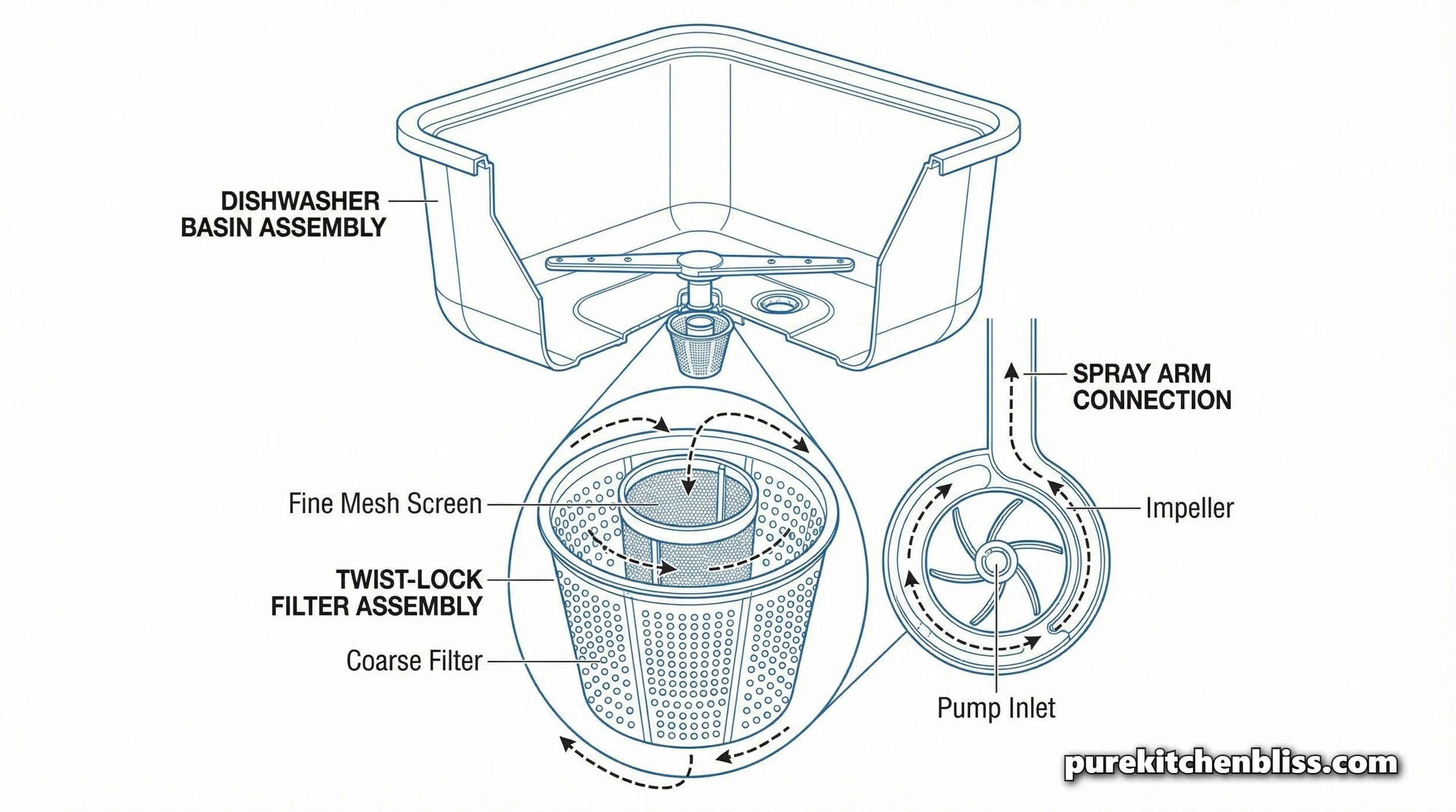
1. The Hydraulic Loop and Your Pump
The primary failure point in almost every residential dishwasher is the filter screen. This component is designed to capture non-soluble particulates (seeds, grease solids, label adhesives) before they reach the pump impeller.
The Debris Trap: If the filter becomes saturated, the dishwasher recirculates dirty water. This "dirty loop" not only leaves residue on your dishware but also increases the abrasive load on the pump.
The Pump Dynamics: The pump is a precision centrifugal motor. It is not designed to move viscous, grease heavy sludge. When the filter fails, that sludge passes directly into the impeller housing. Over time, this causes the impeller to seize or creates a "cavitation" effect, where the pump spins but cannot move fluid effectively because of the increased torque requirement. When a motor is forced to work against this backpressure, it pulls higher amperage, leading to the thermal degradation of the motor windings.
2. The Filter Maintenance Protocol
Cleaning the filter is not a suggestion; it is a maintenance requirement. I recommend a biweekly inspection cycle for any kitchen operating at high volume.
Extraction: Locate the filter at the base of the basin (usually a twist-lock assembly). Remove both the coarse debris catcher and the fine mesh secondary screen.
The Extraction Soak: Do not use abrasive scouring pads. If the mesh is clogged with calcified grease, the best solvent is a hot soak in a 50/50 mixture of distilled white vinegar and water. As detailed in 7 Uses for Vinegar in the Kitchen, the acetic acid will neutralize the mineral bonds holding the grease in place.
Mechanical Cleaning: Use a soft-bristled brush to gently work the debris out of the mesh. Inspect the secondary screen for small plastic shards or labels that may have bypassed the primary filter.
Re-installation: Ensure the seal at the base of the filter assembly is seated correctly before twisting the lock. A poorly seated filter allows bypass—meaning dirty water goes directly back into the pump.
TECHNICAL WARNING: THE DRAIN HOSE LOOPS
If your dishwasher smells like standing water even after a filter clean, check your drain hose. It must have a "high loop" (a section that is higher than the drain connection) before it enters the disposal or drain pipe. Without this loop, water from your sink can siphon back into the dishwasher, depositing organic sludge into your clean machine.
3. The Thermodynamics of the Heating Element
The heating element in your dishwasher is responsible for two things: sanitization and drying. However, it is also a magnet for mineral scale.
Scale Build-up: If you live in an area with hard water, magnesium and calcium ions precipitate out of the water when it is heated. These minerals form a "crust" on the heating element.
Thermal Resistance: Mineral scale is a thermal insulator. When your element is covered in scale, it takes significantly longer for the water to reach the required temperature. This forces the heating element to stay on longer, increasing the total energy consumption of the cycle and increasing the stress on the electrical relay that controls the heater.
The Audit: Periodically inspect the heating element (when the machine is powered off) for a white, chalky coating. If present, it must be descaled. Regular use of enzyme-based cleaners or a dedicated citric acid wash is the only way to restore the element’s heat-transfer efficiency.
4. The Gasket and Seal Audit
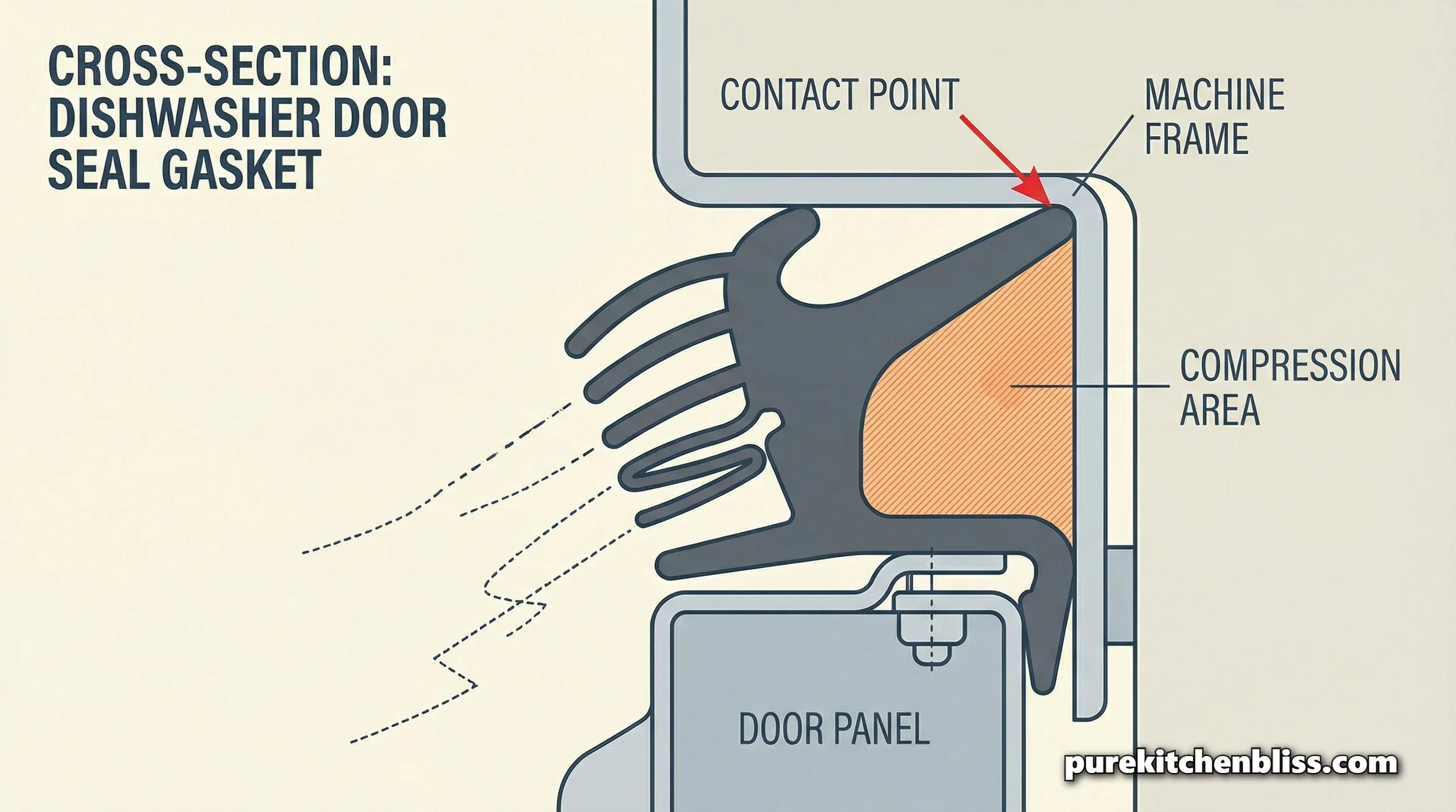
The door gasket is the primary "static seal" of the machine. It is subjected to constant heat, moisture, and chemical detergents. Over time, this causes "compression set"—where the rubber loses its elasticity and stops sealing effectively.
The Inspection: Open the door and inspect the perimeter. If you see black or pinkish slime (biofilm) in the grooves, you are inviting mold growth.
The Cleaning Protocol: Use a 5 Brilliant Uses for Castile Soap solution and a microfiber cloth to wipe the entire perimeter of the gasket.
The Edge Case: Pay specific attention to the bottom corners of the door. This is where food particles are often trapped by the door hinge mechanism. These trapped organics will rot, creating odors that infiltrate the entire cabinet cavity. If the seal is cracked or has lost its "spring," it must be replaced. A faulty seal leads to moisture ingress into your cabinetry, causing the very water damage you are trying to avoid.
5. The Surfactant Science (Rinse Aid)
Many users view "rinse aid" as a luxury. From a mechanical standpoint, it is a functional necessity. Rinse aid is a surfactant, a chemical that lowers the surface tension of the water.
The Physics: Water has high surface tension; it wants to form droplets. Without a surfactant, these droplets dry on your glassware, leaving behind mineral deposits (spots). By lowering the surface tension, the water "sheets" off the surface of the dishes and the stainless steel interior of the machine.
The Maintenance Benefit: When water sheets off, it takes the dissolved mineral load with it. This keeps the interior of the dishwasher significantly cleaner and reduces the rate of calcification on the heating element. Always maintain the rinse aid reservoir; it is a critical component of the machine's internal hygiene.
6. What to Buy: Dishwasher Maintenance Tools
We have audited the high-grade maintenance tools required to keep this hydraulic loop running efficiently.
The Performance Maintenance Kit: Bio-Enzymatic Cleaner
Standard detergents clean the dishes, but they don't clean the machine. This kit uses bio-enzymatic agents to break down the proteins and fats that accumulate in the pump housing and spray arm nozzles.
The Spec: Enzyme-based, phosphate-free formula that dissolves lime scale and grease without damaging the rubber seals.
The Verdict: Run this once a month. It is the only way to remove the internal scale that you cannot reach by hand.
Buy It Now: Professional-Grade Bio-Enzymatic Dishwasher Cleaner
The Precision Brush Set
Standard sponges are too large for the tight clearances of a dishwasher filter or the spray-arm nozzles. You need a dedicated toolset to reach the crevices where biofilms thrive.
The Spec: Anti-microbial nylon bristles, ergonomic handles, and specialized shapes for pump-housing access.
The Verdict: Essential for keeping the "mechanical" parts of the machine free of obstruction.
Buy It Now: Dishwasher Maintenance Brush and Cleaning Set
Conclusion: The Hydraulic Reset
Your dishwasher is a closed-loop hydraulic system. By maintaining the filter screen, auditing the door seals, and utilizing proper surfactants, you are preventing the mechanical strain that leads to premature pump failure. This maintenance protocol, when integrated into your Sunday Night Countertop Reset, ensures that the machine remains a functional piece of infrastructure rather than a disposable appliance.
Explore More in Your Sanctuary:
To handle the biofilm buildup in your sink: Why Does My Kitchen Sink Smell?
To optimize your counter surface for dishwasher loading: Countertop Stewardship: Granite, Quartz, & Wood
To ensure your stainless steel racks are not rusting: The Best Slim Dish Racks for Small Kitchens