The Rise of the Induction Cooktop
In thehigh-performance sanctuary, the "engine" of the kitchen is changing. For decades, a high-BTU gas range was the undisputed status symbol of a "chef’s kitchen." However, as we move through 2026, the architectural and environmental tide has shifted. Induction cooking, once considered a niche European preference, has become the premier choice for the modern North American home.
The move toward induction isn't just a trend; it’s a fundamental shift in how we view kitchen infrastructure. It offers a level of precision, speed, and air-quality control that gas simply cannot match. If you are designing a kitchen to last the next decade, understanding the mechanics of induction is essential.
1. The Physics of Performance: How It Works
Traditional electric and gas cooktops rely on thermal conduction, they heat an element or a flame, which then heats the pan, which then heats the food. This is an inefficient process that loses a significant amount of energy to the surrounding air.
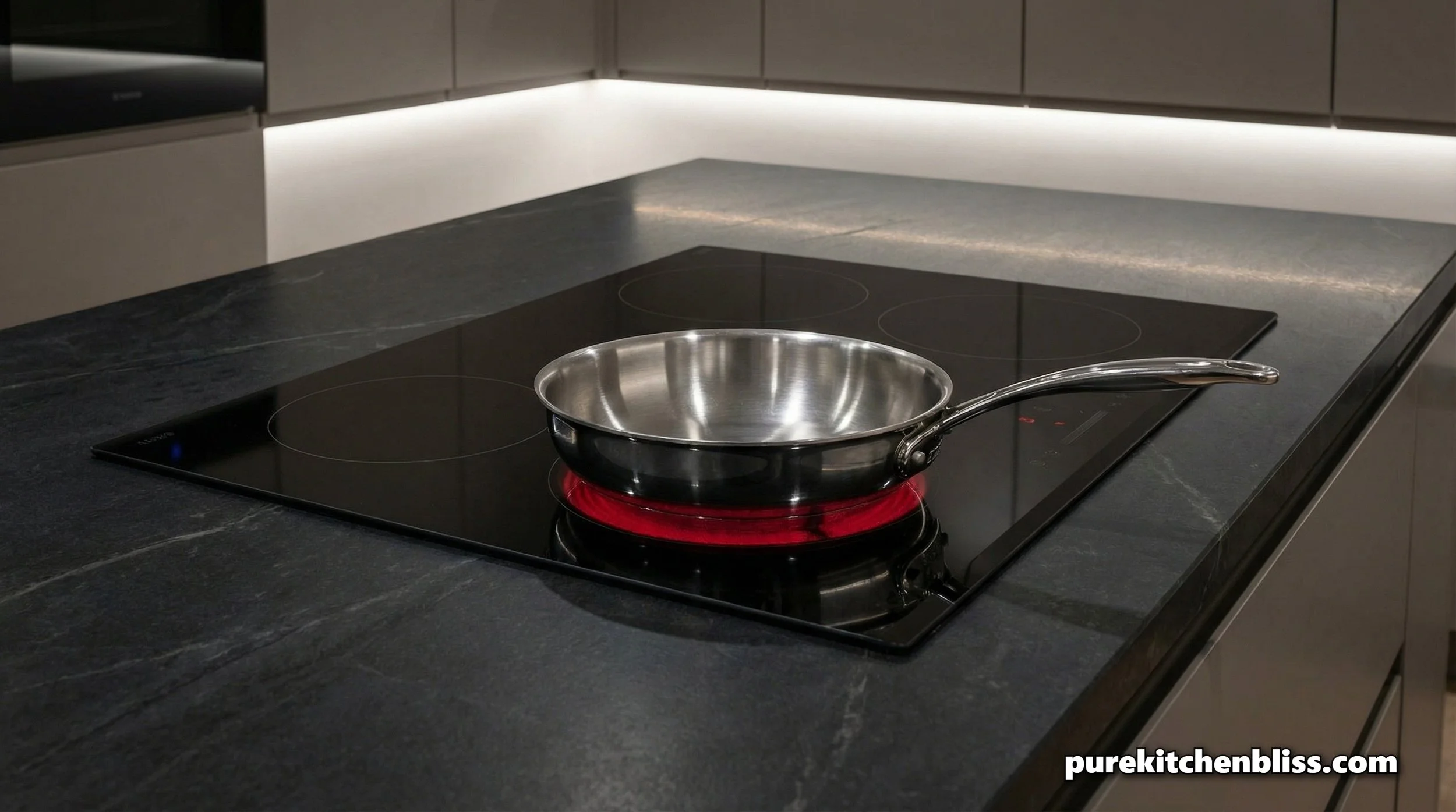
Induction uses electromagnetism. Underneath the glass surface, copper coils create a magnetic field. When you place a ferrous (magnetic) pan on the surface, the field induces an electric current directly inside the pan itself.
The Pan is the Element: In an induction setup, the cooktop stays relatively cool while the pan becomes the heat source.
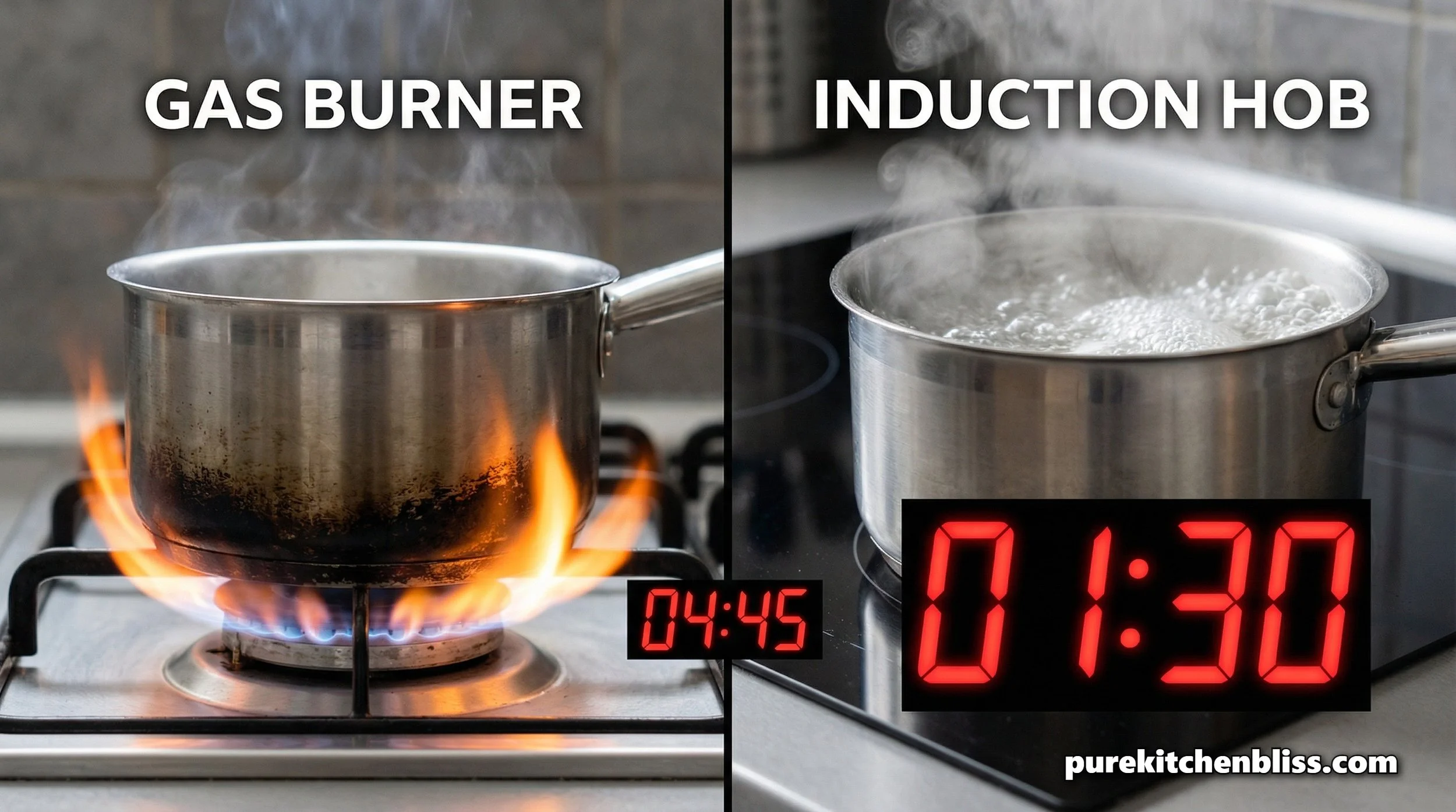
Efficiency: Induction is roughly 90% efficient, compared to about 40% for gas. This means your kitchen stays cooler, and your water boils in half the time.
2. Precision: The "Low Simmer" Advantage
One of the biggest myths about induction is that it lacks the "soul" or control of a gas flame. In reality, modern 2026 induction units offer more granular control than any residential gas burner.
Digital Accuracy: While a gas flame is subject to drafts and inconsistent pressure, induction provides an exact wattage output.
The Melting Point: Induction can maintain a temperature low enough to melt chocolate directly in a pan without a double boiler—something nearly impossible on a gas range. This level of control is the "Invisible Infrastructure" that elevates your cooking from home-prep to professional-grade.
3. Safety and Air Quality
As we discussed in our guide on kitchen mold hot spots, managing the environment of your kitchen is vital. Gas ranges release nitrogen dioxide and carbon monoxide into your living space, requiring a massive range hoodto clear the air.
No Combustion: Because induction doesn't burn fuel, it doesn't emit indoor pollutants.
The "Cool-Touch" Surface: Since the glass only heats up via residual heat from the pan, the risk of accidental burns is nearly zero. This makes induction the safest choice for households with children or pets.
4. Comparison: Induction vs. Gas vs. Radiant Electric
| Feature | Induction | Pro-Gas | Radiant Electric |
|---|---|---|---|
| Boil Time (1qt) | ~90 Seconds | ~4 Minutes | ~5 Minutes |
| Energy Efficiency | 90% | 40% | 70% |
| Cleanup Ease | Excellent (Flat glass) | Difficult (Grates/Burners) | Moderate (Glass bakes on) |
| Indoor Air Quality | Clean | Emits CO2/NO2 | Clean |
5. Infrastructure Check: Do You Need New Pans?
The one "barrier to entry" for induction is cookware. Because the system relies on magnetism, your pans must be ferrous.
The Test: If a refrigerator magnet sticks to the bottom of your pan, it will work on induction.
Compatibility: Cast iron and most stainless steel work perfectly. However, pure aluminum or copper pans will not. Investing in a high-quality set of tri-ply stainless steel is a minor cost compared to the efficiency gains of the cooktop.
6. The Cleanup: A Minimalist’s Dream
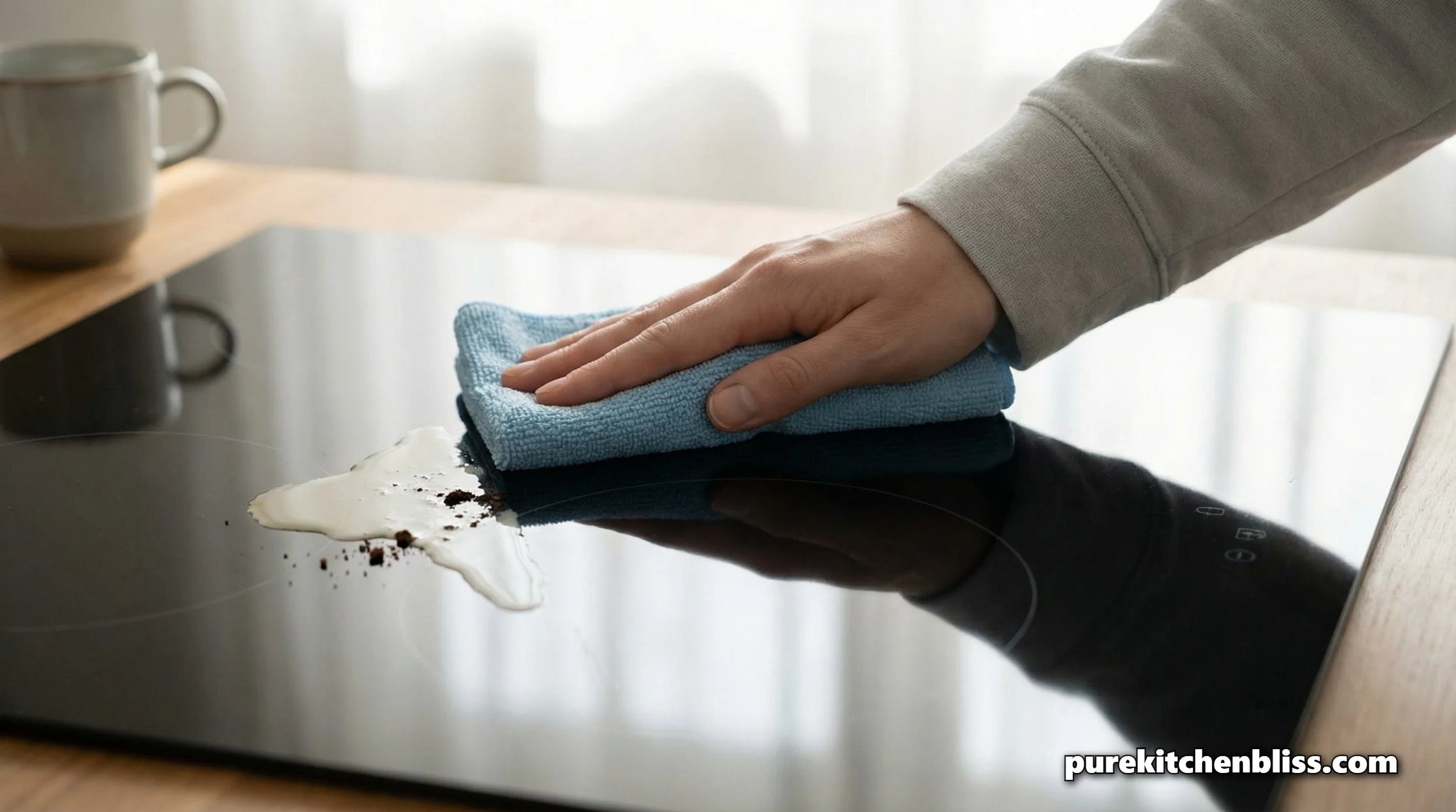
Because the glass surface around the pan doesn't get hot enough to "burn" spilled food, cleanup is instantaneous. You don't need heavy degreasers or scrubbing pads. A simple wipe with a damp cloth and a drop of Castile soapis usually all it takes to maintain the factory shine.
Conclusion: The Future is Magnetic Switching to induction is the single most impactful move you can make to modernize your kitchen's mechanical infrastructure. It offers professional speed, laboratory precision, and a cleaner living environment. Whether you are a dedicated home chef or a minimalist who values easy maintenance, induction is the clear winner for 2026.
Next Up: Pair your high-tech cooktop with the perfect prep station in our Anatomy of a High-Performance Kitchen Sink