Leathered Countertops: The Engineering of the 2026 Tactile Kitchen
For the last decade, the high-gloss, mirrored finish was the undisputed king of the kitchen. But as we move toward the Disappearing Kitchen, the demand for "Quiet Luxury" has shifted the focus from reflection to texture. Enter the Leathered Finish.
Unlike a polished surface that hides the stone’s character behind a glass-like sheen, or a honed finish that can look flat and "chalky," a leathered finish is a mechanical evolution of the stone itself. It is achieved by running diamond-tipped brushes over the slab, whisking away the softer minerals and leaving the harder ones behind. The result is a surface that mimics the feel of fine leather, warm, organic, and technically superior for a home sanctuary.
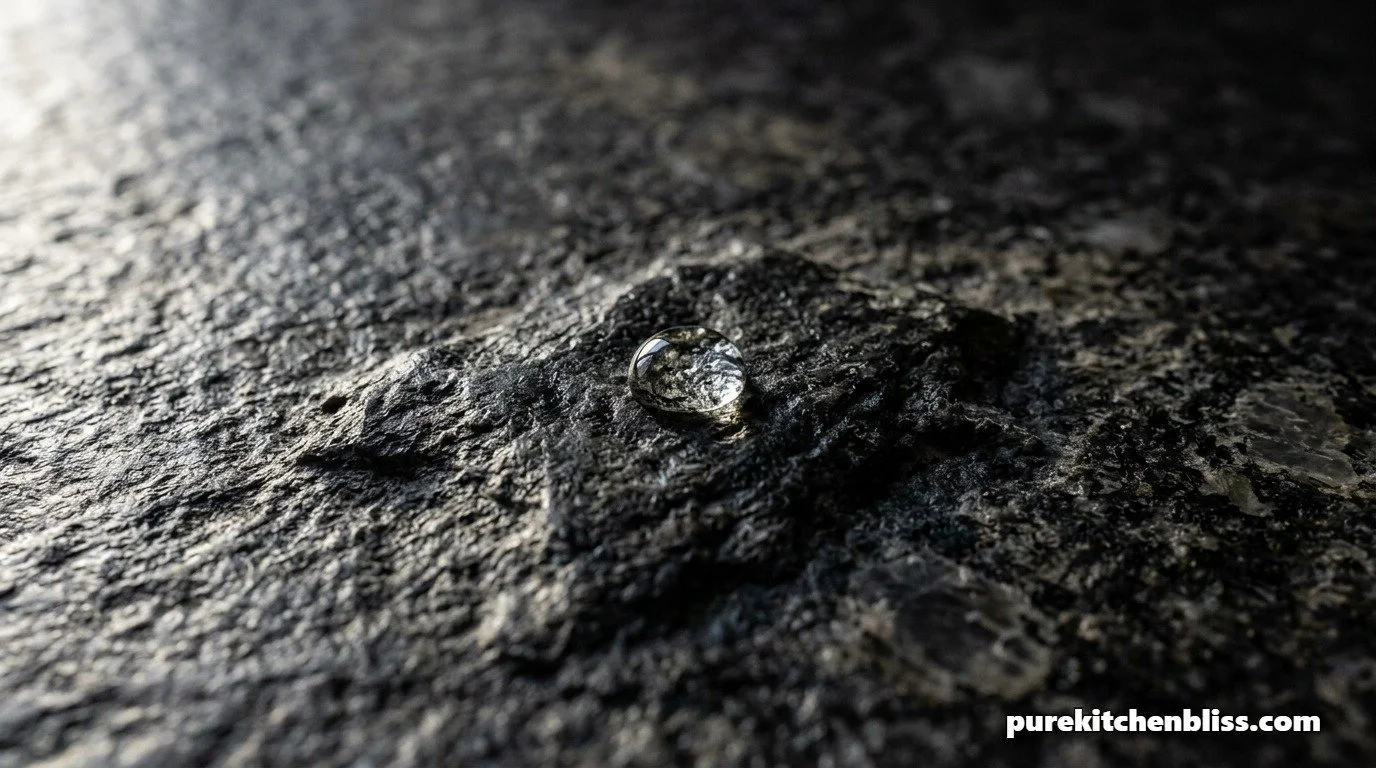
1. The Pore Density Advantage: Beyond Honed
A common mistake in kitchen design is assuming "Matte" equals "Porous."
The Honed Flaw: Honed stone is smooth but flat; the process opens the pores of the stone, making it highly susceptible to staining from oils and acids.
The Leathered Fix: The brushing process used for leathering actually "closes" the surface more effectively than honing. Because the softer minerals are removed, the remaining "peaks" are the densest parts of the stone. This makes leathered granite and quartzite more stain-resistant than their honed counterparts, a critical feature if you are working near a workstation sink.
2. The Fingerprint Audit: Maintaining Visual Calm
One of the biggest "friction points" in a high-gloss kitchen is the constant battle against smudges. Polished stone acts as a dark mirror, highlighting every fingerprint and water spot.
Diffusion of Light: A leathered finish scatters light in multiple directions. This mechanical diffusion masks fingerprints and streaks, allowing the kitchen to maintain its "pristine" look even in the middle of a heavy prep session.
The Sanctuary Feel: From a biophilic perspective, leathered stone feels "room temperature" to the touch, whereas polished stone often feels clinical and cold.
3. The Maintenance Reality: Addressing the "Crumb" Myth
Critics of leathered finishes often claim they are "harder to clean" because of the texture. To out-clean the competition, you need a specific Maintenance Protocol.
Micro-Debris: Yes, crumbs can settle in the subtle "valleys" of the texture. However, using a Swedish dishclothsolves this instantly. The cellulose fibers are flexible enough to reach into the undulations of the stone, unlike flat paper towels which skip over the surface.
The Soap Rule: Avoid waxy cleaners that can build up in the texture. Use a pH-neutral mixture of Castile soapand water to keep the "peaks" of the stone clear and vibrant.
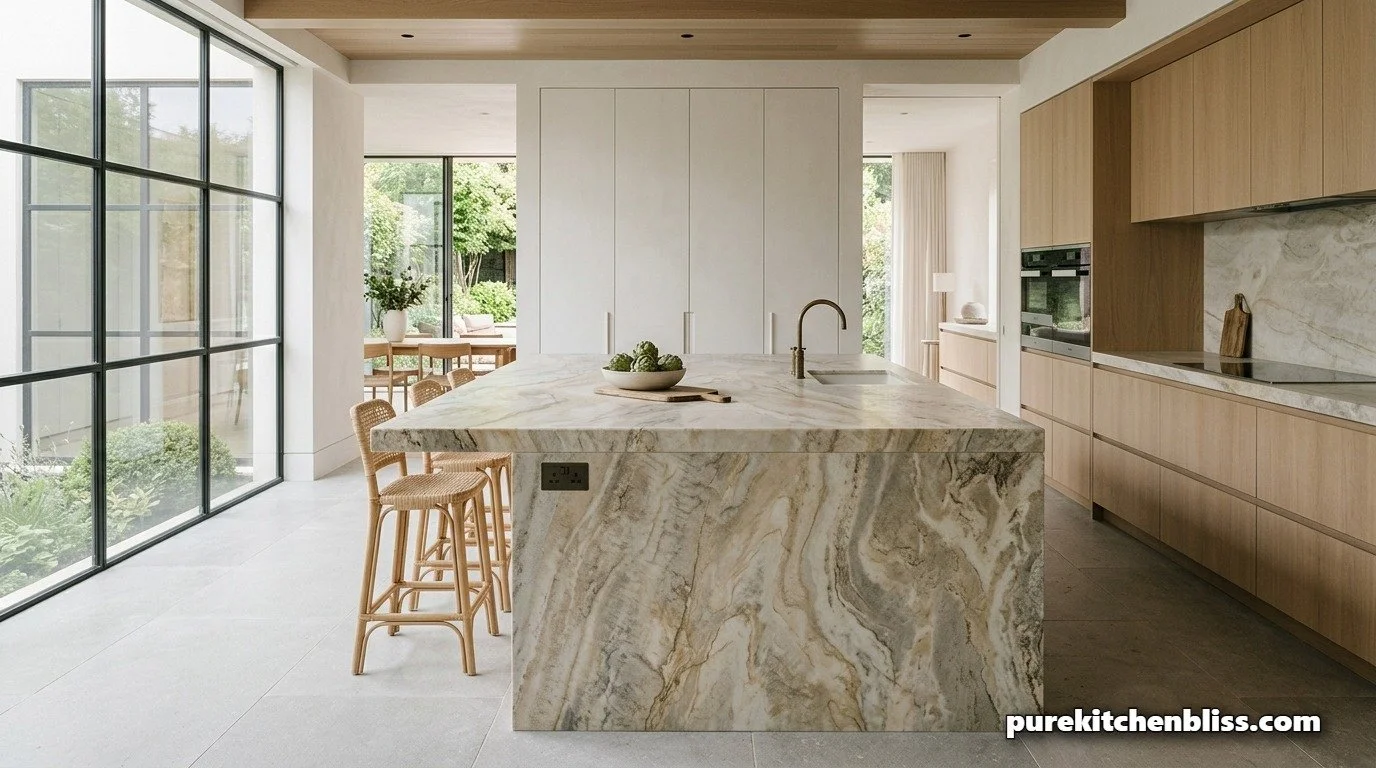
4. Comparison: Polished vs. Honed vs. Leathered
| Finish | Stain Resistance | Tactile Feel |
|---|---|---|
| Polished | High (Sealed). | Cold; Glass-like. |
| Honed | Low (Pores open). | Velvety but flat. |
| Leathered | High (Surface closed). | Warm; Textured. |
5. Fabrication Note: The "Seam" Challenge
If you are planning an island with a leathered finish, you must discuss the Seam Infrastructure with your fabricator.
Texture Matching: Because the undulations of leathered stone are unique to the minerals in that specific slab, getting two pieces to "line up" at a seam is more difficult than with polished stone.
The Pro Strategy: Always choose "Bookmatched" slabs for leathered finishes. This ensures the texture flows continuously across the surface, maintaining the illusion of a single, massive piece of earth in your kitchen.
6. Specified Equipment: Protecting the Texture
To maintain the depth of a leathered finish, avoid "all-in-one" wax polishes that can fill in the texture and make the stone look greasy.
The Cleaner: Use a specialized stone soap that leaves no residue.
The Applicator: Microfiber or cellulose is essential for reaching into the "valleys" of the finish.
Conclusion: The Future is Tactile The shift toward leathered countertops is a recognition that our kitchens should be felt as much as they are seen. By choosing a finish that prioritizes durability, hides the chaos of daily life, and connects us to the raw materials of the earth, we are building better sanctuaries. It is the perfect marriage of material science and quiet luxury.
Next Up: Pair your textured stone with the right storage in our Guide to Magnetic Knife Strips.