The Dedicated Coffee Niche: 2026’s Most Essential Kitchen Infrastructure
In the legacy kitchen layout, the coffee maker was an afterthought, a bulky appliance competing for space on the main counter, usually tucked under a cabinet where steam could eventually damage the wood finish. But in 2026, we are seeing a definitive shift toward the Dedicated Coffee Niche.
This isn't just a "decor trend"; it is a response to the "Morning Traffic Jam." By creating a secondary zone for coffee, you separate the beverage ritual from the meal-prep infrastructure. Whether it’s a recessed alcove, a hidden "appliance garage," or a plumbed-in espresso station, the coffee nook is the new heart of the high-performance kitchen.
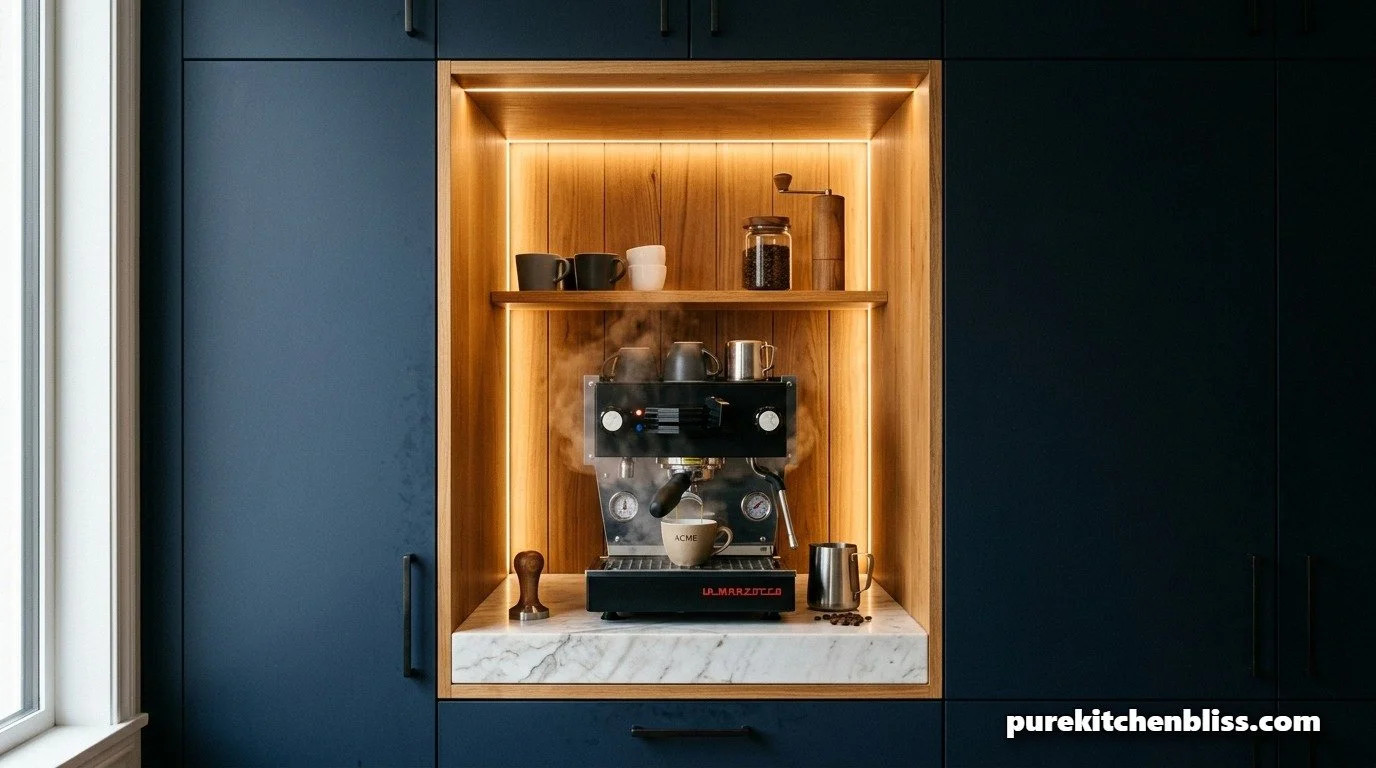
1. Ergonomic Separation: Ending the Morning Conflict
The primary benefit of a coffee nook is Workflow Isolation.
The Problem: In a standard kitchen, the person making coffee is often standing directly in front of the toaster or the refrigerator, blocking the "Kitchen Triangle."
The "Builder" Solution: Place the coffee niche in a transition zone, perhaps between the pantry and the main island. This allows guests and family members to access caffeine without entering the "Hot Zone" where cooking is happening at the induction cooktop.
2. The Electrical Load: Powering the Ritual
A common mistake in DIY coffee bars is underestimating the power draw. A high-end espresso machine and a dedicated grinder can pull significant amperage.
The 20-Amp Rule: For a professional-grade setup, you should specify a dedicated 20-amp circuit. This prevents the circuit breaker from tripping when the machine's boiler and the grinder's motor kick in simultaneously.
Hidden Power: To keep the look clean, install "Pop-up" outlets or under-cabinet power strips. This avoids the visual clutter of black cords draped across your sintered stone.
3. The Plumbing Upgrade: Direct-Fill Infrastructure
The ultimate "Builder-Grade" coffee niche removes the most annoying part of the ritual: refilling the water tank.
The Pot Filler Hack: Installing a small "brio" or filtered water tap directly inside the niche allows you to fill the reservoir without moving the heavy machine to the workstation sink.
Direct-Plumbed Machines: Many 2026 espresso models are "Direct-Plumbed," meaning they connect to your home’s water line via a 1/4" PEX tube. If you are doing a renovation, this is the single best infrastructure upgrade you can make.
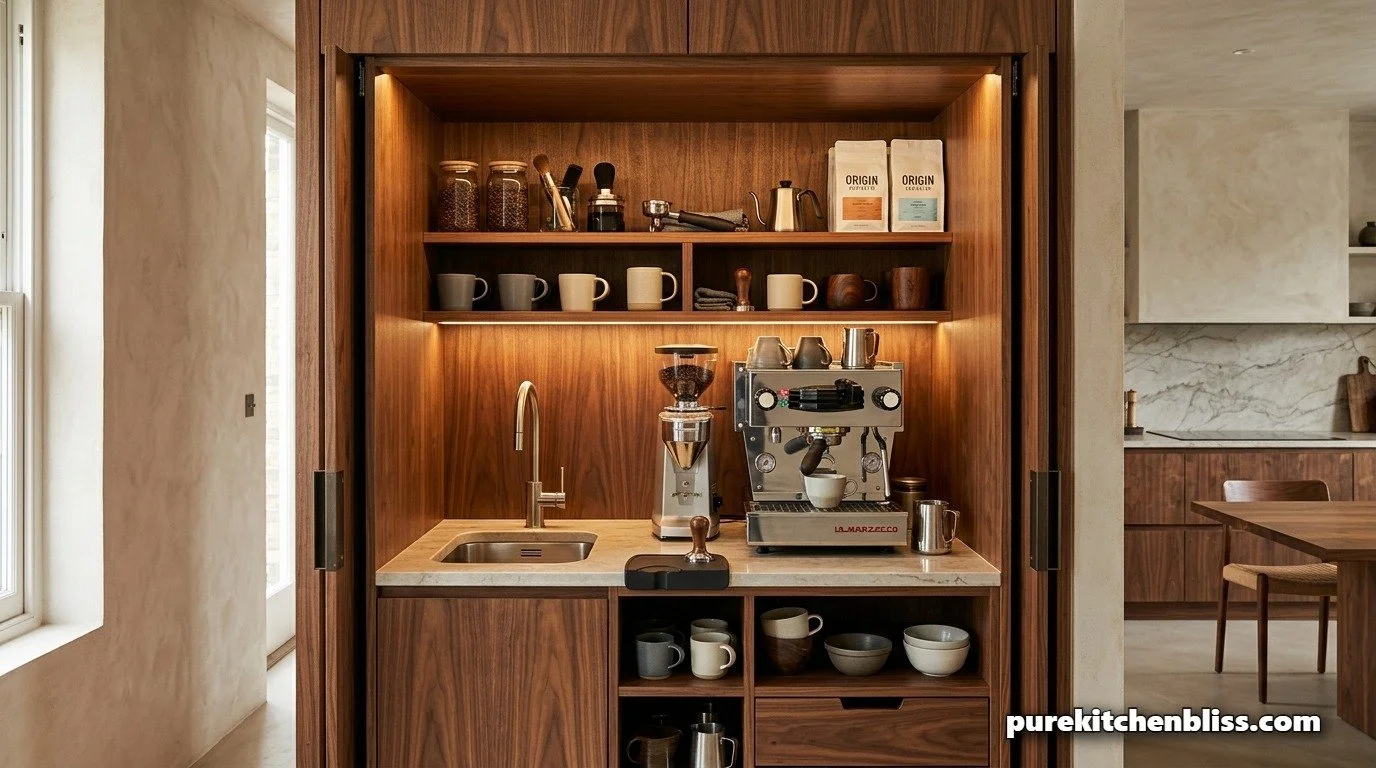
4. Comparison: Countertop Setup vs. Integrated Coffee Niche
| Feature | Standard Countertop | Integrated Niche |
|---|---|---|
| Visual Clue | Visible cords and clutter. | Seamless; often hidden. |
| Steam Control | Can damage upper cabinets. | Vented or open-air design. |
| Water Source | Manual refill (Sink trip). | Dedicated tap or direct-plumbed. |
5. Managing the Heat: Ventilation Infrastructure
Espresso machines and steam wands generate localized heat and moisture.
The Material Choice: Ensure the interior of your niche is lined with moisture-resistant materials. This is where sintered stone or stainless steel shines.
The Clear-Height Rule: Ensure there is at least 18–24 inches of clearance above the machine to allow heat to dissipate. If you are using a "pocket door" system, ensure the doors stay open during use to prevent heat buildup inside the cabinet.
6. Small Kitchen Hack: The Floating Coffee Shelf
In our guide to small kitchen summer decor, we discussed using vertical space. If you don't have room for a full niche, a thick "floating" stone or wood shelf can act as a dedicated coffee zone. By elevating the mugs and bean canisters, you keep the counter below clear for prep.
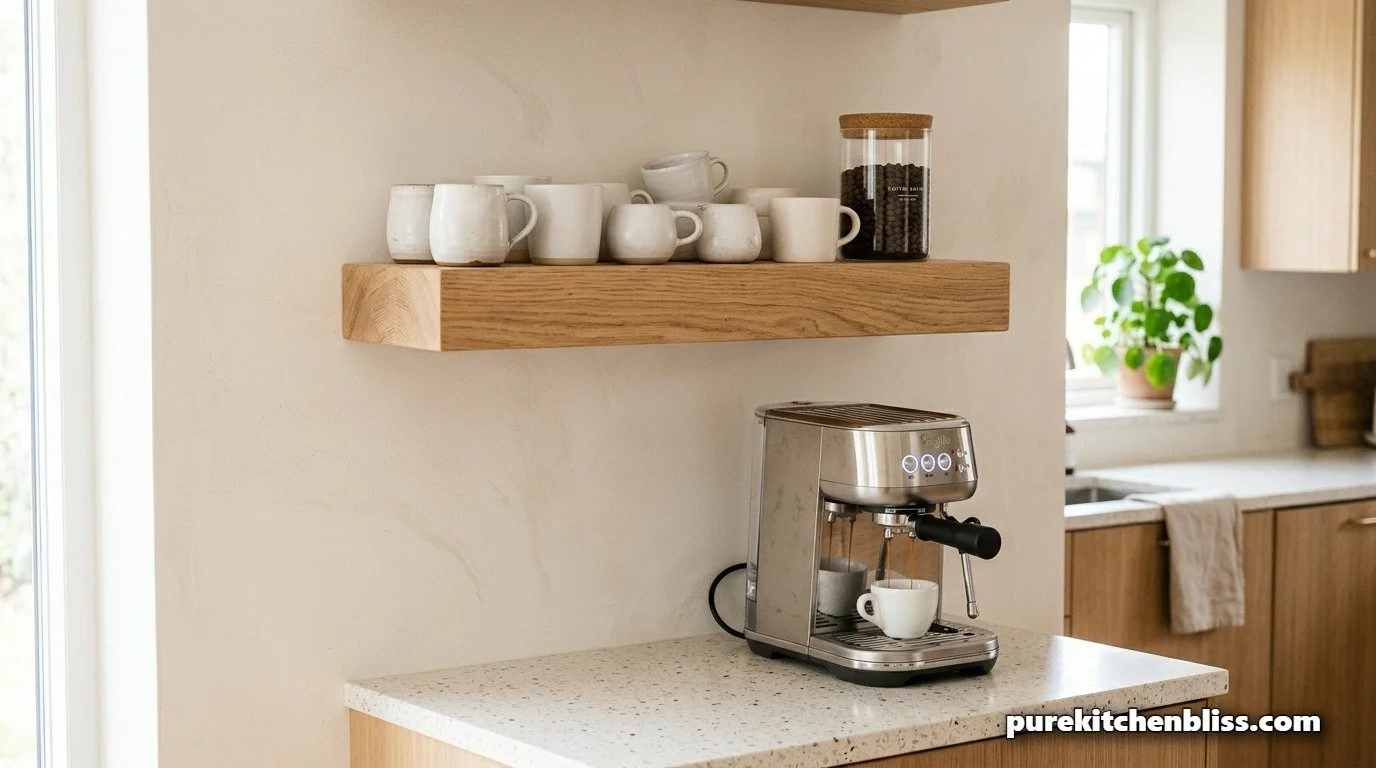
Conclusion: More Than a Trend The coffee niche is the evolution of the kitchen into a multi-zone hub. By investing in the electrical and plumbing infrastructure to support your morning ritual, you aren't just following a trend, you are optimizing the ergonomics of your home. It’s a specialized space that adds significant value to your daily life and your property's resale appeal.
Next Up: Learn how to keep your new coffee station pest-free with our Guide to Non-Toxic Ant Hacks.