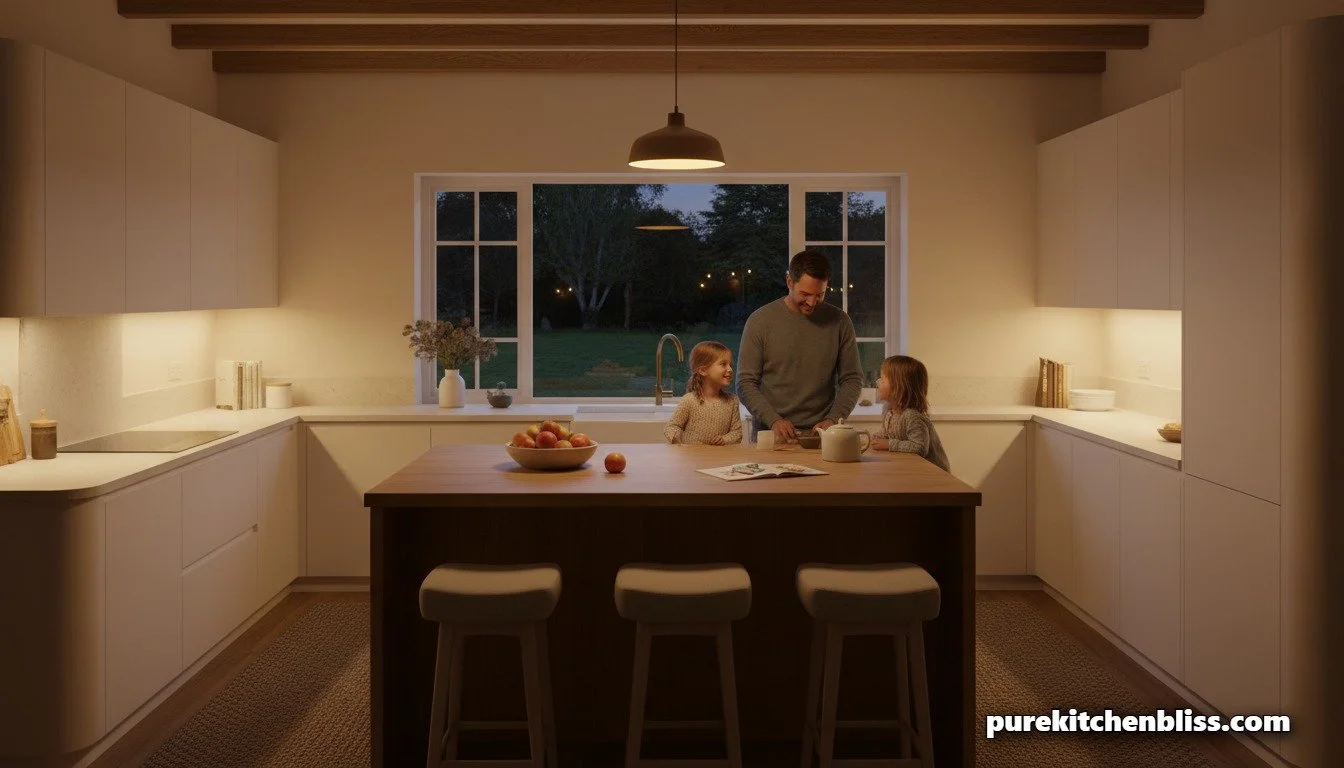
Goodbye Stark White: Why "Cloud Dancer" Porcelain is the Ultimate 2026 Base ☁️
If you’ve walked through any newly built custom homes over the last few years, you’ve probably noticed a common theme: blinding, hospital-grade stark white. From the cabinets to the subway tile, the industry got obsessed with a sterile, hyper-bleached look.
But as a carpenter, a shop owner, and a dad of four kids, I’ve always found stark white to be a major design trap. In a busy household, clinical white doesn't feel like a home—it feels like a pressure cooker. It highlights every stray fingerprint, bounces harsh overhead lighting into your eyes, and feels cold the moment the sun goes down.
Thankfully, the design world is executing a massive U-turn. Pantone officially declared PANTONE 11-4201 Cloud Dancer as the 2026 Color of the Year. It is a soft, lofty, billowy off-white that completely replaces the clinical tones of the past decade. If you are ready to transition your space into a genuine, warm kitchen sanctuary, here is why Cloud Dancer porcelain and cabinetry are the ultimate foundation for a 2026 renovation.
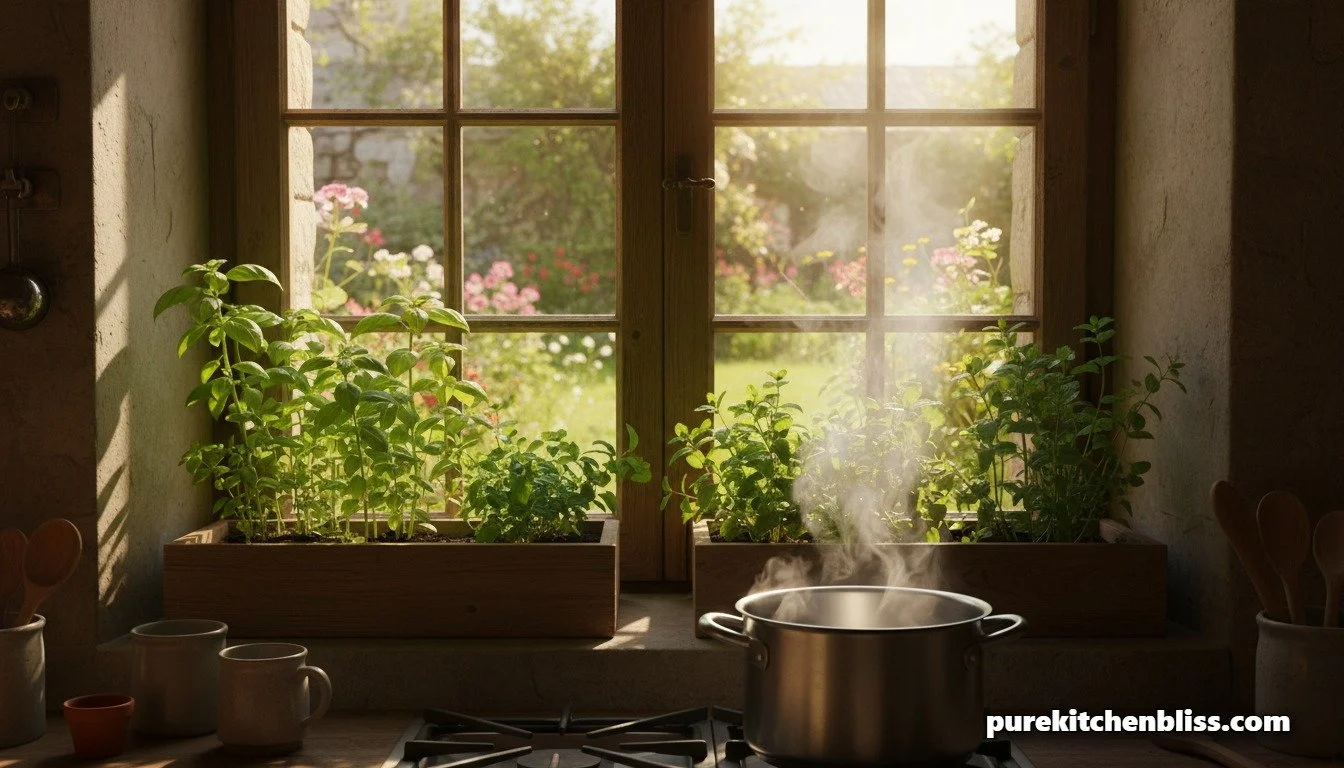
Beyond Cooking Smells: Why Your Kitchen Needs Integrated Scent Infrastructure 🍋🌿
We’ve spent the last few articles perfecting the way your kitchen looks, works, and even how it sounds. But there is one sense that hits us the moment we walk through the door, and usually, it’s an afterthought: Smell.
In a house with four kids and a busy cooking schedule, the "scent profile" of a kitchen is usually a battle between last night’s garlic and this morning’s trash. In 2026, we’re moving beyond just "venting" smells out; we’re using Aromatic Zoning to curate the vibe of the room.
As a coffee shop owner, I’ve used scent for years to make customers feel energized in the morning and cozy in the afternoon. Bringing that "Shop Logic" into your home is the secret to a true multi-sensory kitchen sanctuary. Here is how to build a kitchen that smells as good as it looks.
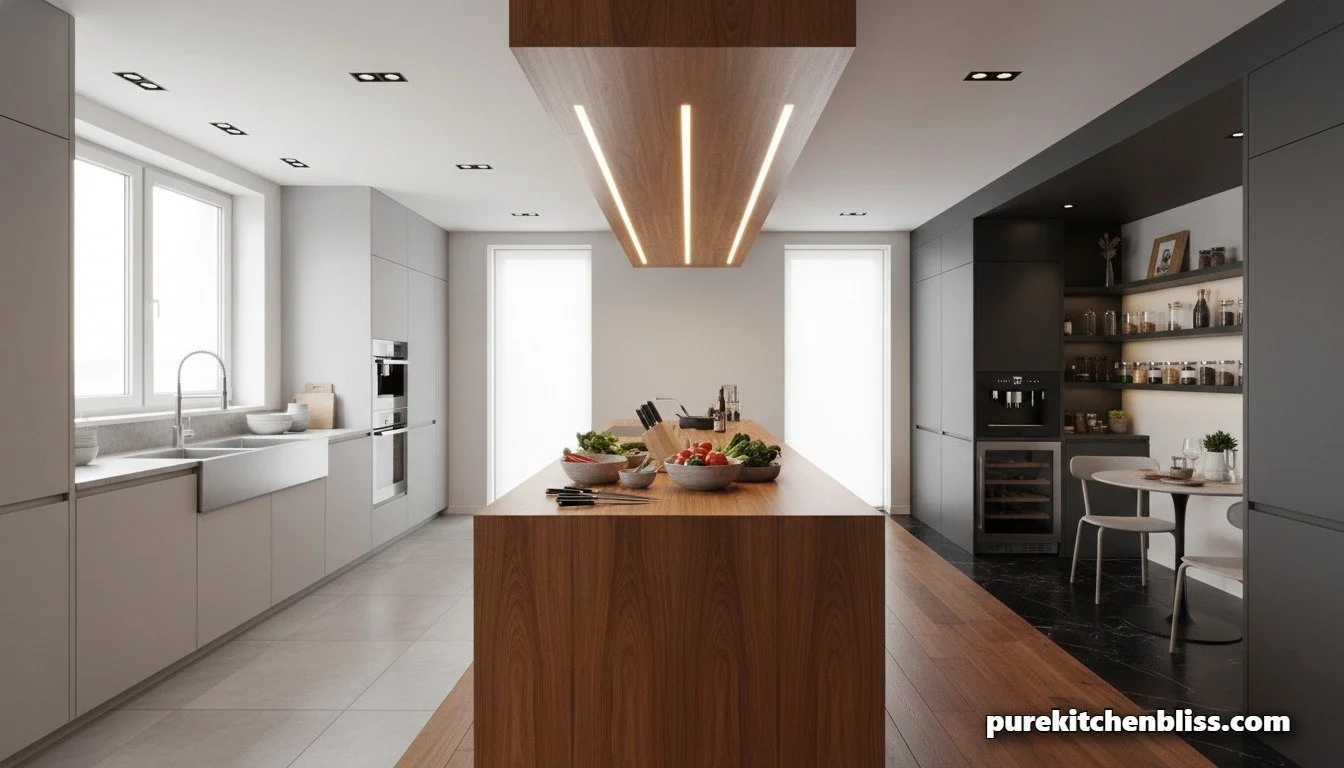
Beyond the Work Triangle: Why "Ergonomic Zoning" is the Secret to a 20-Year Kitchen 🛠️🚶♂️
If you’ve ever looked up kitchen design, you’ve heard of the "Work Triangle." It’s been the holy grail of kitchen layouts since the 1940s. But here’s the truth from a builder’s perspective: the triangle was designed for one person cooking a simple meal in a small, closed-off room.
In 2026, our kitchens are high-traffic hubs. We have four kids running around, two people prepping dinner at once, and a scullery handling the heavy lifting. The triangle just doesn't cut it anymore. It creates bottlenecks and doesn't account for the fact that our bodies change over 20 years.
To build a true Kitchen Sanctuary, we need to move toward Ergonomic Zoning. This is how I design kitchens that aren't just beautiful on day one, but stay comfortable as the kids grow up and we get a little slower.
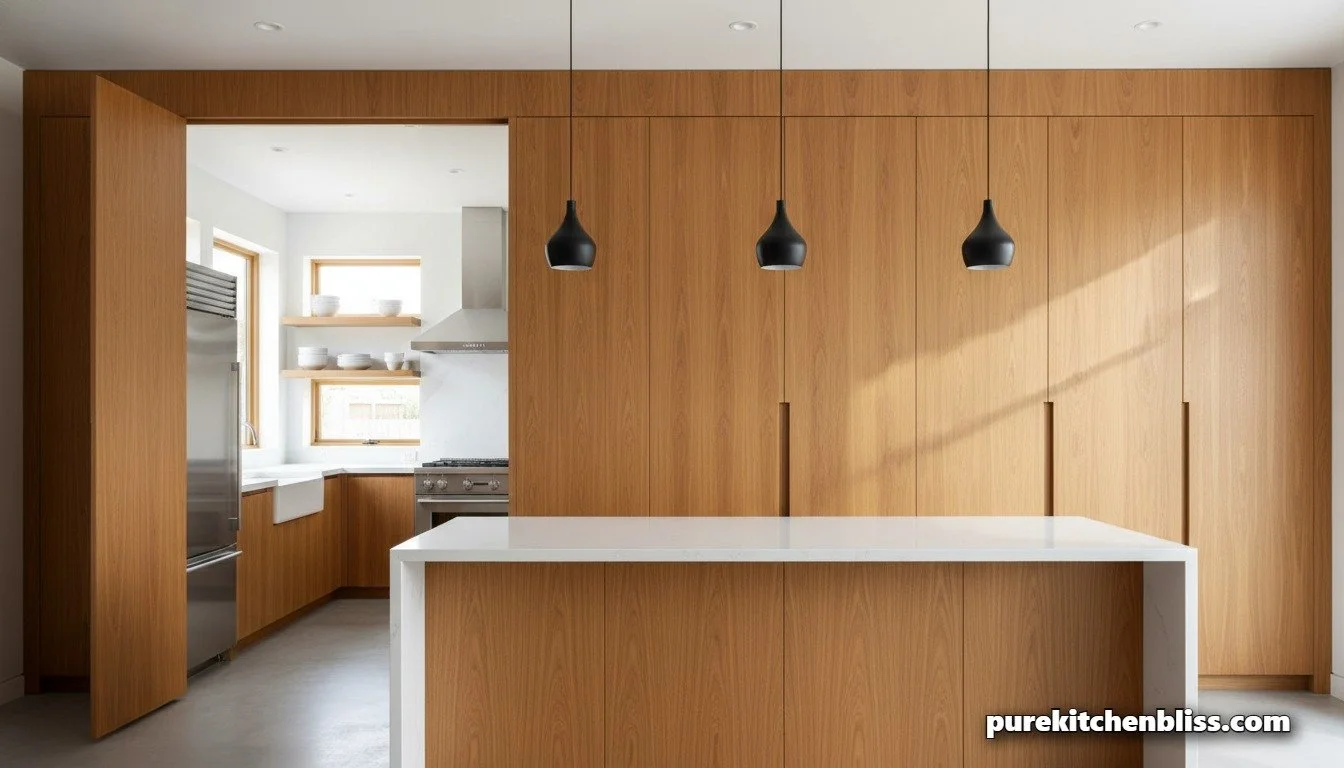
The Rise of the "Scullery": Why 2026 is Moving the Mess Behind a Secret Door 🚪
If you’ve been following our journey to build the ultimate Kitchen Sanctuary, you know we’ve spent a lot of time perfecting the "Show Kitchen", that beautiful, butter-yellowspace where the family gathers. But as a builder and a dad of four, I have to let you in on a professional secret: a pristine kitchen isn't just about good habits. It’s about Infrastructure.
In 2026, the biggest trend for high-end renovations isn't a new material; it’s a secondary space known as the Scullery (or "Dirty Kitchen"). It’s a walk-in, fully-equipped room hidden behind a secret cabinet door where the real heavy lifting happens. By moving the mixers, the steaming pots, and the stacks of dirty dishes out of sight, your main kitchen remains a calm, social stage. Here is how to design a "Second Kitchen" that works as hard as a professional shop.
Why I’ll Never Install "Standard" Granite Again: The 2026 Alternative Surfaces ✨🪵
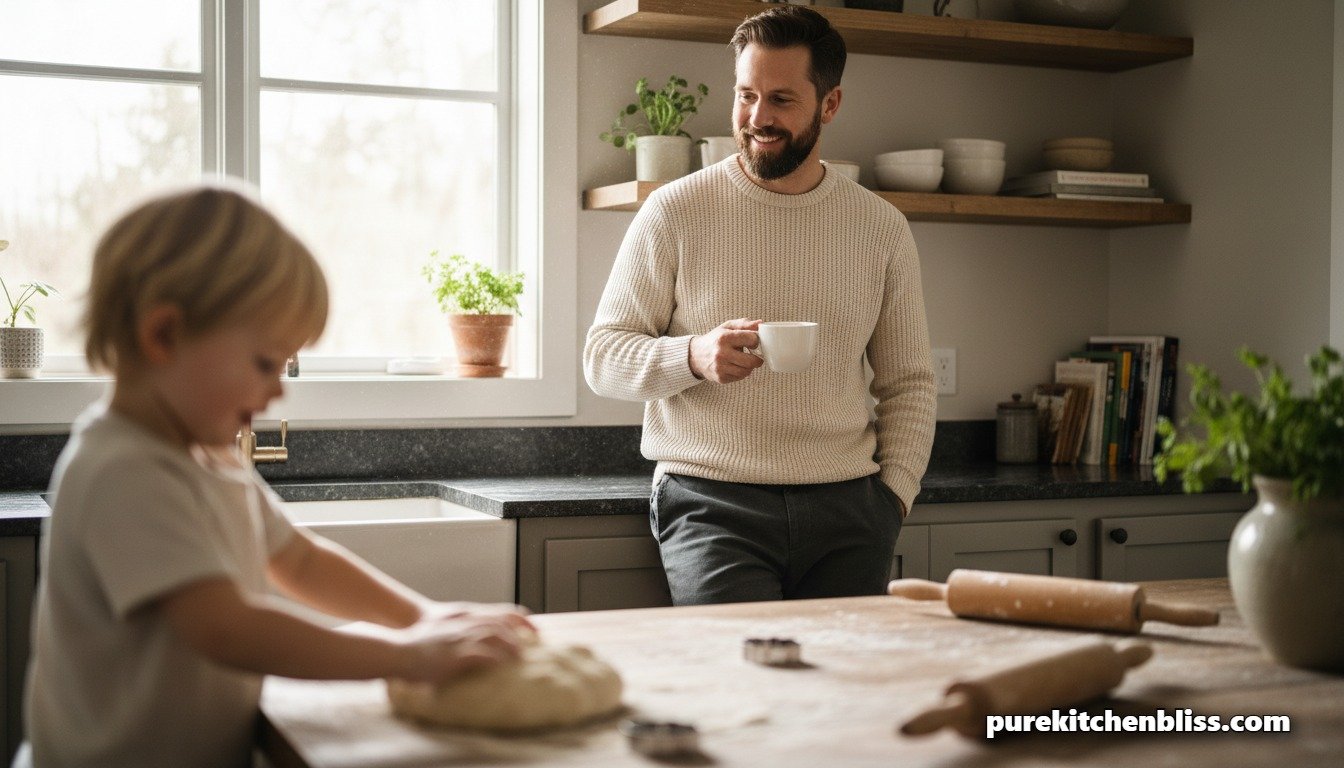
I’ve spent the last twenty years behind the scenes of a coffee shop and on the front lines of home builds, and I’ve seen thousands of "perfect" granite and quartz slabs go into kitchens. They look incredible on day one, shiny, sterile, and cold. But in a house with four kids and a constant stream of morning coffee rushes, "perfect" is usually the first thing to break.
As a builder, I’ve grown tired of materials that fight against the life lived on top of them. We’ve been told that durability means a surface that never changes, but I’ve realized that the true "gold standard" for a kitchen sanctuary isn't a slab that stays frozen in time, it’s a material that evolves with you.
In my home and my shop, I’ve officially retired the big-box stone look. I’m moving toward "Living Surfaces": materials like soapstone, pewter, and end-grain wood that don't just "handle" high traffic, they get better because of it. If you’re ready to move past the flipper-grade aesthetic and build a kitchen with actual soul, here are the three surfaces I’m swearing by in 2026.
Sunshine in the Kitchen: Why "Butter Tones" are Replacing Gray! ☀️
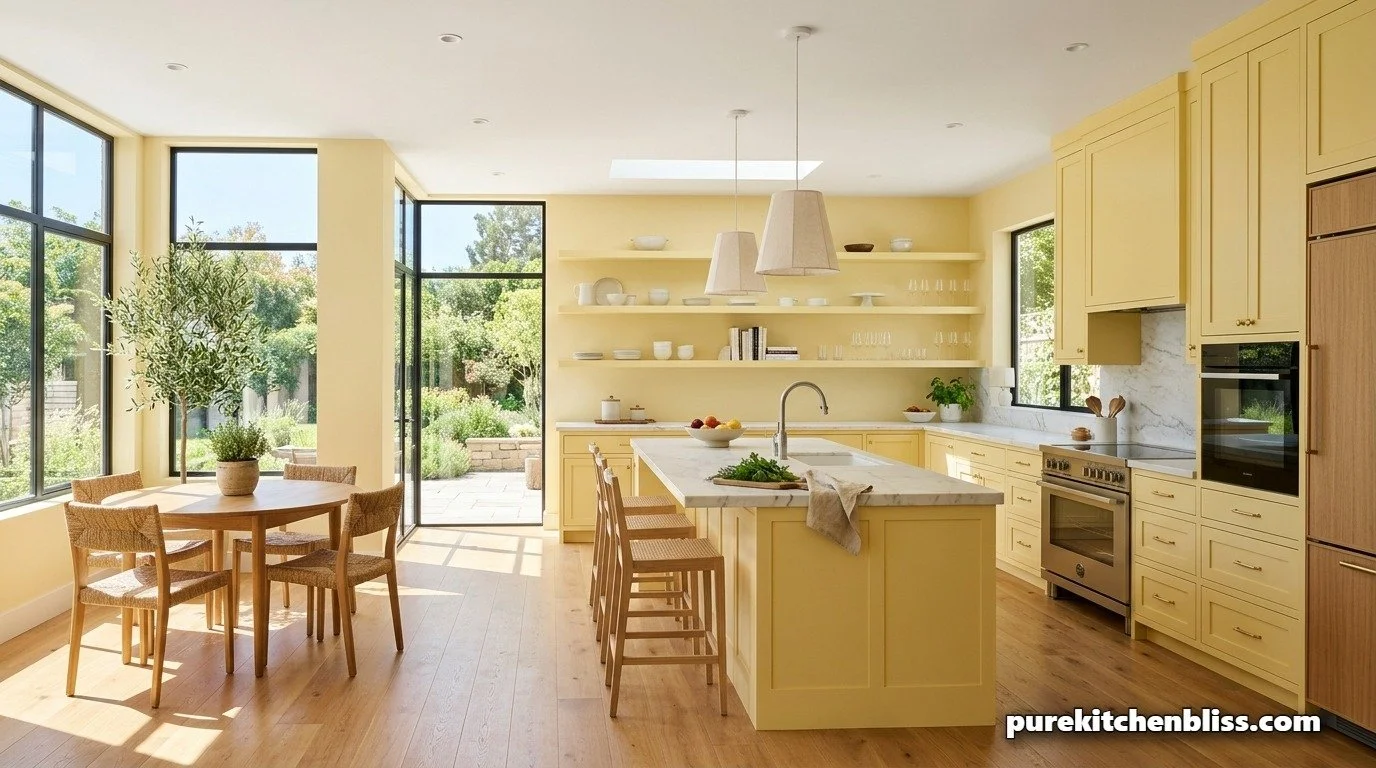
If you’ve walked into a kitchen showroom lately, you might have noticed a massive "vibe shift." For the last decade, we’ve been living in a world of "Millennial Gray"—everything was sleek, cold, and, honestly, a bit sterile. But it’s 2026, and we are officially craving warmth.
As a dad with four kids, I want my kitchen to feel like a happy place to start the day, not a science lab. That’s why I am absolutely obsessed with the new "Butter Yellow" trend. It’s not the bright, "school bus" yellow from the 70s; it’s a soft, sun-washed cream that makes the whole room feel like it’s glowing, even on a rainy Monday. Here is why this "sunshine in a can" is the ultimate choice for your kitchen sanctuary!
3 Updates for Your 90's Countertops: High-Impact DIYs for 2026!
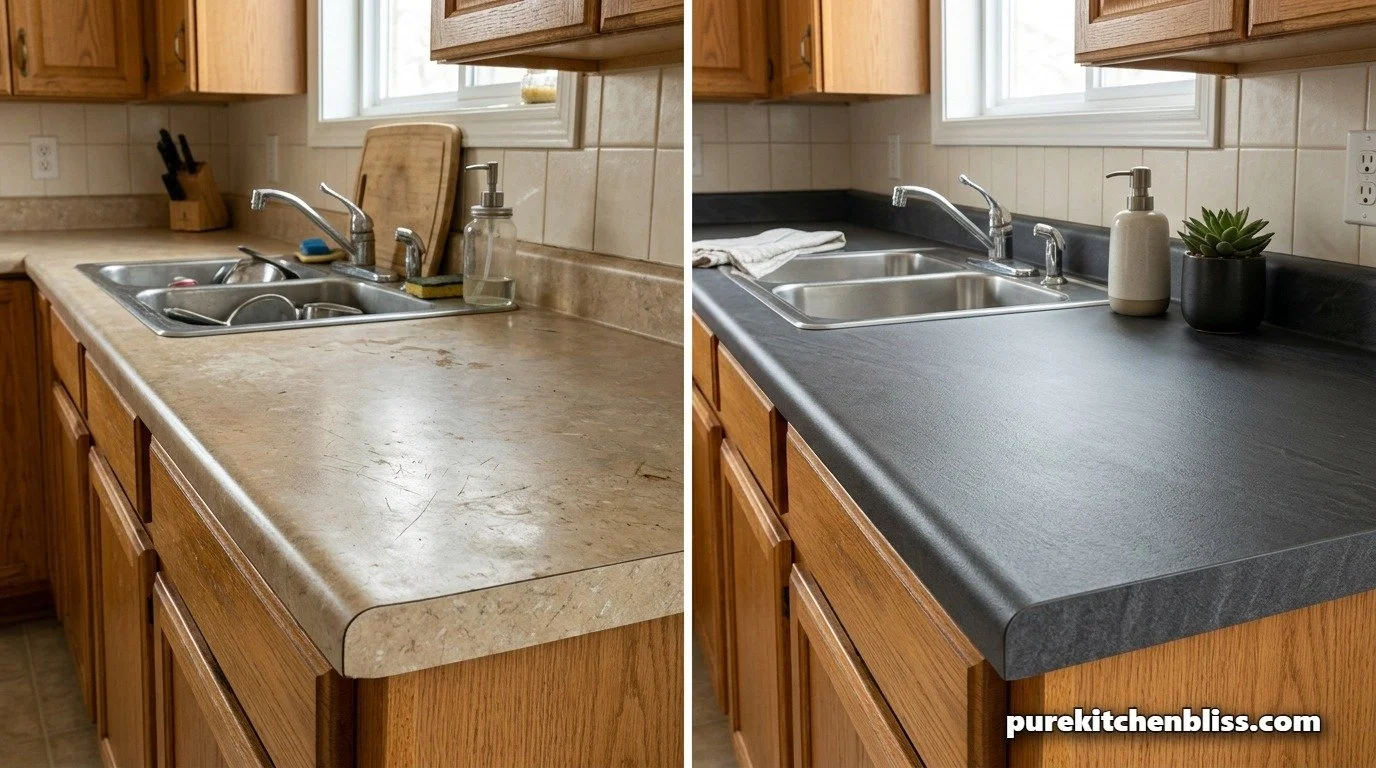
If you’re living with a kitchen that’s stuck in the 90s, I know exactly what you’re looking at: that classic "speckled" laminate or, even worse, the forest green or dusty rose counters that were everywhere back then. 🤢
Replacing countertops can cost thousands and turn your kitchen sanctuary into a construction zone for weeks. But it’s 2026, and the DIY world has leveled up! You don’t need a sledgehammer to get a modern look. Whether you want a sleek stone finish or a cozy wood vibe, here are 3 ways to "resurface" your 90's counters and bring them into the current era!
Bye-Bye All-White: Why "Earthy Neutrals" Are the New Sanctuary Look! 🌿
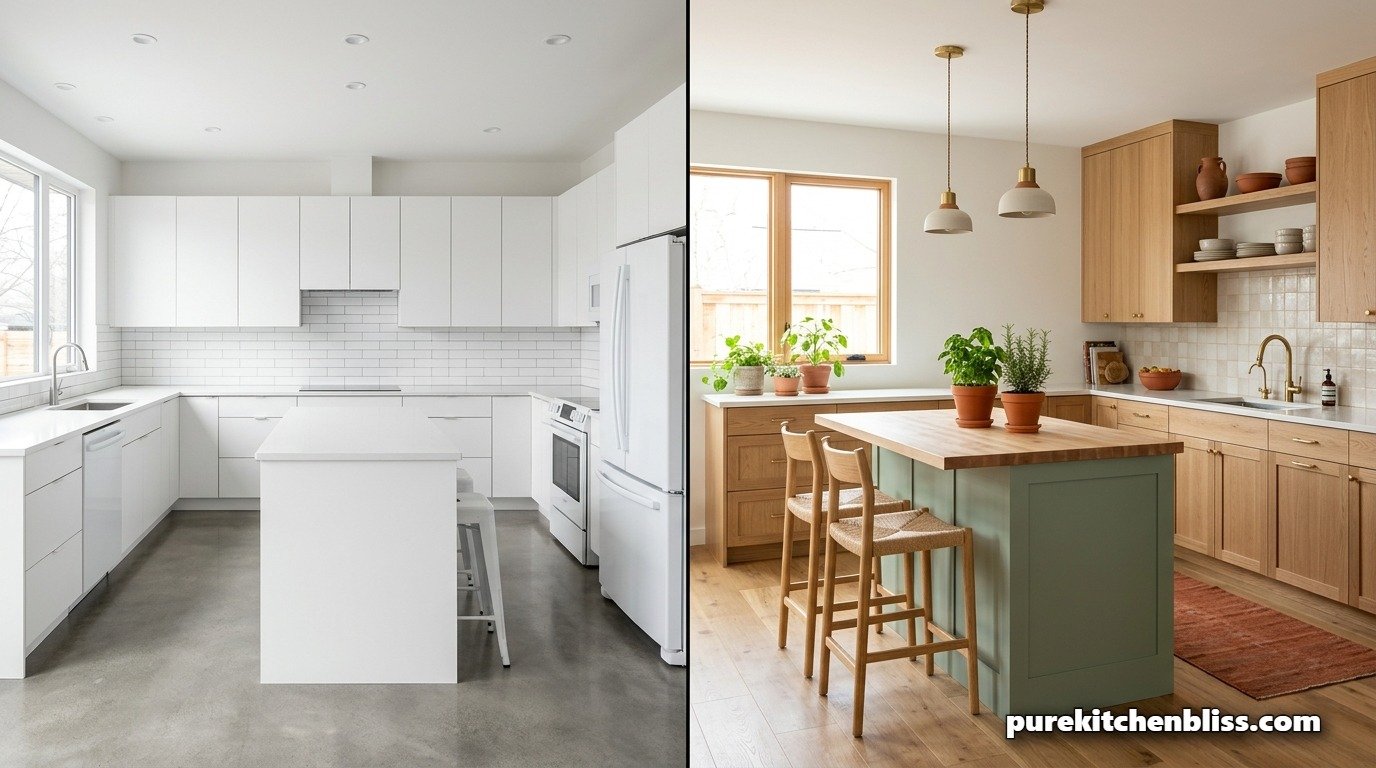
If you’ve been scrolling through Pinterest lately, you’ve probably noticed something huge: the "all-white" kitchen is officially taking a backseat. 🚗💨 Don’t get me wrong, I love a clean look, but for a busy family of six, an all-white kitchen feels like living in a museum where you’re constantly cleaning up fingerprints and spills.
In 2026, it’s all about Earthy Neutrals. We’re talking warm oaks, "Evergreen Mist" cabinets, and creamy beiges that make your kitchen feel like a cozy Sanctuary. As a dad, I’m obsessed because these tones actually hide the chaos of a real home while looking incredibly high-end. Here’s why you need to bring some "earth" into your design!
Why I’m Breaking the "Golden Triangle" Rule (And You Should Too!) 📐✨
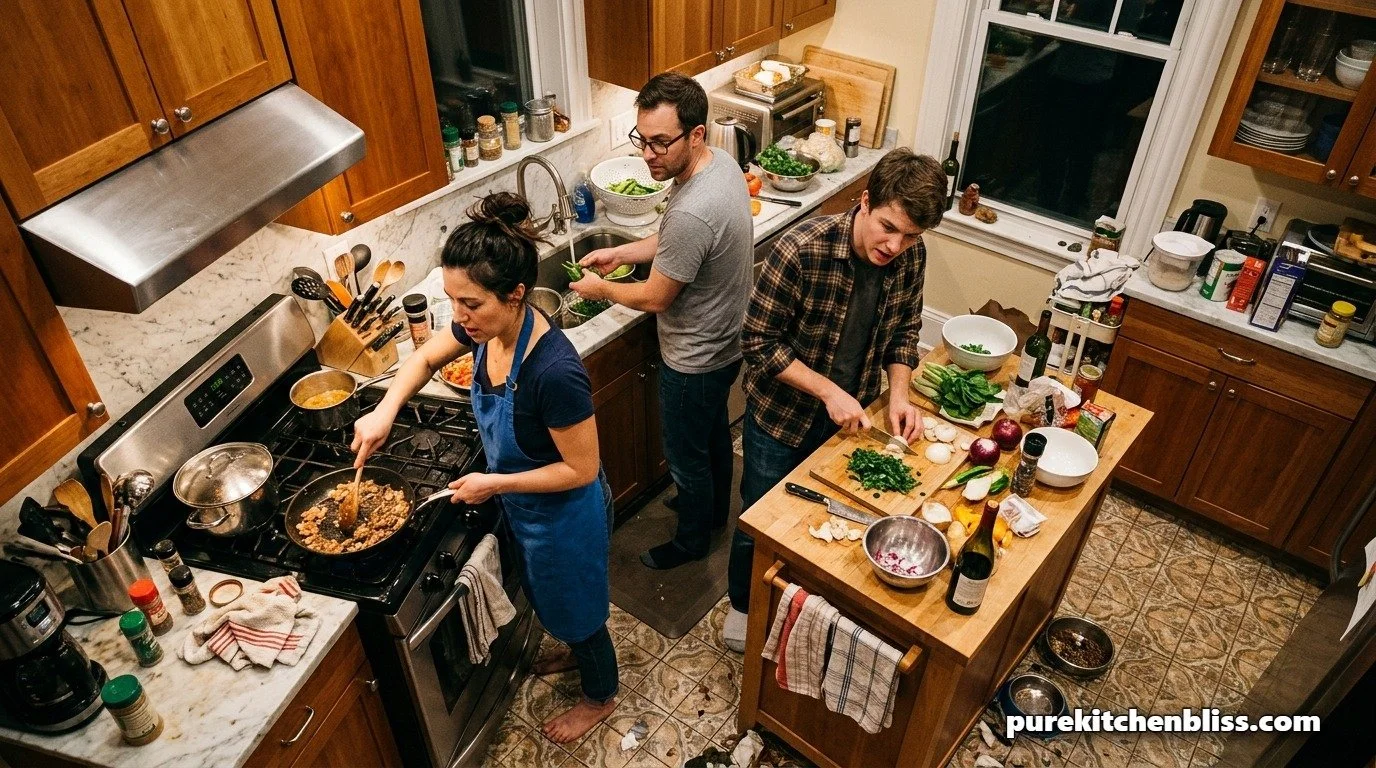
If you’ve ever looked into kitchen design, you’ve heard of the "Golden Triangle", the idea that your sink, fridge, and stove should form a perfect trio. 🔺 But let’s be real: that rule was invented in the 1940s! As a father of four and a builder, I can tell you that a "triangle" doesn't work when you have two kids hunting for juice, you wife prepping coffee, and dinner on the stove all at once. 😱
It’s time to stop designing for 1945 and start designing for your kitchen sanctuary. I’m obsessed with Zone Design. It’s the high-efficiency secret I use in my workshop and my coffee shop to keep people from tripping over each other. Here is why "Zoning" is the ultimate upgrade for your kitchen’s fabric.
The Death of Subway Tile: Why Full-Height Slabs are the 2026 Standard
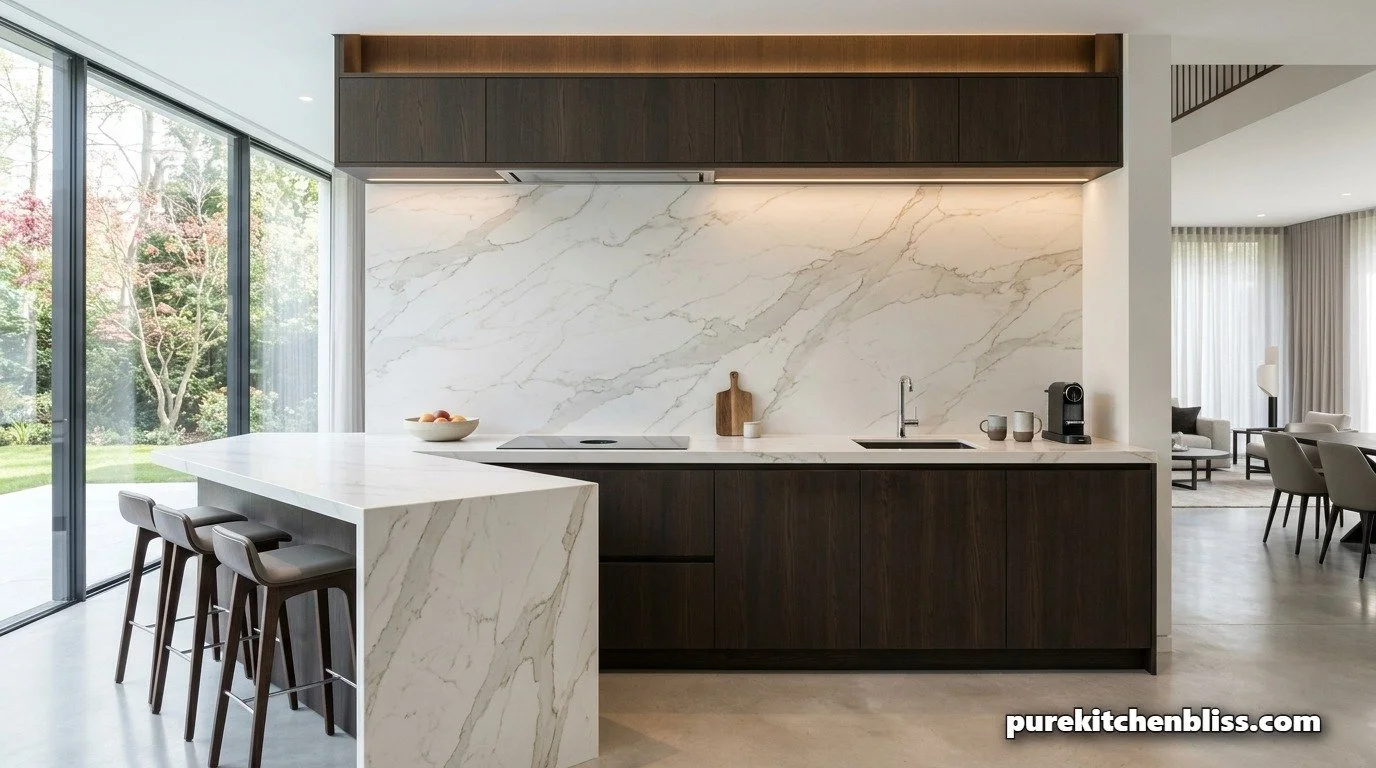
For the last two decades, white subway tile was the "safe" default, the builder-grade block of the vertical world. But as we move into 2026, the demand for a home sanctuaryhas made the "busy" look of tile grids obsolete. The new architectural standard is the Full-Height Monolithic Slab.
This shift isn't just about "Quiet Luxury" aesthetics. It is a fundamental change in how we view kitchen hygiene. Traditional tile backsplashes rely on grout, a porous, cement-based material that acts as a magnet for vaporized cooking oils and bacteria. By extending your countertop material vertically to the cabinets (or the ceiling), you create a seamless, non-porous shield that is technically superior to any tiled surface.
Leathered Countertops: The Engineering of the 2026 Tactile Kitchen
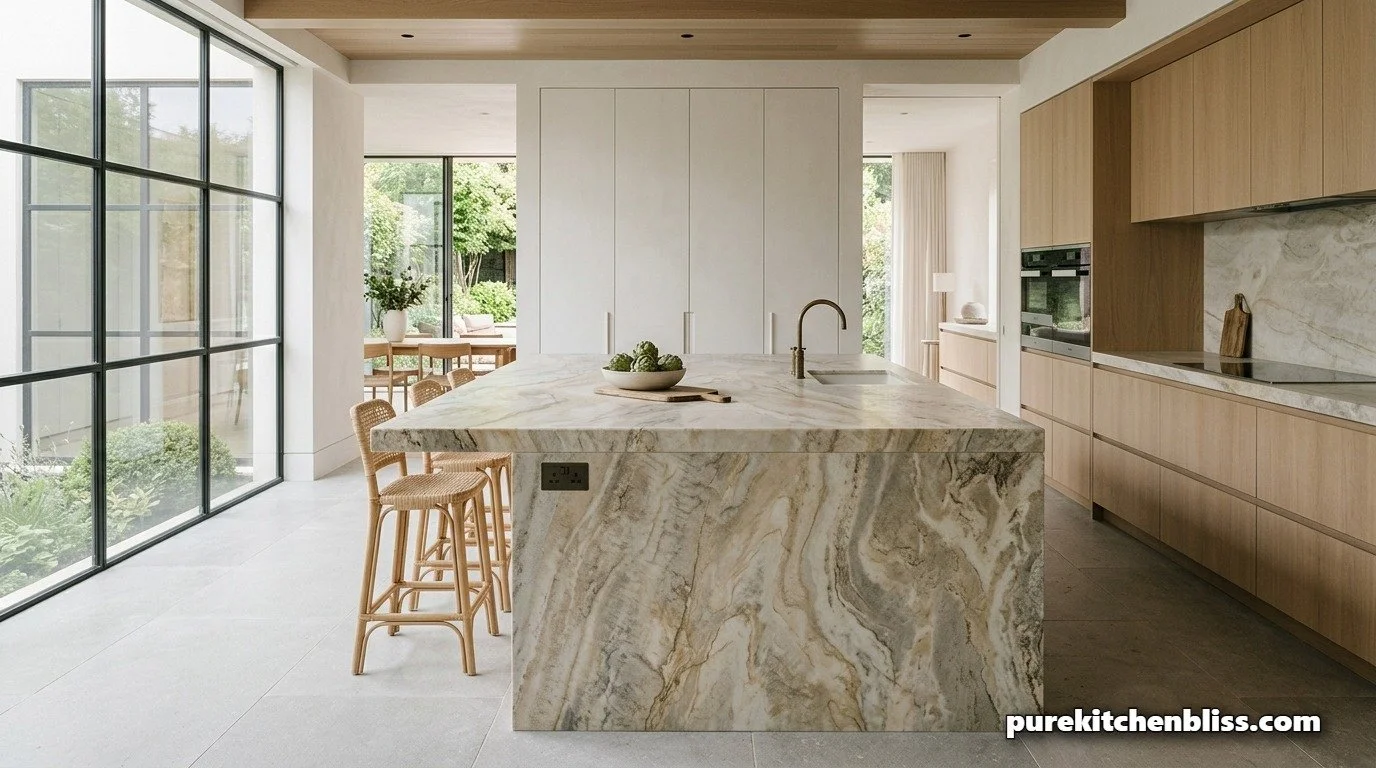
For the last decade, the high-gloss, mirrored finish was the undisputed king of the kitchen. But as we move toward the Disappearing Kitchen, the demand for "Quiet Luxury" has shifted the focus from reflection to texture. Enter the Leathered Finish.
Unlike a polished surface that hides the stone’s character behind a glass-like sheen, or a honed finish that can look flat and "chalky," a leathered finish is a mechanical evolution of the stone itself. It is achieved by running diamond-tipped brushes over the slab, whisking away the softer minerals and leaving the harder ones behind. The result is a surface that mimics the feel of fine leather, warm, organic, and technically superior for a home sanctuary.
The Disappearing Kitchen: Why Integrated Appliances Are the New Standard
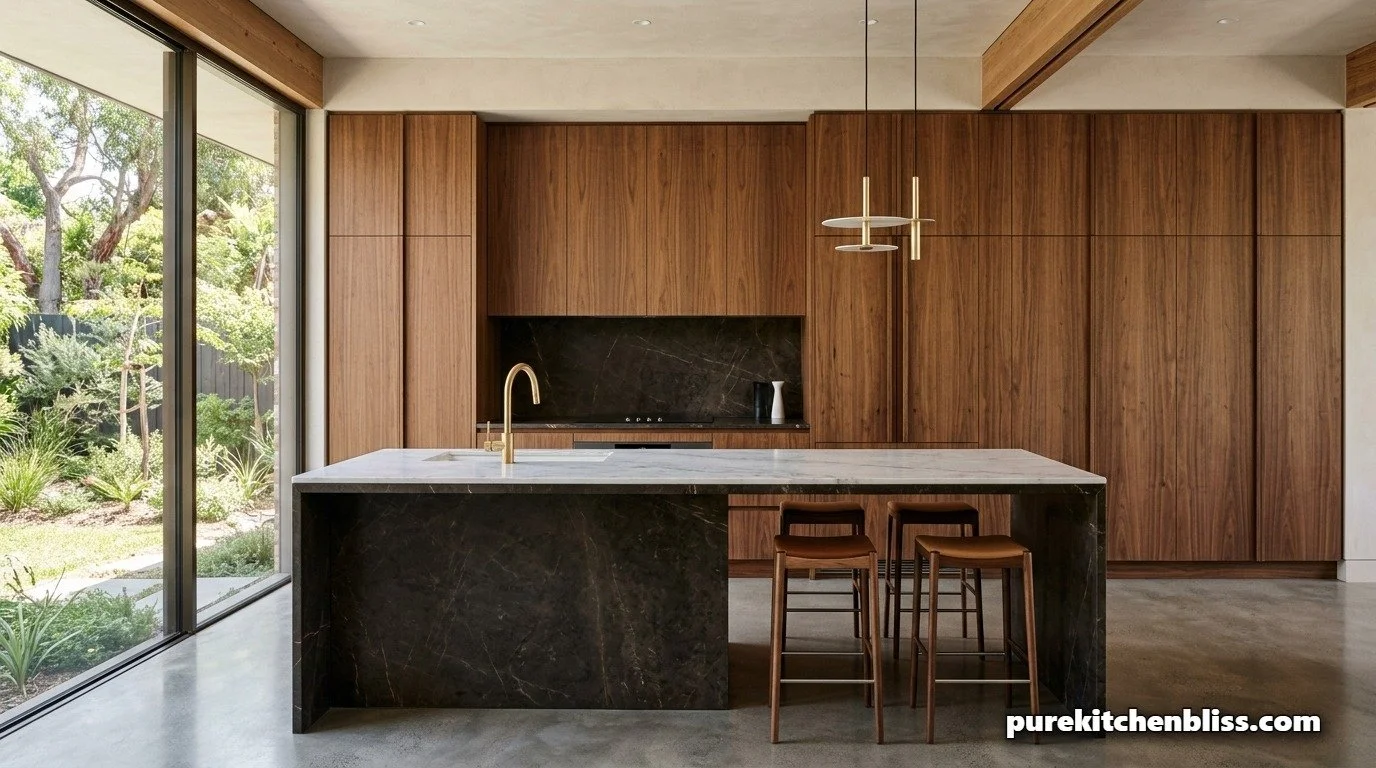
For decades, the "Status Kitchen" was defined by the gleam of oversized stainless steel appliances. A massive, industrial-looking refrigerator was the centerpiece of the room. But as we move into May 2026, the trend has flipped entirely. The goal of a high-performance kitchen sanctuary is now invisibility.
Welcome to the era of the Disappearing Kitchen.
This isn't just about aesthetics; it’s about Infrastructure Cohesion. By utilizing panel-ready appliances and "Appliance Garages," we are removing the visual "noise" of the kitchen, allowing the cabinetry and the sintered stone surfaces to take center stage. The kitchen no longer looks like a laboratory; it looks like a curated extension of the home’s living space.
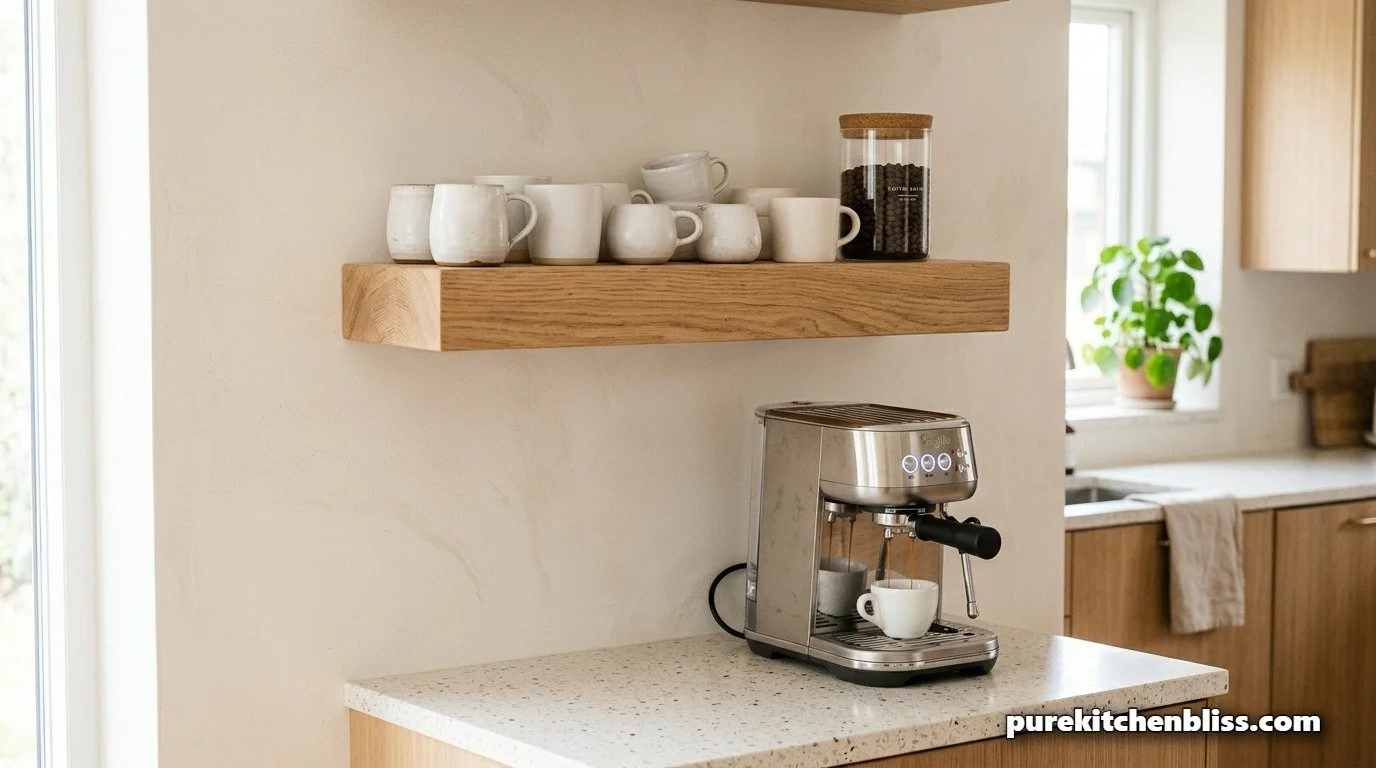
The Dedicated Coffee Niche: 2026’s Most Essential Kitchen Infrastructure
In the legacy kitchen layout, the coffee maker was an afterthought, a bulky appliance competing for space on the main counter, usually tucked under a cabinet where steam could eventually damage the wood finish. But in 2026, we are seeing a definitive shift toward the Dedicated Coffee Niche.
This isn't just a "decor trend"; it is a response to the "Morning Traffic Jam." By creating a secondary zone for coffee, you separate the beverage ritual from the meal-prep infrastructure. Whether it’s a recessed alcove, a hidden "appliance garage," or a plumbed-in espresso station, the coffee nook is the new heart of the high-performance kitchen.
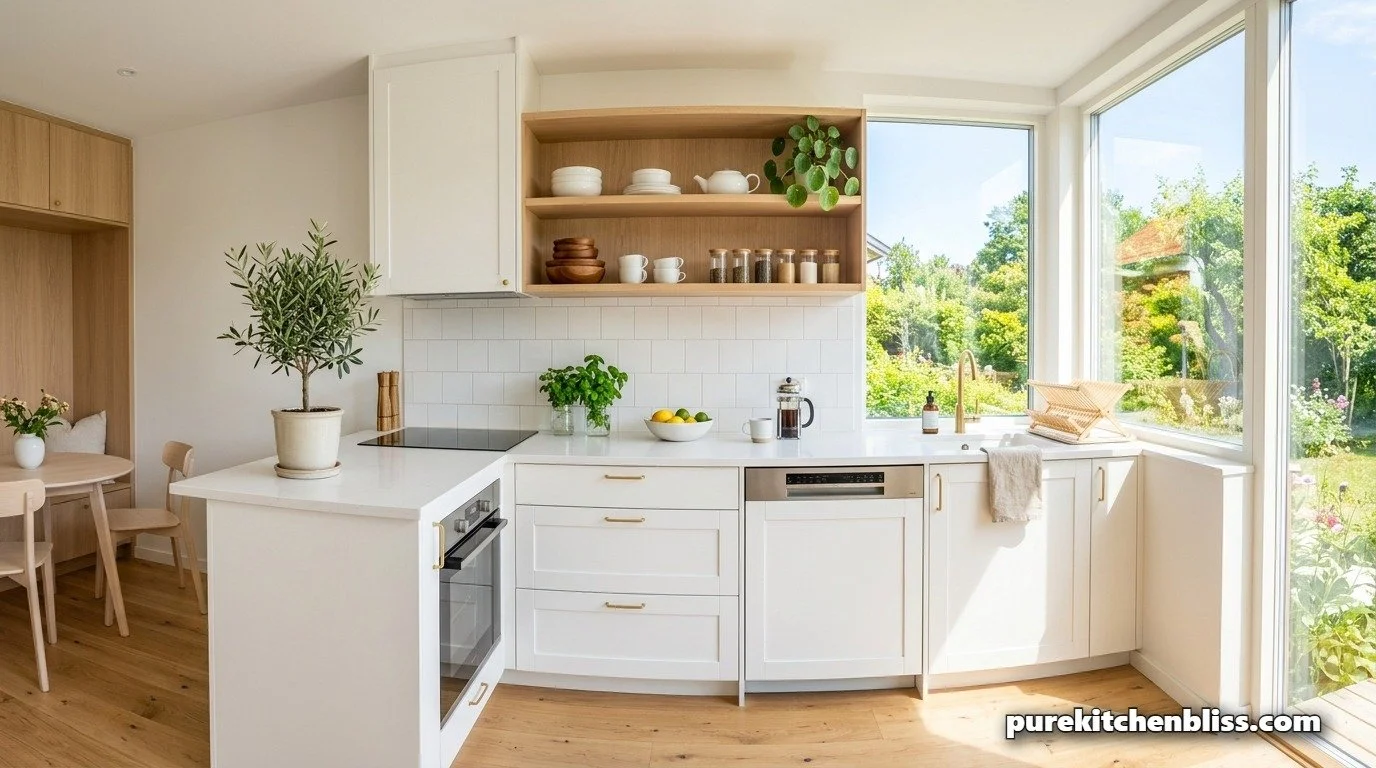
8 Small Kitchen Summer Decor Ideas: A Functional Design Guide
In a compact kitchen, "decor" can quickly become "clutter" if it doesn't serve a secondary purpose. During the summer months, the goal of your interior styling should be two-fold: maximizing the natural light reflecting off your sintered stone and maintaining a sense of "visual coolness" in a high-heat environment.
To upgrade your space for 2026, we are moving away from purely ornamental "trinkets" and focusing on functional aesthetics. Here are 8 small kitchen summer decor ideas that optimize your infrastructure while embracing the season.
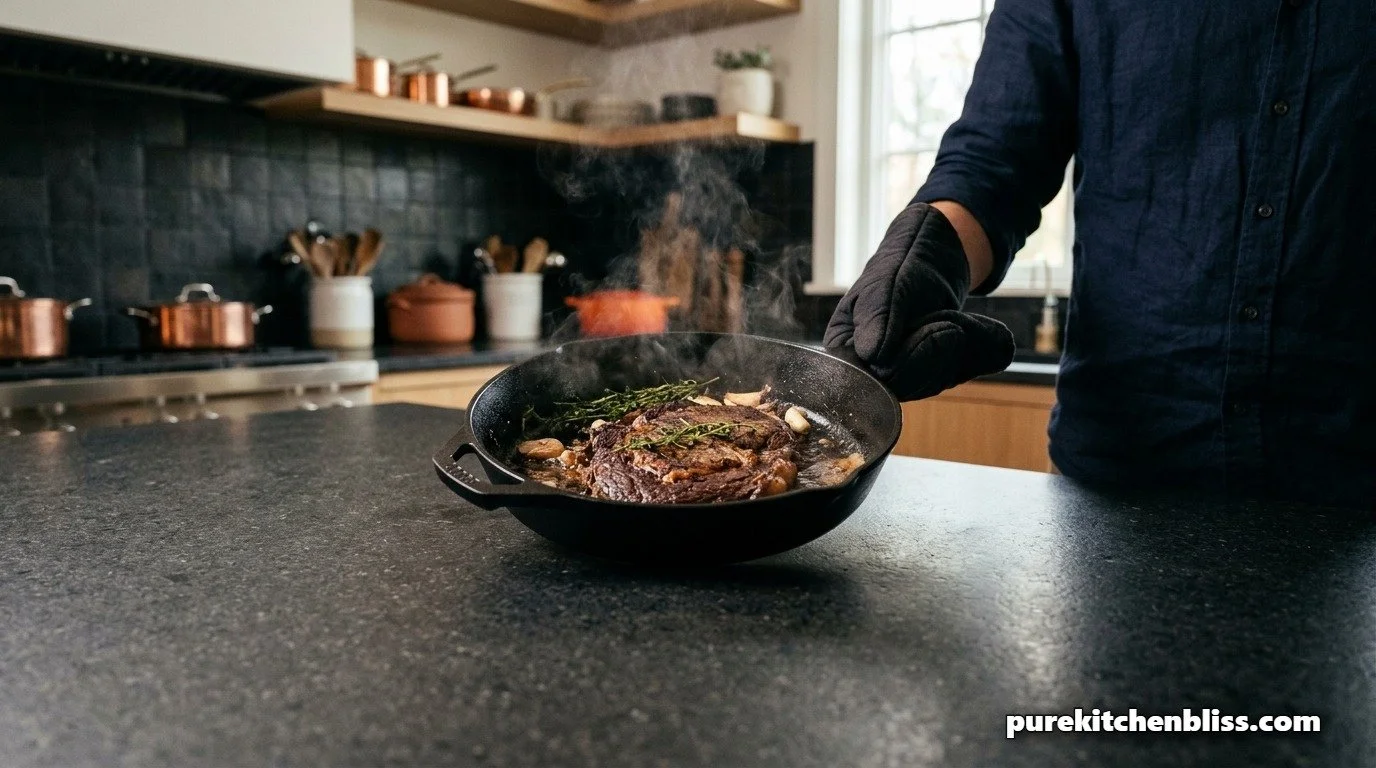
Sintered Stone vs. Porcelain: The Battle of Ultra-Compact Surfaces
In the current landscape of kitchen design, the demand for surfaces that can withstand professional-grade use without the maintenance of natural stone has led to the rise of "ultra-compact" materials. Two names dominate this category: Sintered Stone and Porcelain. To the casual observer, they appear identical—thin, large-format slabs with hyper-realistic veining. However, from a structural and fabrication perspective, the differences are significant.
Choosing between these two isn't just about aesthetics; it’s about the underlying infrastructure of your kitchen. Whether you are planning for an invisible induction system or a heavy-duty prep zone, understanding the mineral composition and the firing process of these slabs is essential for a long-lasting installation.
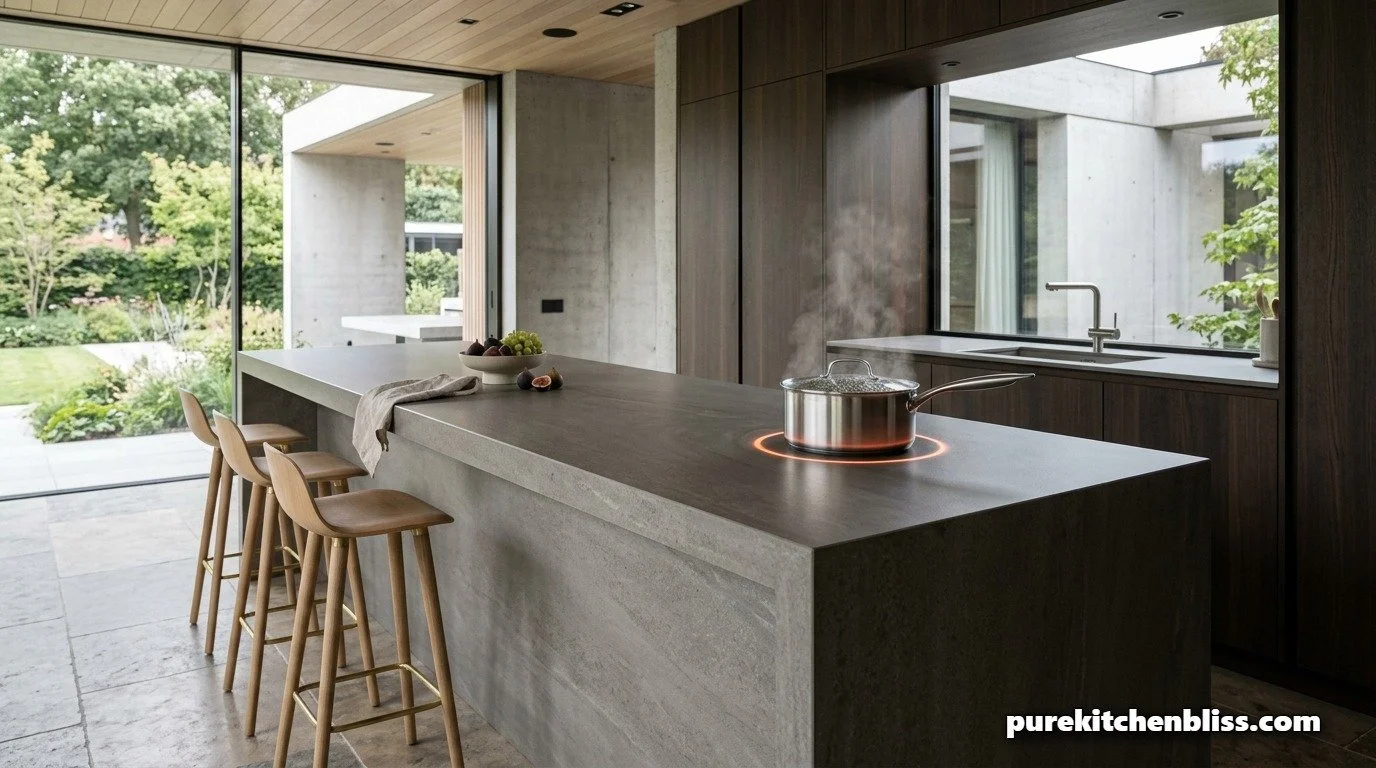
The Rise of Invisible Induction: Cooking Under Stone Surfaces
In the evolution of the high-performance sanctuary, the ultimate goal has always been the seamless integration of technology and aesthetics. For years, the sleek glass surface of a standard induction cooktop was considered the peak of minimalism. However, in 2026, the "Builder" community has pushed the boundaries further with Invisible Induction, a system where the cooking elements are mounted entirely beneath the countertop slab.
This technology allows your kitchen island to function as a seamless piece of stone for prep, dining, and entertaining, only revealing its culinary capabilities when a magnetic pan is placed on the surface. But "Invisible Induction" is not a simple plug-and-play upgrade; it is a complex intersection of physics, material science, and precision fabrication. To implement this infrastructure, one must understand how magnetic fields interact with stone and the thermal management required to prevent slab failure.
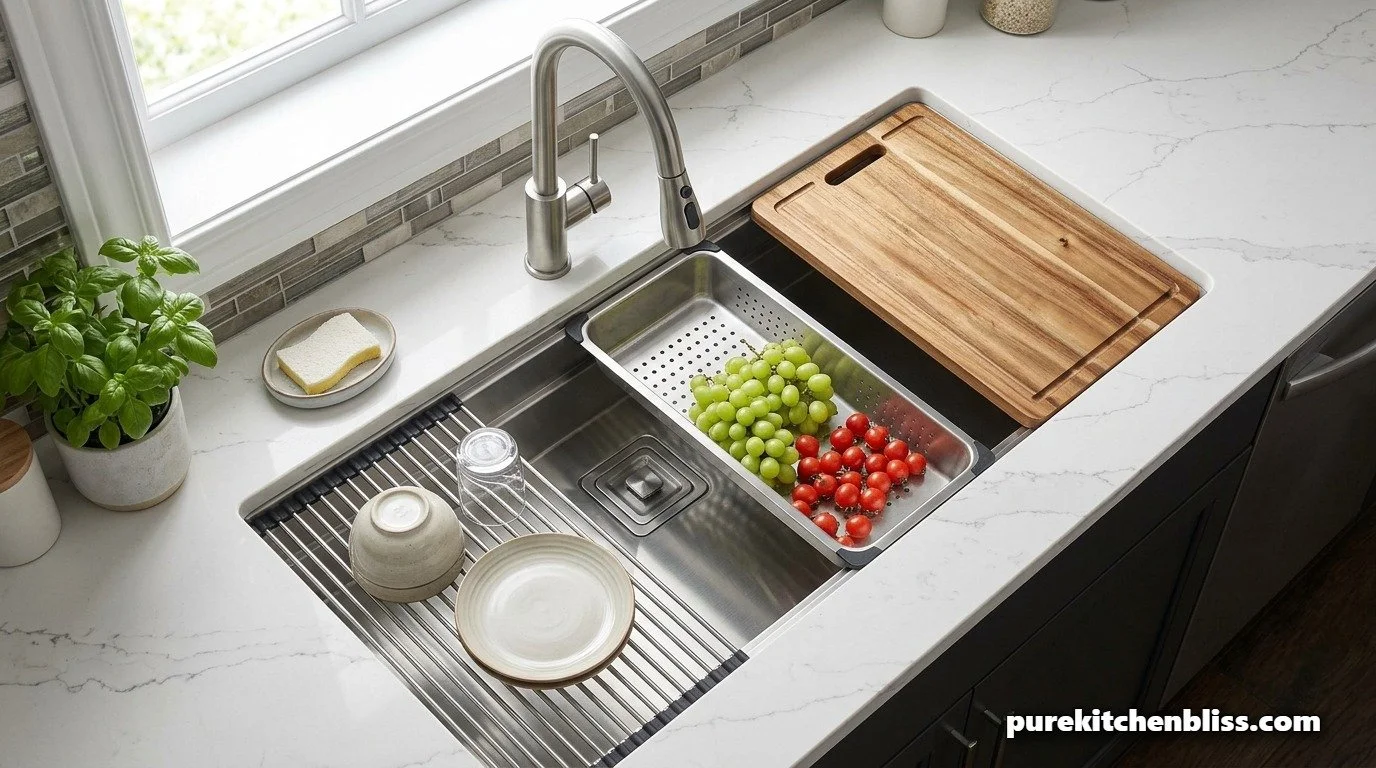
The Anatomy of a Workstation Sink: More Than Just a Basin
For decades, the kitchen sink was a static object—a simple basin designed to hold water and dirty dishes. However, as we shift toward high-performance sanctuaries, the sink has undergone a radical architectural evolution. It is no longer just a plumbing fixture; it is a specialized piece of "Active Infrastructure" known as the Workstation Sink.
By utilizing a system of integrated interior ledges, the workstation sink transforms the "Cleaning Zone" into a multi-level prep area. This allows you to chop, strain, and wash within the footprint of the sink itself, keeping your countertops dry and clear of debris. To choose the right one, you must understand the mechanical tiers that define a professional-grade station.
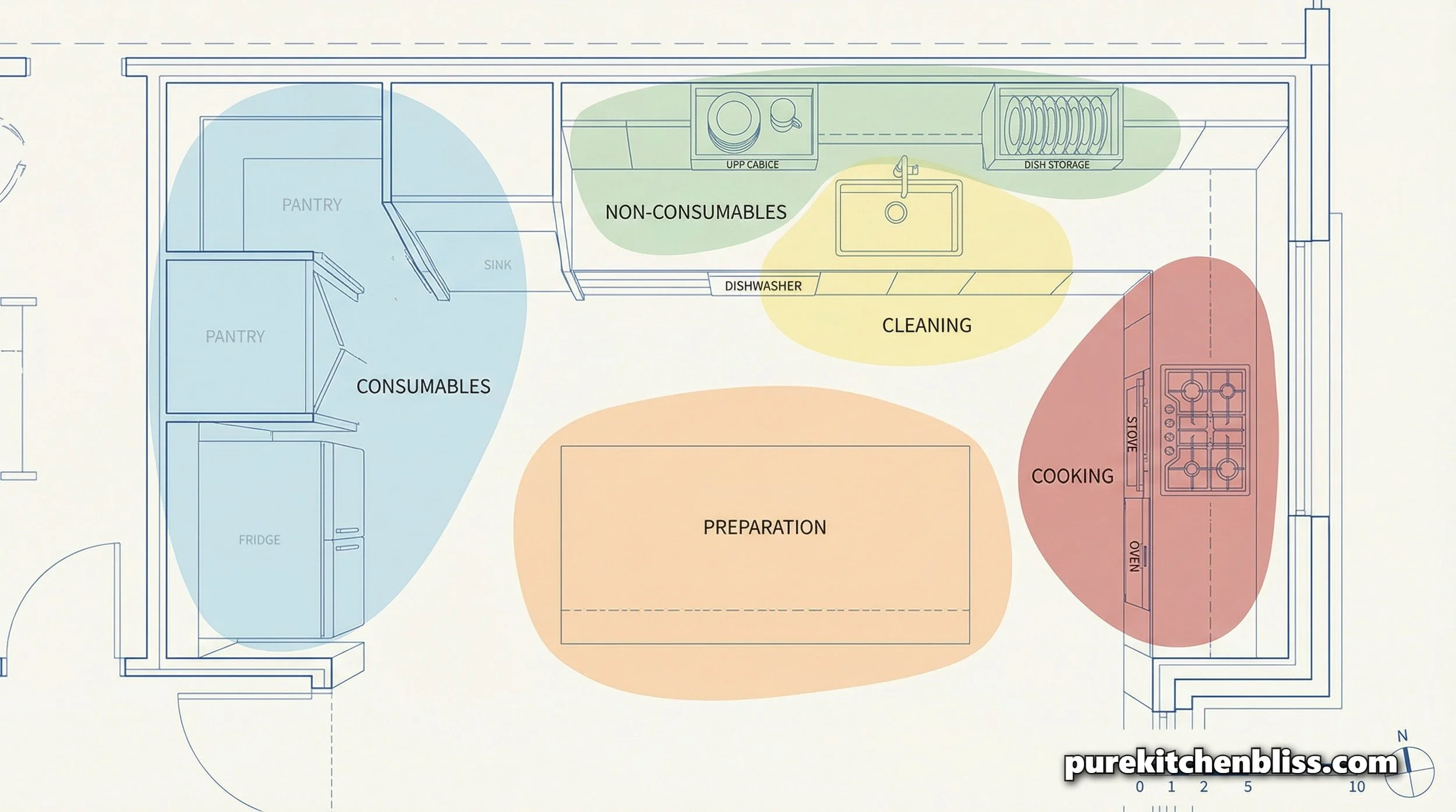
Designing the 5 Culinary Zones: Beyond the Kitchen Triangle
For decades, the "Kitchen Triangle" was the gold standard of kitchen design. The idea was simple: minimize the steps between the sink, the refrigerator, and the stove. However, as our kitchens have evolved into high-performance sanctuaries, the triangle has collapsed under the weight of modern appliances, specialty coffee stations, and multi-cook households.
In 2026, professional designers utilize Zone-Based Infrastructure. By dividing the kitchen into five distinct functional areas, you eliminate the "traffic jams" that occur when one person is trying to chop vegetables while another is trying to unload the dishwasher. Whether you have a massive island or a compact galley, these zones dictate the success of your culinary workflow.
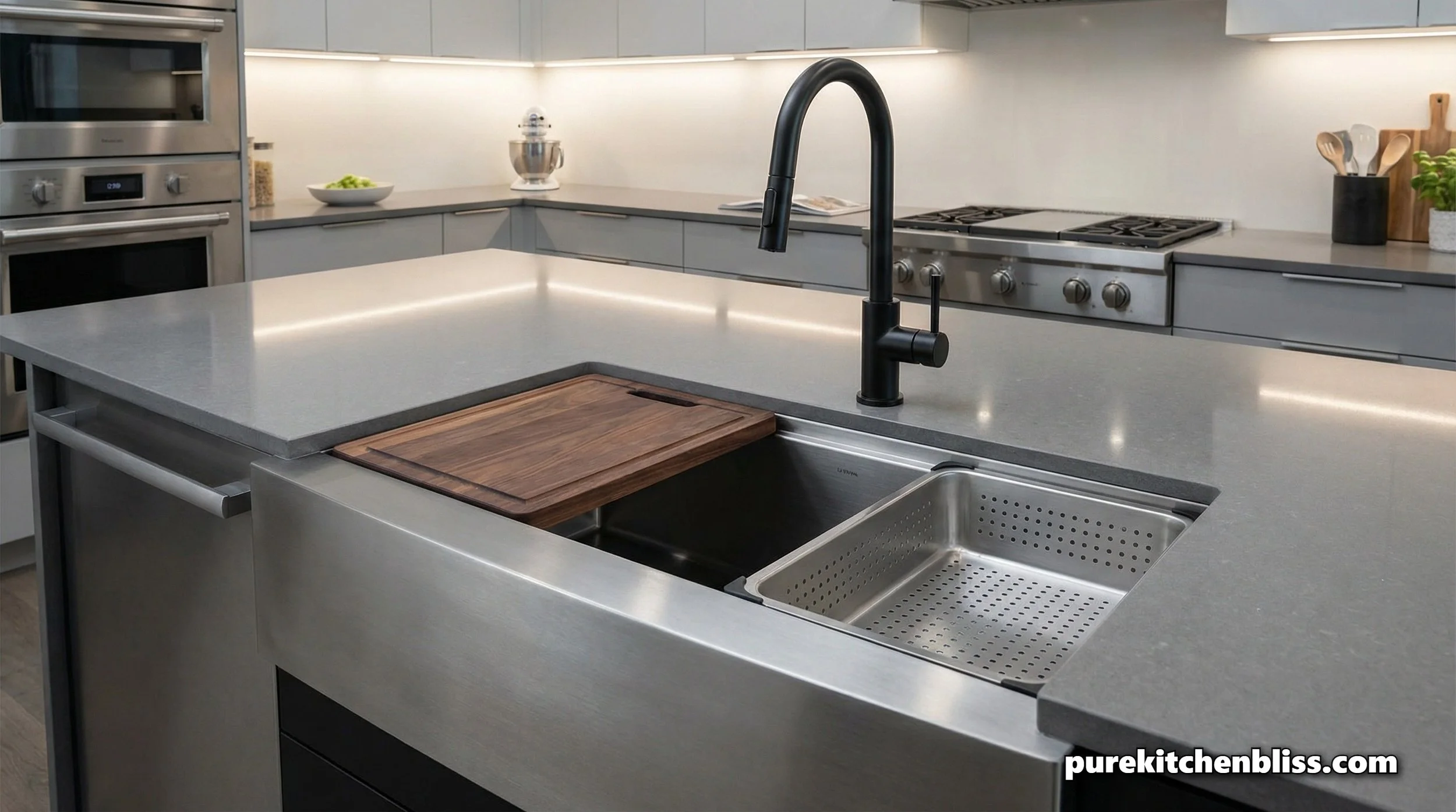
The Anatomy of a High-Performance Kitchen Sink
In the high-performance sanctuary, the kitchen sink has undergone a radical transformation. It is no longer just a "basin for dishes"; it has evolved into a multi-functional "Workstation." In 2026, we view the sink as the primary engine of the kitchen's prep and cleanup infrastructure. If your sink is poorly designed, your entire culinary workflow suffers.
When choosing a sink, you are making a decision that affects your ergonomics, your cleaning time, and the longevity of your surrounding . To build a professional-grade kitchen, you must understand the five key anatomical features of a high-performance sink.
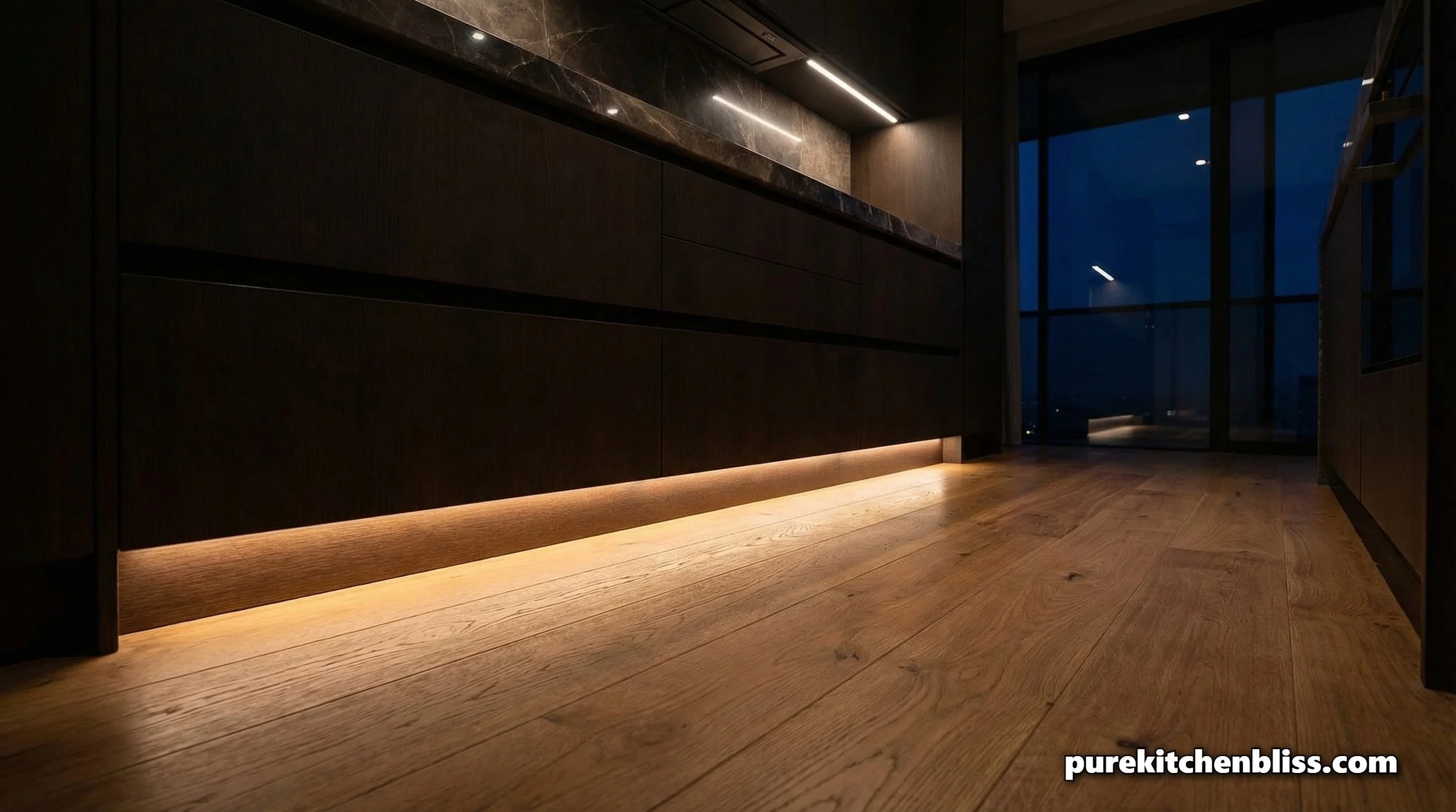
The 3 Layers of Modern Kitchen Lighting
In the evolution of the high-performance sanctuary, lighting has moved from a functional afterthought to a primary architectural element. In 2026, we no longer rely on a single row of recessed "pot lights" to do all the work. That "Operating Room" aesthetic is dead; in its place is a sophisticated, layered approach that mimics the lighting design of a high-end art gallery or a luxury spa.
Lighting is the "Invisible Infrastructure" of your kitchen. It dictates your mood, your safety during prep work, and even how the colors of your gold hardware or dark countertops appear to the eye. To achieve a professional result, you must design in three distinct layers: Task, Ambient, and Accent.