In most home-improvement guides, the kitchen island is discussed in terms of cabinetry and countertops. But for the modern homeowner, the "island" is a multi-functional command center that requires more engineering than any other part of the house.
When you see a "National Average" cost of $4,000 to $6,000, you are seeing the price for a hollow box with a piece of granite on top. If you want an island that supports a workstation sink, an invisible induction cooktop, and a massive stone overhang, your budget needs to reflect the Invisible Infrastructure.
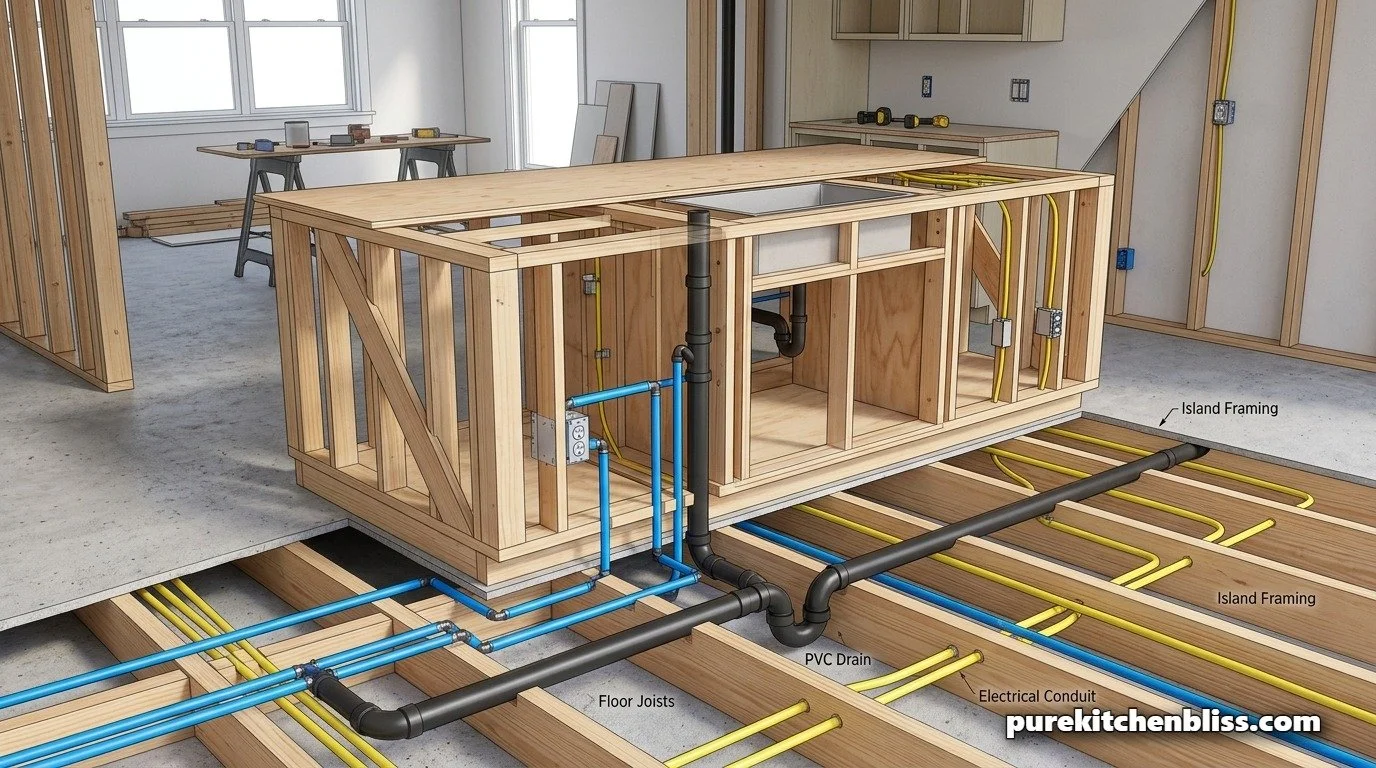
1. The "Below-Floor" Cost: Utility Routing
The moment you decide your island needs a sink or a dishwasher, your cost isn't just the price of the faucet, it's the price of the Slab Trenching.
The Plumbing Hurdle ($2,000 – $4,500): In a renovation, moving water and waste lines to the center of the room requires cutting into your subfloor (wood) or trenching through your foundation (concrete).
The Electrical Mandate ($800 – $1,500): Per the National Electric Code (NEC), any island larger than 24" x 12" must have a permanent electrical outlet. In 2026, we recommend Pop-up Outlets integrated into your sintered stone to maintain the "Disappearing Kitchen" aesthetic.
2. The Structural Load: Supporting the "Power Move"
A 3cm thick natural stone slab for a 4' x 8' island weighs approximately 800 to 1,000 lbs.
Subfloor Reinforcement ($500 – $1,200): If your kitchen is on a wood-joist system, you may need to "sister" the joists underneath the island location to prevent the floor from sagging over time.
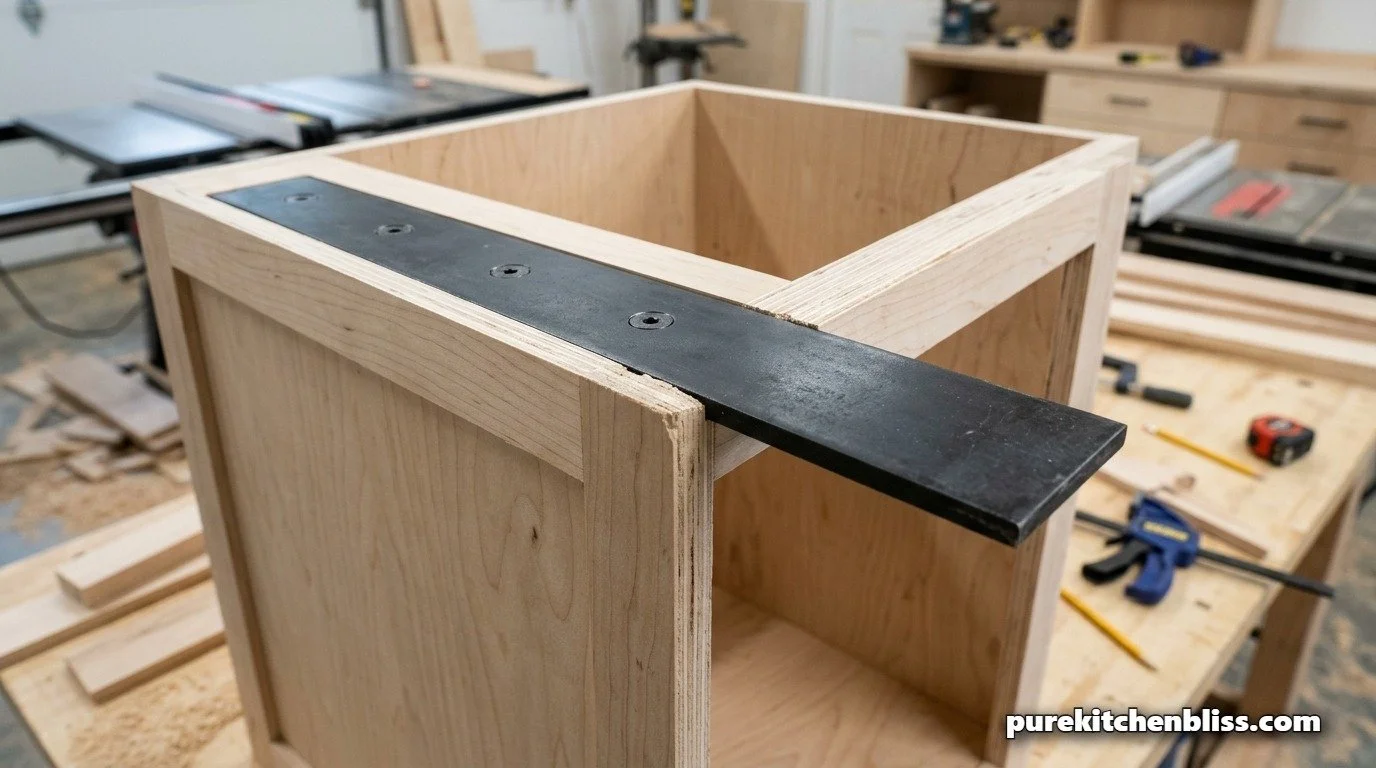
The Overhang Engineering ($400 – $900): If you want a 12" to 15" overhang for seating without visible legs (corbels), you must specify Hidden Steel Brackets. These are 1/4" thick steel plates that are routed into the top of the cabinet boxes before the stone is installed.
3. Material Selection: The "Slab vs. Seam" Financial Logic
The cost of your island is often dictated by the Slab Yield.
The Single-Slab Rule: Most high-end quartz and quartzite slabs are roughly 120" x 60". If your island design exceeds these dimensions by even one inch, you are forced to buy two full slabs.
Mitered Edges ($1,200 – $2,500 extra): To get the look of a 3-inch thick "chunky" island without the weight, fabricators use a mitered drop-edge. This is a labor-intensive process that doubles the fabrication cost of the stone.
4. Comparison: Prefab vs. Builder-Grade Custom
| Infrastructure Tier | The "Spruce" Average | The Builder-Grade Reality |
|---|---|---|
| Utilities | Not included ($0). | Plumbing + Electric ($3k - $6k). |
| Countertop | Laminate / Standard Granite. | Leathered Stone / Mitered Edge. |
| Total Cost | $4,500 | $12,000 – $25,000+ |
5. The "Disappearing" Island: Appliance Integration
In a disappearing kitchen, the island's cost increases due to Panel-Ready integration.
Integrated Dishwashers: Hiding a dishwasher in the island requires custom paneling that matches your cabinetry perfectly.
Under-Counter Refrigeration: Adding a wine fridge or a beverage drawer in the island adds to the electrical load and requires precise cabinet sizing.
Conclusion: Invest in the Framework Don't be fooled by "Average" costs. A kitchen island is a structural and mechanical project. By investing in the utility infrastructure and structural support early, you ensure that your island is more than just a table, it’s the highest-functioning piece of equipment in your home sanctuary.
Next Up: Learn how to protect your new island stone with our Guide to Leathered Countertops.