Why Your Dishwasher Smells Like Eggs: The Professional Reset
In a modern kitchen, the dishwasher is a silent workhorse, but it is also the most complex intersection of water, food waste, and heat in your home. When you start noticing a "sulfur" or "rotten egg" smell emanating from the machine, the standard advice is often to simply run a cycle with a bowl of vinegar.
The problem is that vinegar is a surface-level solution for a structural issue. If your dishwasher smells, the cause is almost always buried in the Invisible Infrastructure: the filter, the spray arms, or the stagnant water trapped in the drainage "high loop." To truly eliminate the odor and protect your non-toxic kids' dishes, you need to perform a mechanical reset of the system.
1. The Biofilm Crisis: Why Surface Cleaning Fails
The "rotten egg" smell is caused by Hydrogen Sulfide gas, a byproduct of bacteria breaking down organic matter in an anaerobic (oxygen-poor) environment.
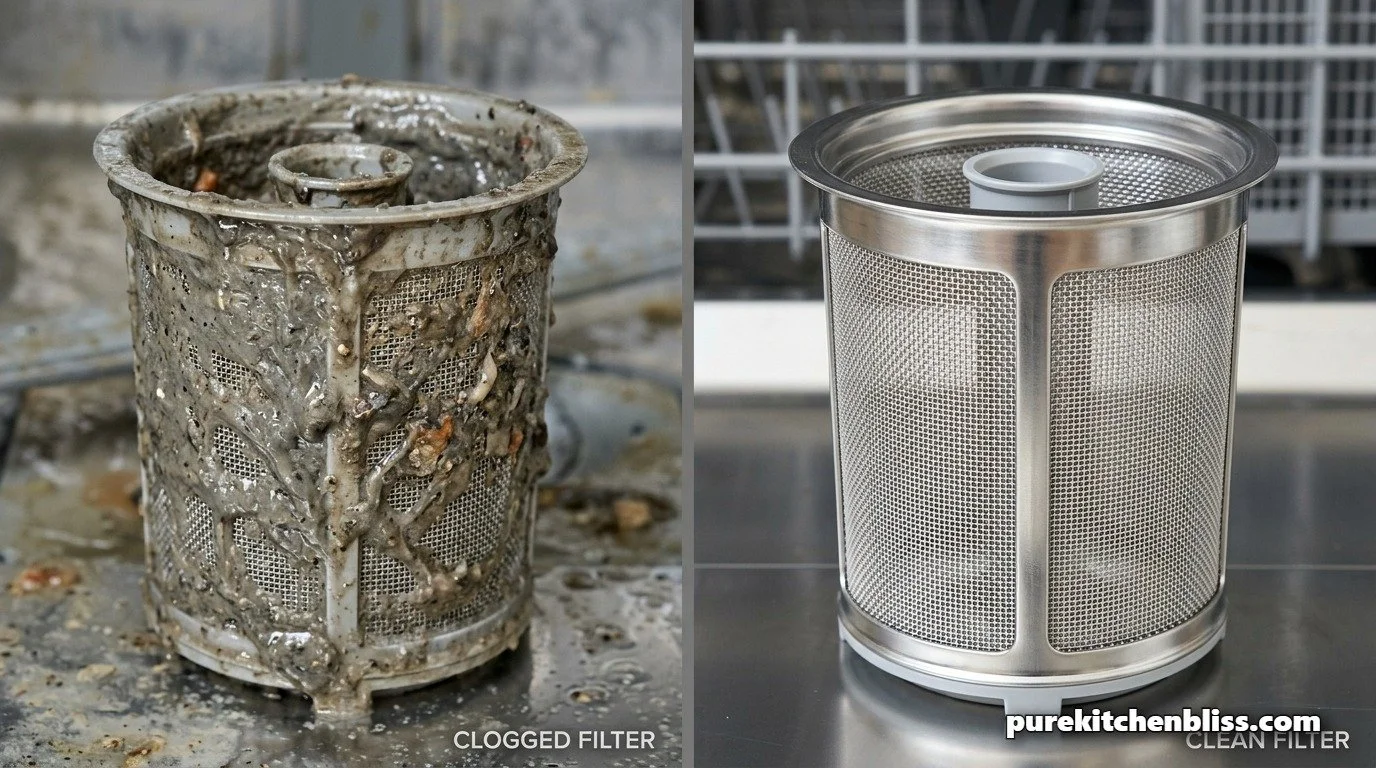
The Trap: Modern high-efficiency dishwashers use "Fine Mesh Filters" instead of grinders to save energy. These filters catch everything from protein residues to microscopic pasta starch.
The Slime: Over time, these particles combine with dish soap to form a thick, grey "biofilm" on the underside of the filter where you can't see it. A simple wash cycle won't reach this, it requires mechanical removal.
2. Phase 1: The Filter and Sump Reset
To restore the hygiene of your appliance, you must remove the hardware. You cannot clean a dishwasher effectively while it is fully assembled.
The Extraction: Rotate the cylindrical filter at the base of the machine and lift it out.
The Deep Clean: Take it to your workstation sink and use a soft brush with Castile soap. Scrub until the mesh is translucent again.
The Sump Audit: Reach into the housing where the filter sat. Often, small debris or a shard of broken glass can become lodged there, trapping food debris and creating an odor pocket. Clear this area manually.
3. Phase 2: The "High-Loop" and Air Gap Check
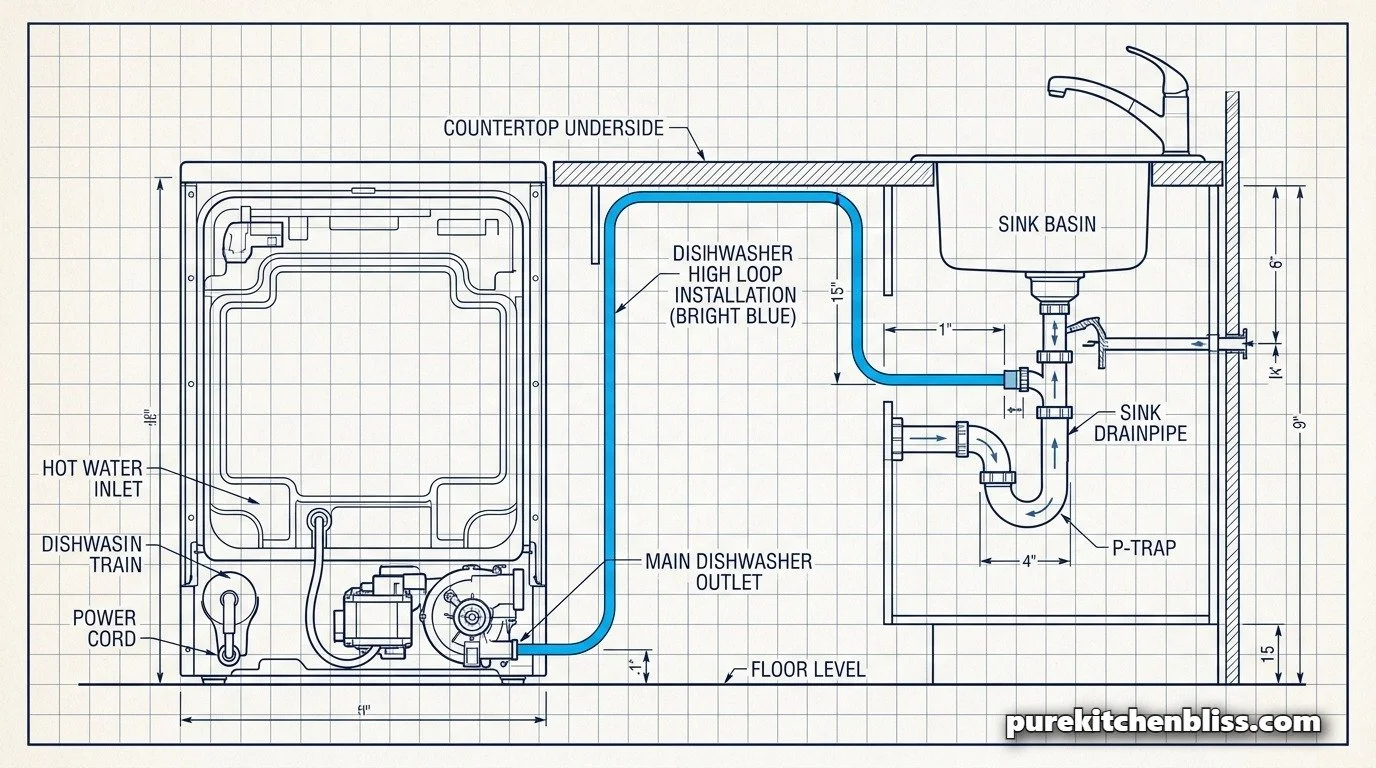
This is often the missing link in kitchen maintenance. If your dishwasher smells but the filter is clean, the problem is likely in the Drainage Infrastructure.
The Backflow Problem: If your drain hose isn't installed with a "High Loop" (arched above the level of the sink drain), dirty water from your sink can flow backwards into your dishwasher, bringing odors with it.
The Air Gap: If you have a cylindrical air gap on your counter next to the faucet, it can become clogged with food debris, creating a vacuum that prevents the dishwasher from draining fully.
The Maintenance: Remove the cover and use a bottle brush to clear any organic "slime" from the tube.
4. Comparison: Chemical Rinse vs. Mechanical Reset
| Action | Standard Rinse | The Professional Reset |
|---|---|---|
| Target | Surface Hard Water Spots. | Deep Biofilm & Pipe Sludge. |
| Longevity | Temporary (1–2 cycles). | Long-term (3–6 months). |
| Risk | Potential seal degradation. | Improves appliance lifespan. |
| Cost | Retail products. | Standard maintenance (Low cost). |
5. Phase 3: The Spray Arm Audit
If your dishes aren't getting clean, the odor might be coming from "Dead Water" trapped in the spray arms.
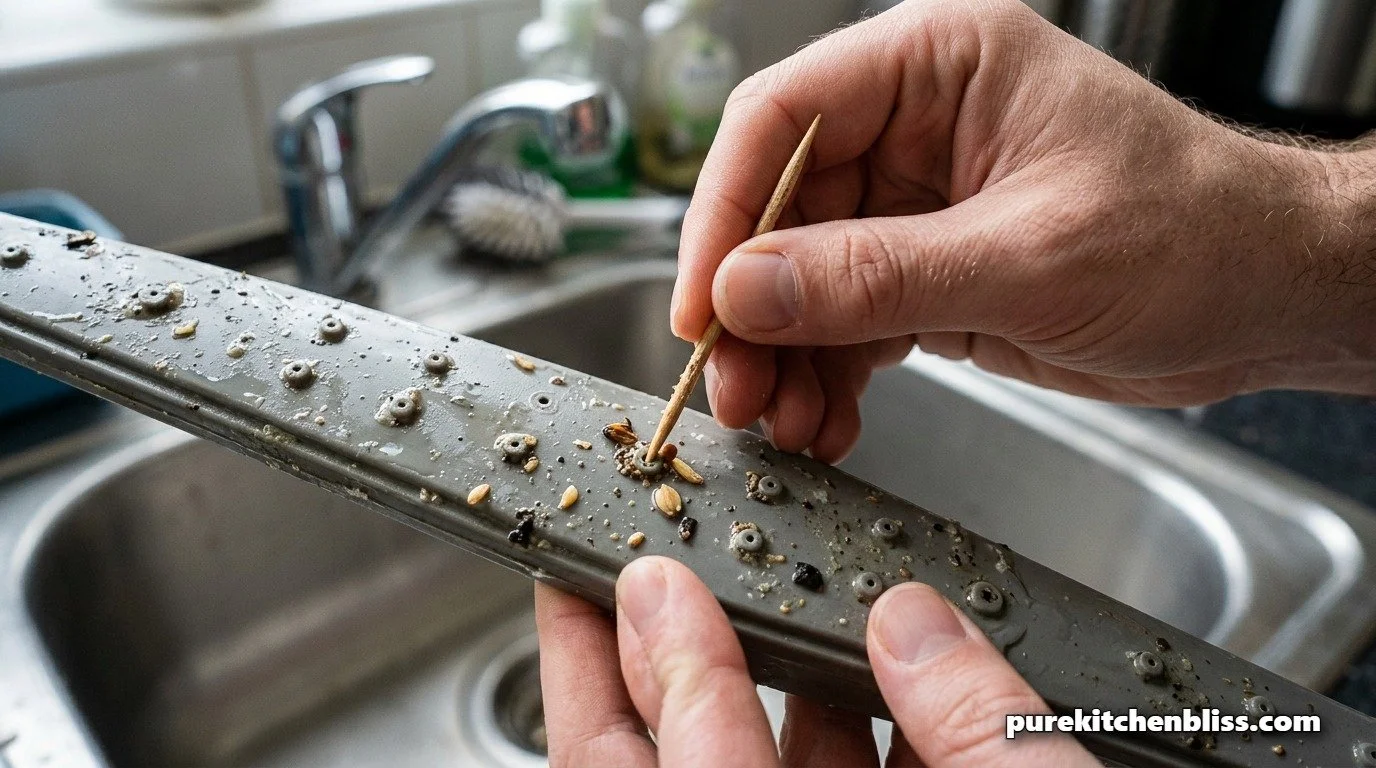
The Clog: Small seeds or oil-based sludge can clog the tiny jet holes.
The Fix: Remove the spray arms. Shake them over the sink to listen for debris inside. Use a toothpick to clear the jets. Run water through the arm to ensure every hole has a strong, clear stream.
6. The "Scent-Free" Maintenance Protocol
Once you have mechanically cleaned the machine, you can maintain it using non-toxic chemistry.
Citric Acid over Vinegar: For regular maintenance, use 2 tablespoons of citric acid powder in the detergent cup of an empty dishwasher. It is a more effective chelating agent for hard water and soap scum than vinegar, and it won't degrade rubber seals over time.
The "Sanitize" Cycle: Once a month, run a high-heat "Sanitize" cycle. This raises the water temperature enough to dissolve fats before they can turn into biofilm.
Conclusion: A Systemic Solution to Odor Eliminating dishwasher odor is a matter of clearing the blockages in your kitchen's drainage infrastructure. By manually cleaning the filter, auditing your high-loop, and clearing the spray arms, you ensure your machine operates at 100% efficiency. A clean dishwasher should be more than visually appealing; it should be biologically reset.
Next Up: Learn how to prevent these clogs from starting with our Guide to Kitchen "Gnat" Identification.