The Death of Subway Tile: Why Full-Height Slabs are the 2026 Standard
For the last two decades, white subway tile was the "safe" default, the builder-grade block of the vertical world. But as we move into 2026, the demand for a home sanctuaryhas made the "busy" look of tile grids obsolete. The new architectural standard is the Full-Height Monolithic Slab.
This shift isn't just about "Quiet Luxury" aesthetics. It is a fundamental change in how we view kitchen hygiene. Traditional tile backsplashes rely on grout, a porous, cement-based material that acts as a magnet for vaporized cooking oils and bacteria. By extending your countertop material vertically to the cabinets (or the ceiling), you create a seamless, non-porous shield that is technically superior to any tiled surface.
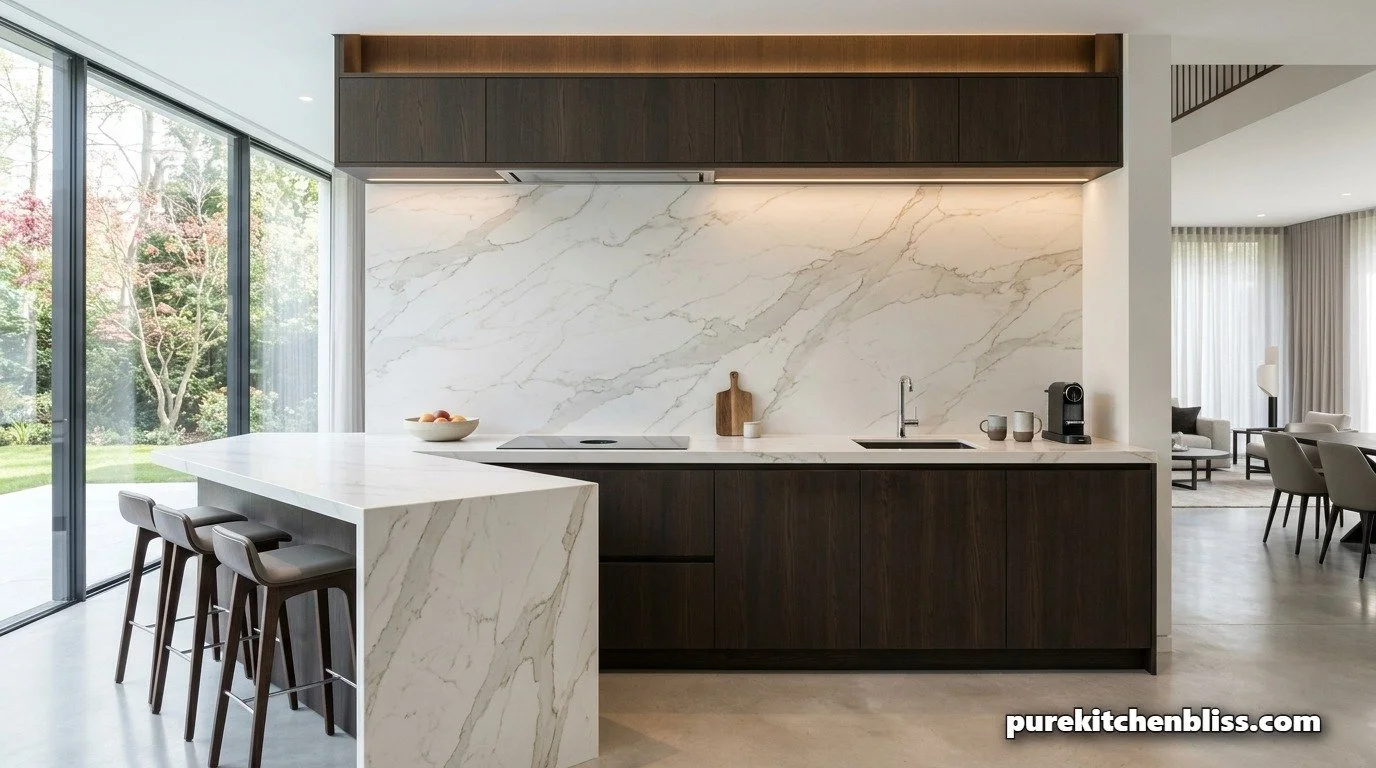
1. The Grout-Free Infrastructure: Hygiene Science
In a high-use kitchen, the area behind the range is a "Bio-Load" zone.
The Grout Problem: Even with high-performance epoxy grouts, the texture of a tile grid traps aerosolized grease. This grease eventually oxidizes, turning yellow and becoming a food source for mold spores.
The Slab Solution: A full-height slab of sintered stone or quartz provides a perfectly flat, vertical plane. Because there are no recesses for grease to hide, a single wipe with a Swedish dishcloth removes 99% of surface contaminants.
2. Material Engineering: Quartz vs. Porcelain Slabs
If you are committing to a monolithic look, your choice of "Invisible Infrastructure" matters.
Engineered Quartz: Best for impact resistance. If you accidentally bang a heavy cast-iron skillet against a quartz backsplash, it’s likely to survive. However, quartz is sensitive to extreme heat; a high-BTU range without a backguard can occasionally "scorch" the resin in the quartz.
Porcelain Slabs (6mm): The 2026 favorite. Porcelain is fired at such high temperatures that it is virtually immune to heat damage. It is also thinner and lighter than 2cm stone, making it easier to install as a vertical "cladding" without over-stressing your wall studs.
3. The Installation Audit: Precision vs. Play
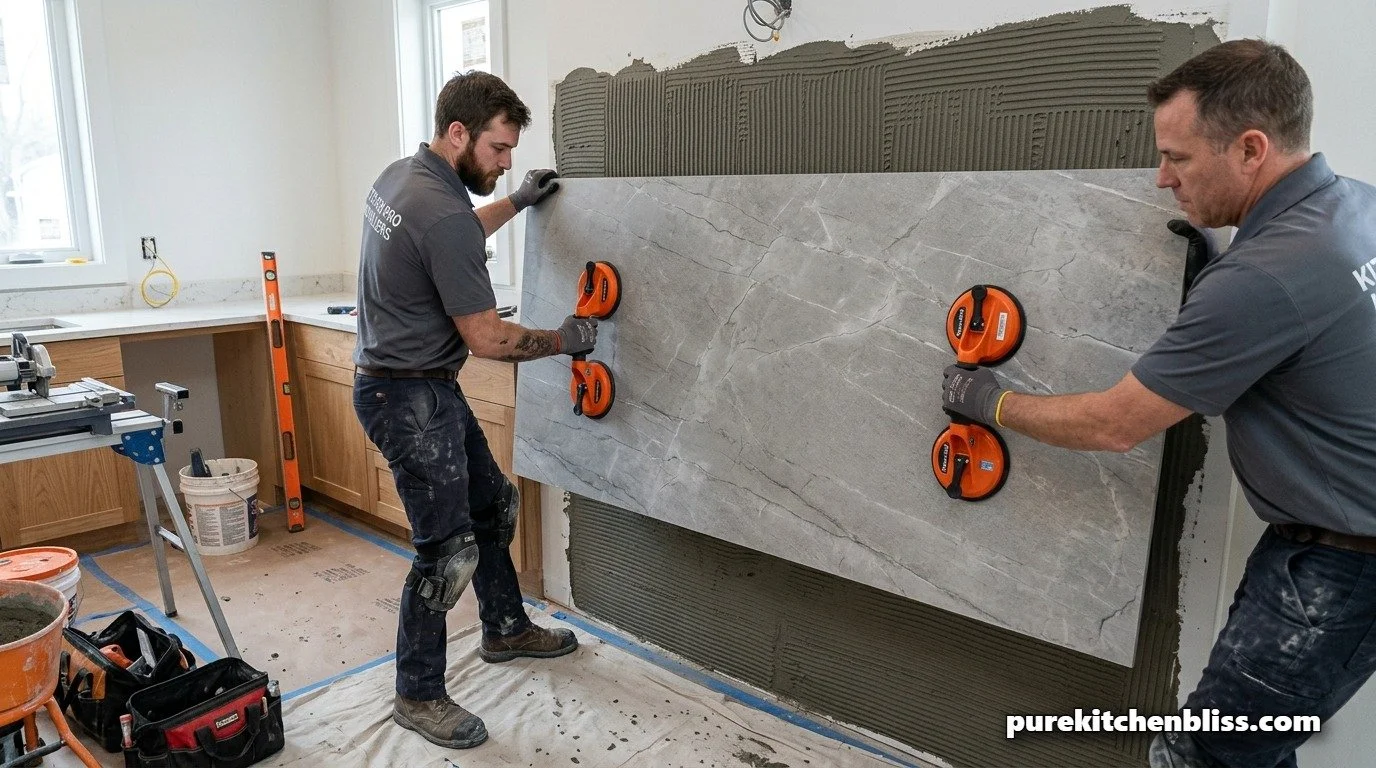
To install a slab, your "Builder-Grade" tolerances must be near perfect.
The Out-of-Plumb Wall: Tile is forgiving; a skilled installer can "hide" a crooked wall in the grout lines. A slab is not. Your walls must be perfectly flat (plumb), or the slab will have visible "lippage" at the edges.
The Outlet Challenge: Cutting a slab for electrical outlets is a high-risk operation. One wrong measurement and the entire $2,000 piece is wasted. In a disappearing kitchen, we recommend moving outlets to the underside of the cabinets to keep the stone face pristine.
4. Comparison: The Financial Infrastructure (2026 Estimates)
| Backsplash Type | Cost per Sq. Ft. (Installed) | Maintenance Load |
|---|---|---|
| Standard Subway Tile | $15 – $35 | High (Grout scrubbing). |
| Zellige / Textured Tile | $30 – $60 | Medium (Irregular cleaning). |
| Full-Height Stone Slab | $80 – $200+ | Ultra-Low (One-wipe). |
5. Maintenance: Protecting the Monolith
While a slab is "Low Maintenance," it is not "No Maintenance."
Avoid the "Chemical Drift": If your slab is natural stone (Marble or Quartzite), avoid acidic cleaners. Even a "green" lemon cleaner can etch the surface over time, leading to a permanent dull spot behind your stove.
The Daily Reset: Use a pH-neutral stone soap or a mixture of water and Castile soap. This preserves the "Leathered" or "Polished" finish without leaving a film that attracts dust.
Conclusion: The Seamless Shift The move to a full-height slab is a commitment to a simpler, cleaner way of living. By investing in the material and installation infrastructure of a monolithic wall, you eliminate the visual and biological "noise" of grout lines. It is the ultimate expression of the modern kitchen sanctuary—where the beauty of the stone is never interrupted by the chores of the past.
Next Up: Pair your new slab with the perfect tactile finish in our Guide to Leathered Countertops.