The Anatomy of a Workstation Sink: More Than Just a Basin
For decades, the kitchen sink was a static object, a simple basin designed to hold water and dirty dishes. However, as we shift toward high-performance sanctuaries, the sink has undergone a radical architectural evolution. It is no longer just a plumbing fixture; it is a specialized piece of "Active Infrastructure" known as the Workstation Sink.
By utilizing a system of integrated interior ledges, the workstation sink transforms the "Cleaning Zone" into a multi-level prep area. This allows you to chop, strain, and wash within the footprint of the sink itself, keeping your countertops dry and clear of debris. To choose the right one, you must understand the mechanical tiers that define a professional-grade station.
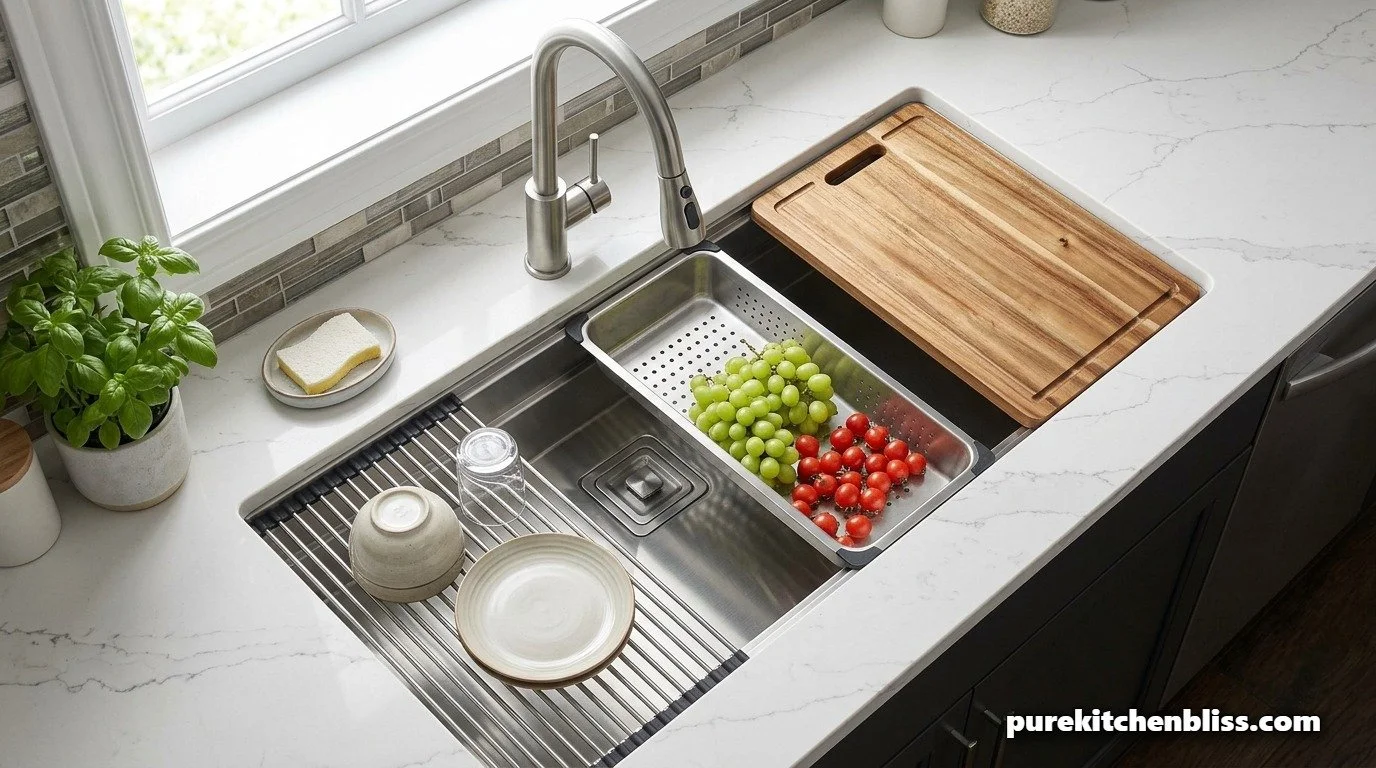
1. The Integrated Ledge System
The defining characteristic of a workstation sink is the "Ledge." Traditional sinks have smooth vertical walls; a workstation sink features one, two, or even three horizontal tracks built directly into the basin walls.
Single Tier: Features one ledge, usually at the top, to hold a cutting board or a roll-up drying rack.
Dual Tier: This is the "Builder" standard for 2026. It allows you to overlap accessories. You can have a colander on the bottom track and a cutting board on the top, allowing you to scrape vegetable scraps directly into a bowl below.
The "Zero-Radius" Myth: While "Zero-Radius" (sharp 90-degree) corners look sleek in architectural photos, they are a maintenance nightmare. A high-performance sink should have a 10mm or 15mm "Tight Radius." This provides the modern look while ensuring the corners are rounded enough to actually clean.
2. The Accessory Architecture
A workstation sink is only as good as the tools that fit inside it. In a professional setup, these accessories are designed to be "interchangeable parts" of your culinary workflow.
The Sliding Cutting Board: Usually made of Walnut or high-density composite. Because it sits over the sink, juice from meats or fruits drains directly into the basin, protecting your primary prep zone.
The Bottom Grid: Often overlooked, the stainless steel grid protects the floor of the sink from scratches and allows water to flow freely to the drain even if the sink is full of dishes.
The Wash Bin: A small, secondary basin that fits onto the ledge. This is essential for conserving water when you only need to soak a few items, rather than filling a massive 36-inch sink.
3. Comparison: Traditional Sink vs. Workstation Sink
| Feature | Traditional Basin | Workstation Station |
|---|---|---|
| Function | Washing / Rinsing Only | Prep / Wash / Dry / Serve |
| Countertop Impact | Often wet and cluttered | Stays dry; clutter is contained |
| Versatility | Static basin | Modular (Interchangeable tools) |
| Ergonomics | Deep reaching required | Elevated prep on tiered ledges |
4. Material Science: 16-Gauge vs. 18-Gauge
When selecting a stainless steel sink, the "Gauge" is the most important structural metric.
The Professional Standard: Always specify 16-gauge stainless steel.
The Why: The lower the number, the thicker the steel. 16-gauge is significantly thicker than the 18-gauge found in big-box stores. It is more resistant to denting, holds heat better for soaking, and, crucially, is much quieter.
Sound Dampening: High-end workstation sinks feature extra-thick rubber pads and a "stone-guard" undercoating on the exterior. This eliminates the "tinny" echoing sound when the water is running or a pot hits the bottom. To maintain this finish, avoid caustic chemicals and stick to Castile soap

5. The "Offset" Drain Logic
In a standard sink, the drain is in the center. In a high-performance workstation sink, the drain is almost always Offset to the back or a corner.
Under-Sink Infrastructure: Moving the drain to the back opens up a massive amount of storage space in your cabinet. It allows the plumbing and garbage disposal to sit at the rear, leaving room for pull-out bins.
Cleaning Efficiency: An offset drain ensures that even if the sink is full of dishes from a deep dishwasher load, the water can still drain freely without being blocked by a large pan.
Conclusion: The Future of the Cleaning Zone The workstation sink is the ultimate example of "Active Infrastructure." It takes a dead space and turns it into the most productive square footage in the kitchen. By choosing a 16-gauge, multi-tiered basin with an offset drain, you aren't just buying a sink, you are upgrading your entire culinary workflow.
Next Up: Learn how to integrate your sink into a professional layout with our guide to Designing the 5 Culinary Zones.