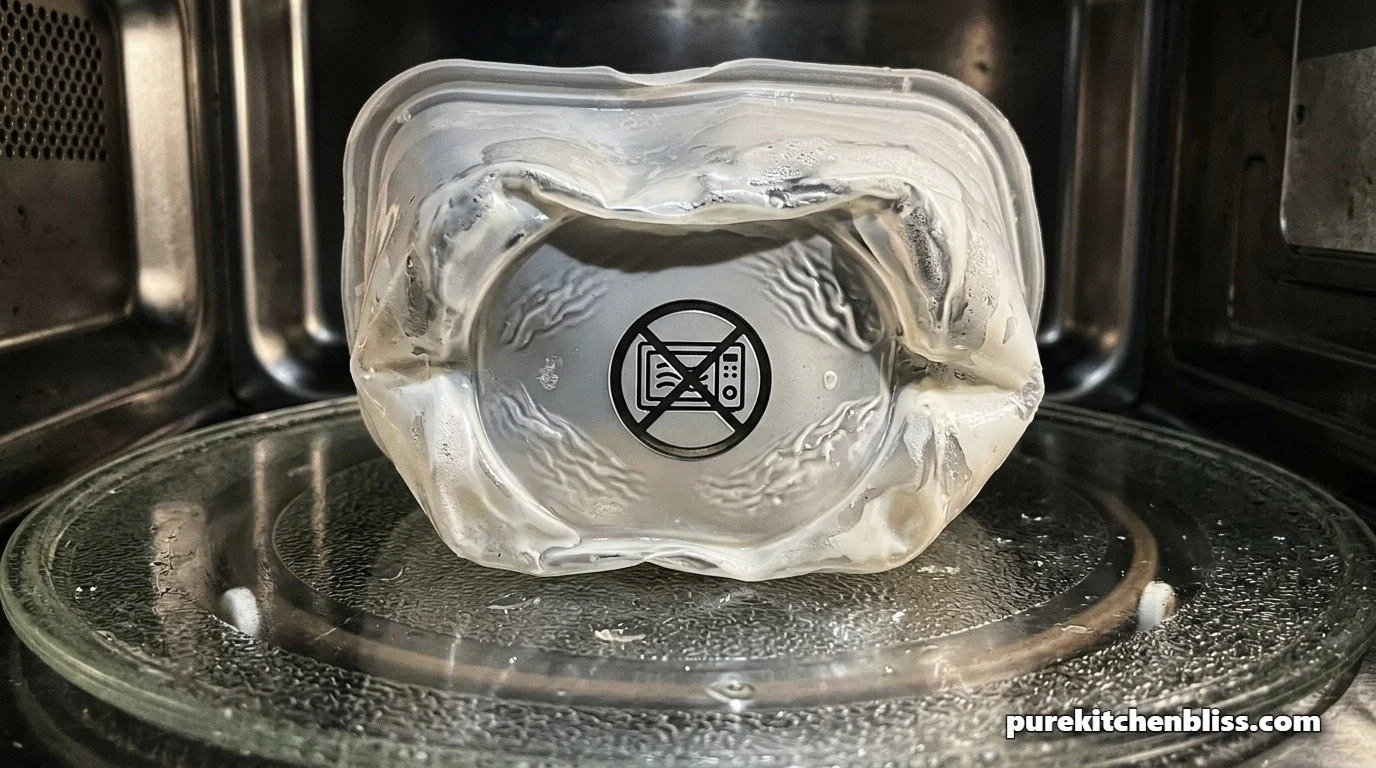
Microwave Safety: Protecting the Mechanical Heart of Your Kitchen
In a high-performance kitchen sanctuary, we often focus on the longevity of our hard water defense systemsor the precision of our soft-close mechanicals. However, the most common threat to your kitchen’s safety isn't a plumbing leak—it’s the misuse of the microwave oven.
Since Percy Spencer patented the microwave in 1945, it has become a staple of the modern rough-in. But as a builder, I see the aftermath of "arc-over" and thermal runaway caused by simple user errors. To maintain the fabric of your kitchen and prevent premature appliance failure, you must understand the technical limits of microwave energy.
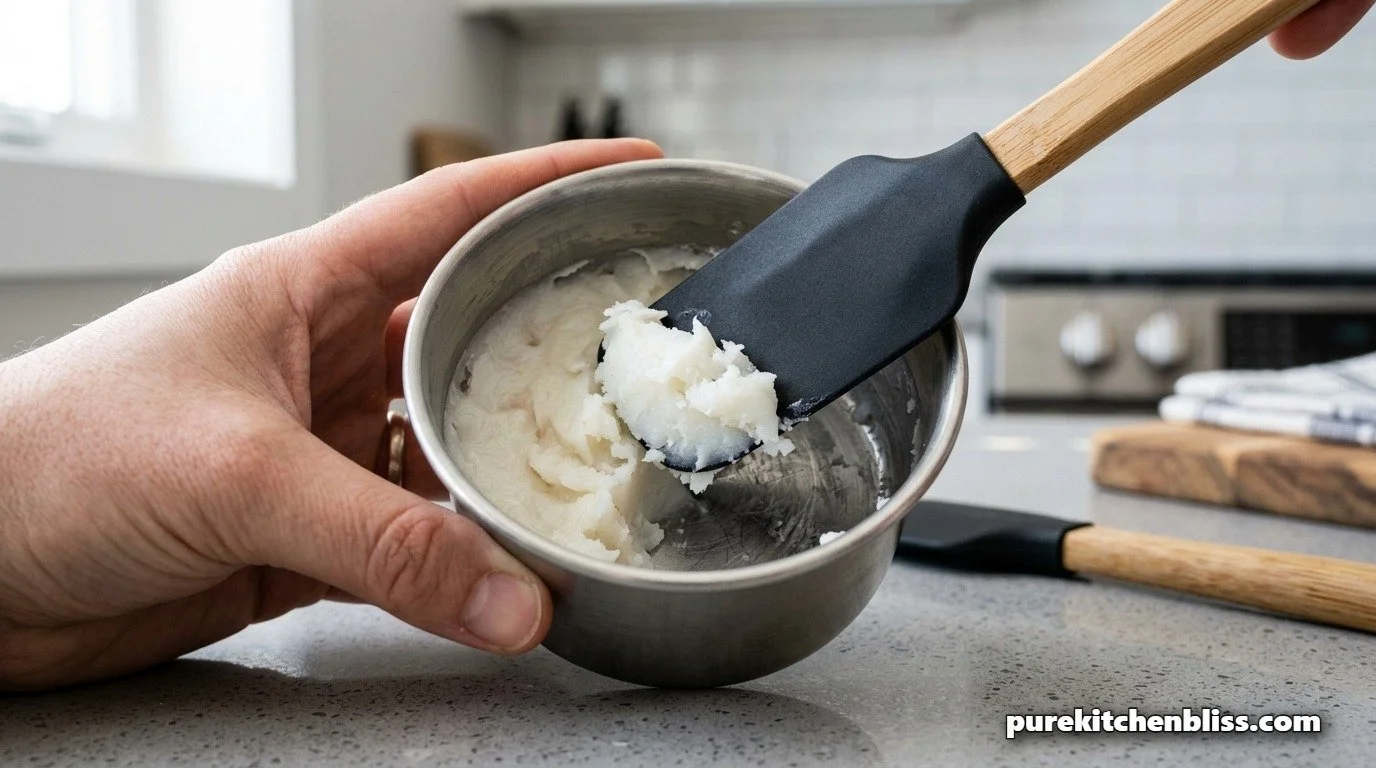
5 Safe Ways to Dispose of Kitchen Oil and Grease
In a high-performance kitchen sanctuary, the most dangerous substance you can handle isn't a sharp knife or a hot flame, it’s used cooking oil. Most homeowners treat their workstation sink like a universal waste bin, but as a builder, I’ve seen the "fatbergs" that form when grease meets cold pipes.
Pouring oil down the drain is a direct attack on the mechanicals of your home. It coats the interior of your PVC or cast-iron rough-in, trapping food particles and eventually causing a total systemic failure. To protect the fabric of your plumbing, you need a technical approach to grease management.
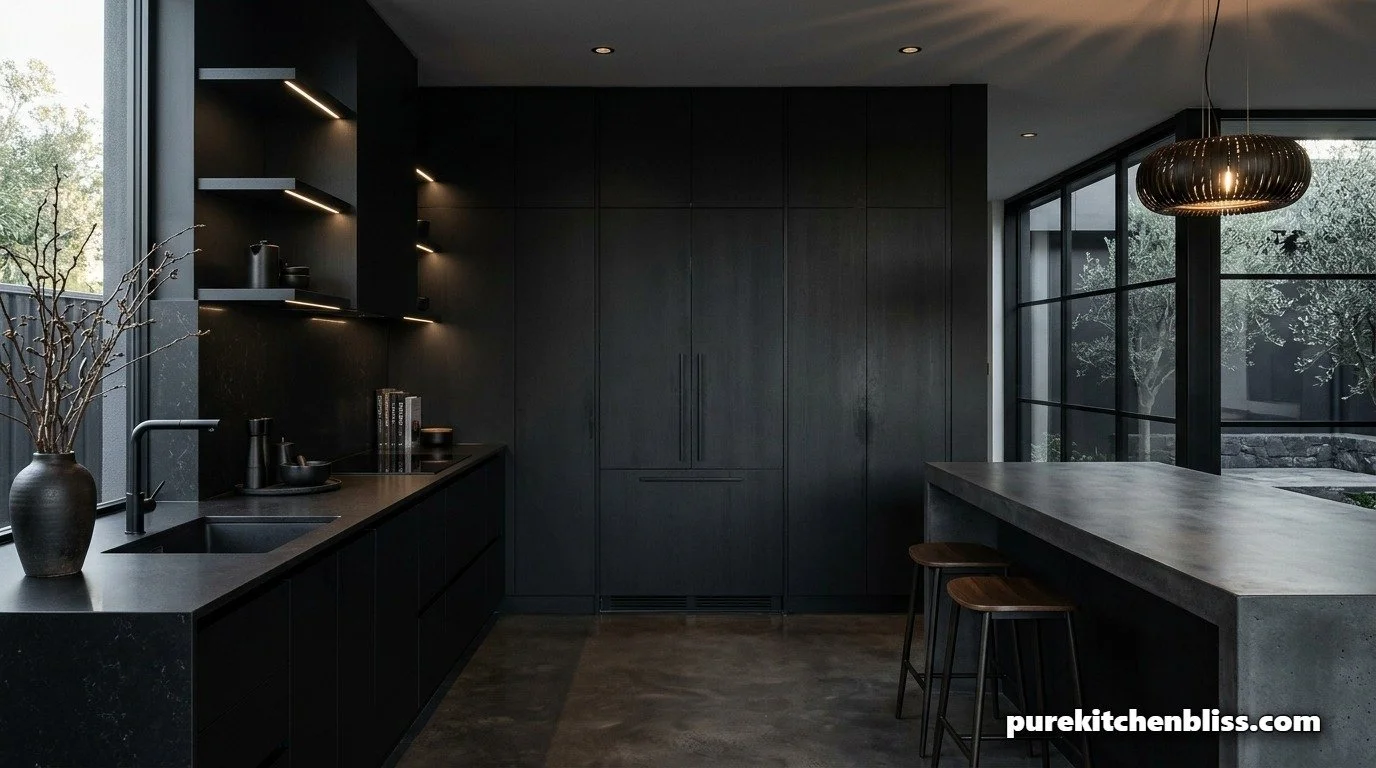
The Zero-Clearance Flush: Refrigerator Ventilation & Rough-In Guide
In the design of a kitchen sanctuary, the visual "clutter" of a refrigerator protruding three inches past the cabinetry is a structural failure. Achieving a true flush, "built-in" look requires more than just a counter-depth unit; it requires a mastery of zero-clearance mechanicals and specialized ventilation rough-ins.
Unlike the generic advice found on most DIY sites, a master carpenter knows that "flush" is a dangerous game. If you don't account for the pivot point of the hinge and the BTU output of the compressor, you are essentially building a thermal tomb for a $10,000 appliance.

6 Things You Can Get Your Child to Help You With in the Kitchen!
A true kitchen sanctuary isn't just a place for high-end mechanicals and pristine surfaces; it is a space for legacy and learning. As a father of four, I’ve learned that involving children in the kitchen early doesn't just teach them life skills, it gives them a sense of ownership over the home's most important room.
The key is matching the task to their height and motor skills while ensuring the fabric of your safety systems remains intact. Here are 6 ways to turn your "helpers" into junior kitchen stewards.
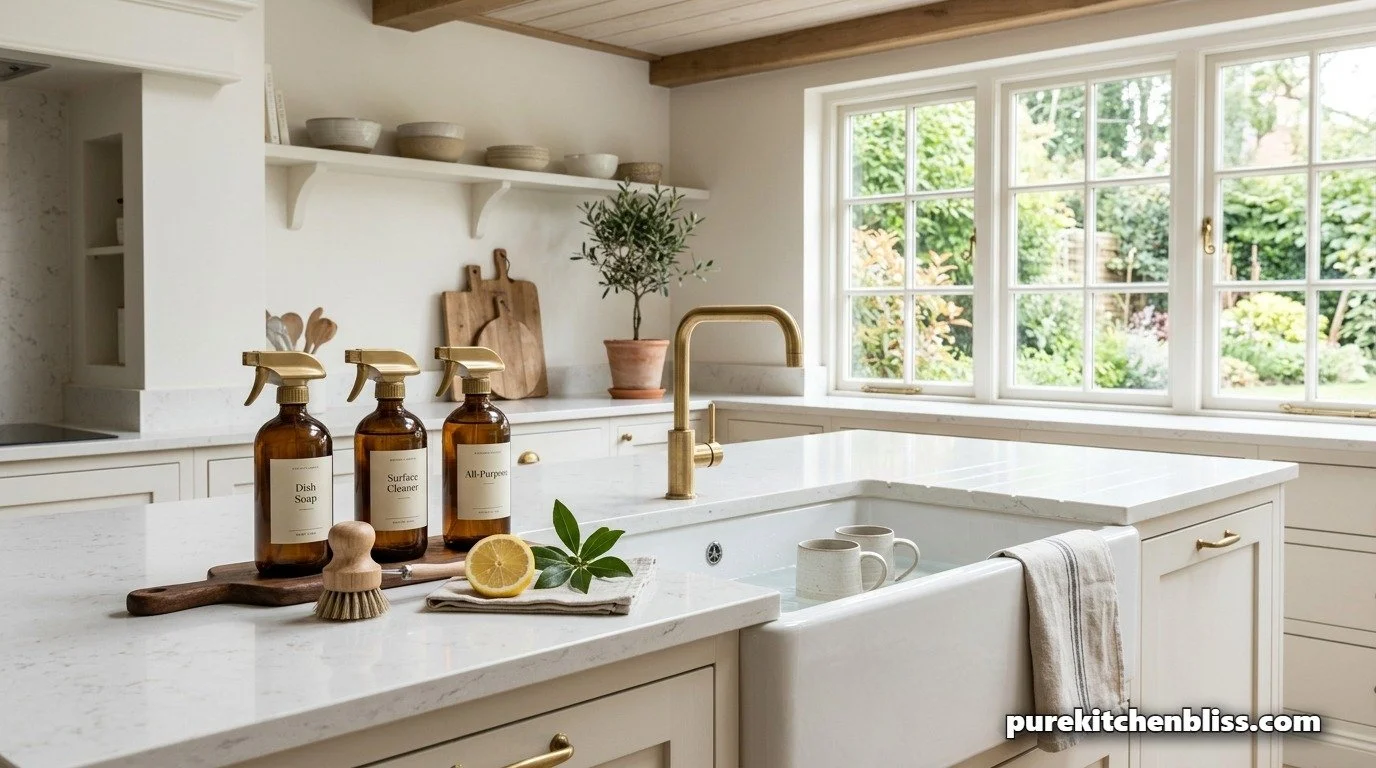
Top 5 Organic Products to Clean Your Sink With!
Maintaining a kitchen sanctuary means keeping your high-traffic areas sterile without introducing toxic chemical residues into your food prep zone. As we explored in our look at scouring pad microplastics, the tools and liquids we use eventually enter our water systems and our bodies.
If you are looking to protect the fabric of your home while ensuring a hospital-grade clean, you need products that leverage plant-based surfactants and natural acids. Here are the top 5 organic products that effectively sanitize your sink.
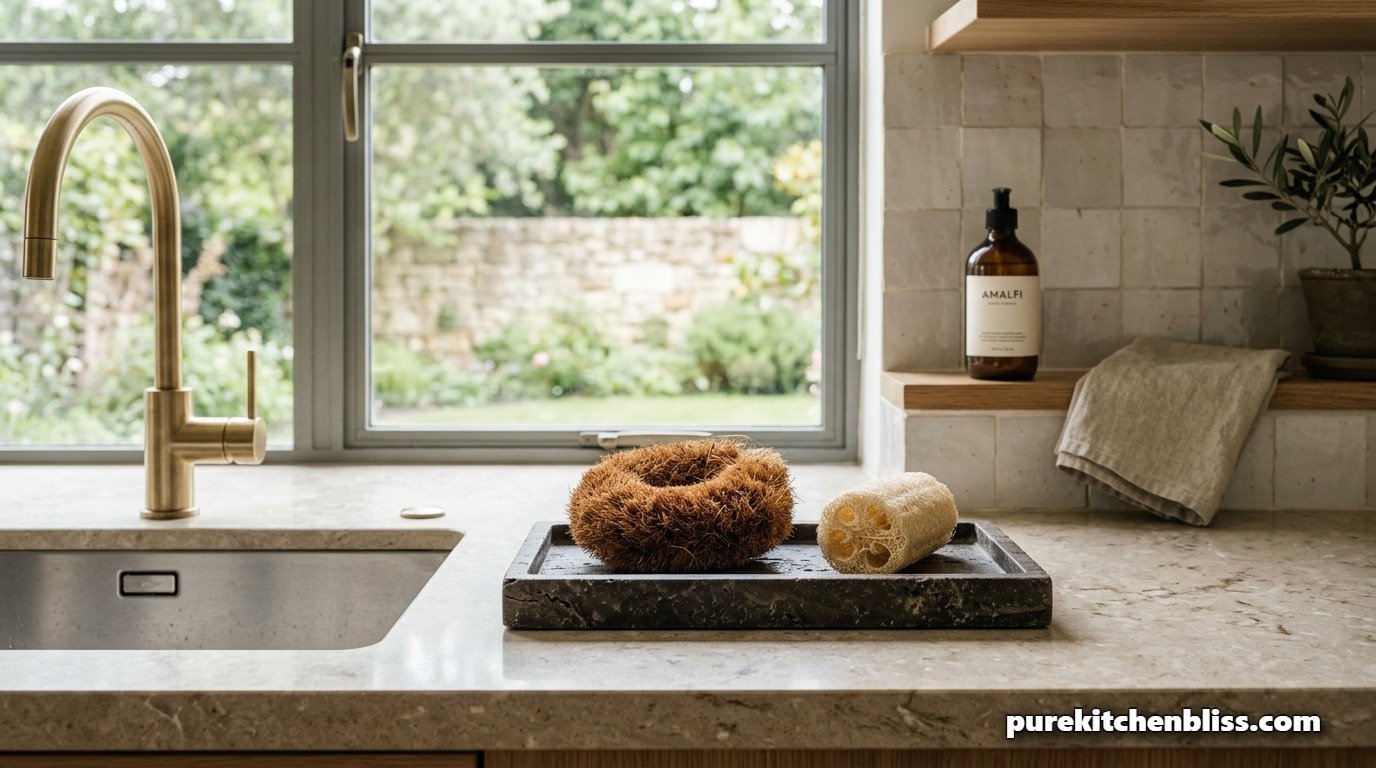
The Microplastic Shed: Are Scouring Pads Killing Your Sanctuary?
In our quest for a silent sanctuary and pristine mechanicals, we often overlook the smallest tools in our arsenal. The standard synthetic scouring pad is a workhorse—cheap, abrasive, and effective. But as a builder, I look at the "wear cycle" of a tool. Where does that material go when it disappears?
I once had a friend who I realized would use a brand-new pad every single day. I was blown away by what I thought was pure waste, but it pushed me to look deeper into the mechanical reality of these scrubbers. What I found changed how I view the "cleanliness" of a kitchen.
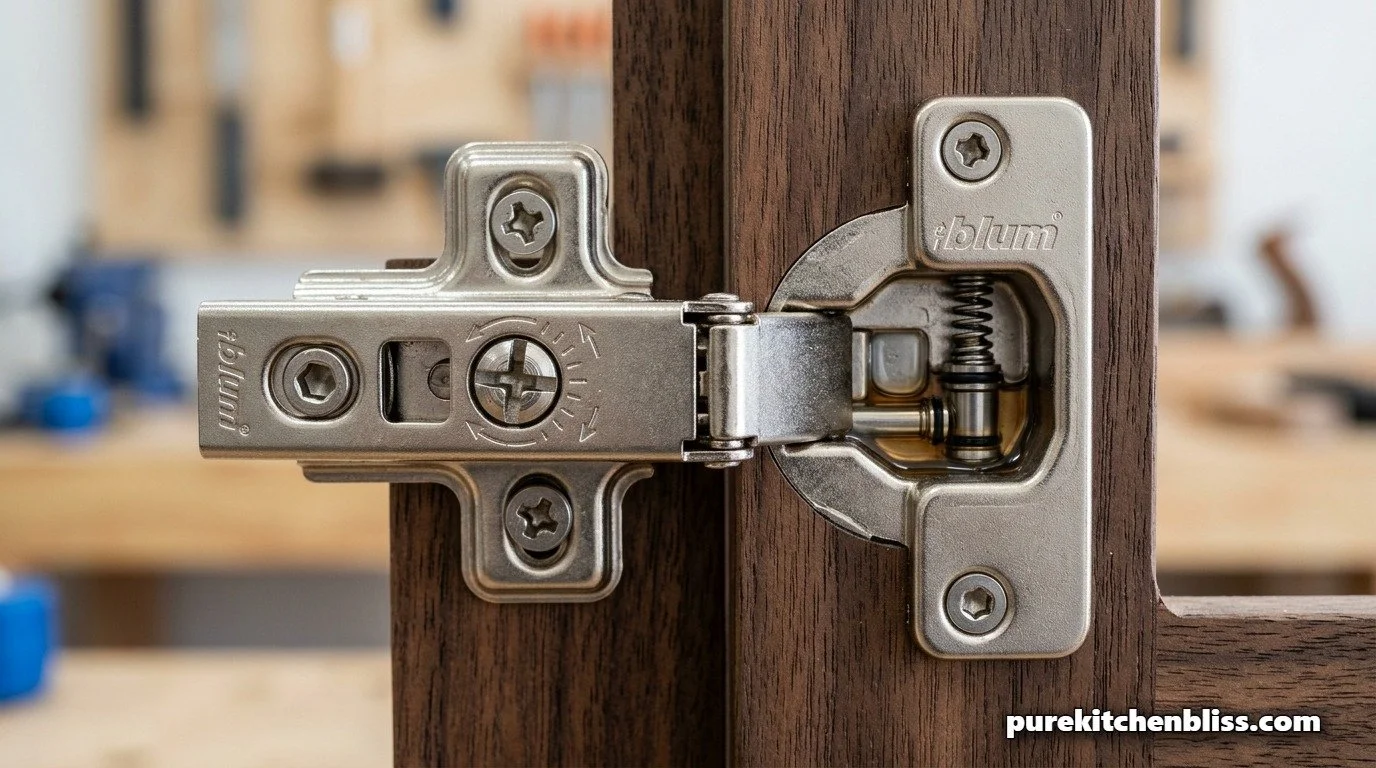
The Silent Sanctuary: Soft-Close Mechanicals & Hinges
In a high-performance kitchen, the "feel" of the space is dictated by the mechanical tolerances of its moving parts. As we’ve established with our hard water defense systems, the longevity of a kitchen depends on the quality of its internal components.
The most frequent point of physical contact in your home isn't the countertop; it's the cabinet hinge. A "slamming" cabinet door is more than an acoustic nuisance, it's a sign of a mechanical system failing to decelerate. To achieve a true "Zero-G" feel where doors glide into place, you need to understand the hydraulic dampening hidden inside the hinge cup.In a high-performance kitchen, the "feel" of the space is dictated by the mechanical tolerances of its moving parts. As we’ve established with our hard water defense systems, the longevity of a kitchen depends on the quality of its internal components.
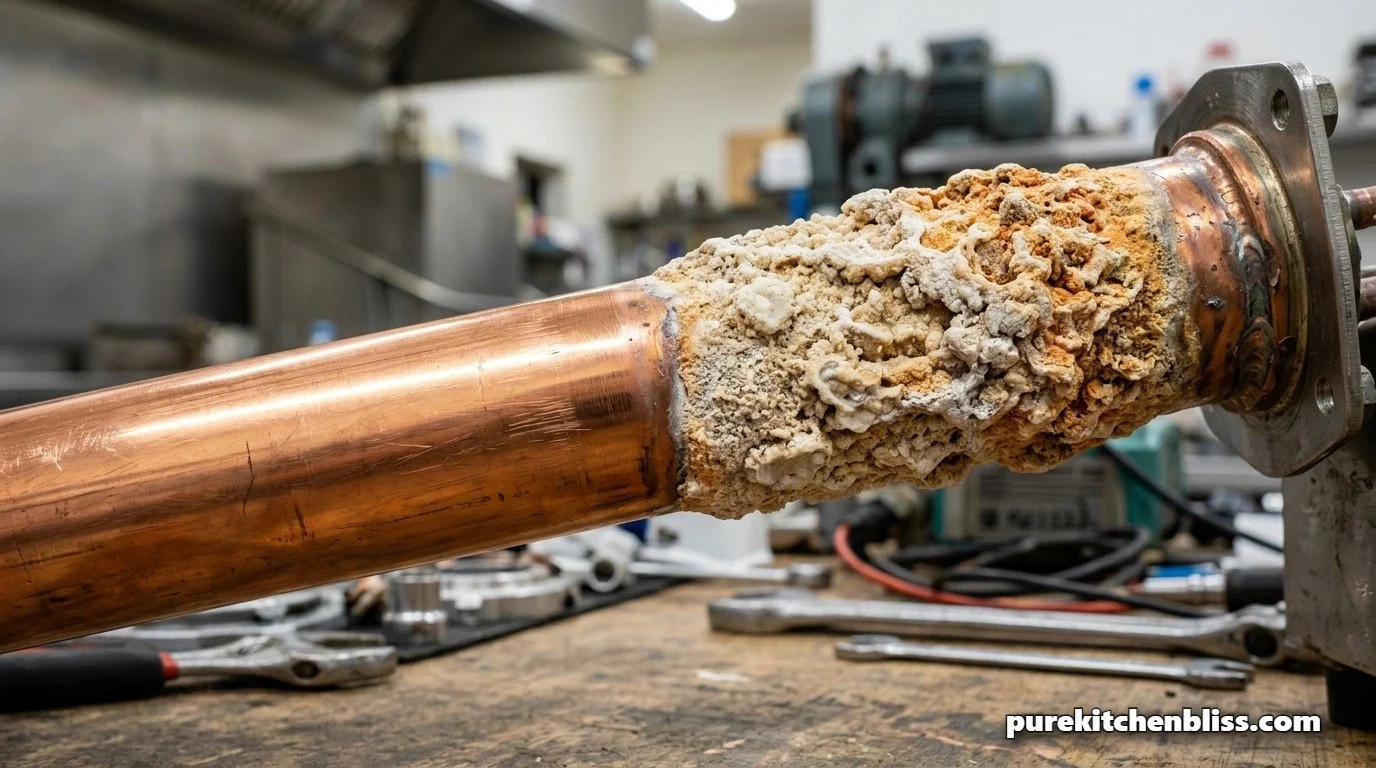
Hard Water Defense: The Mechanical Heart of the Kitchen
In a high-performance sanctuary, we obsess over the aesthetics of full-height slabs and the ergonomics of a workstation sink. But there is an invisible predator that targets the "internal organs" of your home: Calcium and Magnesium.
If you are running untreated water through a $5,000 Miele steam oven or a Breville Bambino, you aren't just making coffee, you are effectively "sandblasting" your heating elements from the inside out. In a commercial environment, we wouldn't dream of pulling a shot without a dedicated filtration manifold. Your home deserves the same technical standard.
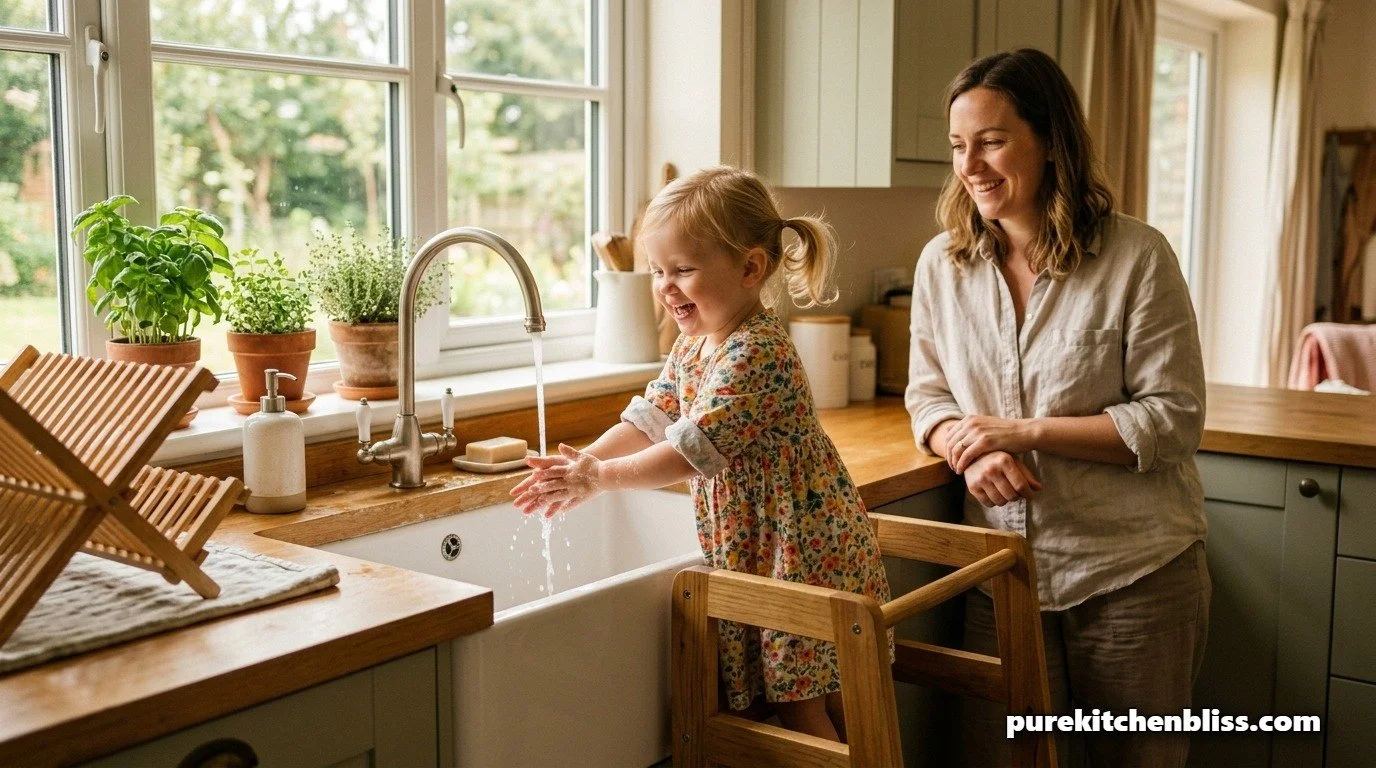
The 120°F Reset: How to Prevent Kitchen Sink Scalds Permanently
As a carpenter and a father of four, I’ve seen my share of "near misses" in the kitchen. We spend thousands on sintered stone countertops and high-end espresso machines, but we often overlook the most dangerous "Invisible Infrastructure" in the room: the temperature of the water coming out of the tap.
In a standard home, the water heater is often set to 140°F (60°C) to kill bacteria and ensure the dishwasher runs effectively. However, water at 140°F can cause a third-degree burn on a child’s delicate skin in less than three seconds.
To turn your kitchen into a true sanctuary for a growing family, you need more than just a "caution" sign. You need a Thermostatic Mixing Valve (TMV).
Beyond Paint: The Technical Guide to Updating Laminate
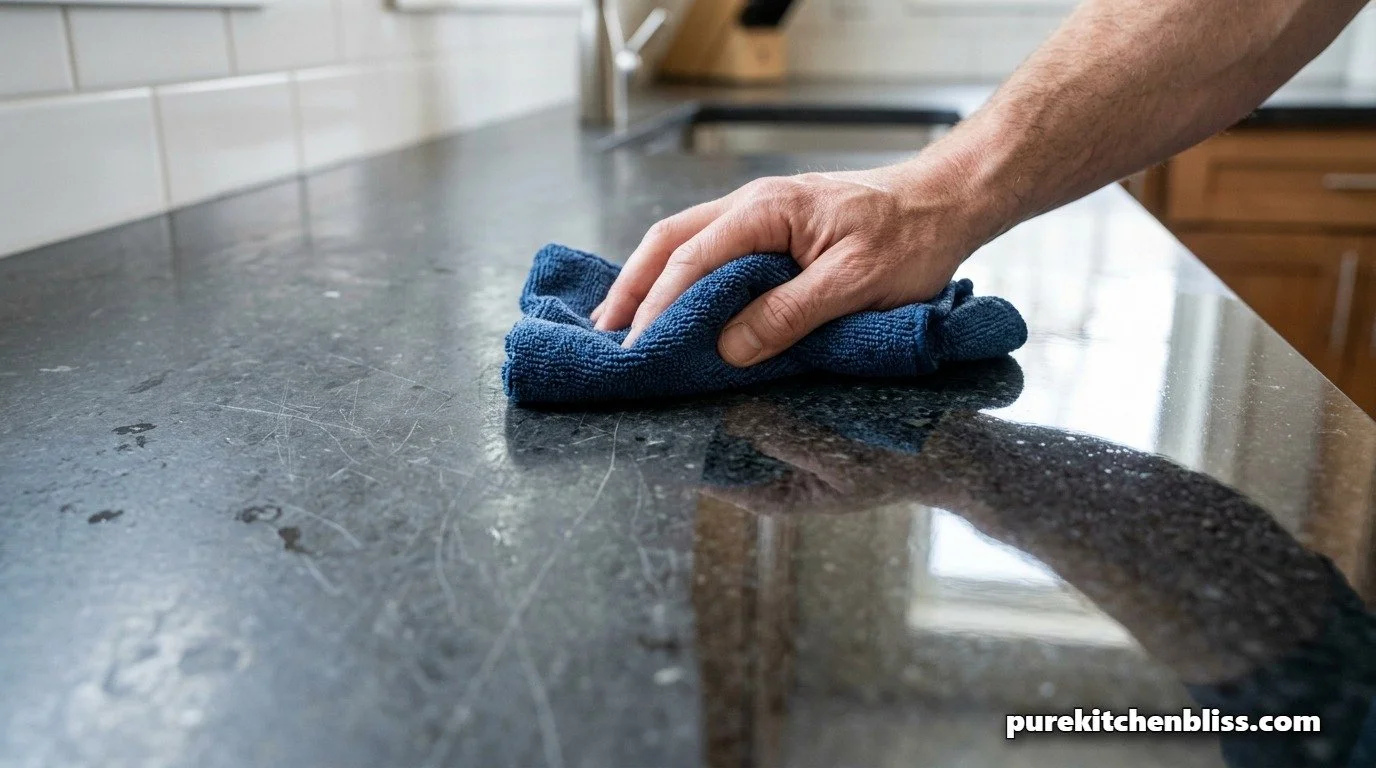
Laminate countertops are the "legacy infrastructure" of millions of homes. While they were the height of 1980s engineering, they eventually succumbed to delamination, edge-chipping, and surface dullness. Most homeowners are told their only options are a $200 paint kit or a full replacement with sintered stone.
But, we have a third option: Technical Restoration. This isn't about covering the problem; it's about chemically and mechanically reinforcing the existing surface to turn it into a high-performance kitchen sanctuary.

Beyond the Slab: The Real Cost of Kitchen Island Infrastructure
In most home-improvement guides, the kitchen island is discussed in terms of cabinetry and countertops. But for the modern homeowner, the "island" is a multi-functional command center that requires more engineering than any other part of the house.
When you see a "National Average" cost of $4,000 to $6,000, you are seeing the price for a hollow box with a piece of granite on top. If you want an island that supports a workstation sink, an invisible induction cooktop, and a massive stone overhang, your budget needs to reflect the Invisible Infrastructure.
The Death of Subway Tile: Why Full-Height Slabs are the 2026 Standard
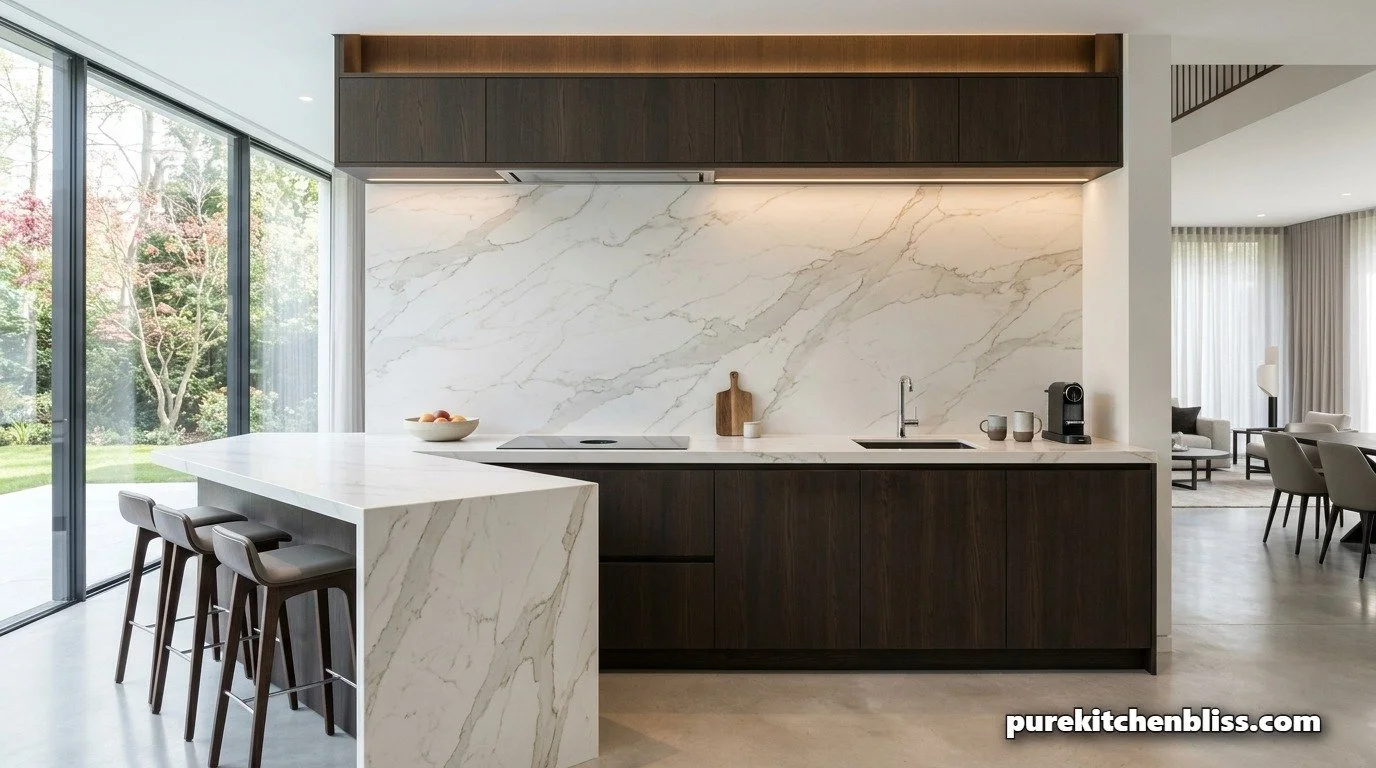
For the last two decades, white subway tile was the "safe" default, the builder-grade block of the vertical world. But as we move into 2026, the demand for a home sanctuaryhas made the "busy" look of tile grids obsolete. The new architectural standard is the Full-Height Monolithic Slab.
This shift isn't just about "Quiet Luxury" aesthetics. It is a fundamental change in how we view kitchen hygiene. Traditional tile backsplashes rely on grout, a porous, cement-based material that acts as a magnet for vaporized cooking oils and bacteria. By extending your countertop material vertically to the cabinets (or the ceiling), you create a seamless, non-porous shield that is technically superior to any tiled surface.
Leathered Countertops: The Engineering of the 2026 Tactile Kitchen
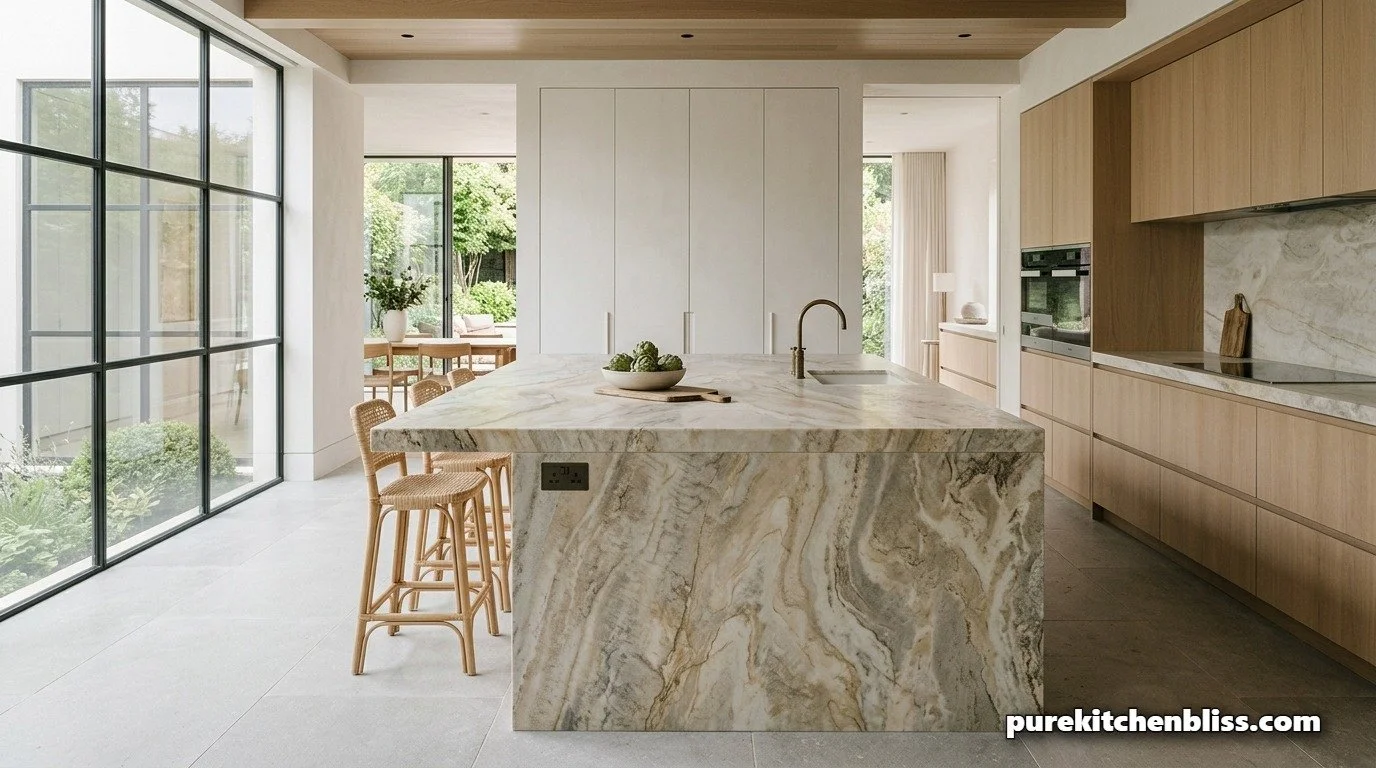
For the last decade, the high-gloss, mirrored finish was the undisputed king of the kitchen. But as we move toward the Disappearing Kitchen, the demand for "Quiet Luxury" has shifted the focus from reflection to texture. Enter the Leathered Finish.
Unlike a polished surface that hides the stone’s character behind a glass-like sheen, or a honed finish that can look flat and "chalky," a leathered finish is a mechanical evolution of the stone itself. It is achieved by running diamond-tipped brushes over the slab, whisking away the softer minerals and leaving the harder ones behind. The result is a surface that mimics the feel of fine leather, warm, organic, and technically superior for a home sanctuary.
The Disappearing Kitchen: Why Integrated Appliances Are the New Standard
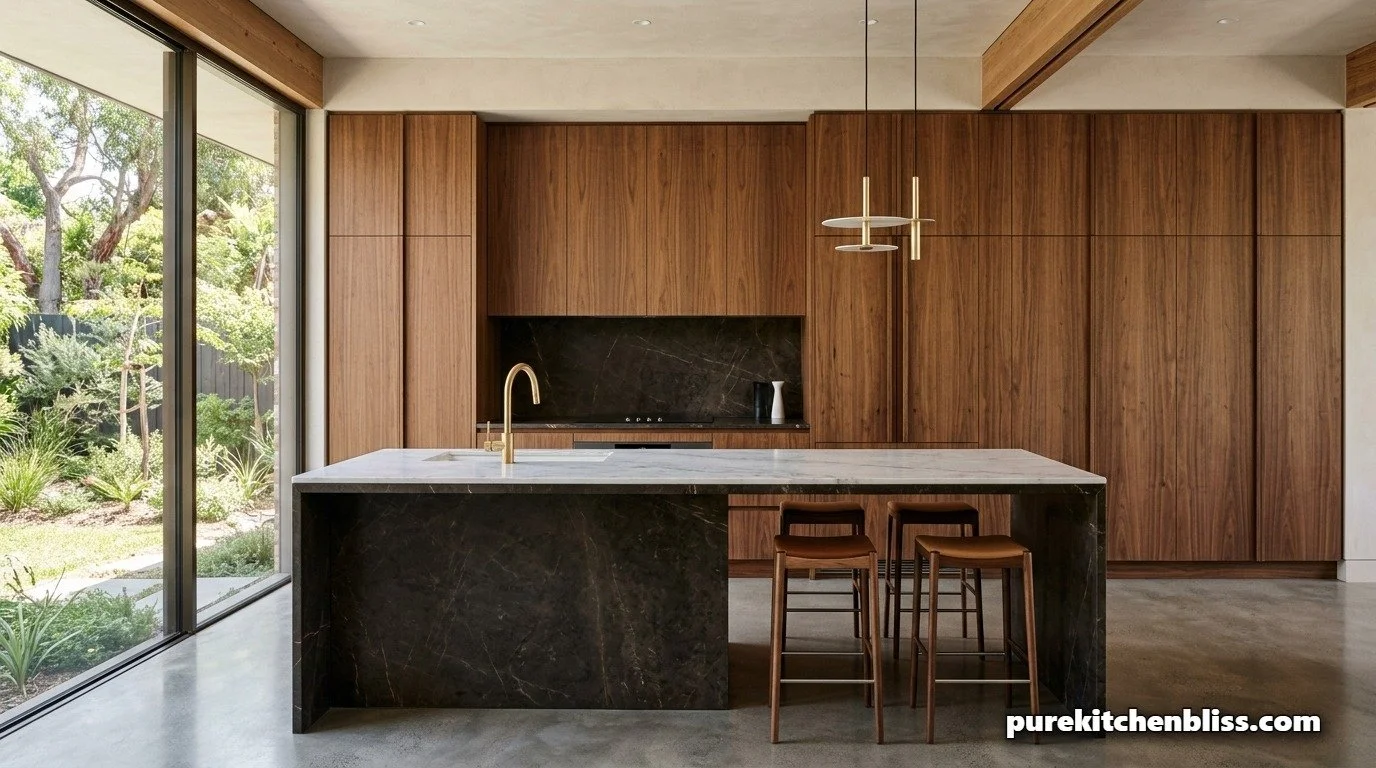
For decades, the "Status Kitchen" was defined by the gleam of oversized stainless steel appliances. A massive, industrial-looking refrigerator was the centerpiece of the room. But as we move into May 2026, the trend has flipped entirely. The goal of a high-performance kitchen sanctuary is now invisibility.
Welcome to the era of the Disappearing Kitchen.
This isn't just about aesthetics; it’s about Infrastructure Cohesion. By utilizing panel-ready appliances and "Appliance Garages," we are removing the visual "noise" of the kitchen, allowing the cabinetry and the sintered stone surfaces to take center stage. The kitchen no longer looks like a laboratory; it looks like a curated extension of the home’s living space.

From Pour-Over to Pro: How the Breville Bambino Transformed My Kitchen Sanctuary
In my journey of documenting kitchen and bath design, my goal has been to slowly transform these rooms into sanctuaries, spaces that don't just function, but provide a genuine sense of enjoyment. These aren't overnight renovations; they are incremental upgrades made as the budget allows. As a carpenter and a father of four, I know that every square inch of our home has to work hard, but it should also feel like a reward.
Recently, the "sanctuary" focus shifted to our morning ritual. For years, we were a pour-over household. It was a reliable, low-tech system, but as we began developing our dedicated coffee niche, I decided it was time to upgrade our daily infrastructure to espresso.
I chose the Breville Bambino. I wanted a "starter" machine that I hoped could rival the $30,000 commercial setups I use at my own coffee shop. In the two months since its installation, it hasn’t just met expectations, it has fundamentally outperformed them. My wife loves it, and for a father of four, that is the ultimate seal of approval.
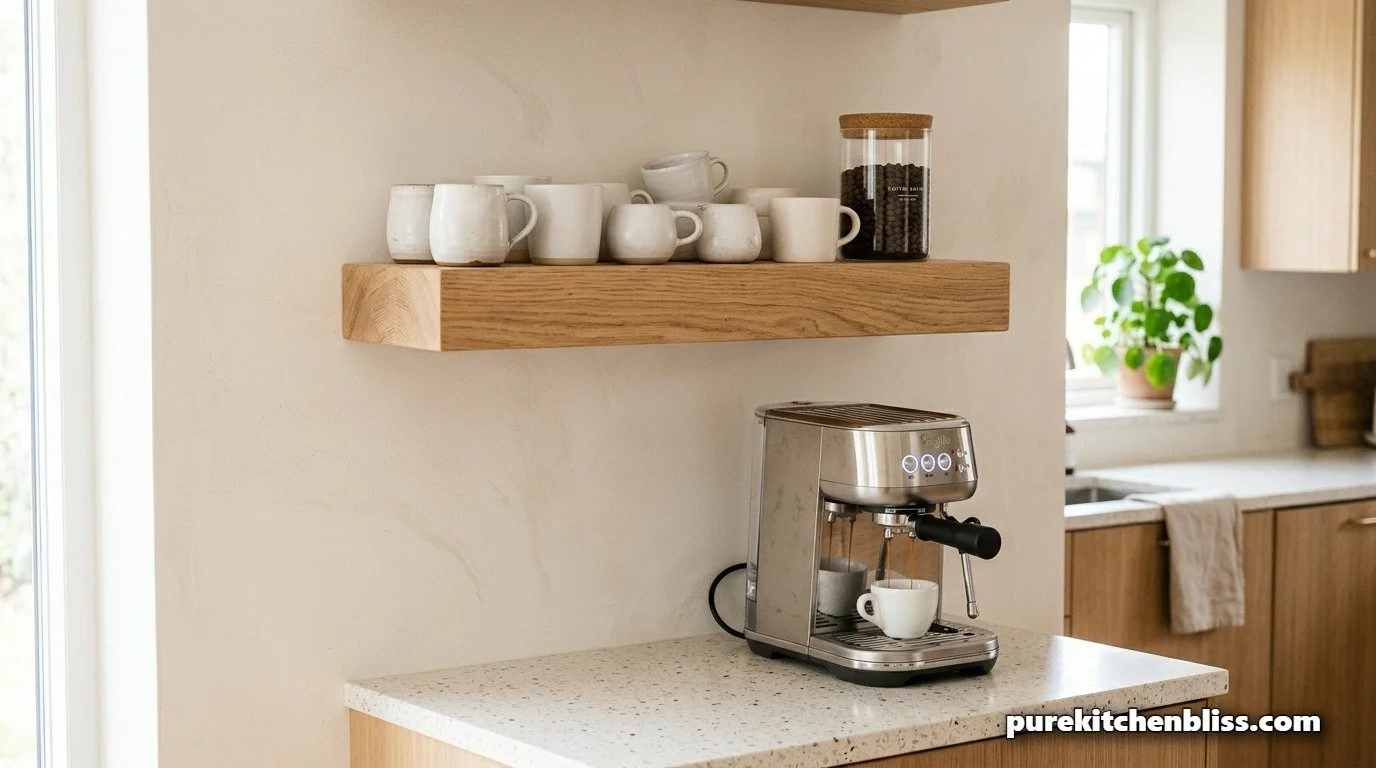
The Dedicated Coffee Niche: 2026’s Most Essential Kitchen Infrastructure
In the legacy kitchen layout, the coffee maker was an afterthought, a bulky appliance competing for space on the main counter, usually tucked under a cabinet where steam could eventually damage the wood finish. But in 2026, we are seeing a definitive shift toward the Dedicated Coffee Niche.
This isn't just a "decor trend"; it is a response to the "Morning Traffic Jam." By creating a secondary zone for coffee, you separate the beverage ritual from the meal-prep infrastructure. Whether it’s a recessed alcove, a hidden "appliance garage," or a plumbed-in espresso station, the coffee nook is the new heart of the high-performance kitchen.
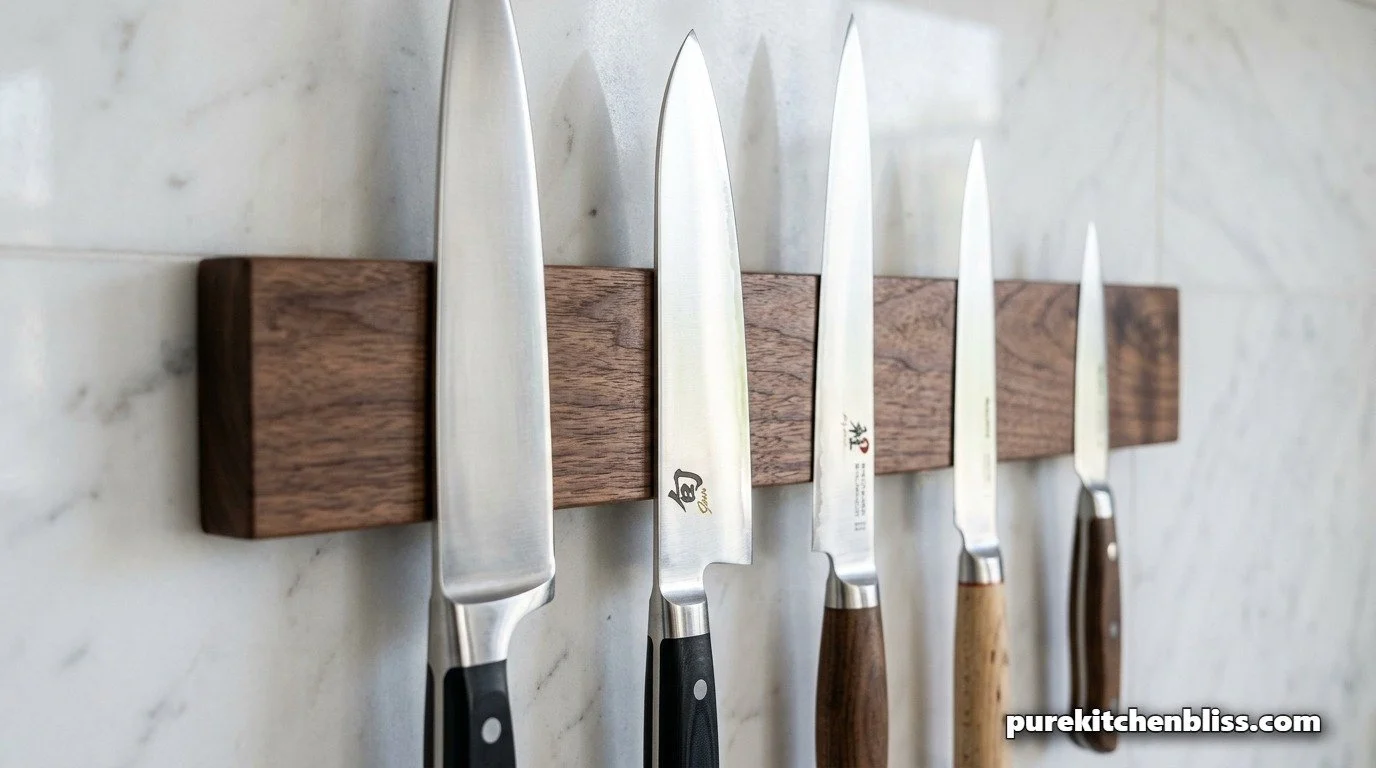
Magnetic Knife Strips: The Hygiene Case for Open Storage
In the world of professional kitchen design, the traditional wooden knife block is increasingly viewed as a legacy failure. While it provides a convenient place to dock your cutlery, the interior of those narrow wooden slots is a dark, unventilated environment where moisture from "mostly dry" knives can settle. Over time, this creates a hidden breeding ground for yeast and mold, a "bacteria box" sitting right on your counter.
For a high-performance kitchen, the solution is the Magnetic Knife Strip. By moving your blades to an open-air, vertical surface, you aren't just saving counter space; you are upgrading your kitchen’s sanitization infrastructure. When your blades are exposed to the ambient airflow of the room, they dehydrate instantly, breaking the biological cycle that leads to cross-contamination.
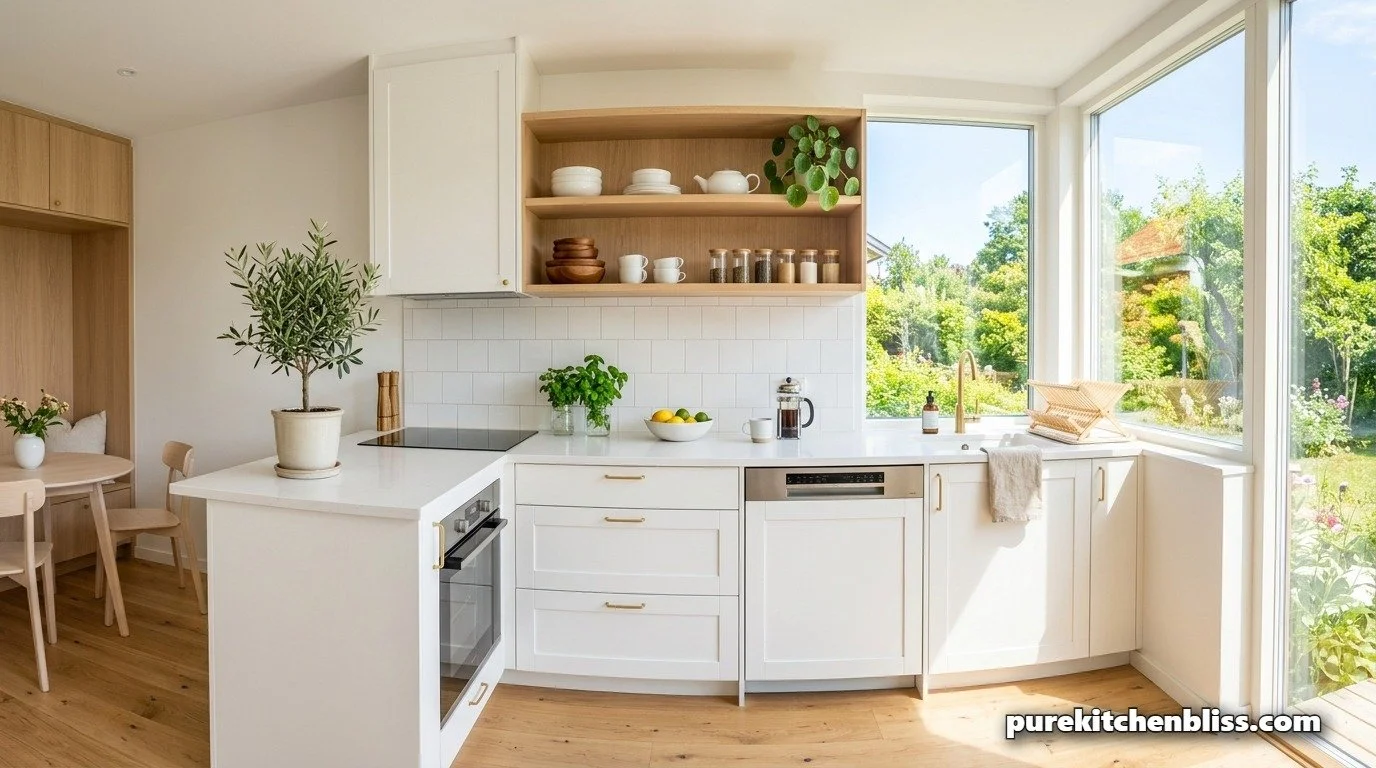
8 Small Kitchen Summer Decor Ideas: A Functional Design Guide
In a compact kitchen, "decor" can quickly become "clutter" if it doesn't serve a secondary purpose. During the summer months, the goal of your interior styling should be two-fold: maximizing the natural light reflecting off your sintered stone and maintaining a sense of "visual coolness" in a high-heat environment.
To upgrade your space for 2026, we are moving away from purely ornamental "trinkets" and focusing on functional aesthetics. Here are 8 small kitchen summer decor ideas that optimize your infrastructure while embracing the season.

The Green Dust: How to Clean and Prevent Moldy Lemons
It starts as a small, white fuzzy patch, but within 48 hours, a single lemon can transform into a pressurized vessel of green spores. If you’ve ever picked one up only to have it release a fine, "smoke-like" dust everywhere, you’ve experienced a spore-dispersal event.
In a high-performance kitchen, this is a serious maintenance hurdle. That green dust isn't just "dirt"; it is a colony of Penicillium looking for its next host. If those spores settle into the porous wood of a fruit bowl or the gaskets of your refrigerator, they can remain dormant for months, waiting to ruin the next batch of groceries. To protect your culinary sanctuary, you need a protocol that captures the dust before it migrates.
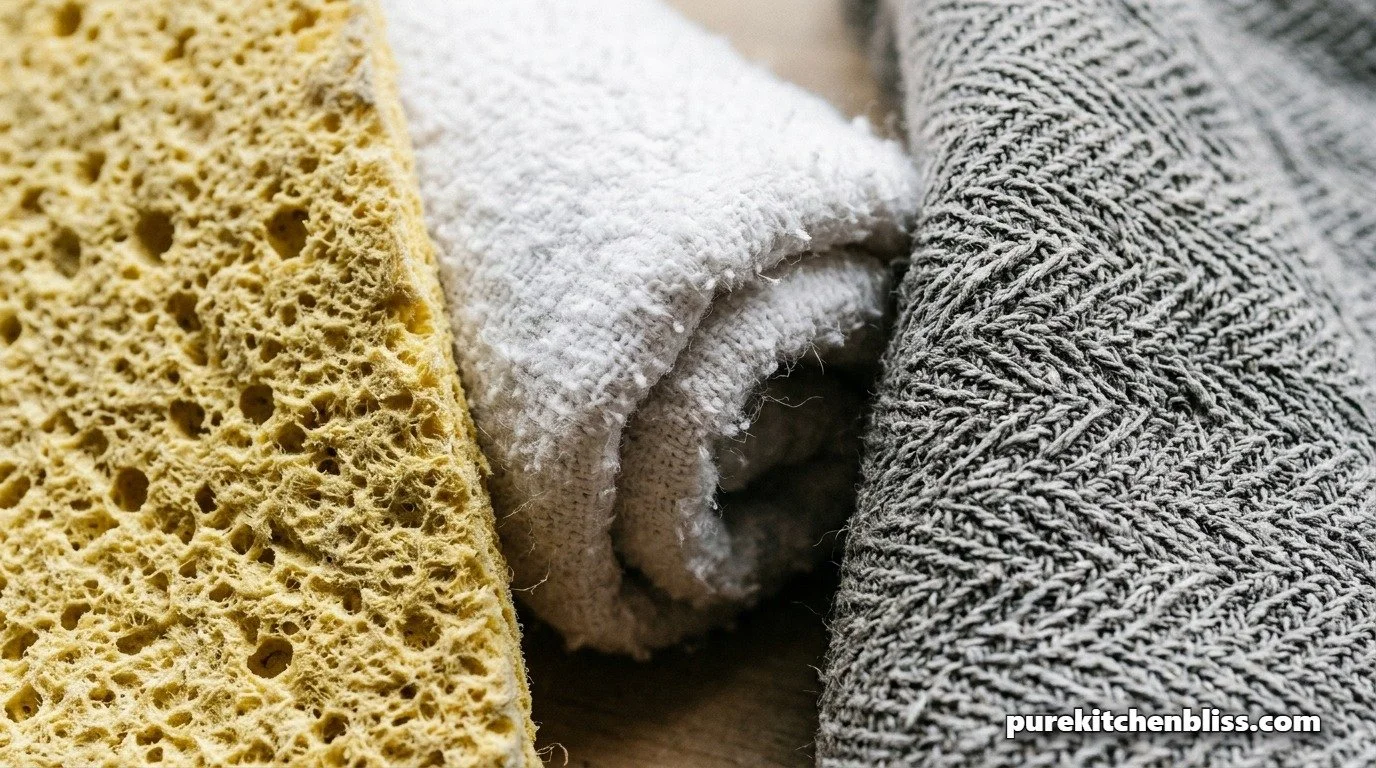
The Simple Swap That Finally Made Me Quit Paper Towels for Good
For years, I was stuck in the "disposable loop." I believed the myth that a truly clean kitchen required a never-ending supply of white, perforated paper towels. I was convinced that any reusable alternative would inevitably lead to a pile of soggy, sour-smelling rags sitting on my counter. But in a high-performance kitchen, the goal isn’t just to move a mess around, it’s to remove it.
The breakthrough didn't come from finding one "magic" towel. It came from realizing that a paper towel is a generalist tool trying to do specialized jobs. By matching specific high-performance textiles to specific kitchen tasks, I was able to retire my paper towel roll for good. This isn't just an eco-hack; it’s a systematic upgrade to your kitchen’s active infrastructure.