In a high-performance kitchen, the "feel" of the space is dictated by the mechanical tolerances of its moving parts. As we’ve established with our hard water defense systems, the longevity of a kitchen depends on the quality of its internal components.
The most frequent point of physical contact in your home isn't the countertop; it's the cabinet hinge. A "slamming" cabinet door is more than an acoustic nuisance, it's a sign of a mechanical system failing to decelerate. To achieve a true "Zero-G" feel where doors glide into place, you need to understand the hydraulic dampening hidden inside the hinge cup.In a high-performance kitchen, the "feel" of the space is dictated by the mechanical tolerances of its moving parts. As we’ve established with our hard water defense systems, the longevity of a kitchen depends on the quality of its internal components.
1. The Physics of Deceleration
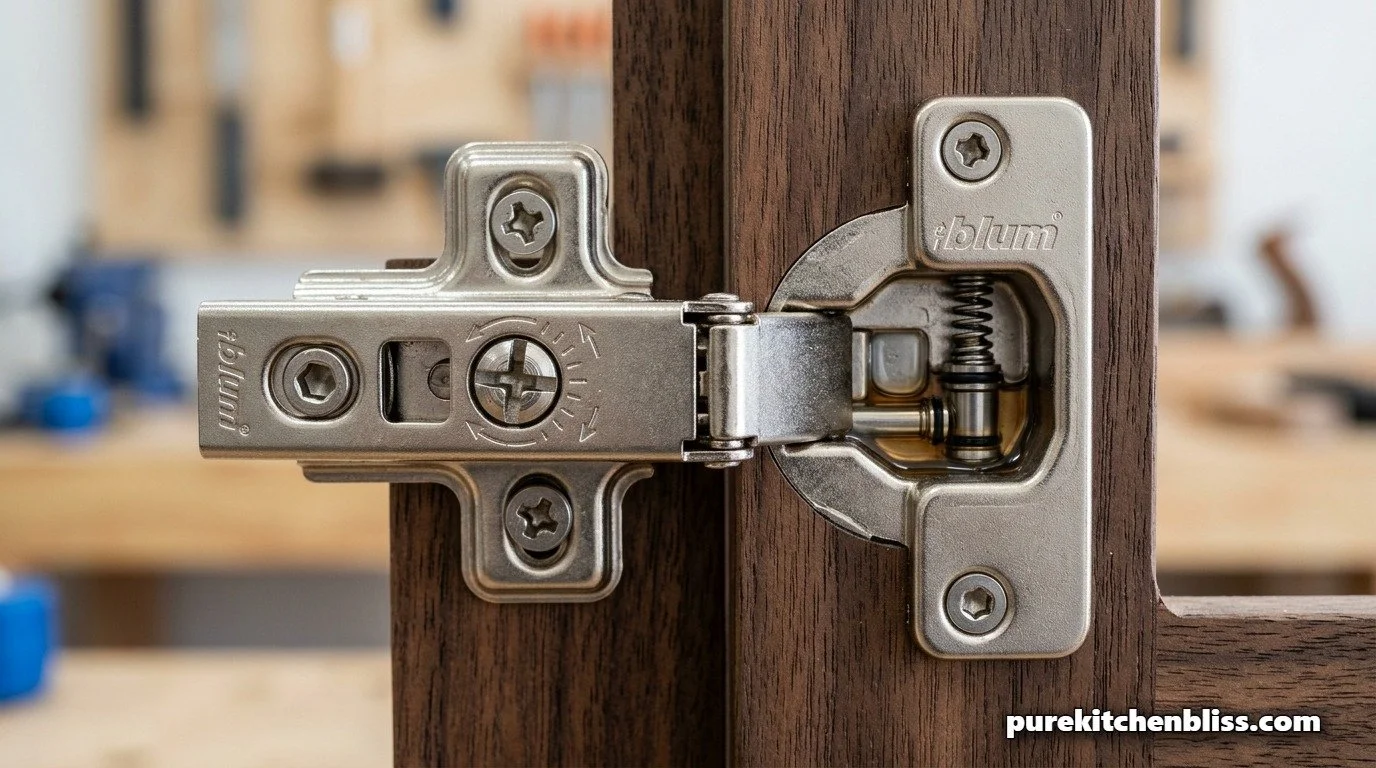
Modern soft-close hinges utilize a miniature hydraulic cylinder. When the door reaches a 25-degree angle, the arm engages the piston, which compresses a specialized fluid. This fluid creates resistance, absorbing the kinetic energy of the door and releasing it slowly.
Newtonian Force: A standard 3/4-inch plywood door carries significant momentum. If the hydraulic seal is poor, the "rebound" can actually pull the mounting screws out of the soft wood over time.
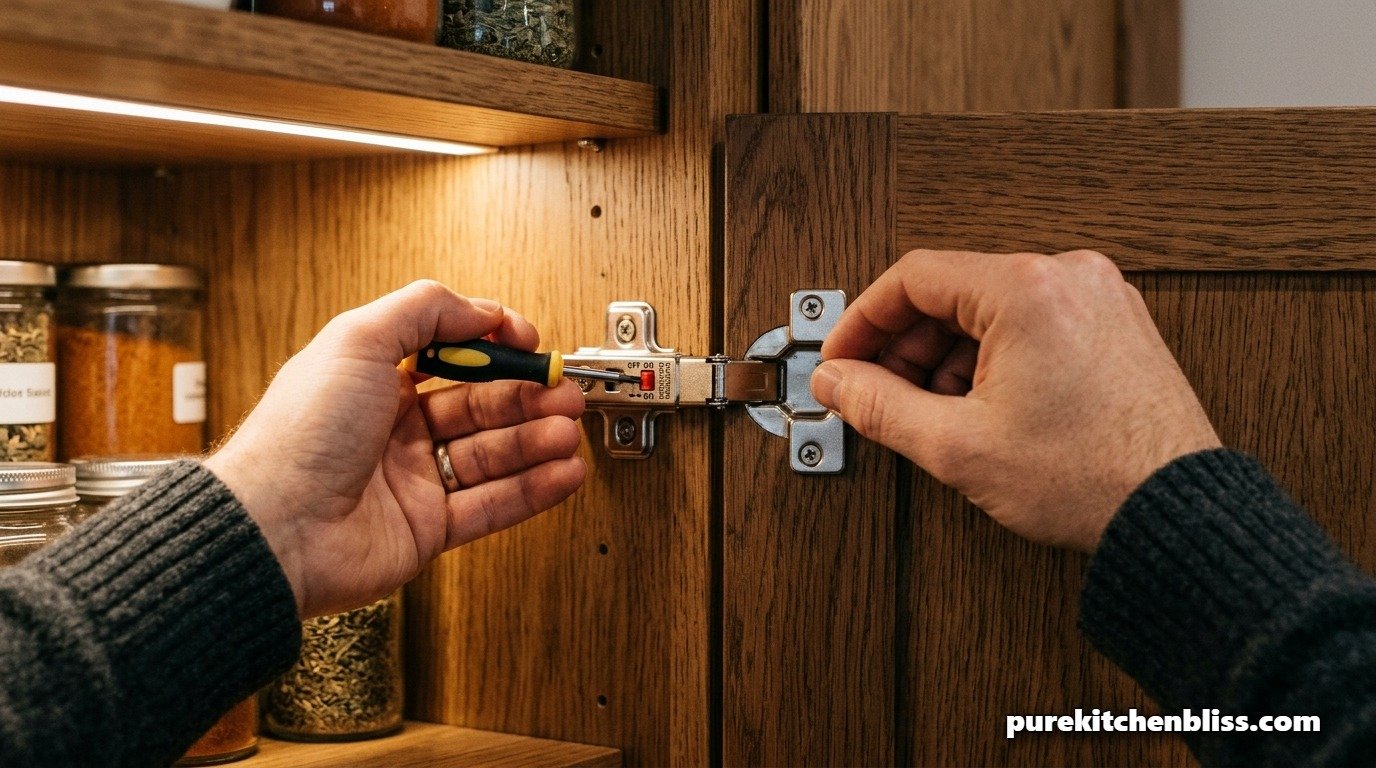
The "Silent" Standard: High-end hinges allow you to toggle the dampening force. If a door is too light, it may stall before closing; if it’s too heavy (like a spice rack door), it may still slam.
2. The Three-Way Adjustment Protocol
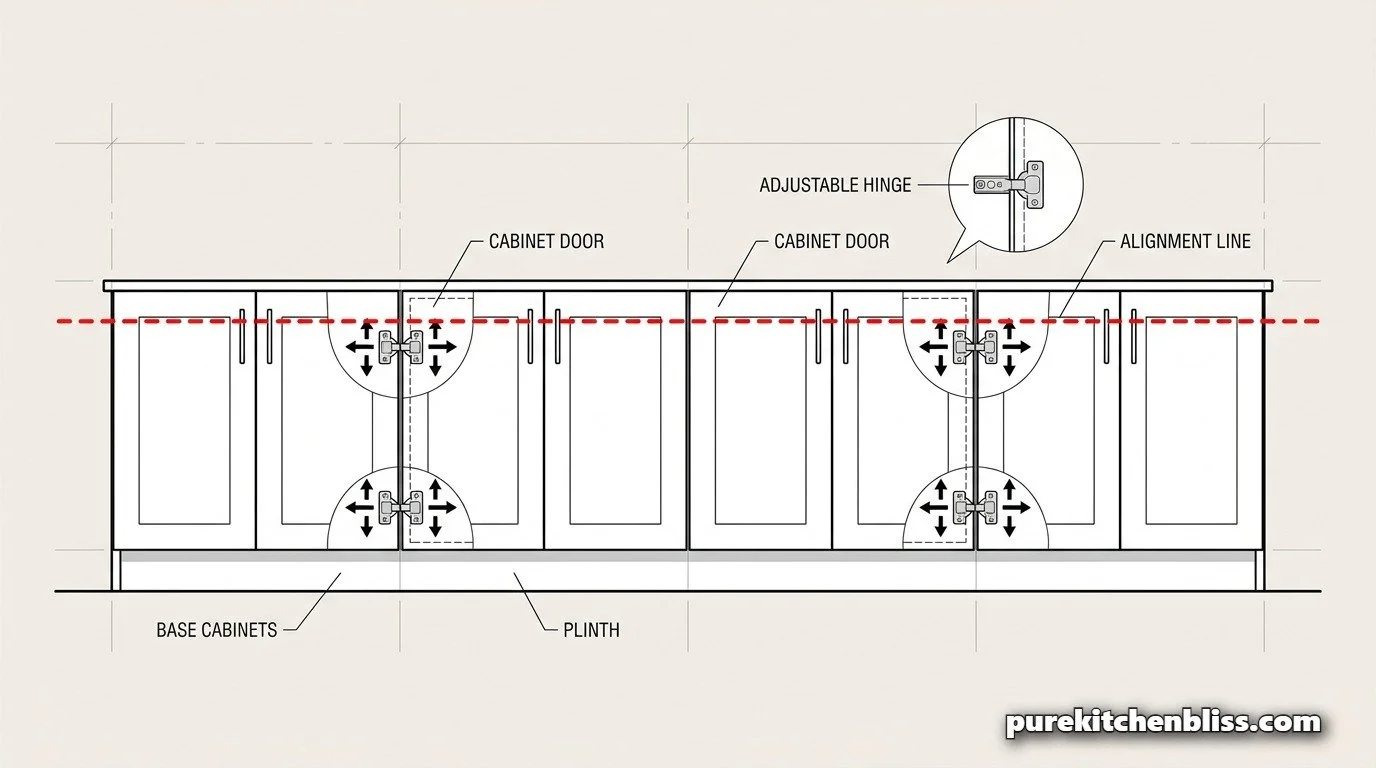
A master-level cabinet installation is defined by the "gaps"—the 1/8-inch reveals between doors. Because wood is a living material that reacts to humidity, these gaps shift.
Depth Adjustment: Controls how flush the door sits against the frame.
Lateral (Side-to-Side) Adjustment: Centers the door within the opening.
Vertical Adjustment: Ensures the "horizon line" of your cabinetry is perfectly level across the entire run.
3. Comparison: Mechanical Grade Levels
| Hardware Tier | Mechanism Type | Lifecycle Rating |
|---|---|---|
| Builder Grade | External "Bumper" add-on | Low (Frequent failure) |
| Sanctuary Grade | Integrated Hydraulic Hinge | 200,000+ Cycles |
4. Protecting the "Rough-in"
Just as scalding water can damage sensitive plumbing, physical force can damage the "bones" of your cabinets. Soft-close hardware acts as a mechanical fuse, preventing the constant vibration and impact that leads to cracked paint and loose face frames.
Next Up: Take control of your water temperature and safety with our 120°F Reset: How to Prevent Kitchen Sink Scalds Permanently.