As a carpenter and a father of four, I’ve seen my share of "near misses" in the kitchen. We spend thousands on sintered stone countertops and high-end espresso machines, but we often overlook the most dangerous "Invisible Infrastructure" in the room: the temperature of the water coming out of the tap.
In a standard home, the water heater is often set to 140°F (60°C) to kill bacteria and ensure the dishwasherruns effectively. However, water at 140°F can cause a third-degree burn on a child’s delicate skin in less than three seconds.
To turn your kitchen into a true sanctuary for a growing family, you need more than just a "caution" sign. You need a Thermostatic Mixing Valve (TMV).
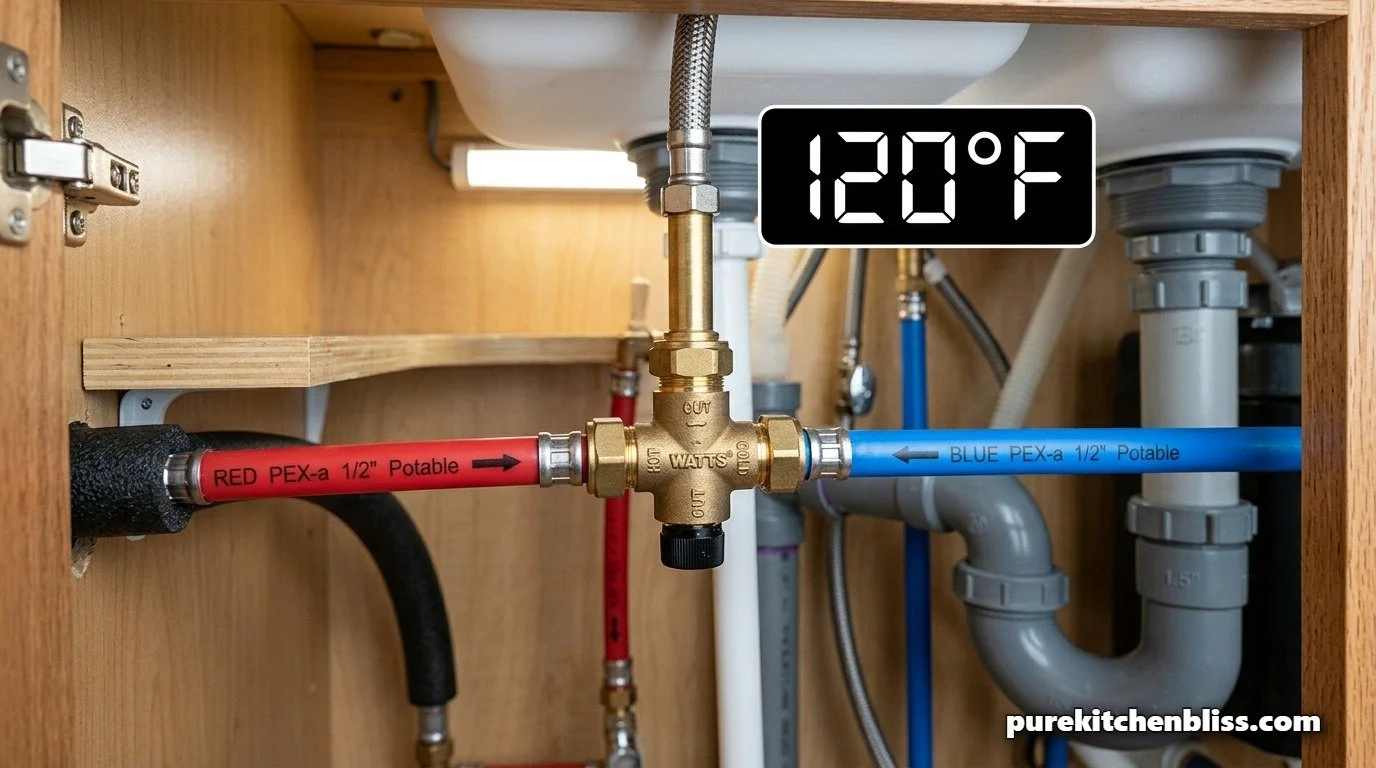
1. The Physics of the Scald: Why 120°F is the Magic Number
Children’s skin is significantly thinner than an adult's, meaning heat penetrates deeper and faster.
The Danger Zone: At 140°F, a "quick wash" of the hands can turn into a hospital visit in the time it takes to blink.
The Safety Zone: By installing a TMV, you can "cap" the output at 120°F (49°C). At this temperature, it takes nearly five minutes of constant exposure to cause a serious burn. This creates a massive "safety buffer" that allows your kids to learn independence at the workstation sinkwithout the risk of a life-altering accident.
2. The Infrastructure: What is a Thermostatic Mixing Valve?
Most people assume the only way to lower water temperature is at the water heater. But lowering the main tank temperature can lead to Legionella growth and poor dishwasher performance.
The "Builder" Solution: A TMV is a mechanical device installed under the sink. It "senses" the temperature of the incoming hot water and automatically injects just enough cold water to hit your target "safety cap" before it reaches the faucet.
The Hidden Benefit: Even if someone else in the house flushes a toilet or starts the laundry, the TMV adjusts in real-time to prevent "thermal shock"—that sudden spike in hot water that causes kids to jump back and potentially slip.
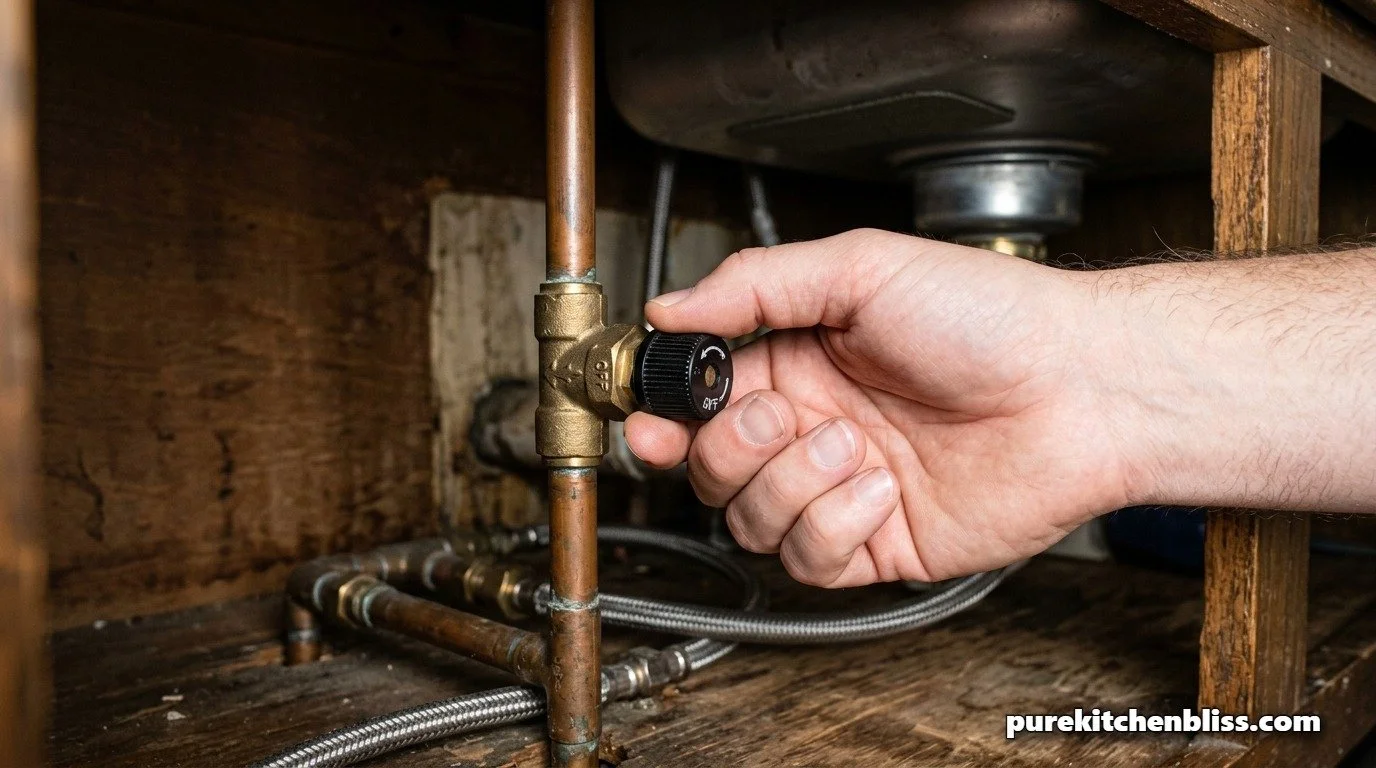
3. Specified Equipment: The "Anti-Scald" Kit
To implement this safety infrastructure, you need a high-reliability valve that won't seize up over time due to hard water.
The Mixing Valve: Look for an ASSE 1070 certified valve. This is the plumbing code standard for "point-of-use" scald protection.
The Installation Tool: Since we are working with PEX or copper lines under the sink, a simple adjustable wrench and some plumber's tape are usually all that’s required for a retro-fit.
4. Comparison: Water Heater Adjustment vs. Under-Sink TMV
| Method | Dishwasher Performance | Safety Level |
|---|---|---|
| Turn Down Water Heater | Poor (Grease won't dissolve). | Global (All taps). |
| Manual Mixing | Unchanged. | None (Requires constant supervision). |
| Under-Sink TMV | Perfect (Dishwasher gets 140°F). | Maximum (Mechanical Lock). |
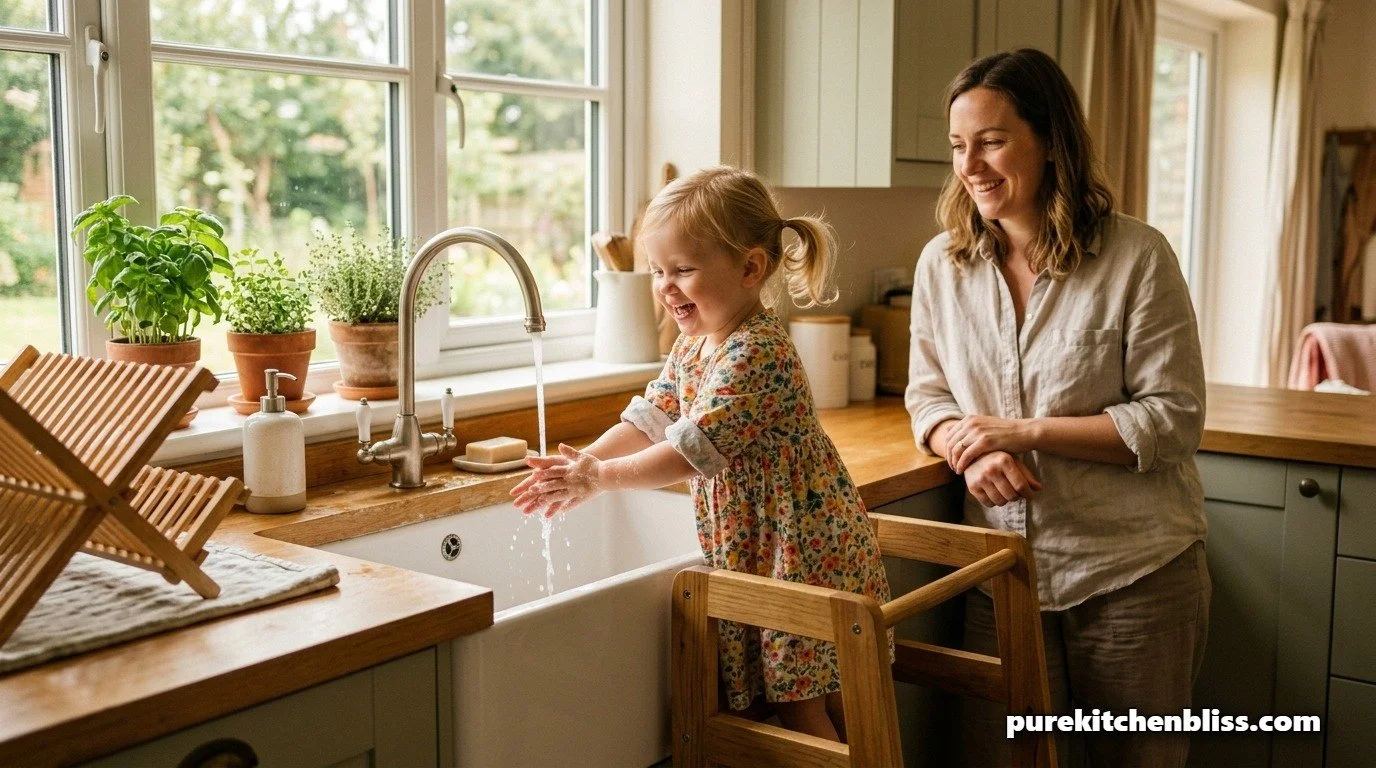
5. Maintenance: The Annual "Exercise"
Like any part of your kitchen's infrastructure, from your dishwasher filter to your magnetic knife strip, a mixing valve needs occasional attention.
The "Exercise" Rule: Once a year, turn the adjustment dial on the valve all the way to cold and then back to your 120°F setting. This prevents mineral buildup from locking the internal piston.
The Clean Check: If you notice a drop in water pressure at the sink, check the small mesh screens at the "In" ports of the valve. They can catch sediment from the hot water tank.
Conclusion: Building a Better Sanctuary Childproofing isn't just about covering sharp corners. It’s about managing the energies and temperatures that flow through your home. By installing a thermostatic mixing valve, you are creating an invisible safety net that allows your kitchen to be a place of exploration for your kids and a place of peace for you. High-performance safety is the foundation of the modern sanctuary.