In our quest for a silent sanctuary and pristine mechanicals, we often overlook the smallest tools in our arsenal. The standard synthetic scouring pad is a workhorse—cheap, abrasive, and effective. But as a builder, I look at the "wear cycle" of a tool. Where does that material go when it disappears?
I once had a friend who I realized would use a brand-new pad every single day. I was blown away by what I thought was pure waste, but it pushed me to look deeper into the mechanical reality of these scrubbers. What I found changed how I view the "cleanliness" of a kitchen.
1. The "SpongeBot" Discovery
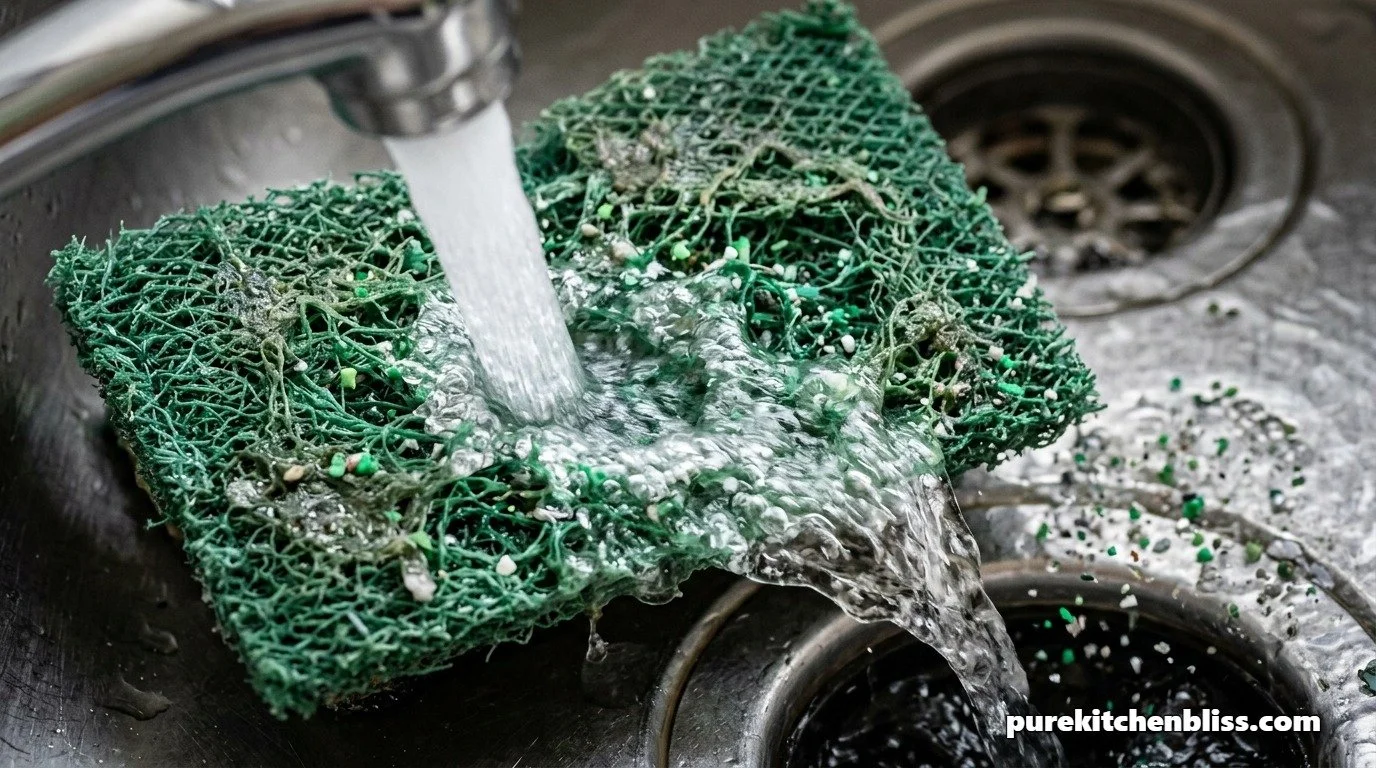
Recent studies using "SpongeBot" technology, a mechanical device that simulates thousands of scrubs, have confirmed a disturbing trend. Every time you use a synthetic pad on a rough surface, it sheds microplastics.
The Drain Pipeline: These plastic fragments are too small for your workstation sink filters to catch. They bypass municipal filtration and head straight into the aquatic ecosystem.
The Volume: While a single scrub seems negligible, a household using these daily can shed several grams of plastic per year. Multiplied by millions of homes, this is a massive, invisible load on the fabric of our environment.
2. Polyurethane vs. The Earth
Most of these pads are made from polyurethane or nylon—petroleum-based plastics that do not biodegrade.
The Landfill Legacy: A pad used for a week will sit in a landfill for 500 years. If a new one is tossed daily, it creates a legacy of waste that outlasts the house itself.
The "Clean" Paradox: We use these tools to sanitize our sanctuary, yet they leave behind microscopic residues and plastic "flaking" that can end up on our "clean" dishes.
3. Comparison: Scouring Tiers
| Scrubber Type | Material Source | End-of-Life |
|---|---|---|
| Standard Synthetic | Petroleum/Nylon | 500-Year Landfill |
| Coconut/Sisal Husk | Plant-Based Fiber | 100% Compostable |
4. The Sanctuary Alternative
You don't have to sacrifice abrasive power to maintain your environmental integrity.
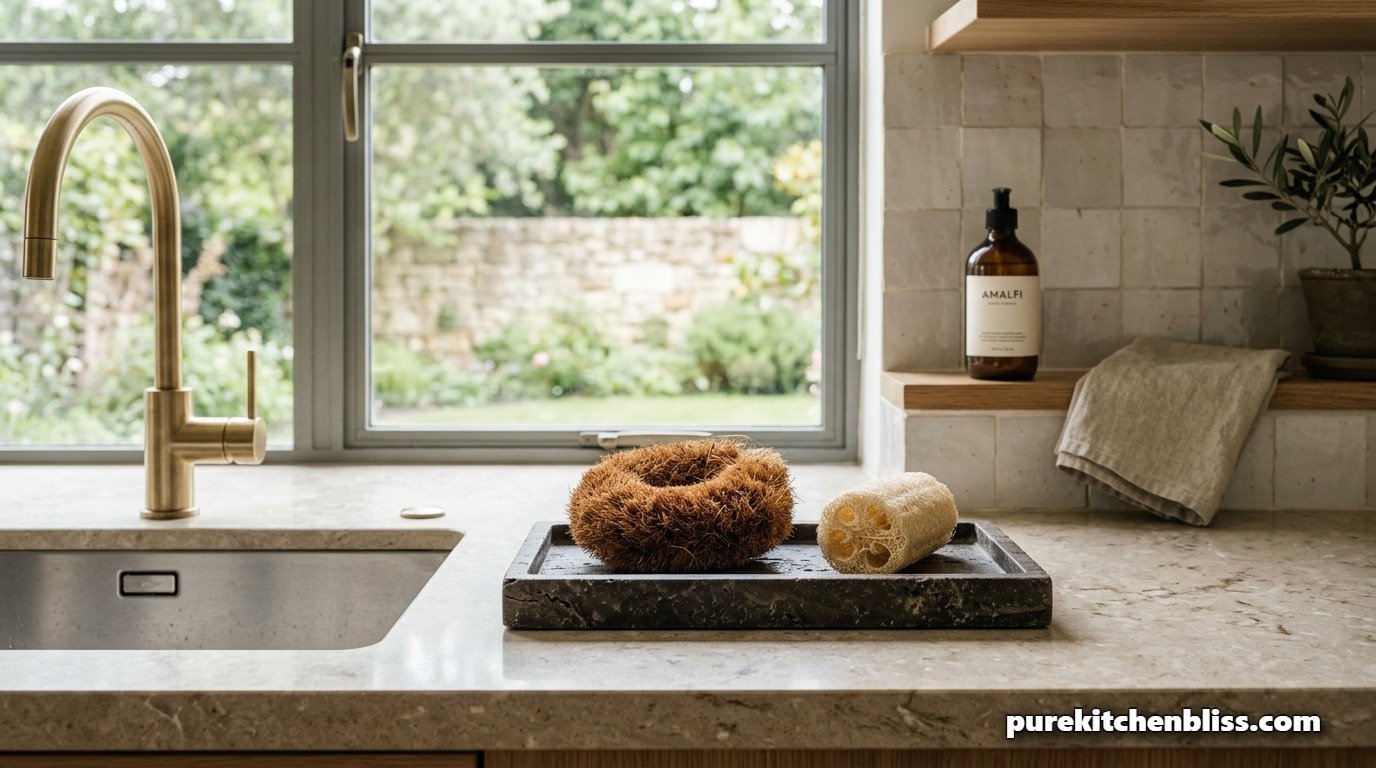
The Loofah/Coconut Move: Natural fibers like sisal or coconut husk provide the same "tooth" as synthetic nylon but break down in a compost bin in months.
The Hygiene Reset: To prevent the bacterial buildup that leads to smelly kitchen odors, choose natural pads that dry quickly. Unlike synthetic foam which traps moisture, open-weave natural fibers allow for the airflow needed to keep your Sanctuary sterile.
Next Up: Complete your silent mechanical setup with our The Silent Sanctuary: Soft-Close Mechanicals & Hinges.