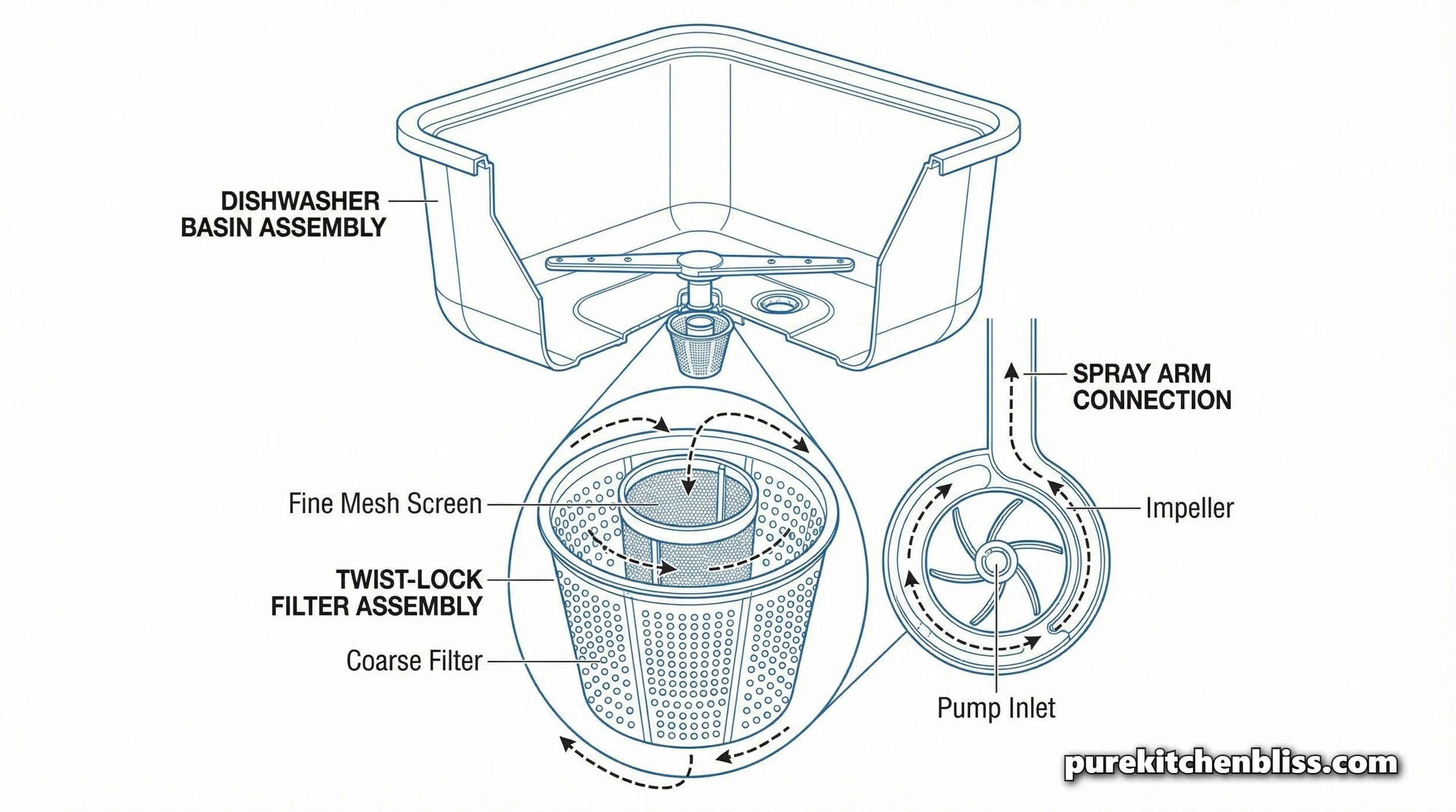
How to Deep Clean Your Dishwasher and Fix Common Issues
In a high output kitchen, the dishwasher is a critical piece of infrastructure. It is designed to circulate high-temperature water, break down food particles, and pump waste out through a drain line. When this process works efficiently, it is a closed-loop hydraulic system. When it fails, it manifests as water stagnation, poor cleaning performance, and the eventual failure of the internal pump assembly.
Most dishwasher failures are not sudden "catastrophes." They are the result of gradual neglect. Calcium deposits, mineral scale, and organic buildup accumulate in the filtration system, forcing the pump to work against resistance. This creates heat, causes premature bearing wear, and forces the motor to operate outside of its design specifications. This guide outlines the professional steps to maintain this system at peak operational efficiency.
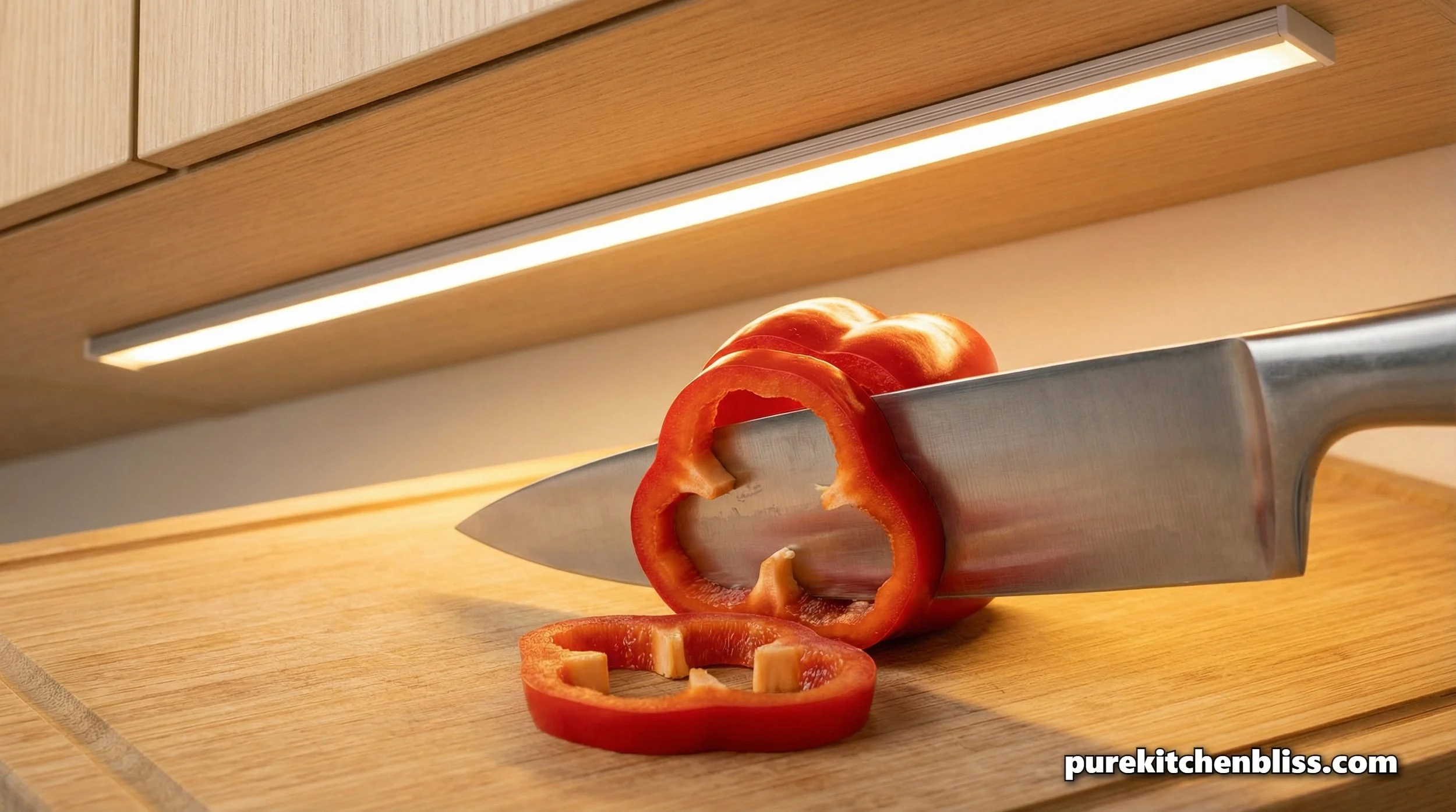
A Simple Guide to Choosing Under-Cabinet Lights
In a high-performance kitchen, lighting is the primary interface between the user and the workspace. If you cannot see the precise state of your ingredients, the doneness of a protein, the freshness of produce, or the accuracy of a knife cut, you are operating with a structural deficit. Most residential kitchen lighting relies on ambient overhead fixtures that create "backlighting," casting your workspace into a shadow while you are trying to work.
Under-cabinet lighting is the correction for this failure. It transforms the counter from a dark, shadowed surface into a high-visibility, precision workspace. However, not all lighting is created equal. Most "consumer-grade" LED kits prioritize aesthetic brightness over Color Rendering Index (CRI) and Thermal Stability. This audit evaluates the technical requirements necessary to build a permanent, professional-grade lighting infrastructure that enhances safety and visual clarity.
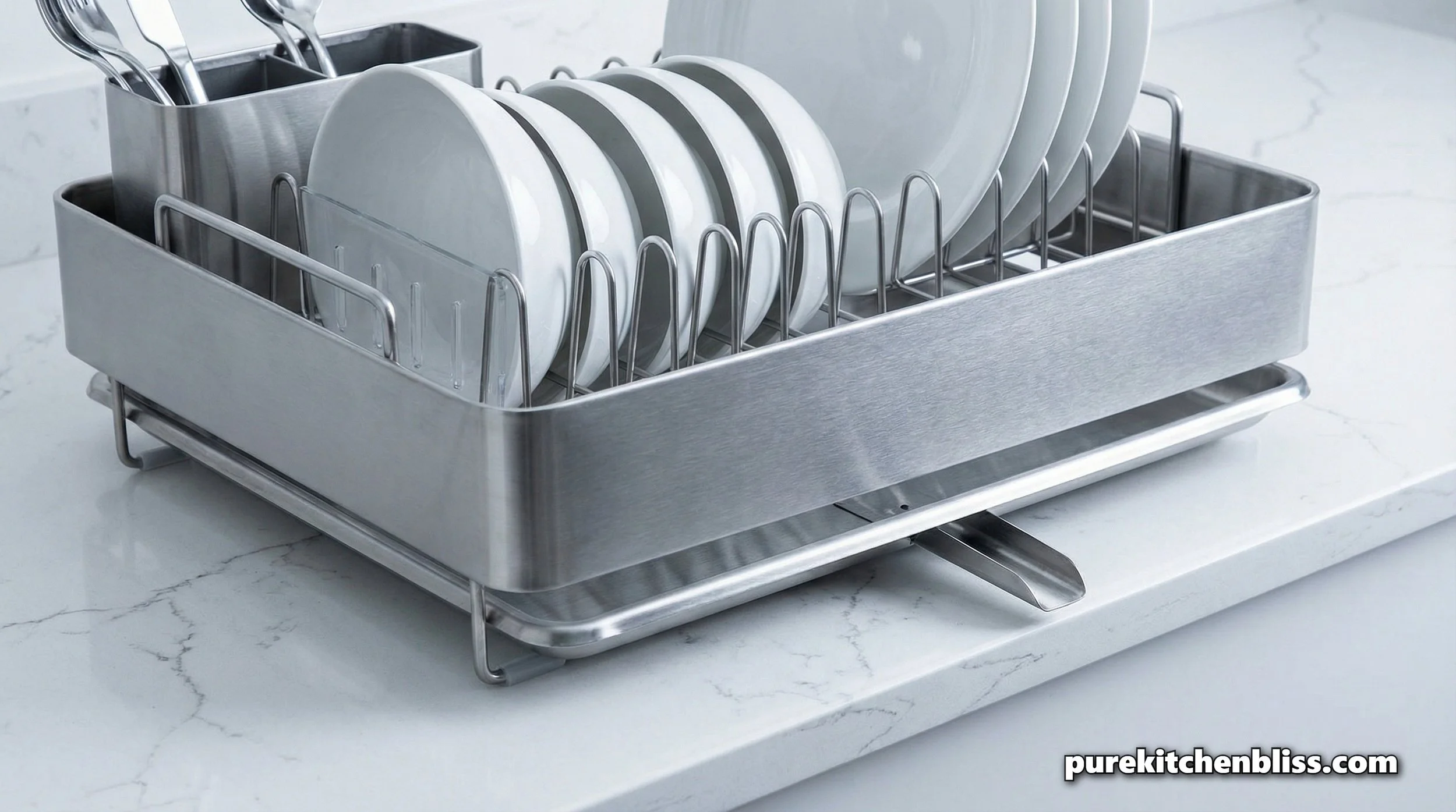
The Best Slim Dish Racks for Small Kitchens
In a high-output kitchen, counter space is the most valuable real estate. A drying rack should not just hold wet items; it is a piece of infrastructure that must manage moisture, prevent microbial growth, and facilitate rapid evaporation. If your rack fails to do this, it’s not a tool, it’s a permanent wet spot that invites oxidation and bacterial colonization.
The following list prioritizes "Structural Integrity" and "Hydro-Dynamics." We evaluated these models based on three specific metrics: Material Fatigue (how they handle wet environments), Flow-Dynamics (how effectively they move water away from the dishes), and Spatial Density (how much volume they handle per square inch of countertop).
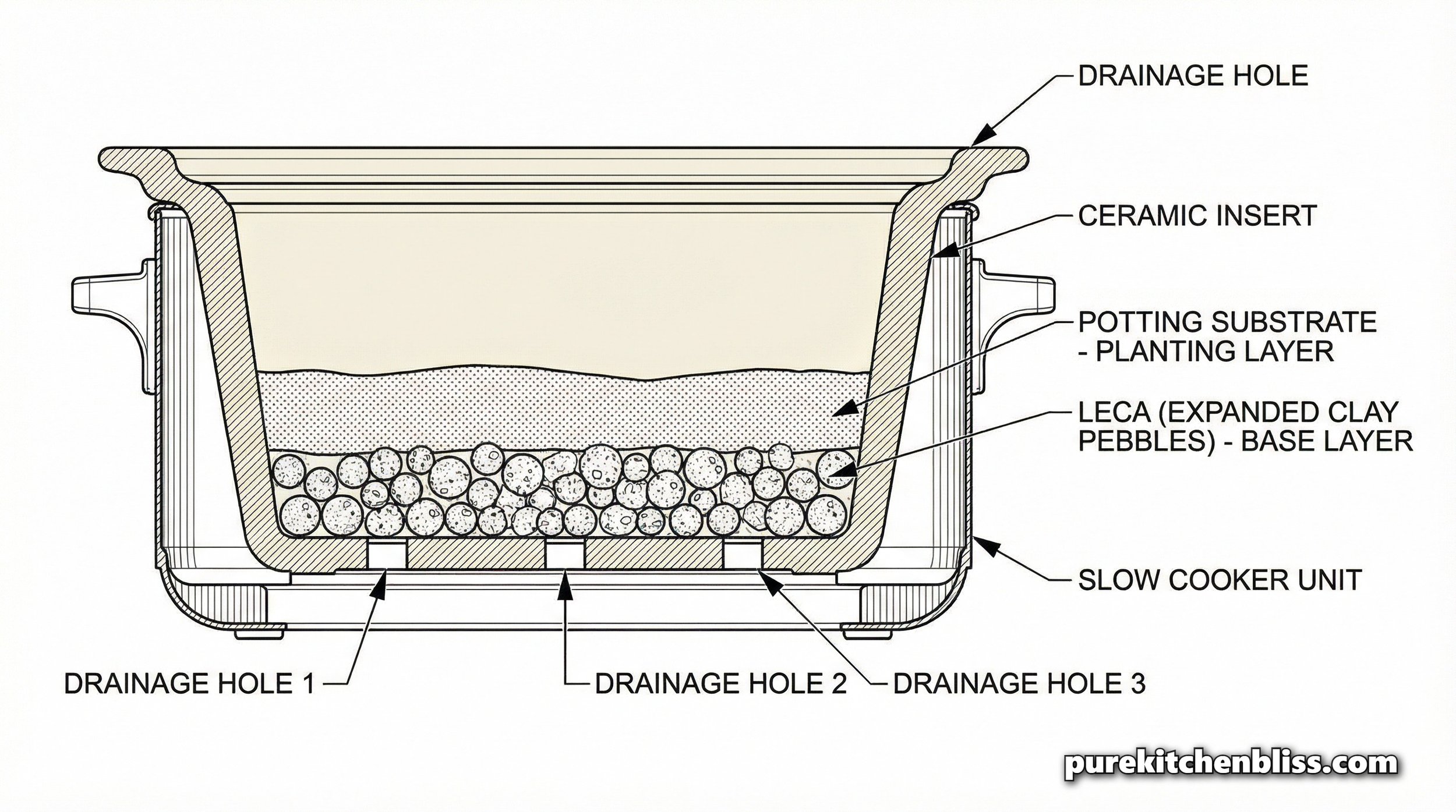
How to Turn an Old Slow Cooker into a Perfect Planter
Material efficiency is the hallmark of a functional kitchen. A ceramic slow cooker insert is often overlooked as a piece of equipment, but it is an ideal candidate for home infrastructure. It is heavy, non-reactive, and possesses excellent thermal mass, meaning it resists rapid temperature swings. These thermal properties are vital for stabilizing a plant’s root system, which is arguably the most sensitive part of any living organism in your kitchen.
Many standard upcycling guides suggest using these inserts as "cachepots”, hiding a plastic nursery pot inside. While this is simple, it creates a "dead zone" between the two vessels. This space acts as an incubator for trapped moisture, mold, and stagnant air, which can compromise the air quality of your sanctuary. Instead, this protocol builds a permanent extraction system directly into the vessel itself, turning it into a dedicated, high-performance home for your Unkillable Plants.
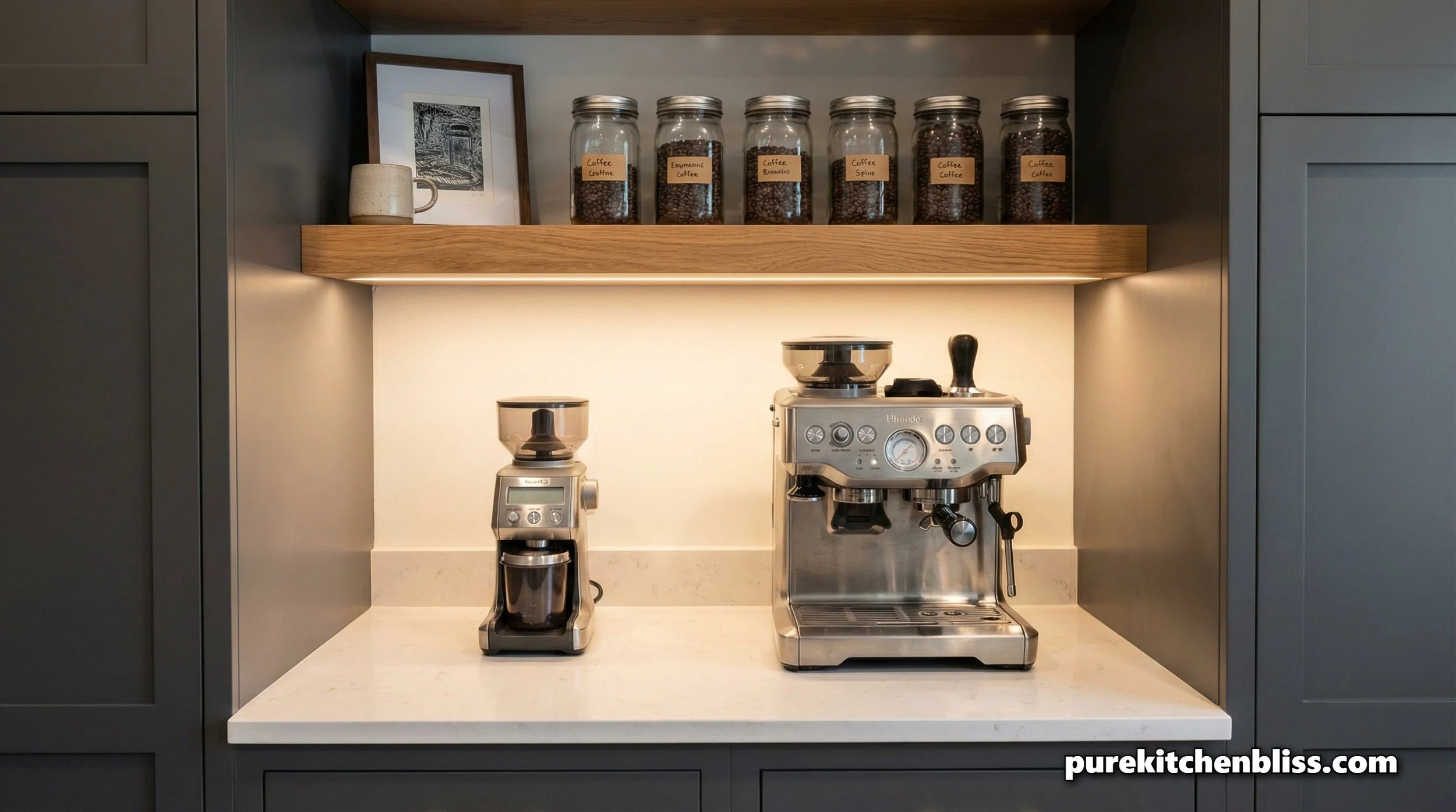
The Ultimate Kitchen Coffee Station
In a house with four daughters, the morning routine is a high-demand "production run." As a builder-curator, I don't see a coffee station as just a place for a machine; I see it as a high-traffic utility zone. If you simply plop an espresso machine under a cabinet, you are ignoring the two primary threats to your kitchen’s "bones": aerosolized steam and the mechanical wear of daily use.
To build a sustainable sanctuary, your coffee station needs more than just an outlet. It needs a "workflow infrastructure" that manages water access, heat dissipation, and thermal protection. Whether you’re a pour-over minimalist or a dual-boiler espresso enthusiast, here is how to engineer a station that supports your Monday Morning Momentum.
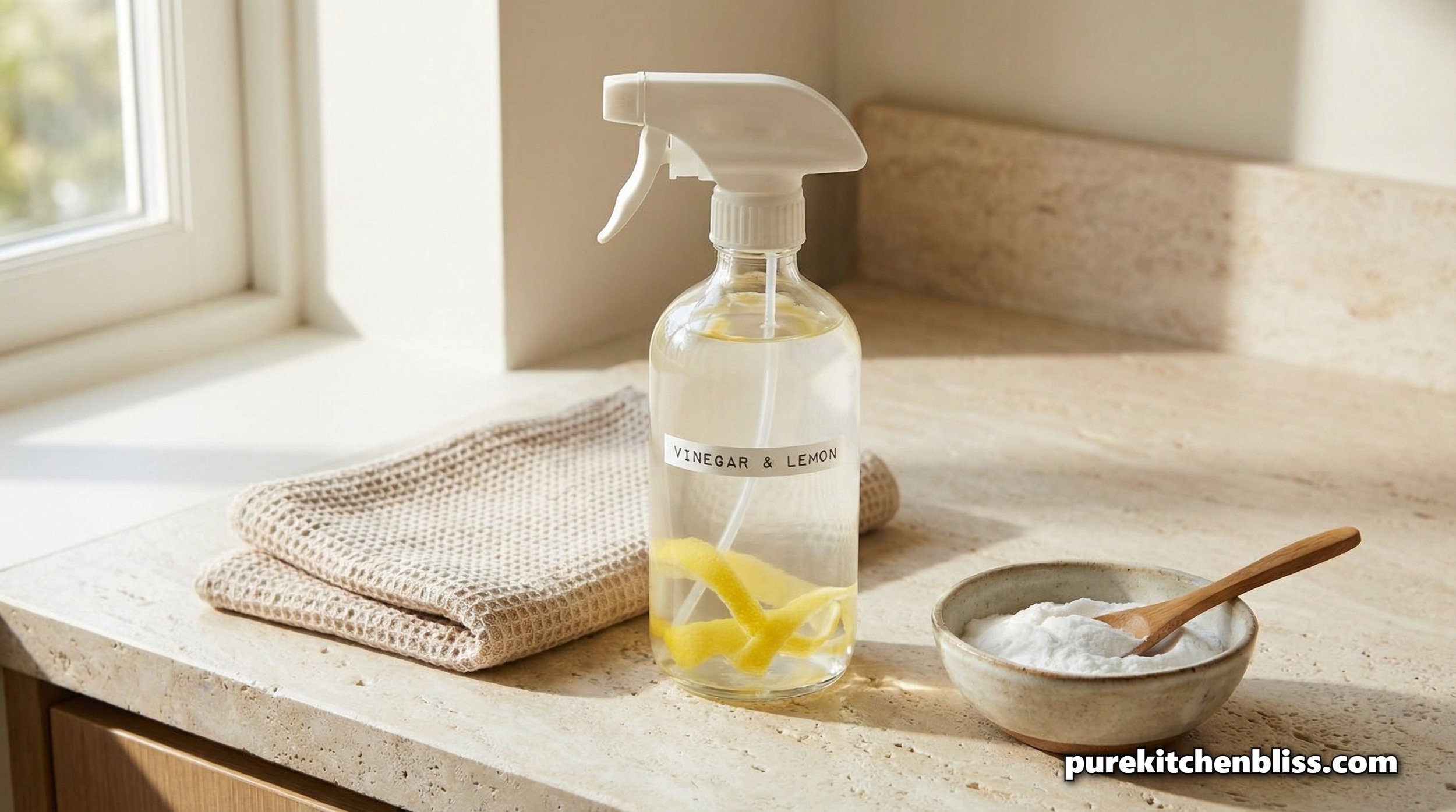
7 Brilliant Uses for Vinegar in Your Kitchen Sanctuary
In the arsenal of a Builder-Curator, distilled white vinegar is the "acidic workhorse." As a Red Seal Carpenter, I appreciate vinegar because it’s a low-pH solvent that breaks down mineral deposits and alkaline residues without compromising the structural integrity of your home's air quality. In a house with four daughters, we strictly avoid the harsh, synthetic fumes of commercial cleaners.
Vinegar is the ultimate tool for maintaining a sustainable sanctuary because it’s edible, biodegradable, and incredibly effective at a molecular level. It consists of roughly 5% acetic acid, which makes it a natural "chemical extraction" tool. It doesn't just mask odors; it physically dissolves the bonds of hard water minerals, grease, and even the stubborn "biofilm" we discussed in the Smelly Sink Guide.
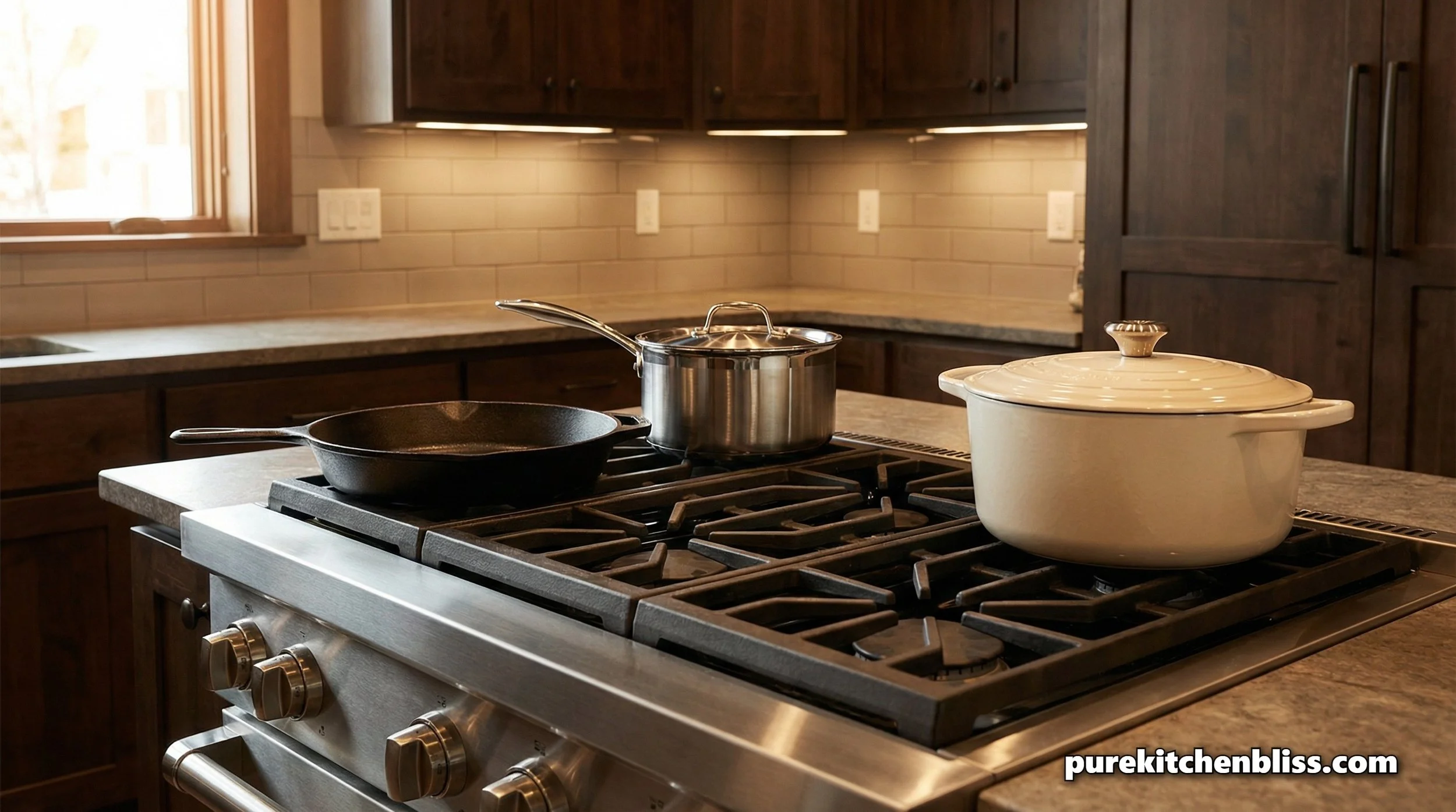
The Healthy Kitchen Audit: Choosing Non-Toxic Cookware
In my 20 years in the trades, I’ve learned that the quality of your finish is only as good as the substrate you apply it to. In the kitchen, your cookware is the substrate for every meal your family eats. If you are using pans coated in PFOAs or "forever chemicals" (PFAS), you are introducing a structural weakness into your Sustainable Sanctuary.
Most modern "non-stick" pans rely on a thin chemical film that begins to degrade the moment it is overheated or scratched. As a Builder-Curator, I prioritize materials that are inert, durable, and mechanically sound. To protect the "soft infrastructure" of your four daughters’ health, we need to transition to cookware that doesn't off-gas or leach toxins into your food.
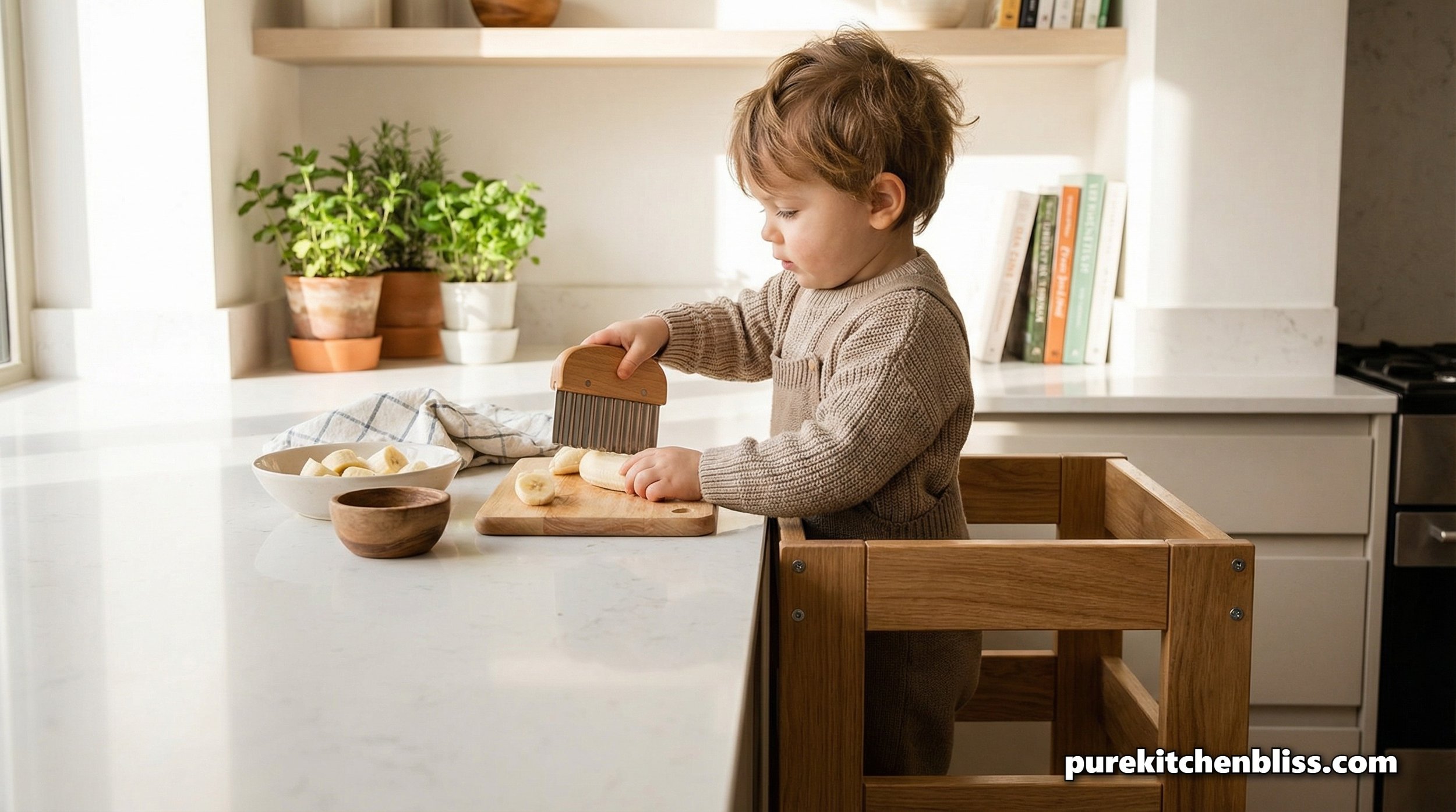
5 Fun and Safe Kitchen Tools for Toddlers Helping Mom
In a house with four daughters, I’ve seen the transition from "toddler chaos" to "capable sous-chef" many times. As a builder-curator, I look at a toddler in the kitchen as an apprentice entering a high-output workspace. To make it a sustainable sanctuary, we need to provide them with "small-scale infrastructure," tools that are ergonomically designed for their "soft infrastructure" (developing motor skills) while maintaining strict safety standards.
Involving toddlers isn't just about keeping them busy; it’s about apprenticeship. Most parents hesitate to let toddlers help because of the "Sharp and Hot" nature of the environment. But as a builder, I know that if you give a worker the wrong tool for the job, an accident is inevitable. By curating a specialized toolkit, you allow your child to participate in the Monday Morning Momentum without compromising the safety of your sanctuary.
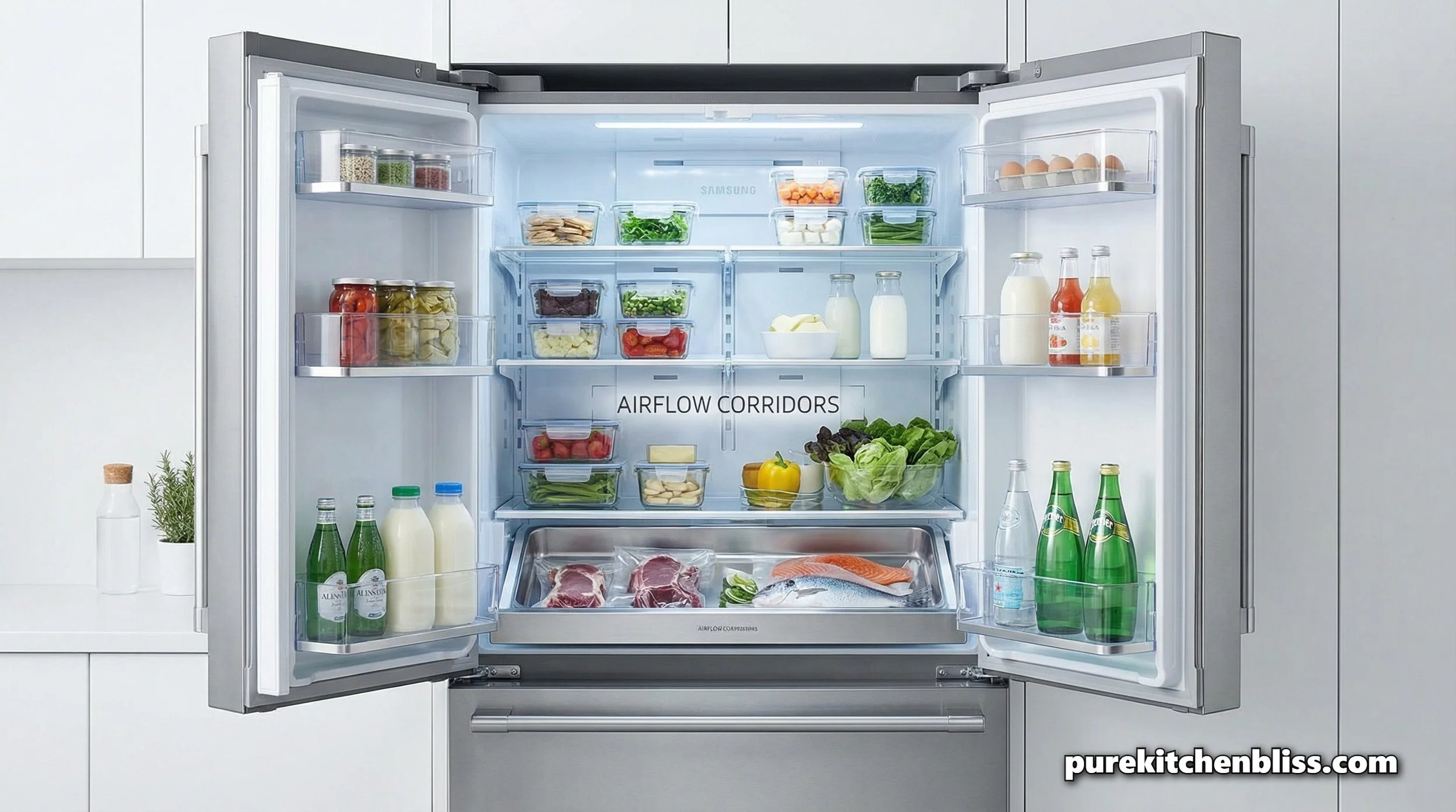
Professional Fridge Organization: The Thermal Zoning Protocol
To a builder-curator, a refrigerator is a controlled atmosphere infrastructure. It is a specialized machine designed to manage the "thermal load" of your household’s food supply. Most people treat their fridge like a closet—stuffing items wherever they fit. But in a high-output home with four daughters, a disorganized fridge is a structural failure that leads to "Forgotten Zones," cross-contamination, and massive food waste.
In a Sustainable Sanctuary, we don't just "organize"; we implement thermal zoning. This is the professional strategy of matching the biological needs of your food to the specific temperature gradients within the machine. By treating your fridge as a decision-support system, you protect both your family’s health and your grocery budget.
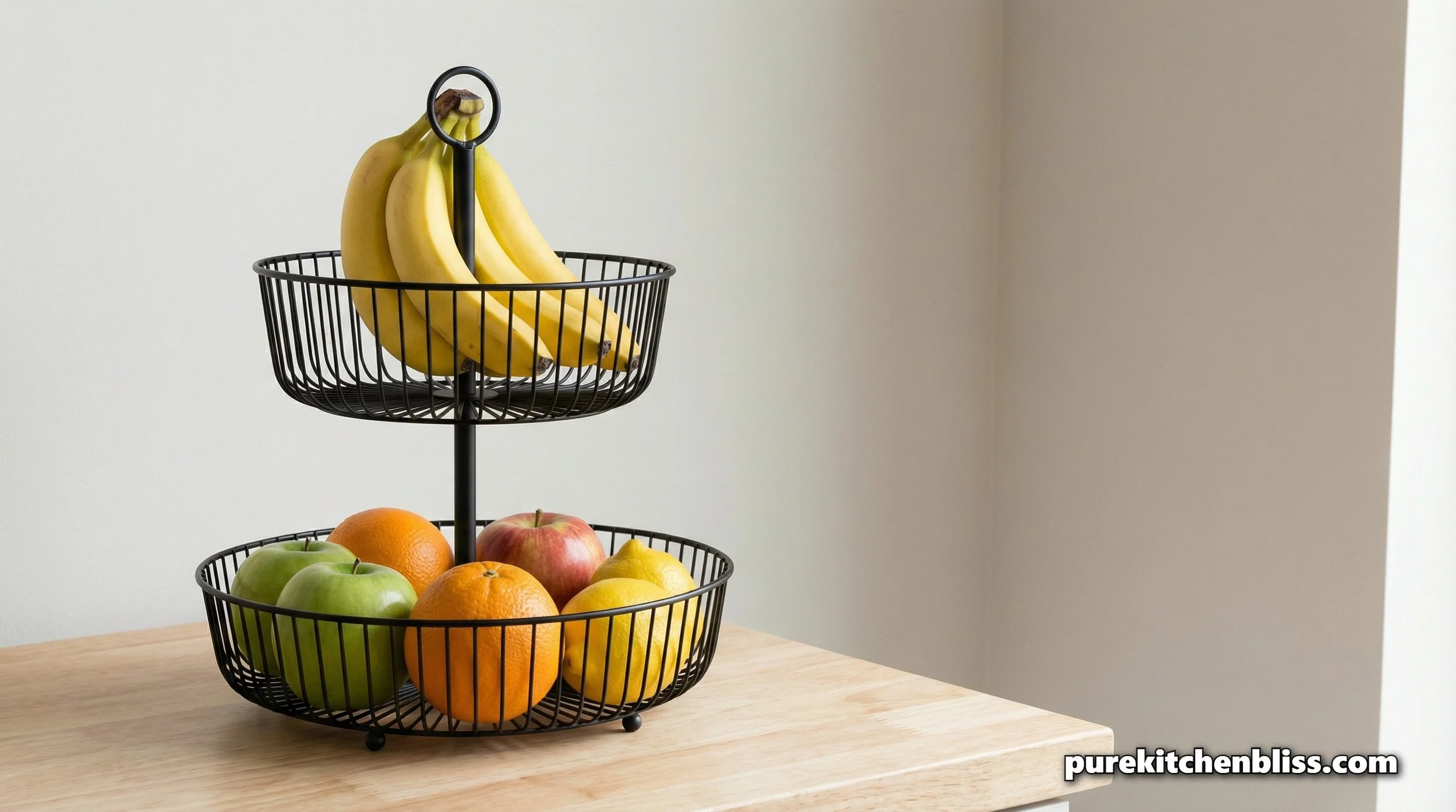
Why Is My Fruit Bowl Always Getting Moldy?
In a house with four daughters, the fruit bowl is the high-traffic fuel station. It’s the central hub where energy is grabbed between school and soccer. But as a builder curator, I look at that bowl and see more than a snack station; I see a storage system. If the "bones" of your setup are wrong, you aren't just storing apples, you’re essentially creating an incubator for fungal spores.
Mold is a scavenger that requires three specific environmental conditions to thrive: moisture, stagnant air, and ethylene gas. If your fruit bowl is a solid ceramic or glass basin, you are inadvertently building a "Bio-Dome" where these three factors collude to break down the cellular integrity of your produce. To maintain a sustainable sanctuary, we need to move from "static storage" to "active aeration."
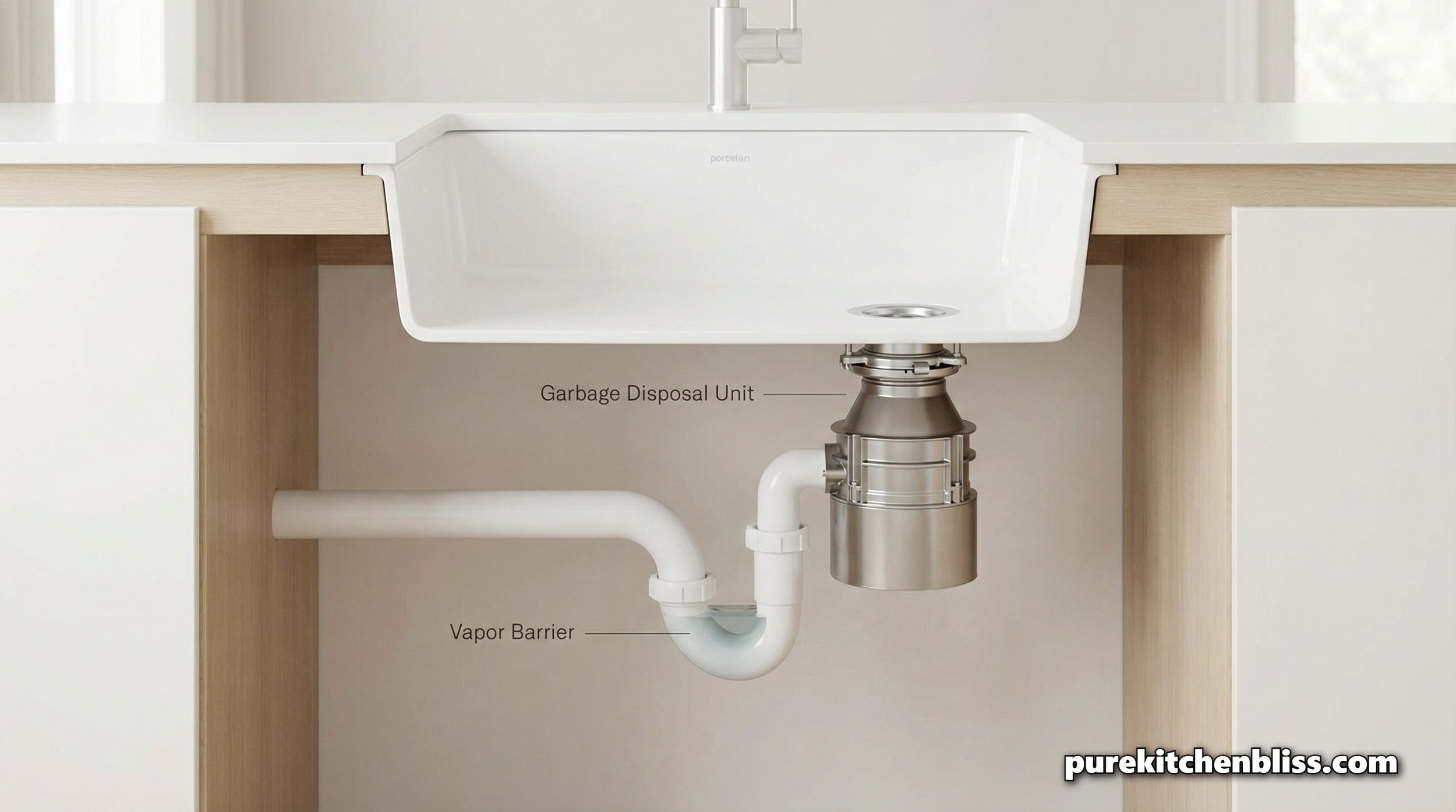
Why Does My Kitchen Sink Smell?
To me, a smelly sink is more than a minor annoyance, it’s a diagnostic signal that the biological extraction system of your home is failing. In a house with four daughters, the sink is the "Main Drain" for the beautiful chaos of family life. When that drain starts to emit an odor, it means a "biofilm" has colonized the infrastructure beneath your counters.
If you’ve already checked the Kitchen Garbage Schedule and the smell persists, the issue is likely lurking in the "Sump" of your plumbing. Odors are the byproduct of bacteria feeding on trapped organic matter. Because your kitchen plumbing is dark, wet, and warm, it acts as a natural incubator for the very things we try to eliminate from our Sustainable Sanctuary.
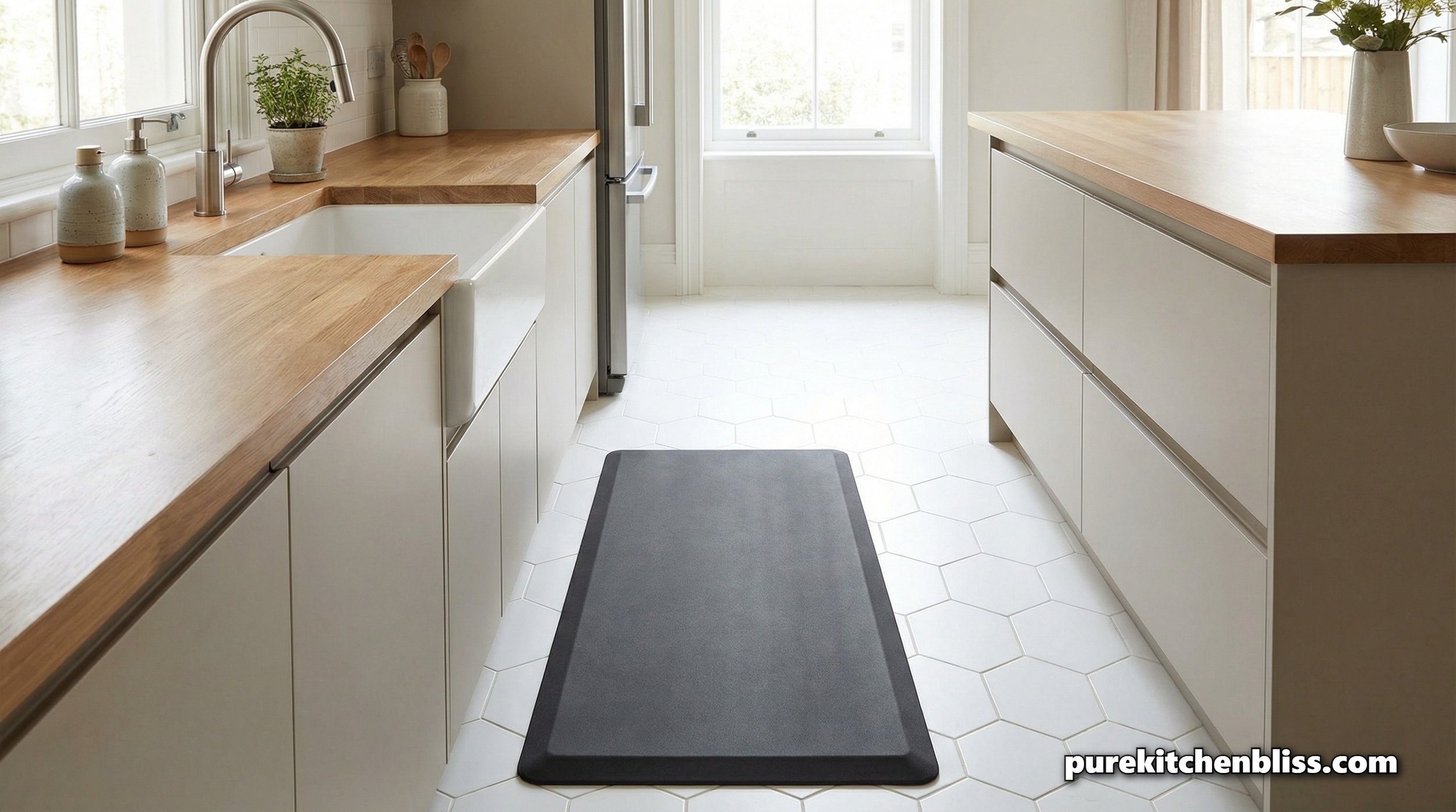
Do I Need a Kitchen Mat on My Tile Floors?
To a builder-curator, a kitchen mat is more than a decorative accessory; it is a piece of ergonomic infrastructure. In a house with four daughters, the kitchen is the "Primary Workspace," and standing on a hard, unyielding tile floor for hours is a structural stress test for your body. Tile is a "zero-flex" material. Unlike wood, which has a cellular structure that offers a microscopic amount of "give," tile is essentially stone.
When you stand on it while managing the Monday Morning Momentum, your joints, the "soft infrastructure" of your body, absorb 100% of the impact. However, from a "purity" standpoint, most kitchen mats are biological traps. To maintain a sustainable sanctuary, you must balance your orthopedic health with the cleanliness of your floor’s "bones."
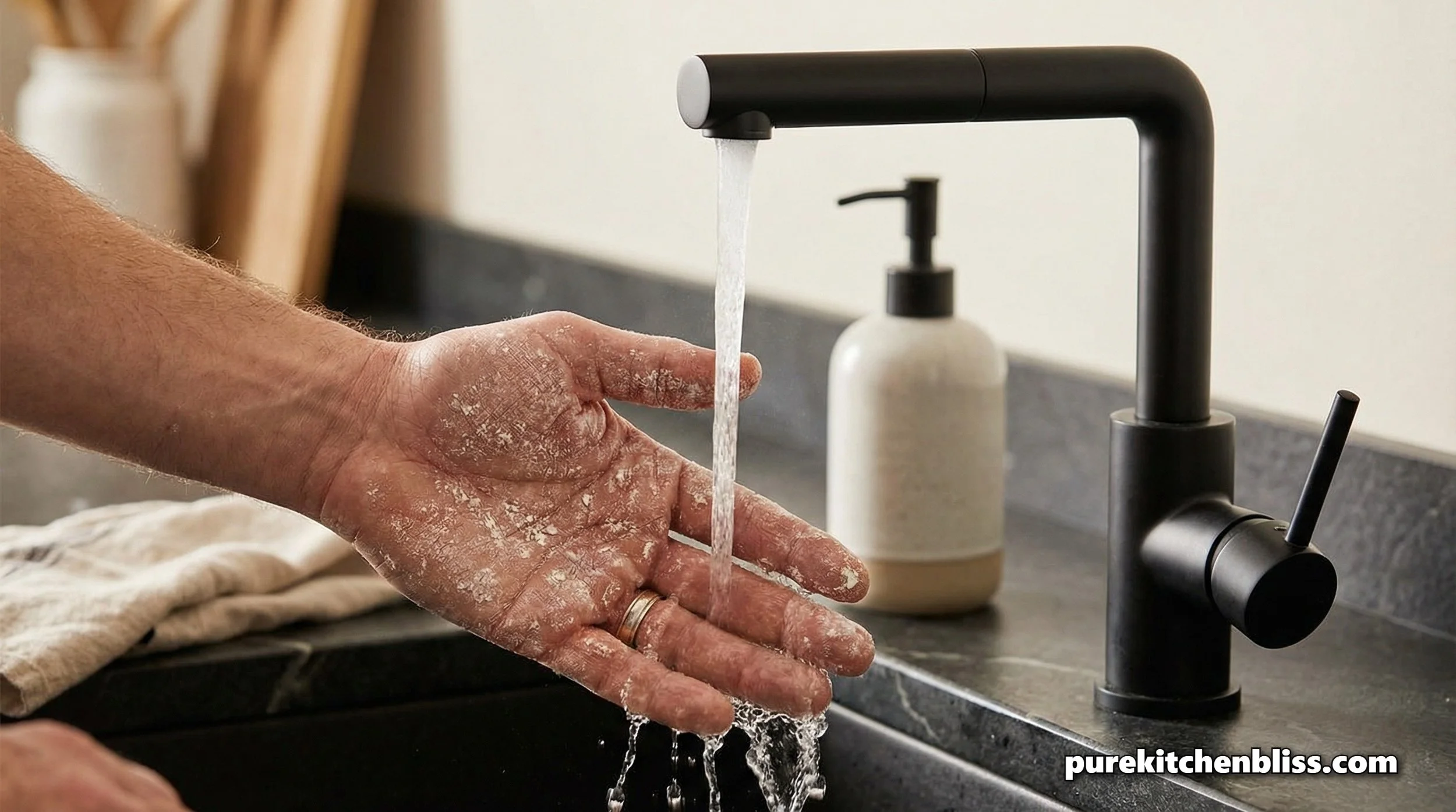
Choosing Your Kitchen Faucet: Finding the Flow Between Magic and Reliability
In the heart of a home, the kitchen faucet is the primary valve of your daily life. It’s a tool we engage with dozens of times a day—often without a second thought—until it either simplifies our routine or complicates it. While a faucet might look like a simple piece of jewelry for your sink, the choice between manual, touch, or touchless technology dictates how you interact with your water and how much maintenance you’ll be doing over the next decade.
In a house with four daughters, the "Beautiful Chaos" of handwashing and meal prep means the faucet is the unsung hero of the Monday Morning Momentum. Here is the verdict on which style truly belongs in your sanctuary.
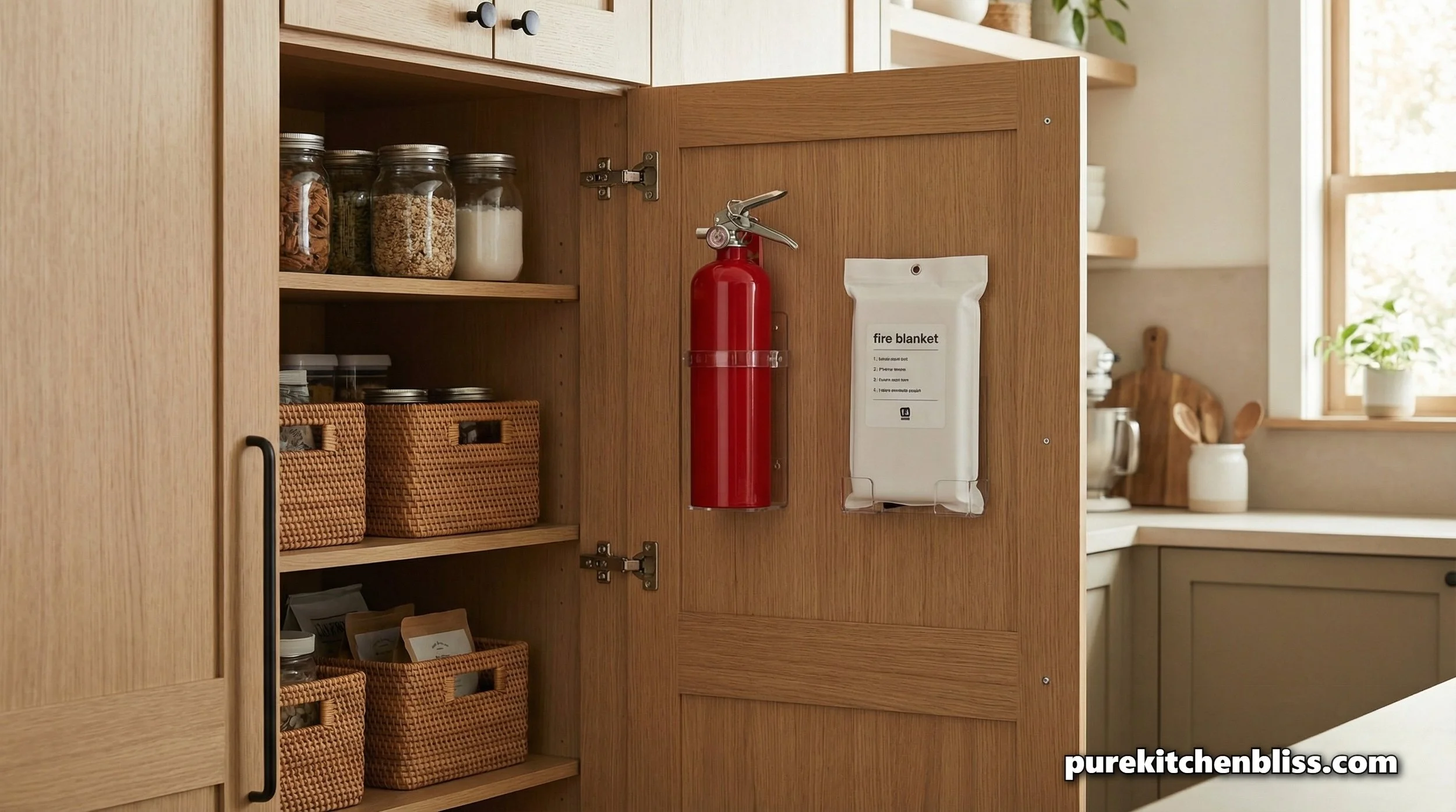
5 Must-Have Items for Your Kitchen Safety
In my 20 years in the trades, I’ve learned that the most critical tools in a house aren't the ones used for the "finish work", they are the ones you never hope to use, but must have "at the ready." Most homeowners focus on the aesthetics, the Zero-VOC Paint or the Stone Drying Mat, but the true "bones" of a kitchen are its safety systems.
Whether you are deep in the Monday Morning Momentum or prepping a large family meal in the midst of "Beautiful Chaos," these five items ensure that a small mechanical glitch doesn't become a structural disaster.
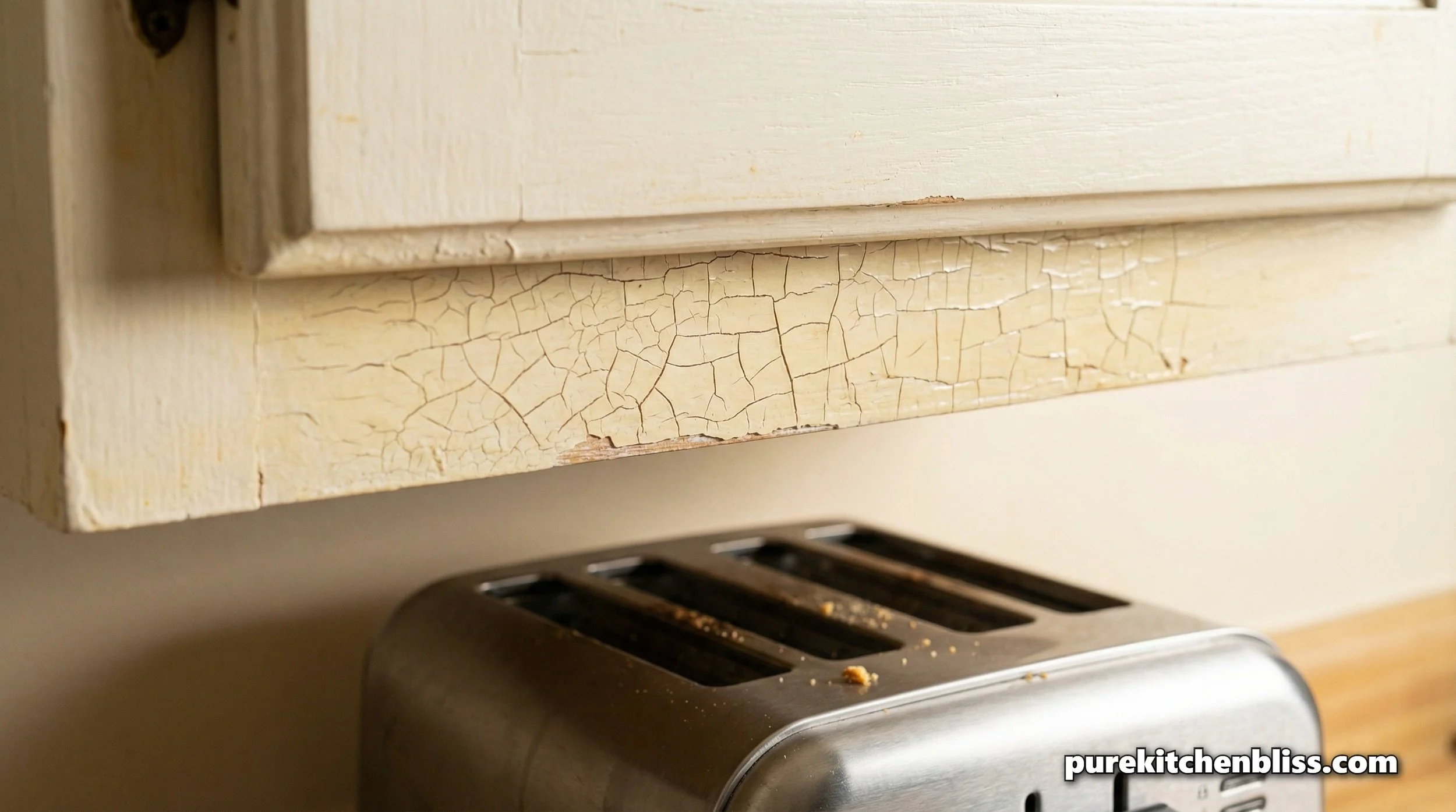
Why Toaster Placement Must Be Considered: Protecting the Bones of Your Kitchen
In the "Beautiful Chaos" of a family kitchen, the toaster is often the unsung workhorse of the Monday Morning Momentum. However, to a builder-curator, a toaster isn't just a convenient appliance; it is a high-heat thermal engine that interacts directly with your kitchen’s "bones."
Most people instinctively tuck their toaster under an upper cabinet to save counter space, but from a structural and safety standpoint, this is a compromise that can degrade your home’s infrastructure over time. In my 20 years in the trades, I’ve seen the "invisible" damage caused by poorly placed high-heat appliances. When you engage a toaster, it generates significant vertical heat and aerosolized particulates. If that heat has nowhere to go but up into your Zero-VOC Cabinet Paint, you are essentially "cooking" your kitchen’s infrastructure from the bottom up.
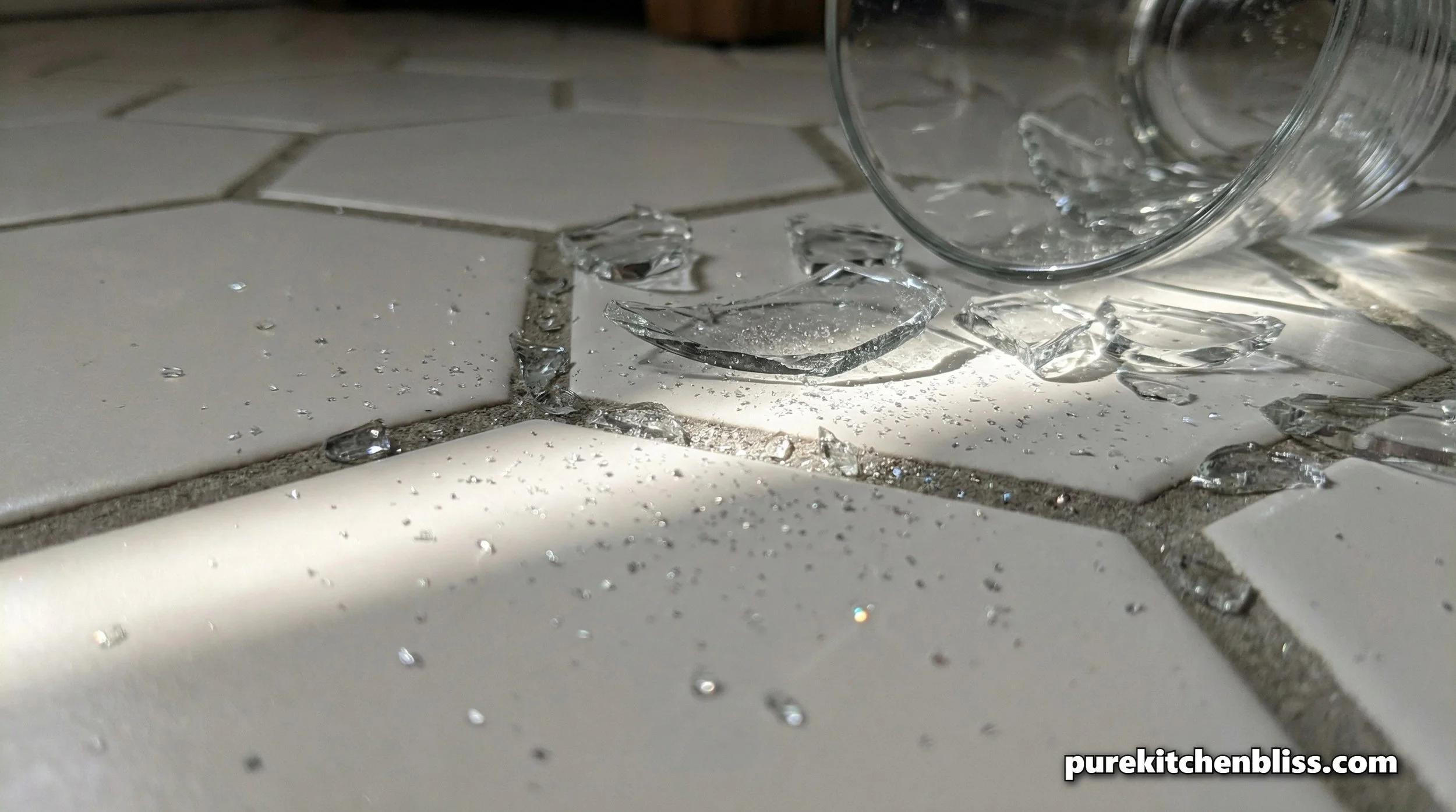
How to Clean Broken Glass on Kitchen Tile:
When a glass hits a hard fired ceramic or porcelain tile floor, the physics of the impact creates a "debris field" far larger than most homeowners realize. The impact generates three distinct types of hazards: Shards (the visible, structural pieces), Slivers (needle like fragments), and Glass Dust (microscopic particles).
If you only perform a standard sweep, you are merely moving the shards while leaving the slivers and dust behind in the "valleys" of your grout lines. In a high-performance home, we don't just "clean up"; we perform a Search and Extract ritual. Here is the professional, non-toxic protocol to ensure your sanctuary remains safe for bare feet.
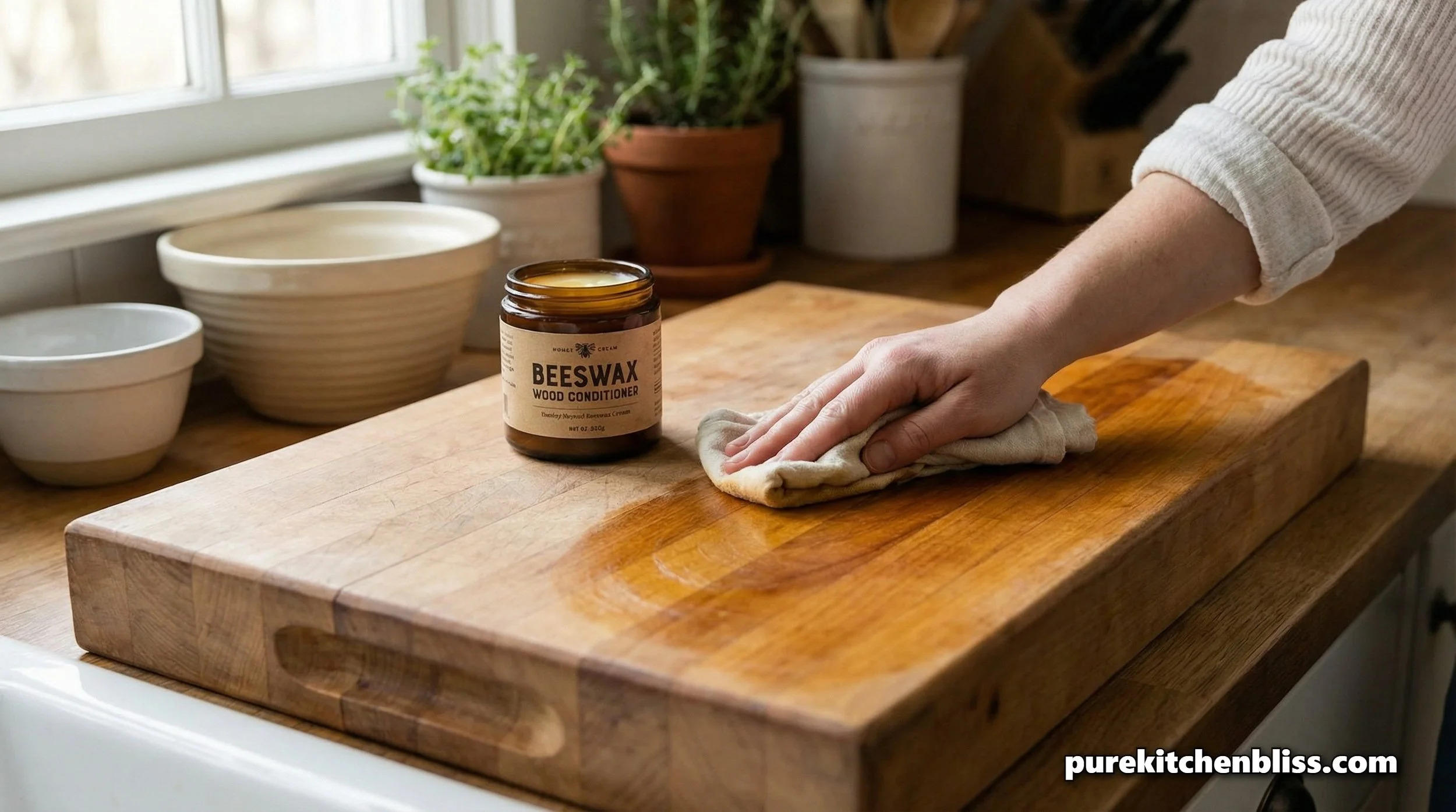
Cutting Board Stewardship: How to Protect the "Workhorse" of Your Kitchen
In any high-performance kitchen, the cutting board is more than a tool; it is the primary Worksurface Infrastructure. Whether you have a massive end-grain butcher block or a simple edge-grain board, the wood is a living, breathing material. It reacts to humidity, absorbs liquids, and requires a specific maintenance ritual to stay pure.
As a builder, I see many homeowners treat their boards like disposable plastic, soaking them in the sink or, even worse, putting them through the dishwasher. This destroys the "bones" of the wood, leading to warping and the opening of "micro-cavities" that harbor bacteria. Proper stewardship ensures your board remains a non-toxic, heirloom-quality surface for decades.
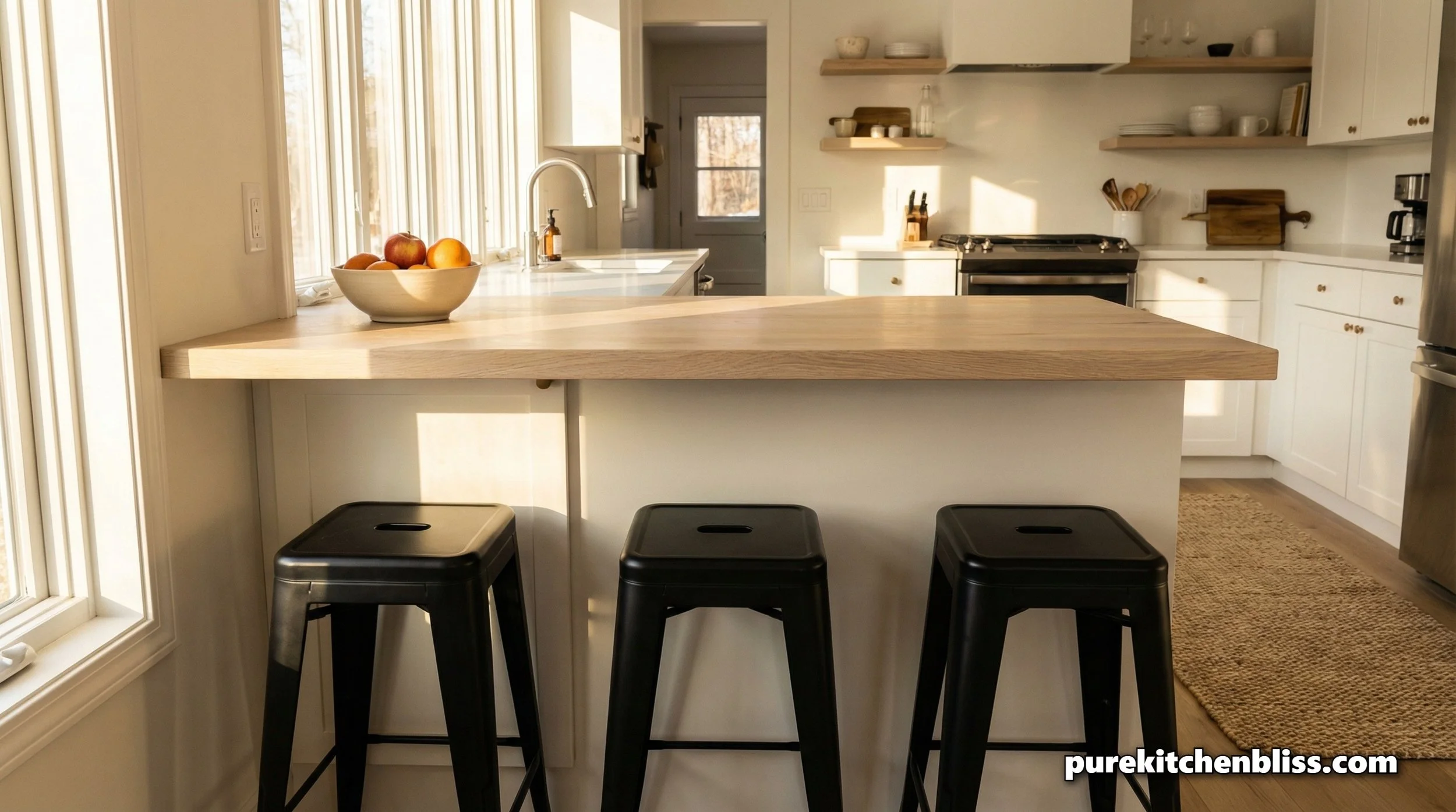
Pros and Cons of a Kitchen Breakfast Bar
A breakfast bar is more than just an extended countertop; it is Social Infrastructure. When we design a Sustainable Sanctuary, we look at how the physical layout of a room dictates the behavior of the people inside it. A well-executed breakfast bar changes the "Circulatory System" of your home by allowing family and guests to be "in" the kitchen without encroaching on the "Work Triangle" of the cook.
However, from a "Curator" standpoint, a breakfast bar can also become a "Clutter Magnet." If the infrastructure isn't managed with discipline, it quickly transforms into a landing pad for mail, backpacks, and the very items we work to eliminate during our Sunday Night Countertop Reset. Before you commit to this structural change, you must weigh the social flow against the spatial reality.
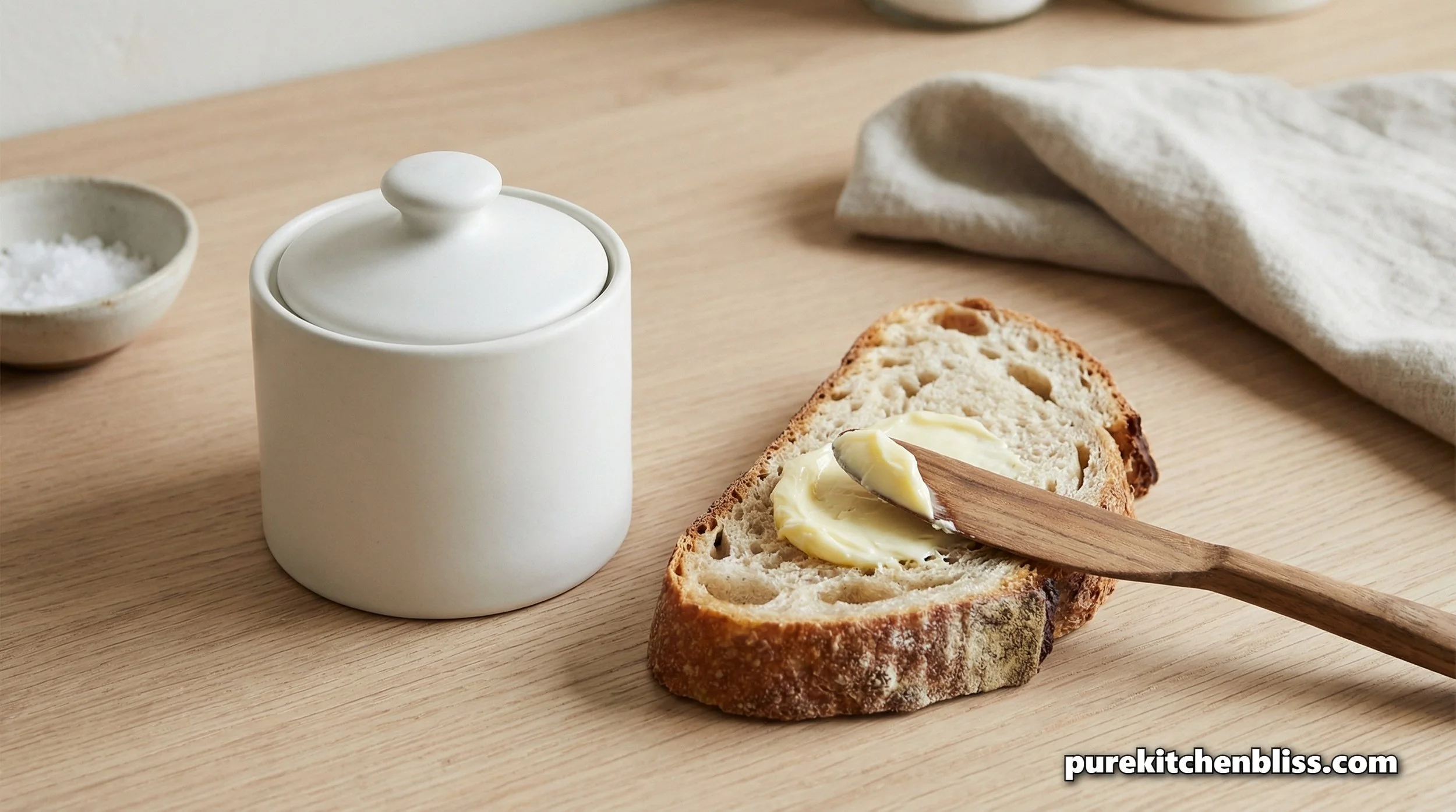
Where Should You Really Keep Your Butter?
In the "Beautiful Chaos" of a busy family kitchen, the butter dish is often the center of the breakfast table. But unlike most dairy products, butter has a unique "Infrastructure Spec." Because it is composed of roughly 80% fat and has a remarkably low water content, it is far more resistant to bacterial growth than liquid milk or cream.
However, butter is also a "Molecular Sponge." As we discussed in 5 Uses for Coffee in Your Kitchen, fats are highly efficient at absorbing odors and volatile organic compounds (VOCs) from the air. If your butter is sitting out unprotected, it isn't just softening; it’s absorbing the "bio load" of your kitchen environment. To maintain a Sustainable Sanctuary, we need to balance the convenience of spreadability with the science of preservation.

5 Brilliant Uses for Castile Soap in Your Kitchen Sanctuary
Most people think of Castile soap as a body wash, but in our kitchen, it’s a foundational part of our maintenance infrastructure. Because it is a true soap (not a synthetic detergent), it works by emulsifying oils and lifting debris away from surfaces without leaving a toxic film.
Whether we are deep in a Sunday Night Countertop Reset or just managing the daily "beautiful chaos," Castile soap is the common thread in our cleaning protocol. Here are 5 ways to use it to protect your kitchen’s "bones."