Choosing Your Kitchen Faucet: Finding the Flow Between Magic and Reliability
In the heart of a home, the kitchen faucet is the primary valve of your daily life. It’s a tool we engage with dozens of times a day, often without a second thought, until it either simplifies our routine or complicates it. While a faucet might look like a simple piece of jewelry for your sink, the choice between manual, touch, or touchless technology dictates how you interact with your water and how much maintenance you’ll be doing over the next decade.
In a house with four daughters, the "Beautiful Chaos" of handwashing and meal prep means the faucet is the unsung hero of the Monday Morning Momentum. Here is the verdict on which style truly belongs in your sanctuary.
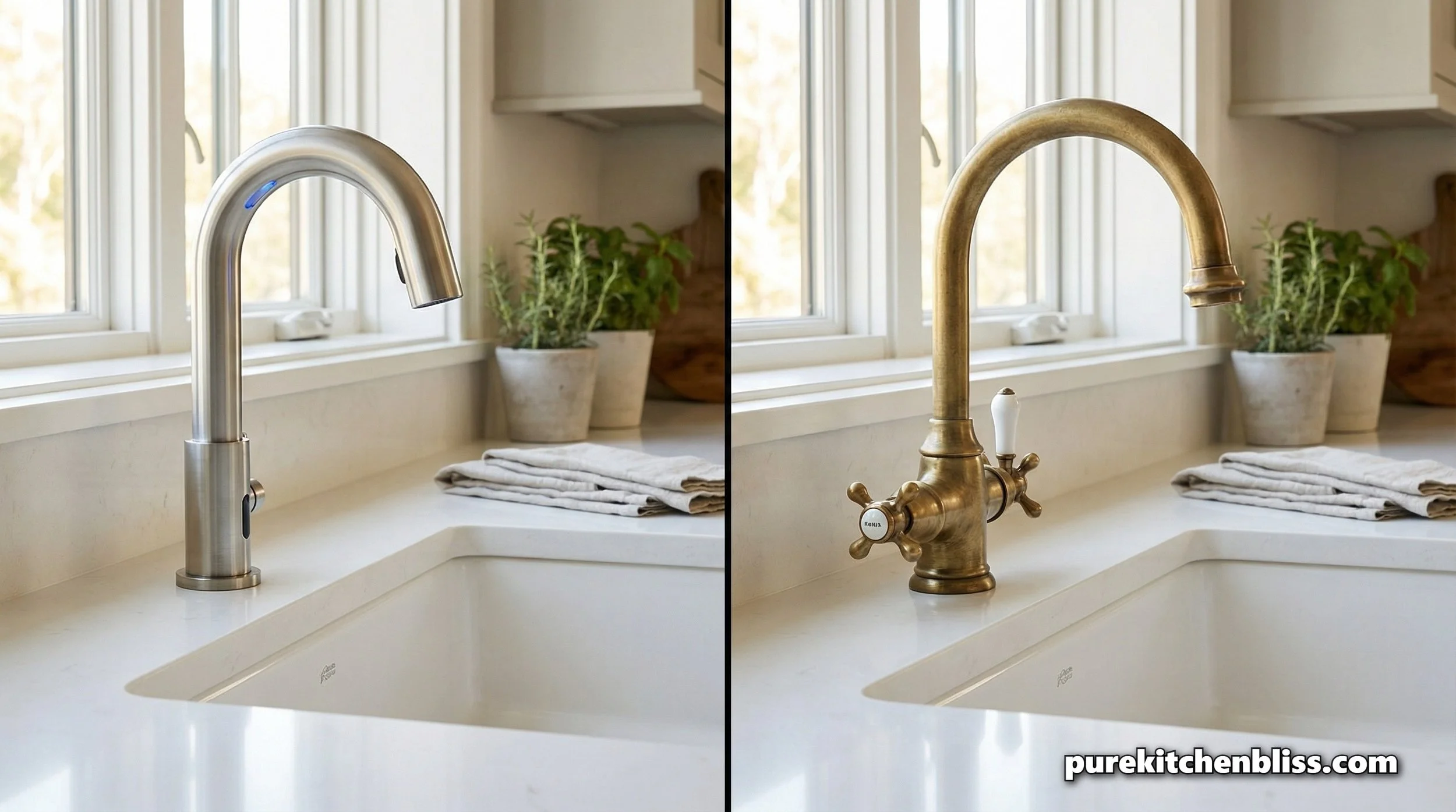
1. The Manual Faucet: The "Zero-Point" Reliability
As a builder, I love a manual faucet for its Structural Simplicity. It operates on basic physics: a ceramic disc cartridge moves to allow water through. No batteries, no solenoids, and no circuit boards.
The Pros: It works 100% of the time, even during a power outage or a total tech failure. It is the most "Honest" piece of infrastructure in your kitchen.
The Cons: It is the "Hygiene Weak Point." You touch the handle with "raw chicken hands" to turn it on, then touch it again with clean hands to turn it off, re-contaminating the surface.
The Builder’s Tip: If you go manual, choose a Single Handle model with a high arc spout. You can easily engage the lever with your elbow or the back of your hand, preserving the "Sanctuary Purity" of the hardware.
2. The Touch Activated Faucet: The "Hybrid" Middle Ground
Touch technology (like Delta’s Touch2O) allows you to tap anywhere on the spout or handle with your forearm or wrist to start the flow.
The Science: These rely on Capacitance. Your body carries a minute electrical charge; when you touch the metal, the sensor detects a change in the electrical field and opens the solenoid valve.
The Pros: It’s often more reliable than a motion sensor because it isn't confused by steam, dark-colored pots, or changes in ambient light.
The Cons: The "Ghost Flush." High humidity or a curious pet can occasionally trigger a touch faucet.
Maintenance Spec: These require a battery pack (usually 6 AA or C batteries) housed in the "Sump" area under your sink. If the batteries die, the "touch" feature stops, though most professional-grade models have a manual override.
3. The Touchless (Motion) Faucet: The "Hygiene Hero"
This is the ultimate in Sanctuary Purity. You wave your hand in front of an infrared eye, and the "Magic" of the water begins.
The Pros: 98% less bacteria transfer than manual faucets. It is the only way to truly eliminate the "Bio-Bridge" between raw food prep and your hardware. It is the gold standard for a Zero-VOC Kitchen.
The Cons: Sensor Fatigue. Infrared sensors can be finicky. If you have "Hard Water," mineral deposits can build up on the sensor eye over time, causing it to "miss" your hand or stay on too long.
The Structural Load: These are the most complex to install. Under the sink, you will have a control box, a solenoid valve, and power cables. This requires a higher level of Under-Sink Organization to ensure the wires aren't snagged by cleaning supplies.
BUILDER TIP: THE "HIDDEN" HYGIENE TRAP
Interestingly, some studies in healthcare facilities show that touchless faucets can harbor more internal bacteria because the water "stagnates" in the complex internal valves more than in a simple manual pipe. The Fix: Always "flush" your faucet for 5 seconds every morning during your Monday Morning Momentum to move fresh, oxygenated water through the internal infrastructure.
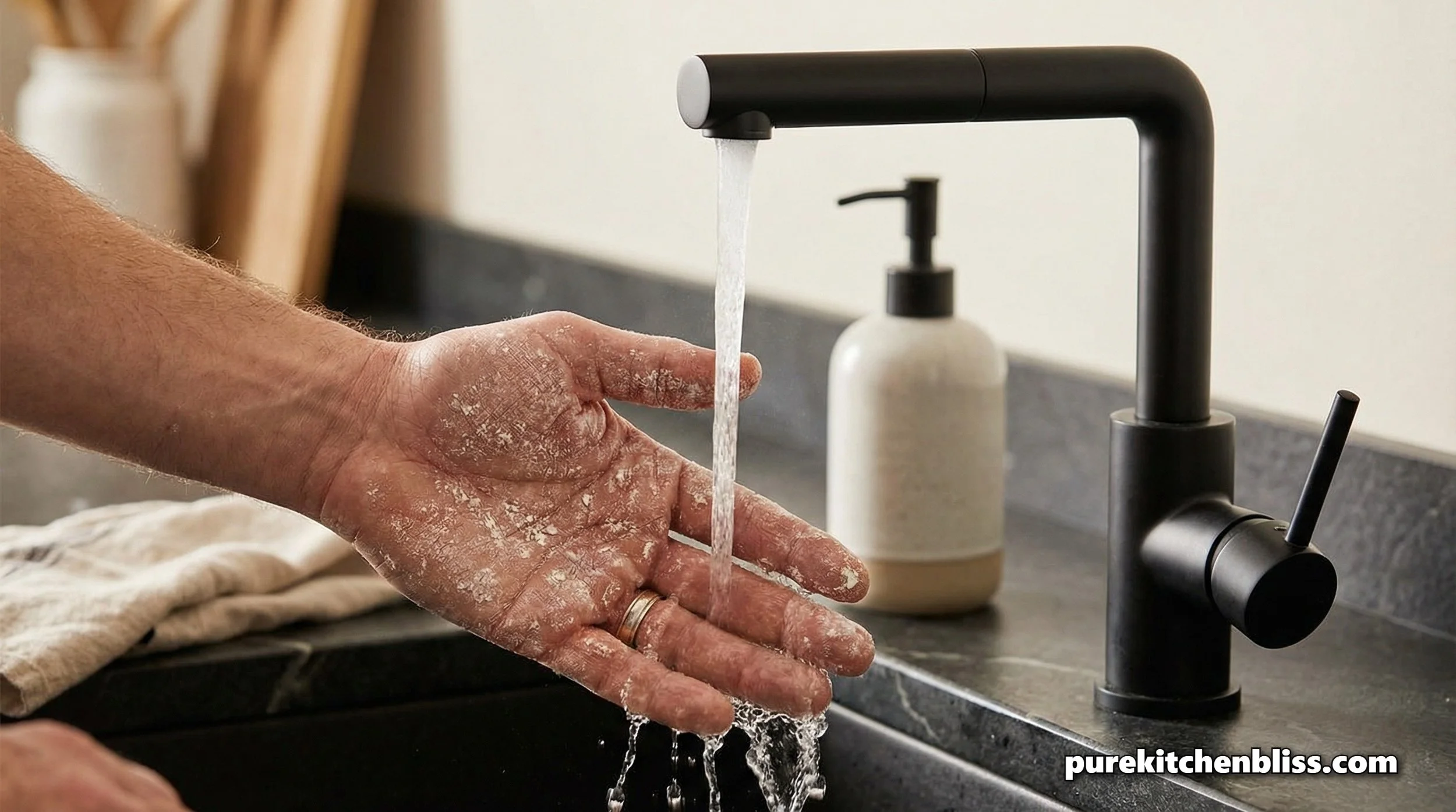
4. The "Tapmaster" Secret: The Professional’s Choice
In a house with four daughters, there is a "Ghost Option" I often recommend to clients who want the best of both worlds: The Foot Pedal.
The Infrastructure: A device called a Tapmaster installs under your sink and connects to your existing manual faucet. You press a small, discrete pedal at the base of your cabinet (the "toe-kick") with your foot to start the water.
The Benefit: It is 100% hands-free, uses zero electricity/batteries, and allows you to keep the simplicity of a manual faucet while getting the hygiene of a touchless one. It is the ultimate "Builder-Curator" hack for a high-output kitchen.
5. Valve Quality: Ceramic Discs vs. Compression
Regardless of the "User Interface," the "Bones" of the faucet matter most. Always look for Ceramic Disc Valves. Older faucets used rubber washers (compression valves) that degrade and leak over time. Ceramic discs are nearly diamond-hard and are rated for over 500,000 cycles, ensuring your sanctuary remains leak-free for a lifetime.
Conclusion: Balancing Magic and Maintenance
Your faucet choice determines the "Flow" of your daily ritual. If you want the ultimate hygiene and are willing to perform the "Battery Maintenance" once a year, Touchless is your spec. If you want "Zero-Failure" infrastructure that will work through a power outage, stick with a High-Quality Manual or the Foot Pedal hack.
Explore More in Your Kitchen Sanctuary:
To clean your new faucet without chemicals: 5 Brilliant Uses for Castile Soap
To manage the "Sump" area under the sink: Small Kitchen Organization Hacks
To prep for a sink upgrade: Do You Really Need a Double Sink?