Why Toaster Placement Must Be Considered: Protecting the Bones of Your Kitchen
Transparency Note: We independently select these products based on research and user reviews. If you buy something through our links, we may earn a commission.
In the "Beautiful Chaos" of a family kitchen, the toaster is often the unsung workhorse of the Monday Morning Momentum. However, to a builder-curator, a toaster isn't just a convenient appliance; it is a high-heat thermal engine that interacts directly with your kitchen’s "bones."
Most people instinctively tuck their toaster under an upper cabinet to save counter space, but from a structural and safety standpoint, this is a compromise that can degrade your home’s infrastructure over time. In my 20 years in the trades, I’ve seen the "invisible" damage caused by poorly placed high-heat appliances. When you engage a toaster, it generates significant vertical heat and aerosolized particulates. If that heat has nowhere to go but up into your Zero-VOC Cabinet Paint, you are essentially "cooking" your kitchen’s infrastructure from the bottom up.
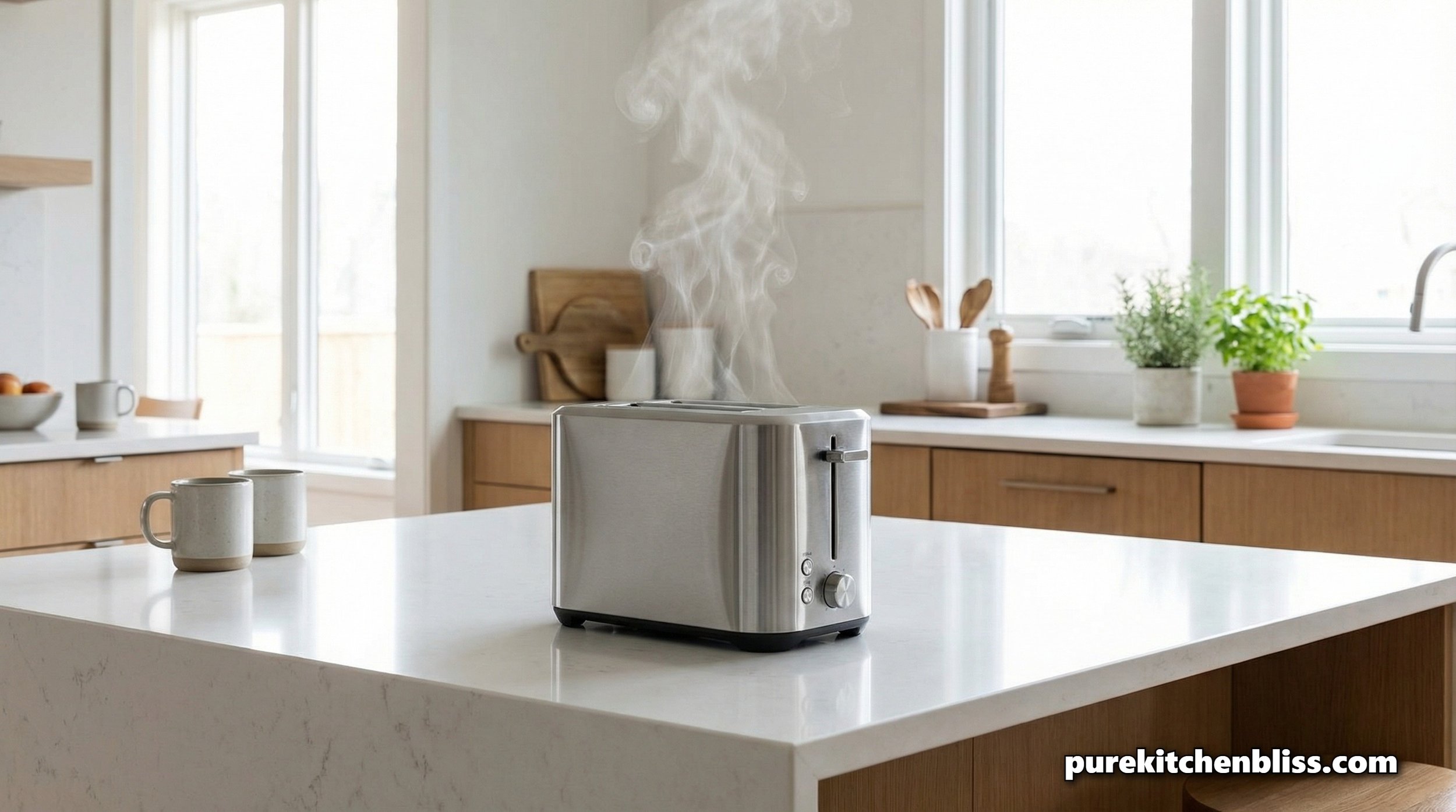
1. The Physics of "Thermal Cycling" and Finish Failure
Most modern kitchen cabinets are finished with paints, lacquers, or "Thermofoil" (a plastic vacuum-press) that are stable at room temperature. However, they are not designed for "Thermal Cycling"—the repeated heating and cooling caused by a toaster.
Structural Failure: Constant heat exposure causes wood to expand and contract at a different rate than the paint sitting on top of it. This lead to "alligatoring" (a specific pattern of micro-cracks) or peeling.
The Delamination Risk: If you have MDF core cabinets with a Thermofoil finish, the heat from a toaster can actually dissolve the adhesive bond. This causes the plastic "skin" to pull away from the wood—a structural failure that is nearly impossible to repair without replacing the door.
The Off-Gassing Risk: As a sanctuary, we prioritize Indoor Air Quality. High-heat exposure can cause older, non-eco-friendly finishes to "off-gas" chemical odors back into your kitchen air every time you make a piece of toast.
2. The Fire Infrastructure: The "12 Inch Rule"
As a professional who understands the "bones" of a house, I always look for the ignition points. A toaster is a rare appliance that features an exposed heating element.
The Vertical Clearance: You should always have at least 12 inches of vertical clearance above your toaster during operation. If your cabinets are lower, the professional protocol is to use a sliding tray to pull the appliance out to the edge of the counter before pressing the lever.
The "Carbonized Debris" Factor: Over time, the bottom of a toaster collects burnt crumbs. If the toaster is tucked in a dark corner under a cabinet, you are less likely to notice when the tray is full. This creates a high-density fuel source directly beneath your cabinetry’s wooden "bones."
BUILDER TIP: THE ELECTRICAL LOAD SPEC
Toasters are high-amperage appliances, often drawing between 800 and 1,500 watts. In a high-performance kitchen, they must be plugged into a GFCI (Ground Fault Circuit Interrupter) outlet. In a Small Kitchen Organization setup, never use extension cords or "multi-plug" adapters for a toaster. These can overheat at the connection point, posing a fire risk that is hidden behind your cabinetry.
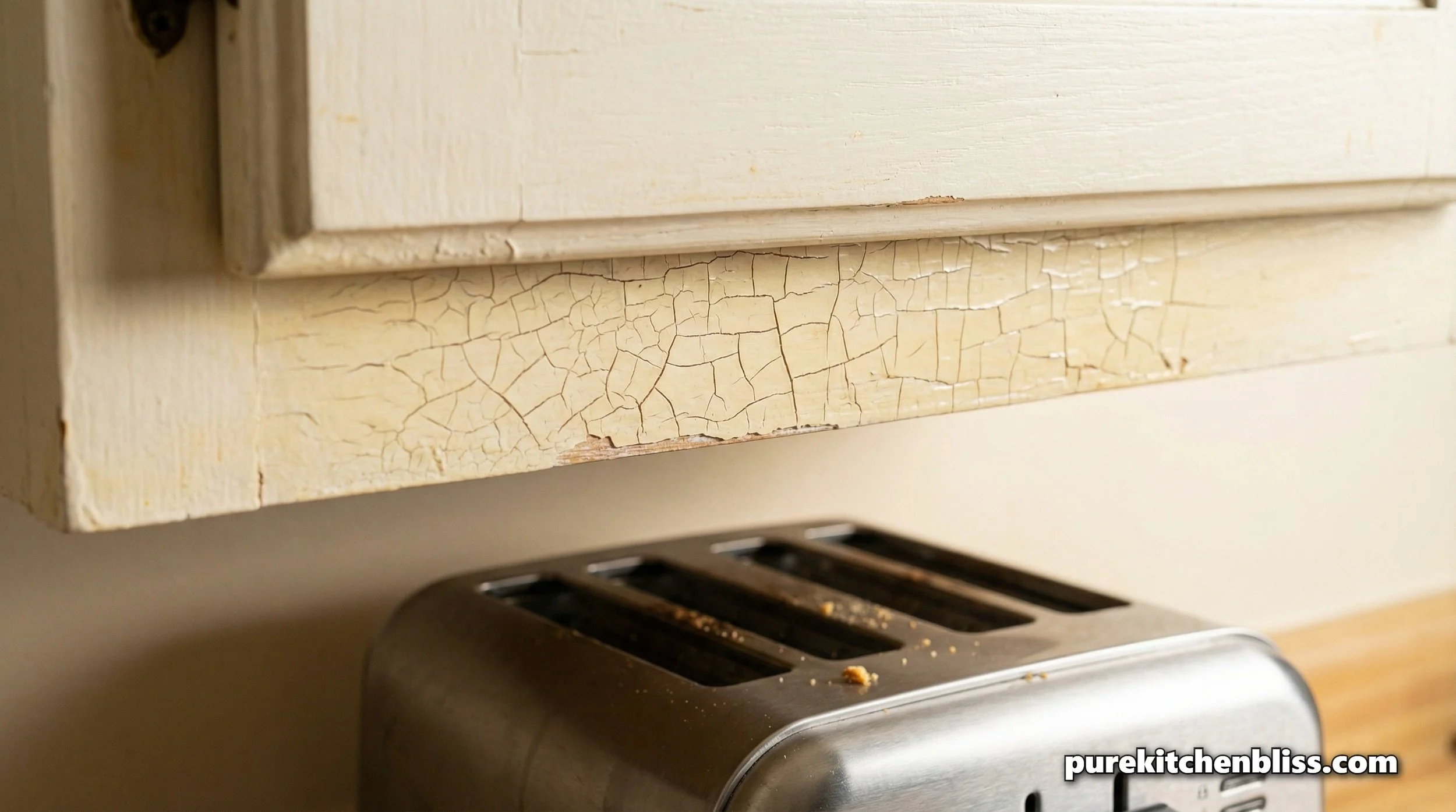
3. Managing the "Aerosolized Grease" Elevator
As we discussed in How Often to Mop Kitchen Floors, cooking oils travel on air currents. Rising heat acts like an elevator for any microscopic grease particles in the air.
The Magnet Effect: The heat from the toaster carries these oils upward, where they settle on the underside of your upper cabinets. This creates a "tacky" surface that traps dust and creates a "bio-film" that is difficult to extract.
The Solution: Whenever possible, place your toaster near your Non-Toxic Kitchen Ventilation or on an open Breakfast Bar where the air can circulate freely, dispersing the heat before it can damage your finishes.
4. Maintenance Ritual: The Sunday Toaster Reset
To maintain your kitchen’s "Purity Spec," the toaster must be part of your Sunday Night Countertop Reset.
The Extraction: Empty the crumb tray completely.
The Degrease: Wipe the exterior with a mixture of water and Castile Soap to remove the "tacky" grease layer.
The Polish: Use a microfiber cloth to buff the stainless steel, removing any "heat-tint" or fingerprints.
The Toaster Purity Toolkit
To maintain a safe and organized station, we recommend these "Builder-Approved" essentials:
The Platform: Sliding Bamboo Appliance Tray — This allows you to protect your cabinets by easily pulling the toaster into open air.
The Safety Gear: Non-Toxic Fire Blanket
The Finish: Natural Stainless Steel Polish
Conclusion: Intentional Placement
In a Sustainable Sanctuary, every object has a designated "zone" that respects both the user and the structure of the home. By considering your toaster’s placement—keeping it out from under uppers and away from combustible materials—you protect your kitchen’s "bones" and ensure your family’s safety.
Explore More in Your Kitchen Sanctuary:
To clean the cabinets above your toaster: How to Degrease Kitchen Cabinets Naturally
To manage the breakfast chaos: Where to Store Butter: Counter vs. Fridge
To reset the rest of your worksurface: The Sunday Night Countertop Reset