The Sunday Night Kitchen Reset: A Practical 20-Minute Routine
Originally published Feb 4, 2026 · Updated Aug 12, 2026
Transparency Note: We independently select these products based on research and user reviews. If you buy something through our links, we may earn a commission.
A clear counter Monday morning is a nice bonus, but that's not actually why I run this routine every Sunday night. With four kids in the house, I've learned that most expensive repairs start as something small that sat unnoticed for weeks, standing water at a cabinet seam, a drain running a little slower than it used to, grease building up somewhere it shouldn't. Twenty minutes on a Sunday catches that stuff before it becomes a real problem.
This isn't a vague "tidy up" checklist. It's a specific routine built around what actually protects the materials in a working kitchen, and the reasoning behind each step, not just the step itself.
Why a weekly reset works better than daily upkeep alone
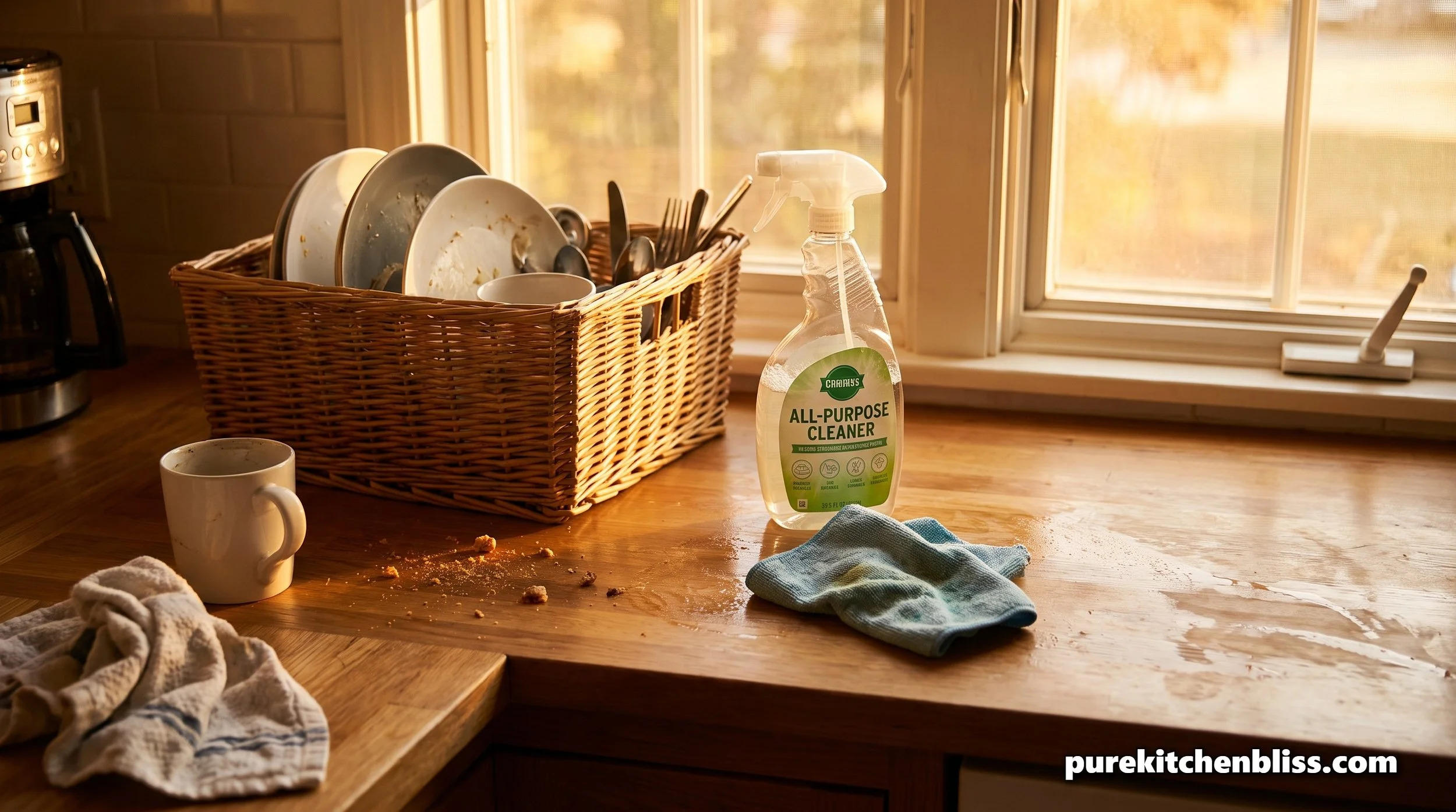
Daily wiping and dishwashing keeps a kitchen functional, but it doesn't catch slower, cumulative problems the way a dedicated weekly pass does. Mail, loose toys, and stray items pile up gradually enough that nobody notices the counter filling up day to day, the same way nobody notices a slow drain worsening or a small water spot at a cabinet seam until it's already caused damage. A weekly reset forces a genuine look at things that get overlooked in the daily rush, which is really the entire point of batching this into one focused session instead of hoping it happens passively.
Sunday works well for most households simply because it sits right before the week starts, but the actual day matters less than picking one and sticking to it. What matters is that it's a fixed, recurring appointment rather than something you get to eventually.
Step one: clear the counters with an actual system
In a house with four kids, the island becomes a catch-all for hair ties, stray Legos, and whatever mail arrived that week. I use one dedicated basket for this step, everything that doesn't belong in the kitchen goes into it in one pass, rather than walking items to their actual home one at a time. That second approach sounds more efficient but almost never finishes, since the first trip to put something away turns into three other tasks along the way.
Paper is usually the biggest single category of clutter, so I sort it immediately into three piles as it comes off the counter, recycle, needs action, or needs filing. My kids know Sunday evening is their last chance to grab anything of theirs off the counter before it goes into a bin in the garage until they ask for it back, which has done more to keep the island clear during the week than any amount of reminding ever did.

Step two: clean without damaging the finish
Once the surfaces are clear, I avoid the harsh disinfectant sprays most people default to, since caustic cleaners can etch natural stone and break down cabinet topcoats over repeated use. For a weekly cleaning pass, a simple mixture of warm water, a small amount of liquid castile soap, and a few drops of thyme essential oil handles it without that risk. Thyme's antimicrobial effect isn't a wellness marketing claim, thymol, its main active compound, has been shown in lab studies to have meaningful bactericidal activity against a wide range of common bacteria, and it's classified as Generally Recognized as Safe by the FDA for both food and surface use.
The technique matters as much as the mixture. Spray it on and let it sit for a full two minutes before wiping, that dwell time is what actually lets the surfactants lift grease and the thymol do its work, rather than being wiped away before it's had a chance to act. Heavy scrubbing right away accomplishes less than a light wipe after that short wait, and it's gentler on stone and finished wood in the process.
Step three: the five-minute maintenance check most people skip
This is the part of the routine that's actually caught real problems before they turned into repairs, and it's the piece most cleaning checklists leave out entirely. I check the sink strainer for trapped food debris, since organic material sitting in a drain contributes to the biofilm buildup that eventually slows a drain down. Once a month, this is also when I run a full baking soda and vinegar flush rather than waiting for an actual clog, we cover the specifics of why that combination works and which pipe materials it's safe for in our full drain guide.
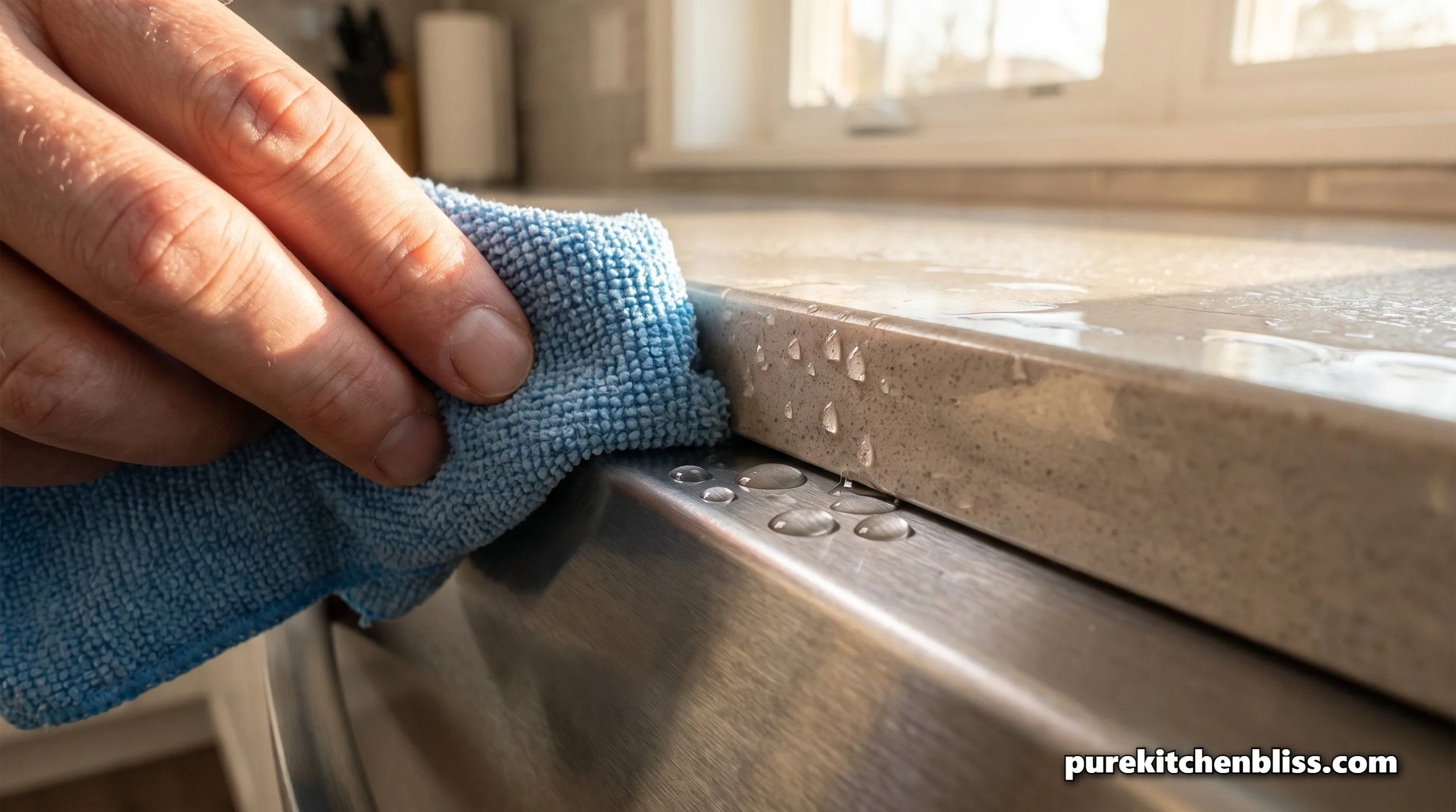
Water is genuinely the biggest threat to kitchen cabinetry, more than any cleaning product. I look specifically at the base of the faucet and the seam where the dishwasher meets the counter, and wipe both bone dry. If water sits and seeps into the edge-banding on cabinetry, the thin strip of material sealing the raw edge of a panel, the substrate underneath swells and delaminates, and that's a repair that usually means replacing the whole panel rather than a simple touch-up. Catching it while it's still just standing water costs nothing. Catching it after the wood has already swollen costs a lot more.
Step four: finish care that doesn't rely on harsh chemicals
For stainless steel appliances, I skip synthetic stainless cleaners that often contain petroleum distillates, and use a small amount of plain olive oil on a microfiber cloth instead. It restores the shine and leaves a light barrier that resists fingerprints for a few days, without any of the residue a spray cleaner can leave behind. This takes under a minute per appliance and covers the fridge and range front in one pass if you're doing the whole kitchen.
If you're weighing when a stronger tool is actually appropriate versus when it'll damage a finish, our guide to Magic Erasers in the kitchen covers that same material-by-material logic in more depth, which surface can take an abrasive and which one it'll ruin.
| Step | Time | Why it matters |
|---|---|---|
| Clear counters into one basket | 5 min | One pass finishes; item-by-item usually doesn't |
| Clean with castile soap + thyme oil | 5 min | Real antimicrobial effect without damaging finishes |
| Check strainer, dry wet zones | 5 min | Catches slow drains and cabinet water damage early |
| Olive oil polish on stainless | 2 min | No petroleum residue, no scratching |
| Reset pantry/fridge storage | 3 min | Sets up an easier week ahead |
Setting up for a lower-effort week
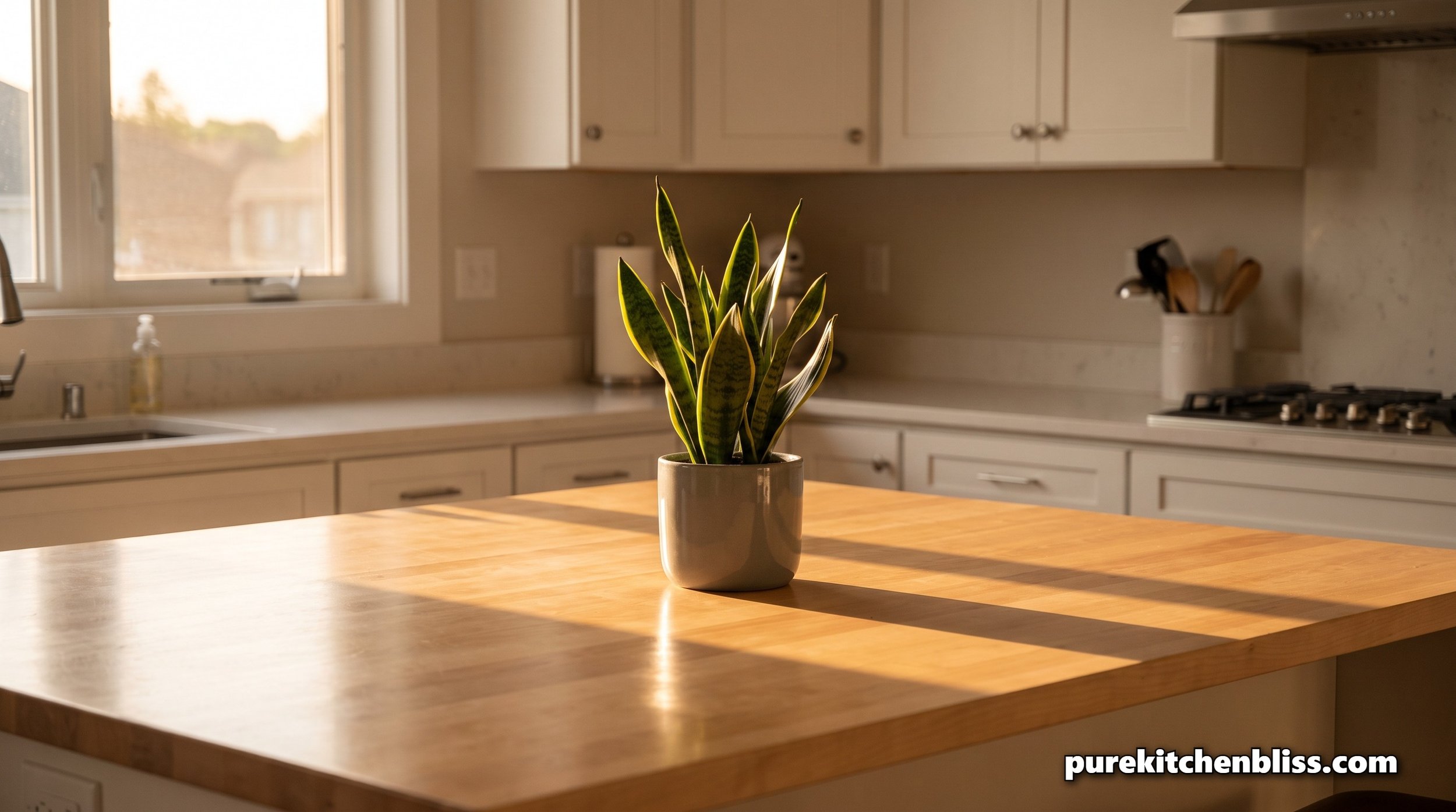
The last few minutes of the reset go toward setting up the coming week rather than just finishing the cleaning. A quick check of pantry and fridge storage, making sure containers are actually sealed and nothing's been left open since the last use, keeps food fresher and the space easier to work in. Our fridge storage container roundup covers the specific containers that hold up well to this kind of weekly rotation. I also keep one low-maintenance plant, a Snake Plant in our case, as a fixed point on the island, less for decoration and more because a single consistent object on an otherwise clear counter makes it genuinely easier to notice when clutter starts creeping back during the week. Our Snake Plant care guide covers why it holds up so well in a kitchen environment specifically.
What I keep on hand for this
A stack of microfiber cloths dedicated specifically to this routine, separate from ones used for other cleaning, keeps the process fast since you're never hunting for a clean one mid-reset. A bottle of liquid castile soap is the base for the cleaning mixture, and a small bottle of thyme essential oil is what actually gives it real antimicrobial power beyond what soap alone provides. For the staging step, a simple catchall basket makes the one-pass declutter step faster than digging through a junk drawer for something to hold loose items.
What this actually comes down to
This routine works because it isn't just cosmetic. Clearing the counters makes the kitchen usable, the cleaning step protects finishes instead of degrading them, and the five-minute maintenance check catches the kind of slow, easy-to-miss damage that turns into a real repair bill if it goes unnoticed for weeks. Twenty minutes on a Sunday is genuinely less time than dealing with a swollen cabinet panel or a fully clogged drain later, which is really the whole argument for doing this consistently rather than only when the counter gets bad enough to bother you.