Where Should You Really Keep Your Butter?
In the "Beautiful Chaos" of a busy family kitchen, the butter dish is often the center of the breakfast table. But unlike most dairy products, butter has a unique "Infrastructure Spec." Because it is composed of roughly 80% fat and has a remarkably low water content, it is far more resistant to bacterial growth than liquid milk or cream.
However, butter is also a "Molecular Sponge." As we discussed in 5 Uses for Coffee in Your Kitchen, fats are highly efficient at absorbing odors and volatile organic compounds (VOCs) from the air. If your butter is sitting out unprotected, it isn't just softening; it’s absorbing the "bio load" of your kitchen environment. To maintain a Sustainable Sanctuary, we need to balance the convenience of spreadability with the science of preservation.
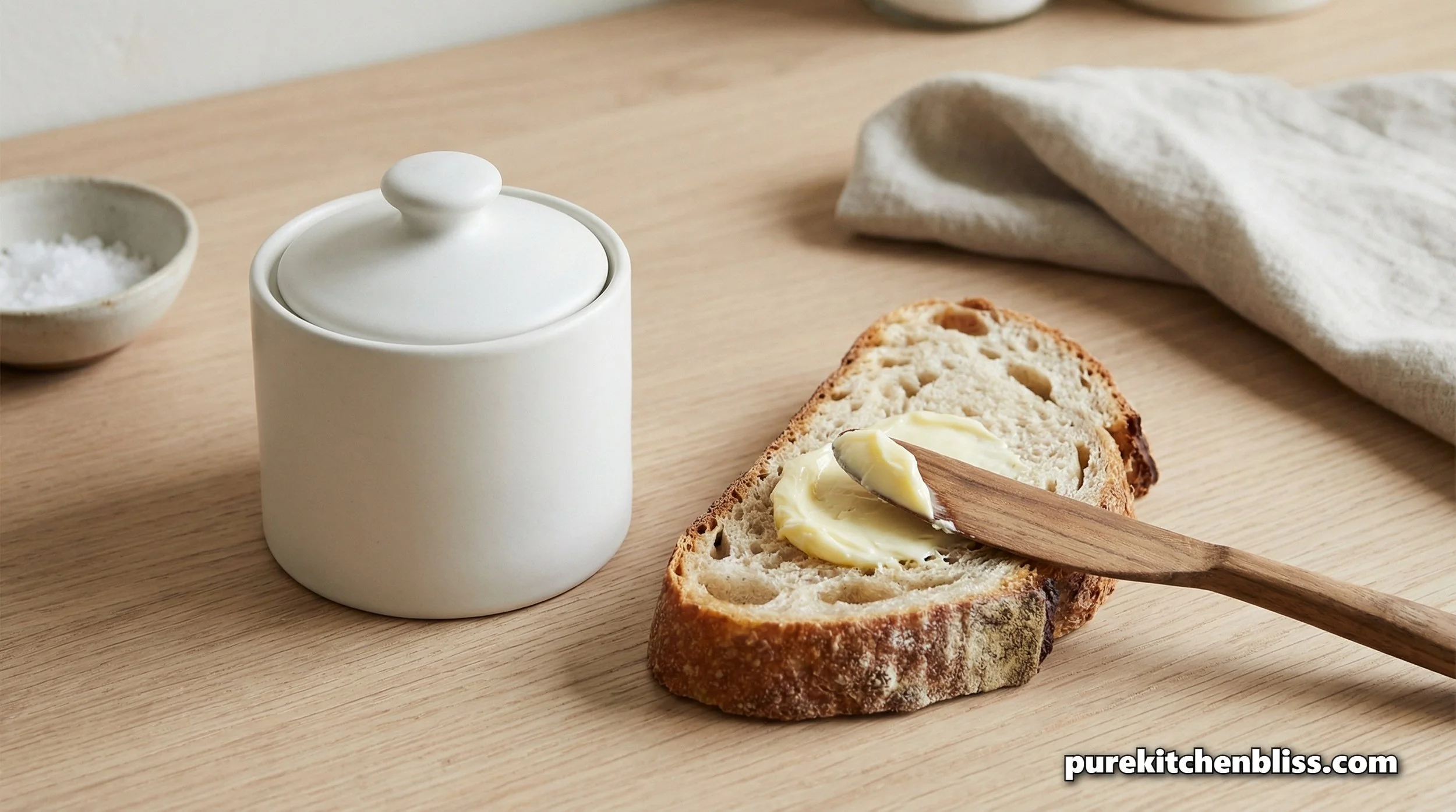
1. The Physics of the Countertop: The "7-Day" Window
According to the USDA, it is technically safe to keep salted butter at room temperature. However, as someone who cares about Sanctuary Purity, I add a caveat: The Environment Matters.
The Temperature Spec
Butter is a "thermal mass." If your kitchen temperature consistently rises above 70°F (21°C), the crystalline structure of the butterfat begins to collapse. When this happens, the oils can begin to go rancid through a process called oxidative rancidity. This doesn't just change the flavor; it alters the nutritional integrity of the fat.
The "Salt" Factor
The most important "spec" to check before leaving butter out is the salt content. Salt acts as a natural antimicrobial preservative, inhibiting the growth of bacteria.
Salted Butter: Safe for the "Countertop Protocol."
Unsalted Butter: Should always remain in "Cold Storage" (the fridge). Without the salt barrier, the water droplets trapped in the fat provide a breeding ground for spoilage.
2. The "French Bell" Infrastructure: A Hermetic Solution
If you want "spread-on-demand" butter without the risk of oxidation, you need the right tool. A standard glass dish with a loose lid is insufficient for long-term counter storage because it allows constant oxygen exchange.
The Protocol: Use a French Butter Bell (or Butter Crock). This two piece design uses a small amount of h2o in the base to create a "Hermetic Seal" around the butter.
The Benefit: By submerging the butter "bell" into the water, you create a vacuum that keeps oxygen out and keeps the butter cool through a process of evaporative cooling. This extends the countertop life to nearly two weeks while maintaining a Monday Morning Momentum texture.
BUILDER TIP: PHOTO-OXIDATION WARNING
Butter is highly sensitive to UV light. "Photo-oxidation" occurs when light hits the fats, triggering a chemical reaction that creates a "stale" or metallic flavor. In a high-performance kitchen, always use an opaque ceramic or stoneware dish, never clear glass, if you’re keeping butter on your Open Shelving. Protect the "bones" of your ingredients from light just as you protect your finishes.
3. The Fridge: The "Primary Reservoir"
Think of your refrigerator as the "Warehouse" and your butter bell as the "Active Site." You should only keep the amount of butter you’ll realistically use in 3 to 5 days on the counter. The rest belongs in the fridge’s "Dairy Compartment."
The Strategic Location: The "butter door" in most refrigerators is actually the warmest spot in the unit, usually hovering around 40-45°F. This is intentional; it keeps the butter sticks just soft enough that they don't turn into unmanageable "bricks."
The Odor Barrier: Because fats are porous to smells, keep your butter reservoir away from pungent items like onions or open leftovers. If you’ve just performed a DIY Fabric Refresh in the kitchen, ensure your butter is sealed in its original foil or an airtight container to prevent scent-contamination.
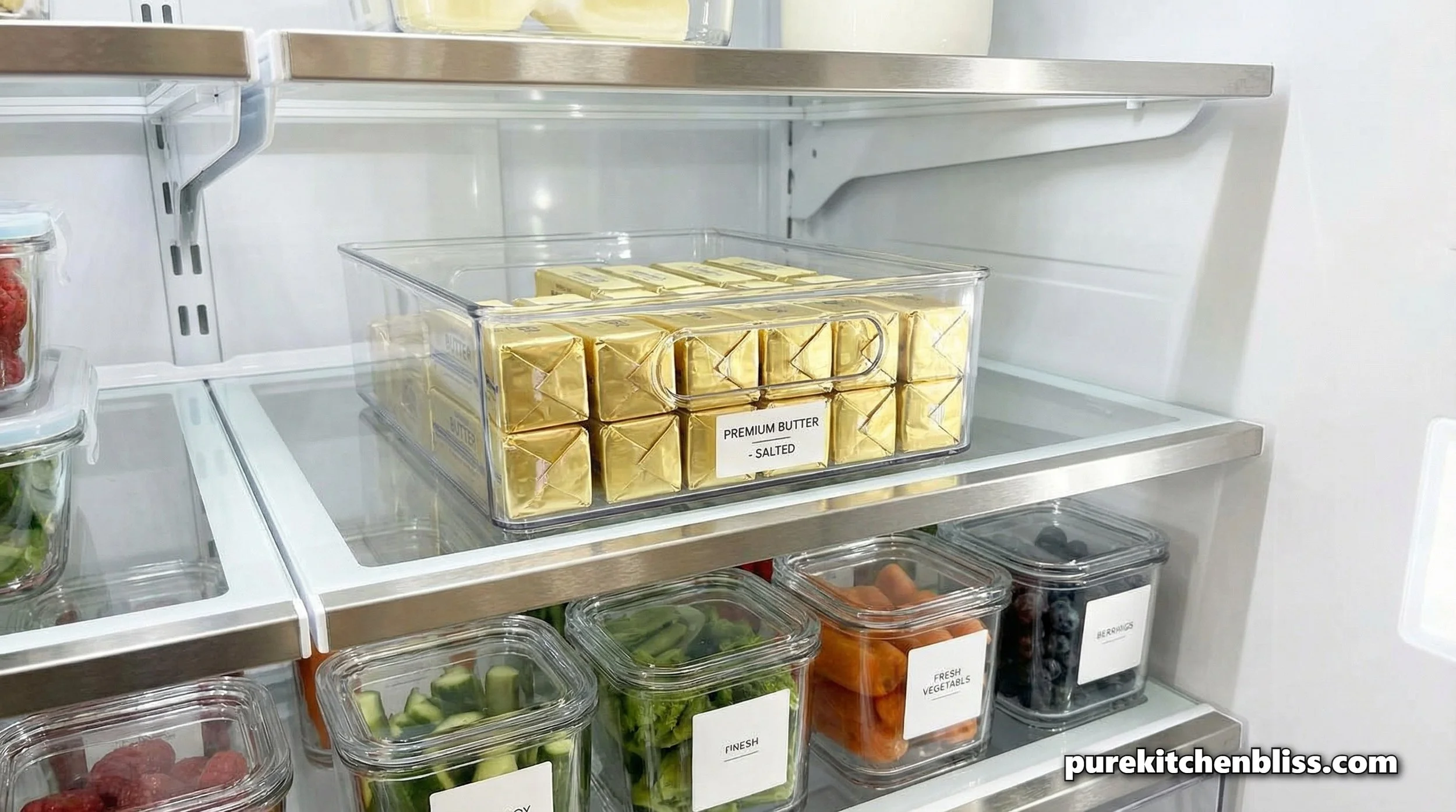
4. The Maintenance Ritual: The "Fresh Flush"
If you utilize a butter bell, the water is the "Infrastructure" that protects the purity. It must be maintained with the same discipline as your Kitchen Floor Extraction.
The Protocol: Change the water in your butter bell every 2 to 3 days. Use cold, filtered water to ensure the seal stays fresh and free of any mineral buildup.
The Deep Clean: Every time you finish a stick of butter, do not simply "reload." Wash the crock thoroughly with Eco-Friendly Dish Soap to remove any trace of old, oxidized fat residues. This ensures that the fresh butter isn't "seeded" with old bacteria.
5. The Culinary Science of Spreadability
Why do we go to this much trouble? Because the mechanical stress of trying to spread cold butter on soft bread actually tears the "crumb" (the internal structure) of the bread. By maintaining butter at a consistent 65-68°F, you preserve the integrity of your food and the "Blissful Flow" of your morning ritual.
The Butter Curator Gear
To maintain the perfect spread without the mess, you need a vessel that balances form and function:
The Vessel: Lead-Free Ceramic French Butter Bell & Marble Butter Keeper
The Prep: Stainless Steel Spreading Knife with Ergonomic Grip
Conclusion: Purity in Every Spread
Where you keep your butter is a balance of convenience and chemistry. For a Sustainable Sanctuary, the "Counter Bell" for daily use and the "Fridge Reservoir" for long-term storage is the winning infrastructure. It respects the "bones" of the ingredient while fueling the "beautiful chaos" of your family’s day.
Explore More in Your Kitchen Sanctuary:
To manage the surfaces where your butter sits: How Often Should You Mop Kitchen Floors?
To clean the ceramic after a reload: 5 Brilliant Uses for Castile Soap in Your Kitchen