5 Brilliant Uses for Castile Soap in Your Kitchen Sanctuary
Transparency Note: We independently select these products based on research and user reviews. If you buy something through our links, we may earn a commission.
Most people think of Castile soap as a body wash, but in our kitchen, it’s a foundational part of our maintenance infrastructure. Because it is a true soap (not a synthetic detergent), it works by emulsifying oils and lifting debris away from surfaces without leaving a toxic film.
Whether we are deep in a Sunday Night Countertop Reset or just managing the daily "beautiful chaos," Castile soap is the common thread in our cleaning protocol. Here are 5 ways to use it to protect your kitchen’s "bones."
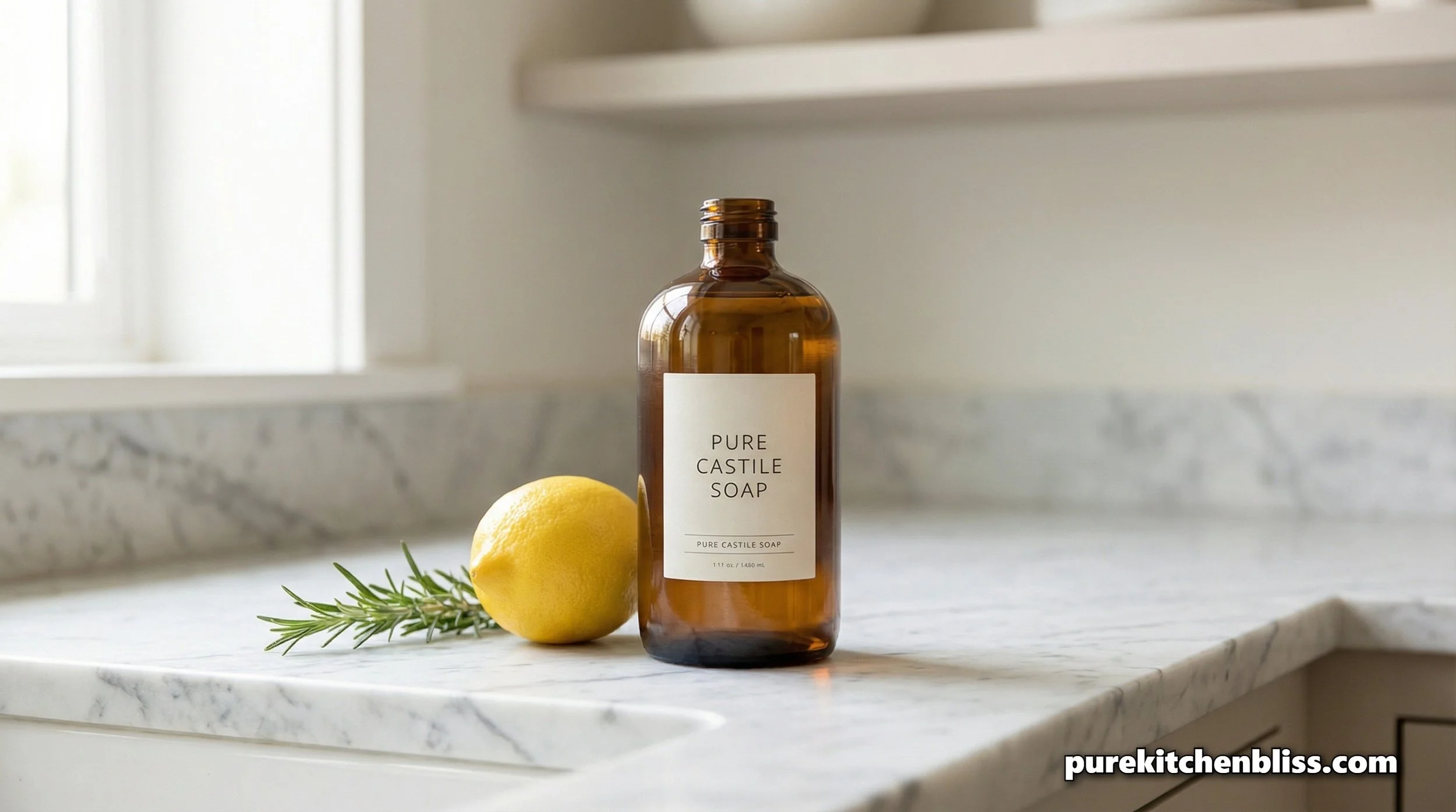
1. The High-Performance Dish Liquid
You don't need the "blue stuff" to get a professional clean. Castile soap is a powerful surfactant that cuts through grease without the chemical off-gassing.
The Protocol: Mix 1 part Castile soap with 10 parts H₂O in a glass dispenser.
The Benefit: It’s gentle enough for your hands but tough enough for your DIY Glass Jars.
The Builder's Tip: If you have hard water, add a splash of lemon juice to your rinse to prevent mineral spotting on your stainless steel.
2. The Non-Toxic Produce Wash
In our home, we eat organic whenever possible, but even organic fruit can carry "bio-debris" or wax.
The Hack: Add 1/4 teaspoon of Castile soap to a bowl of cold water. Swish your veggies and fruit, then rinse thoroughly.
The Purity Spec: Because it’s made from food-grade oils, you aren't trading "dirt" for "chemicals." It removes the "microplastic" dust and field-grime instantly.
3. The Structural Degreaser Base
As we discussed in The Best Non-Toxic Kitchen DegreaserCastile soap is the "engine" of our cabinet-cleaning protocol.
The Action: It breaks the molecular bond between aerosolized cooking oils and your cabinet’s finish.
The Safety Factor: It is safe forZero-VOC Cabinet Paint and natural stone, unlike vinegar based cleaners which can etch the surface over time.
BUILDER TIP: CHEMICAL SYNERGY
Never mix Castile soap with vinegar in the same bottle. The acid in the vinegar will "unsaponify" the soap, turning it back into oil and leaving a curdled, useless mess. Use them in separate stages: Soap to clean, Vinegar to rinse.
4. The Biological Floor Reset
Your kitchen floor is a collector of the week's "momentum." Castile soap provides a deep clean that is safe for the "bones" of your flooring.
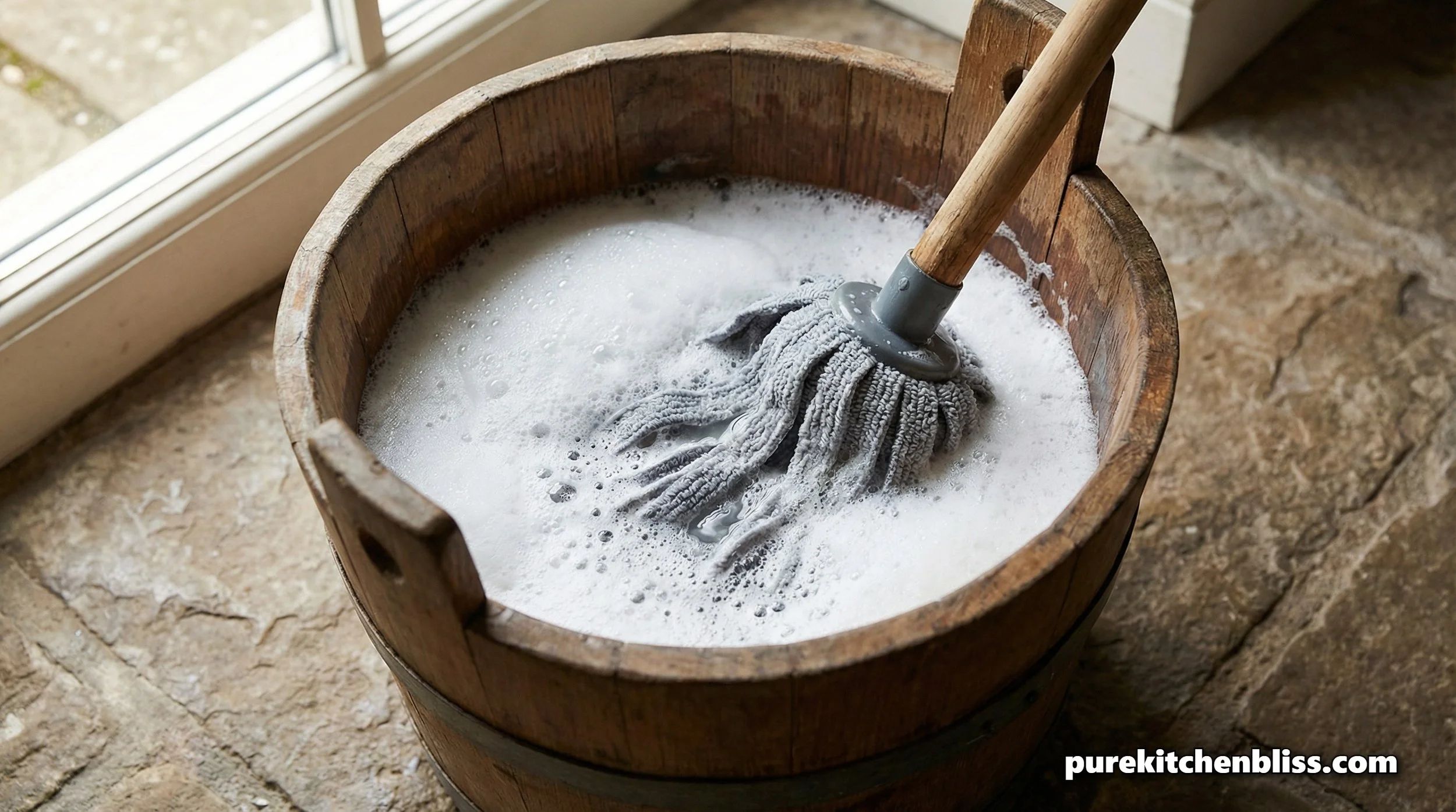
The Hack: Add 2 tablespoons of Castile soap to a gallon of hot water for your Weekly Deep Mop.
The Result: It lifts the "tacky" residue without leaving a synthetic wax buildup that can trap dirt and make the floor look dull over time.
5. The "Soft Infrastructure" Pre-Treat
In a house with four kids, our Tea Towels and aprons take a lot of hits, berry juice, coffee spills, and grease.
The Hack: Rub a drop of full-strength Castile soap directly into the stain before throwing it in the wash.
The Science: The soap molecules "grab" the organic pigment and pull it out of the fabric fibers during the wash cycle, acting as a natural, non-toxic "Stain Stick."
Conclusion: One Tool, Total Purity
In a Sustainable Sanctuary, simplicity is the ultimate sophistication. By using Castile soap as your primary kitchen surfactant, you reduce plastic waste, eliminate "hidden" toxins, and maintain your kitchen’s infrastructure with the power of plants.