Do I Need a Kitchen Mat on My Tile Floors?
Transparency Note: We independently select these products based on research and user reviews. If you buy something through our links, we may earn a commission.
To a builder-curator, a kitchen mat is more than a decorative accessory; it is a piece of ergonomic infrastructure. In a house with four daughters, the kitchen is the "Primary Workspace," and standing on a hard, unyielding tile floor for hours is a structural stress test for your body. Tile is a "zero-flex" material. Unlike wood, which has a cellular structure that offers a microscopic amount of "give," tile is essentially stone.
When you stand on it while managing the Monday Morning Momentum, your joints, the "soft infrastructure" of your body, absorb 100% of the impact. However, from a "purity" standpoint, most kitchen mats are biological traps. To maintain a sustainable sanctuary, you must balance your orthopedic health with the cleanliness of your floor’s "bones."
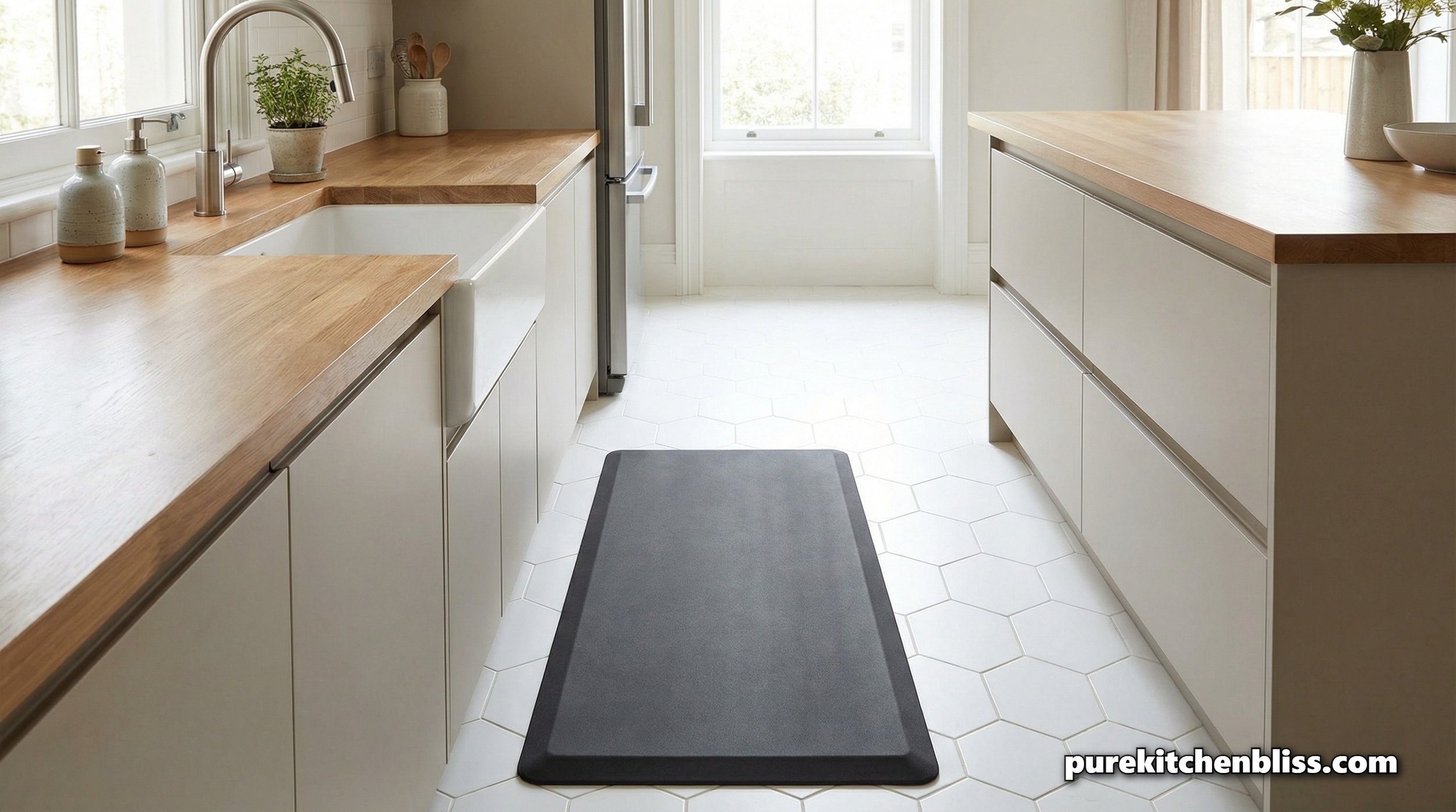
1. The Pro: "Orthopedic Integrity"
If you spend more than 20 minutes a day at the sink or stove, the "mechanical load" on your lower back, knees, and fascia is significant. Standing on tile causes the muscles in your legs to remain static, which restricts blood flow and leads to fatigue.
The Benefit: A high-quality anti-fatigue mat uses compression-set technology. It creates a subtle instability that forces your leg muscles to make microscopic movements to maintain balance.
The Science of Proprioception: These micro-movements act as a "pump" for your circulatory system, keeping blood moving and reducing joint inflammation.
The Result: You finish the Sunday Night Countertop Reset with more energy and less physical "noise" in your body.
2. The Con: The "Biological Sponge" Problem
Most cheap kitchen mats found in big-box stores are made of low-density, open-cell foam or have fabric covers. As a builder, I view these as a liability to your home’s hygiene.
The Risk: In a busy kitchen, mats catch Coffee Spills, grease, and crumbs. If the mat isn't "closed-cell" infrastructure, it becomes a breeding ground for bacteria and mold right under your feet.
The "Trip" Factor: We must also consider "Threshold Safety." If a mat doesn't have a beveled edge, it’s a structural trip hazard in a house with kids running through the "Beautiful Chaos." A mat that "slides" on tile is a failure of the safety spec.
BUILDER TIP: THE SEALER CONFLICT
Some cheap rubber-backed mats contain plasticizers that can "off-gas" and react with the sealer on your tile or the finish on your wood floors. This chemical reaction can cause permanent yellowing or discoloration of your grout. Always look for a mat labeled "Non-Staining" or "Safe for All Floor Types" to protect the "bones" of your flooring.
3. The "Sanctuary-Grade" Spec: What to Look For
If you decide your body needs the support, don't buy a rug; buy a Tool. In a high-performance kitchen, the material choice is everything.
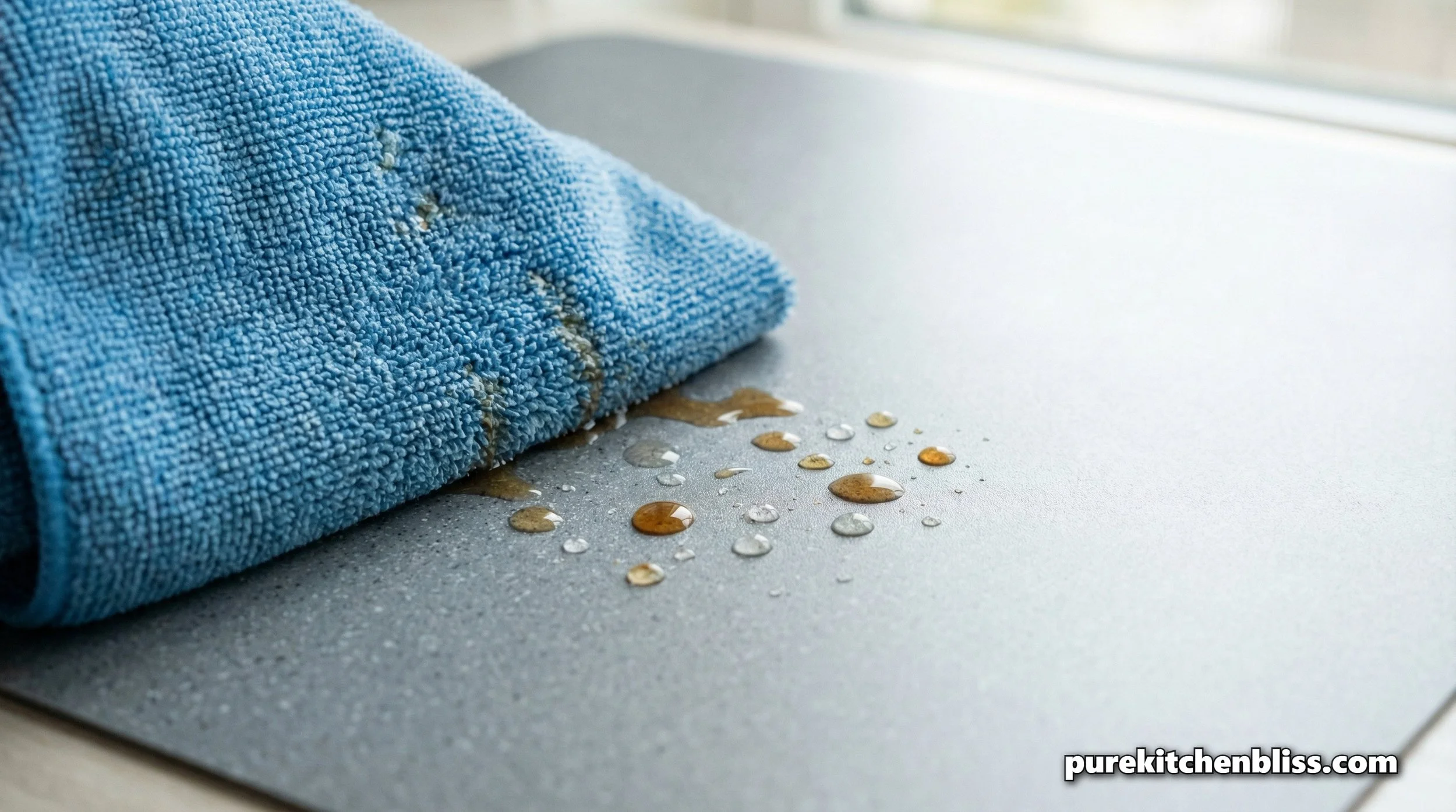
The Material: Look for 100% Polyurethane. It is non-toxic, doesn't off-gas like PVC (which contains phthalates), and is completely "closed-cell." This means it is physically impossible for the mat to absorb liquids, odors, or the "bio-load" of the kitchen.
The Maintenance: Because it’s non-porous, you don't need to "wash" it in a machine. You can clean it during your Kitchen Floor Extraction with the same Castile Soap solution you use for your tiles.
Puncture Resistance: Ensure the mat is rated for high traffic. In a house with four daughters, it needs to withstand dropped forks, high heels, and the occasional Broken Glass incident.
4. The "No-Mat" Alternative: The Soft-Sole Strategy
If you prefer the "visual silence" of a completely clear tile floor and want to show off your grout work, you can move the ergonomic infrastructure to your feet.
The Protocol: Use dedicated "indoor only" shoes with high quality arch support and a cork or foam midsole.
The Benefit: This protects your joints anywhere you walk in the house, whether you're in the laundry room or the pantry, and keeps yourProfessional Mopping Schedulemuch simpler since you don't have to move and clean under a heavy mat.
5. Placement Rituals
If you choose the mat, placement is key to the "Flow" of the room.
The Sink Station: Center the mat with the faucet to create a symmetrical "work zone."
The Prep Zone: If you have a long island, consider a "Runner" style mat to cover the entire length of the active workspace.
The Weekly Flip: During your weekend reset, always pick up the mat and mop the tile underneath. This prevents "dust-seeding," where grit gets trapped under the mat and acts like sandpaper against your tile finish.
GET THE ERGONOMIC INFRASTRUCTURE
Protect your body without compromising your floor's purity. We’ve sourced the best non-toxic, eco-friendly anti-fatigue mats that are built to last a lifetime.
Check Price: Non-Toxic 100% Polyurethane Anti-Fatigue Mat - Shop on Amazon
The "No-Mat" Solution: Supportive Cork House Slides for Tile Floors
Conclusion: Function Over Fashion
On a hard tile floor, a kitchen mat is a valuable piece of Health Infrastructure. However, it must be the right mat—non-porous, beveled, and non-toxic. If you choose wisely, it becomes the foundation that lets you enjoy the "Beautiful Chaos" of family life without the physical toll on your body.
Explore More in Your Kitchen Sanctuary:
To clean the tile under your mat: How Often to Mop Kitchen Floors
To manage spills on your mat: 5 Brilliant Uses for Castile Soap
To protect your joints elsewhere: Small Kitchen Organization Hacks