Pros and Cons of a Kitchen Breakfast Bar
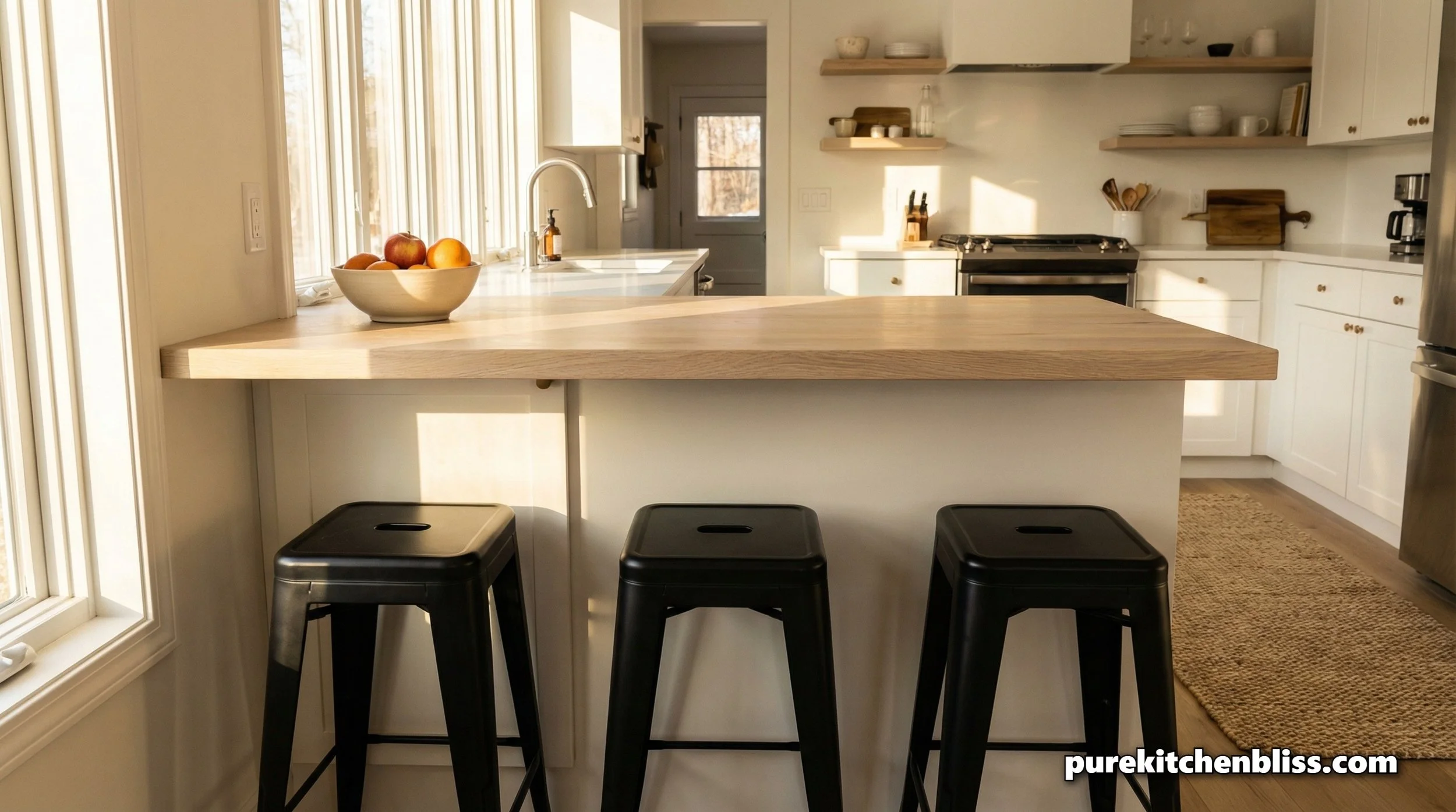
A breakfast bar is more than just an extended countertop; it is Social Infrastructure. When we design a Sustainable Sanctuary, we look at how the physical layout of a room dictates the behavior of the people inside it. A well-executed breakfast bar changes the "Circulatory System" of your home by allowing family and guests to be "in" the kitchen without encroaching on the "Work Triangle" of the cook.
However, from a "Curator" standpoint, a breakfast bar can also become a "Clutter Magnet." If the infrastructure isn't managed with discipline, it quickly transforms into a landing pad for mail, backpacks, and the very items we work to eliminate during our Sunday Night Countertop Reset. Before you commit to this structural change, you must weigh the social flow against the spatial reality.
1. The Pros: Why the Breakfast Bar Wins
Frictionless Social Flow
The primary benefit of a breakfast bar is Inclusion. In a traditional closed kitchen, the person preparing the meal is isolated. The breakfast bar breaks this barrier, allowing the "Chef" to maintain the Monday Morning Momentum while staying connected to the family’s morning ritual. It creates a "perch" for conversation that doesn't require a formal sit-down setting.
The Builder’s View: Spatial Efficiency
From a construction standpoint, a breakfast bar utilizes "Dead Space." By overhanging your countertop material by 12 to 15 inches, you create a dining zone within the existing footprint of your cabinetry. This is a high-performance solution for homes where a traditional dining table would feel like a structural bottleneck.
Increased Property "Bones"
In the current real estate market, a breakfast bar is a high-value "spec." It signals a modern, open-concept lifestyle. When we look at the "Bones" of a house, an island with seating is often the #1 request from buyers looking for a sanctuary that balances work, life, and nourishment.
2. The Cons: The Structural Reality Check
The "Horizontal Surface" Trap
In the physics of home organization, any flat, horizontal surface will eventually be covered in objects. Because the breakfast bar is usually at waist height, it is the path of least resistance for "Soft Infrastructure" like keys, mail, and school forms.
The Risk: Without the discipline of a Sunday Night Countertop Reset, the bar becomes a source of visual stress rather than a place of rest.
The Fix: If you install a bar, you must also designate a specific "Drop Zone" or "Command Center" elsewhere to protect the purity of the kitchen surface.
Seating "Encroachment" and Clearance
Stools take up significantly more room than people realize. As a builder, I follow the 36 Inch Rule.
The Spec: You need at least 36 inches of clearance behind the stools when they are in use to allow for comfortable "Circulation."
The Danger: If your kitchen is narrow, a breakfast bar can turn a high-traffic hallway into a structural bottleneck, leading to "Spatial Friction" that makes the kitchen feel cramped rather than open.
The "Visual Noise" of the Sink
Many modern islands place the sink directly opposite the seating. This means your guests are sitting inches away from the "Beautiful Chaos" of dirty prep pans. This is where choosing the right sink—like a deep, single-basin model discussed in Dou Really Need a Double Sink? becomes vital for "hiding" the mess during the social hour.
BUILDER TIP: THE OVERHANG SUPPORT SPEC
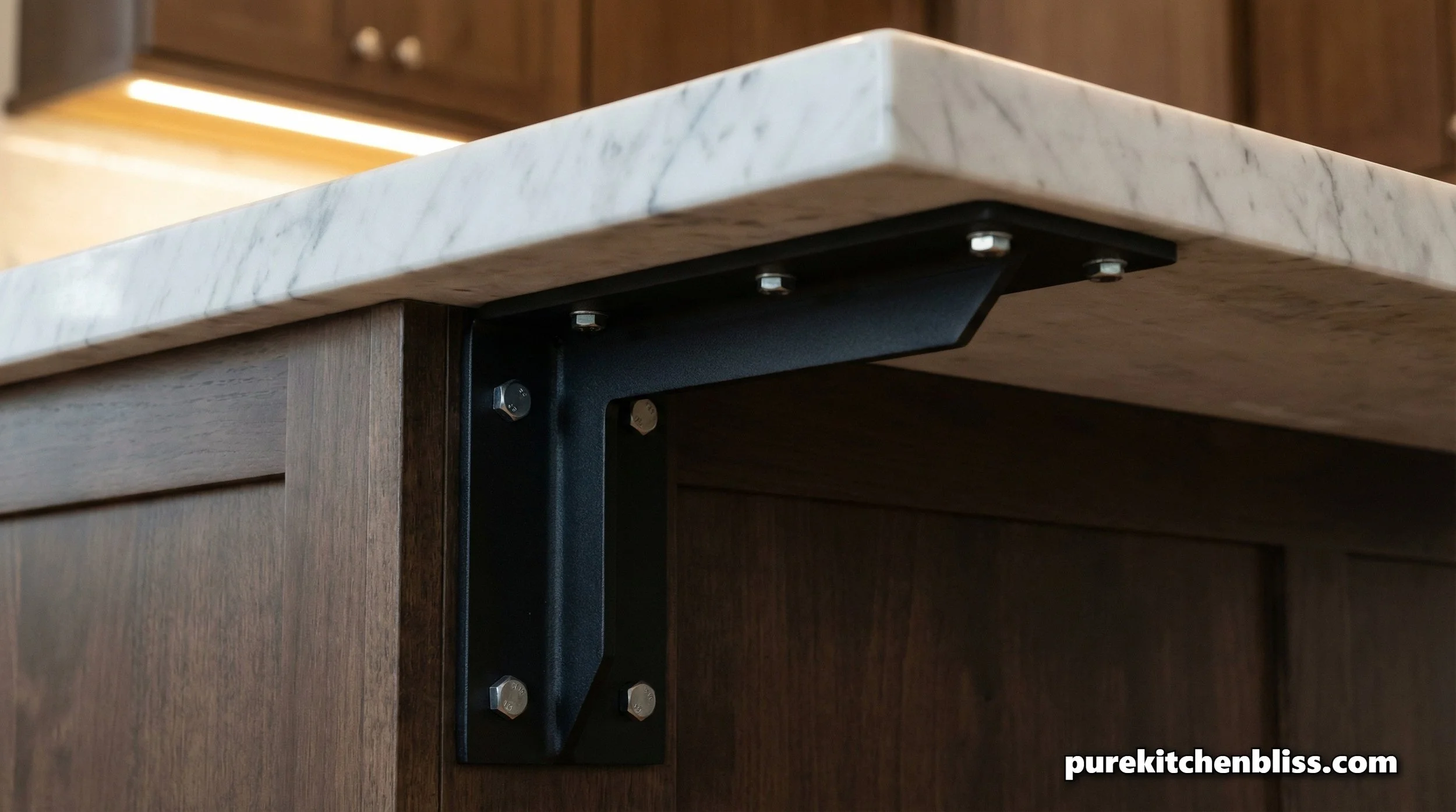
If your breakfast bar overhang exceeds 10 inches for stone (granite/quartz) or 12 inches for wood, you cannot rely on the material's internal strength alone. Natural stone is incredibly heavy but surprisingly brittle; without support, it can "shear" and crack. In a house with kids who might lean or climb on the counter, you must install hidden steel "L-brackets" or structural corbels to ensure the integrity of the surface.
3. Substrate Selection: Wood vs. Stone
The material you choose for your bar changes the "vibe" and the maintenance rhythm of the room.
Stone (Quartz/Marble): Provides a seamless, cool-to-the-touch surface. It is the gold standard for "Visual Silence," but it can be loud when setting down glasses and plates.
Wood (Butcher Block): Adds a layer of "Biological Warmth" to the kitchen. It acts as a natural sound dampener and feels more informal. However, it requires a dedicated Cutting Board Stewardship ritual to prevent drying and cracking.
4. The Hybrid Alternative: The "Peninsula"
If your floor plan doesn't have the "Spatial Flow" for a full island, a Peninsula breakfast bar is the professional alternative. It offers the same social "infrastructure" but is anchored to a wall or existing cabinetry. This is often the best choice for [Internal Link: Small Kitchen Organization] because it defines the kitchen boundary without requiring a 360-degree walkway.
Conclusion: Balancing Flow and Function
A breakfast bar is a powerful tool for building a Sustainable Sanctuary, provided you respect the "Bones" of your space. It is a commitment to a more social, integrated way of living. If you have the clearance for circulation and the daily discipline to keep the surface clear, it will become the most utilized piece of infrastructure in your home.
Explore More in Your Kitchen Sanctuary:
To keep your new bar clear of clutter: The Sunday Night Countertop Reset
To choose the right sink for your island: Do You Really Need a Double Sink?
To maintain the wood if you choose a butcher block top: Cutting Board Stewardship