The Healthy Kitchen Audit: Choosing Non-Toxic Cookware
In my 20 years in the trades, I’ve learned that the quality of your finish is only as good as the substrate you apply it to. In the kitchen, your cookware is the substrate for every meal your family eats. If you are using pans coated in PFOAs or "forever chemicals" (PFAS), you are introducing a structural weakness into your Sustainable Sanctuary.
Most modern "non-stick" pans rely on a thin chemical film that begins to degrade the moment it is overheated or scratched. As a builder-curator, I prioritize materials that are inert, durable, and mechanically sound. To protect the "soft infrastructure" of your four daughters’ health, we need to transition to cookware that doesn't off-gas or leach toxins into your food.
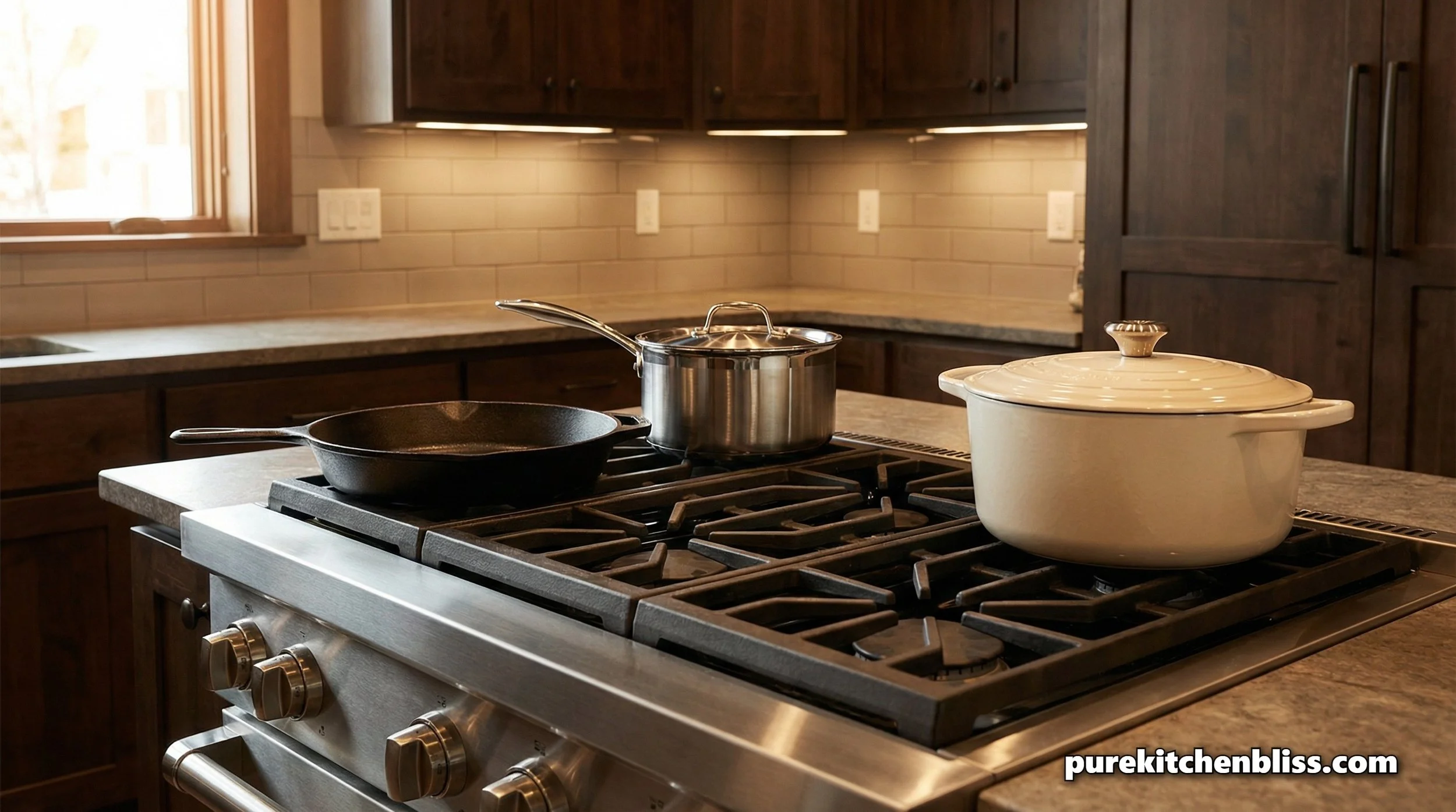
1. Cast Iron: The Indestructible Infrastructure
If I had to choose one material to survive a century of use, it’s cast iron. It is the "I-beam" of the culinary world.
The Non-Toxic Spec: Once seasoned with flaxseed or grapeseed oil, cast iron develops a natural, polymerized "biofilm" that acts as a non-stick surface without the need for synthetic chemicals.
The Benefit: It has incredible thermal mass, meaning it holds heat better than any other material. It also adds trace amounts of beneficial iron to your diet, a "structural bonus" for a growing family.
The Maintenance: As we discussed in 5 Uses for Castile Soap, you can use a drop of soap, but the real secret is heat and oil.
2. Stainless Steel: The High-Performance Workhorse
There is a reason professional kitchens are filled with stainless steel. It is non-reactive, meaning it won't leach metallic tastes into acidic foods like tomato sauce.
The Spec: Look for "18/10" Stainless Steel (18% chromium, 10% nickel). This is the "marine-grade" equivalent for the kitchen, highly resistant to rust and corrosion.
The Mechanical Logic: Unlike coated pans, you can scrub stainless steel without fear of destroying a chemical layer. It is built to handle the "Beautiful Chaos" of a high-output kitchen.
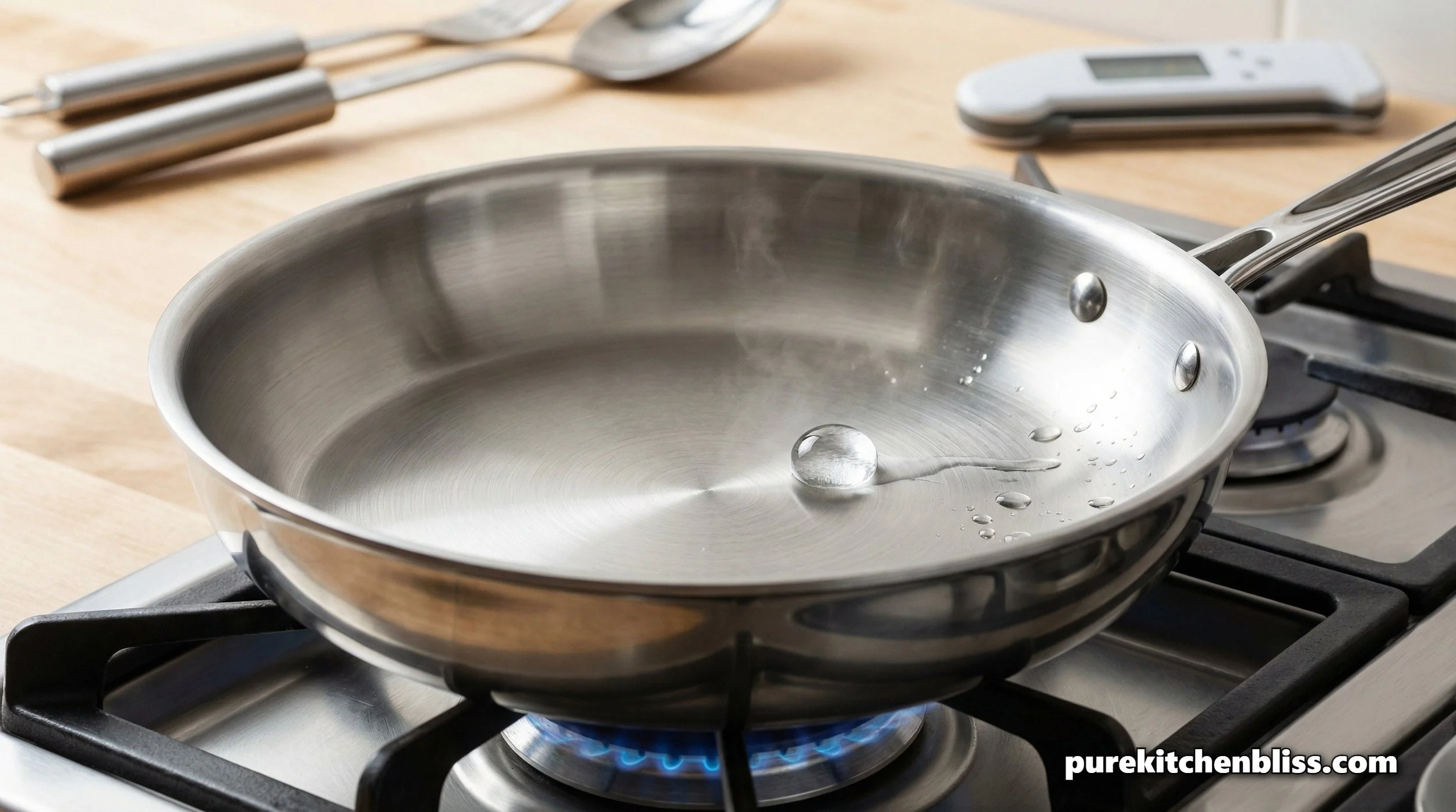
The "Leidenfrost" Trick: To make stainless steel non-stick, you simply have to wait for the "Water Bead" test. When the pan is properly preheated, the food floats on a microscopic layer of steam.
3. 100% Ceramic: The "Zero-Off-Gas" Solution
Note that I am not talking about "ceramic-coated" aluminum, which can still peel. I am talking about 100% solid ceramic or high-quality Enameled Cast Iron.
The Purity Spec: These materials are essentially glass. They are completely inert and do not off-gas, even at extreme temperatures.
The Design: Enameled pieces (like a Dutch Oven) provide a smooth, non-porous surface that is incredibly easy to clean during your Sunday Night Countertop Reset.
The Toddler Factor: As noted in Safe Kitchen Tools for Toddlers, using silicone or wooden tools on these surfaces ensures the enamel never chips, preserving the "bones" of the cookware for decades.
BUILDER TIP: THE OVERHEATING WARNING
Most toxic off-gassing occurs when empty non-stick pans are left on a high-heat burner. This causes the chemical bond to "thermalize" and release fumes into your Kitchen Ventilation. With Cast Iron and Stainless Steel, overheating might burn your dinner, but it won't compromise the air quality of your sanctuary.
Conclusion: Investing in Permanence
In a Sustainable Sanctuary, we move away from "disposable" culture. By choosing these three non-toxic materials, you are investing in cookware that won't need to be replaced every two years. You are building a legacy of health and durability in your kitchen—one meal at a time.
Explore More:
To clean your non-toxic pans safely: 5 Brilliant Uses for Castile Soap
To store your new cookware: Open Shelving vs. Upper Cabinets
To protect your apprentice’s hands: 5 Safe Kitchen Tools for Toddlers