The Ultimate Kitchen Coffee Station
In a house with four daughters, the morning routine is a high-demand "production run." As a builder-curator, I don't see a coffee station as just a place for a machine; I see it as a high-traffic utility zone. If you simply plop an espresso machine under a cabinet, you are ignoring the two primary threats to your kitchen’s "bones": aerosolized steam and the mechanical wear of daily use.
To build a sustainable sanctuary, your coffee station needs more than just an outlet. It needs a "workflow infrastructure" that manages water access, heat dissipation, and thermal protection. Whether you’re a pour-over minimalist or a dual-boiler espresso enthusiast, here is how to engineer a station that supports your Monday Morning Momentum.
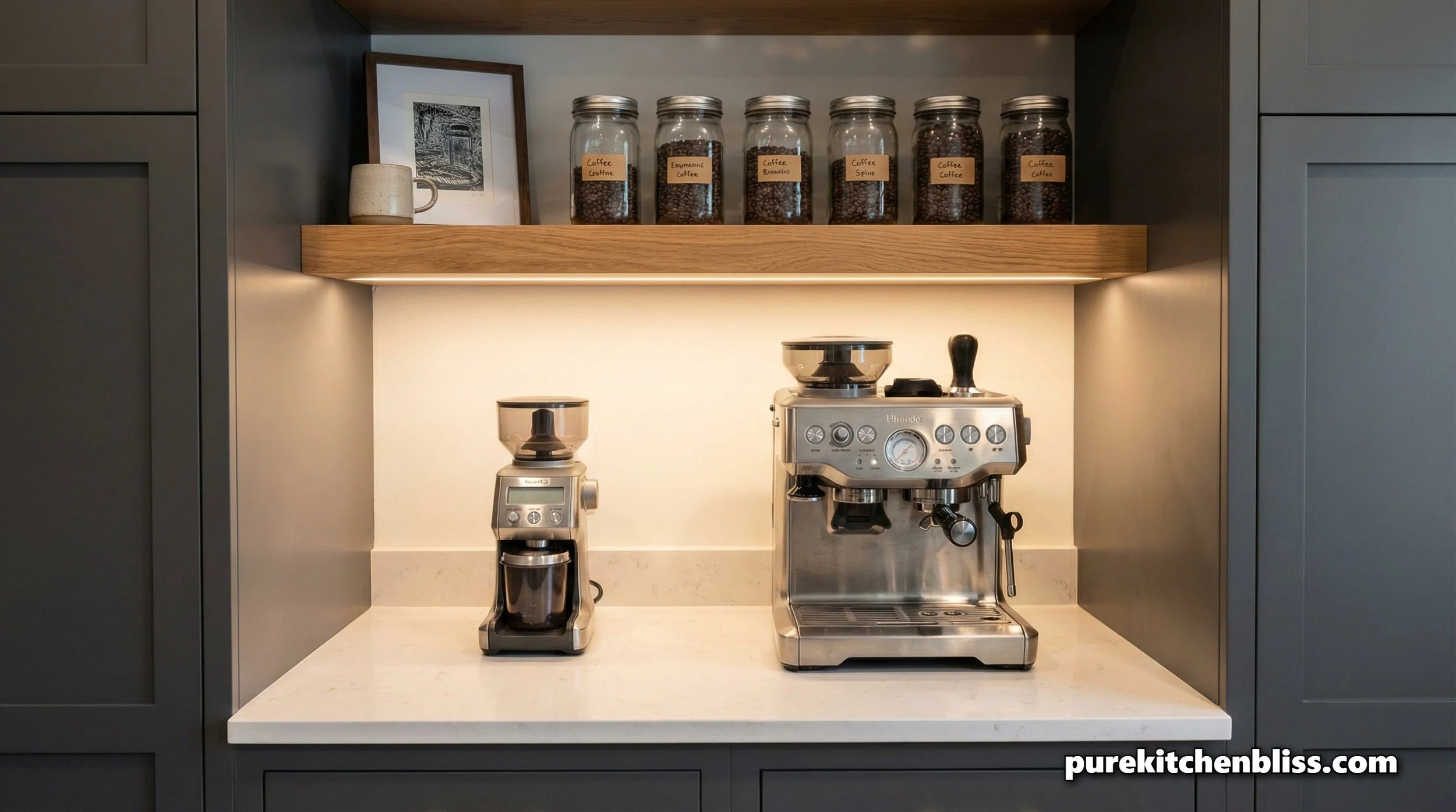
1. The Proximity Logic: The "Wet Zone"
The most common mistake in coffee station design is placing it in a "Dead Corner" far from the sink.
The Infrastructure: A coffee station is a water-intensive operation. Every cup requires filling, flushing, and rinsing.
The Builder’s Fix: Position your station within a "Single Pivot" of your Manual vs. Touchless Faucet. If you are building from scratch, consider a Pot Filler specifically for your reservoir. This eliminates the "Heavy Lift" and reduces the risk of spills on your Kitchen Mat.
2. Thermal Protection: Managing the "Steam Vent"
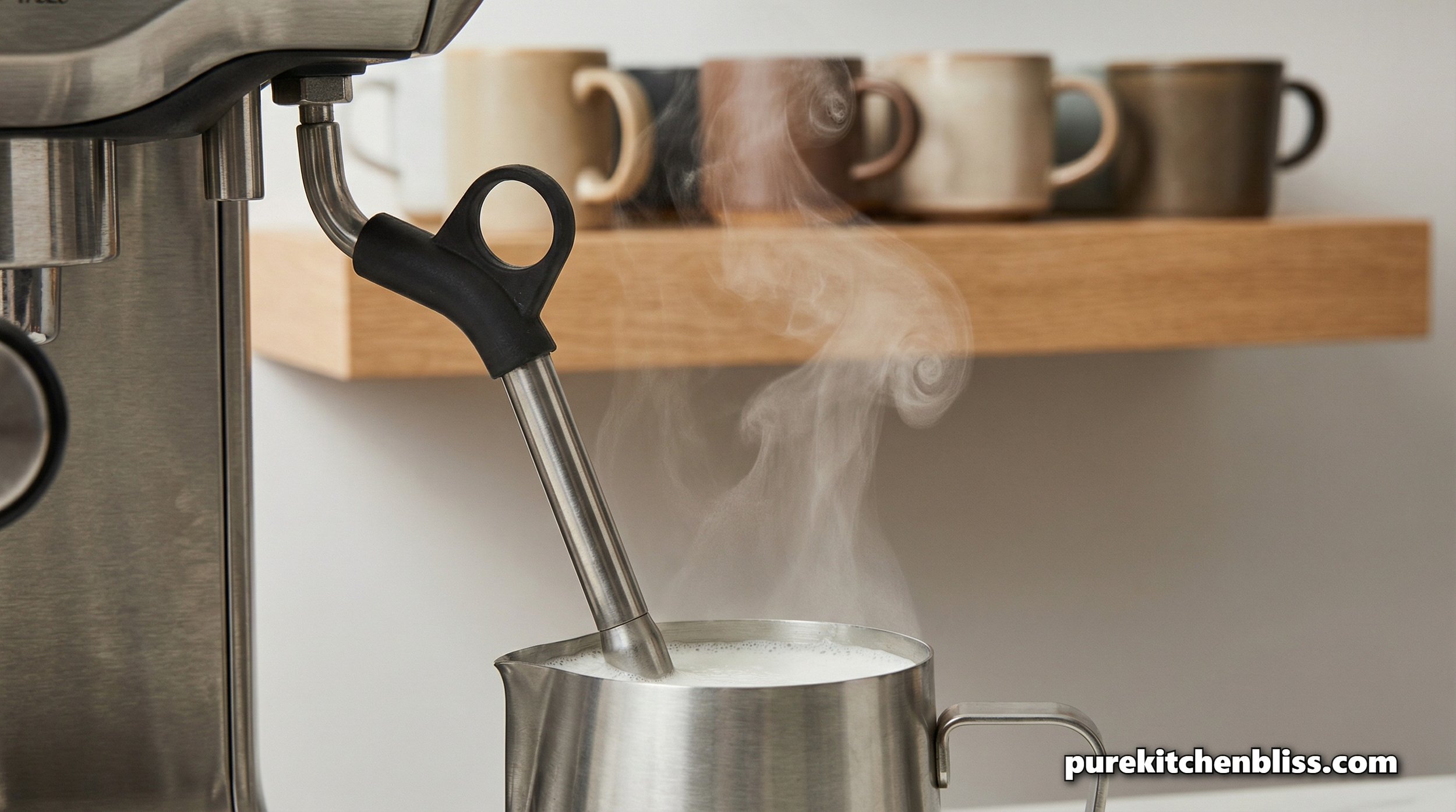
Coffee machines, especially kettles and espresso wands, release a massive amount of concentrated steam. Over time, this steam will delaminate cabinet finishes and trigger mold growth in the "Hidden Infrastructure."
The Spec: Ensure there is at least 15-18 inches of vertical clearance above your machine.
The Professional Shield: If your station is under upper cabinets, apply a discrete heat-resistant shield or a "steam deflector" to the underside of the cabinet. This preserves the "Finish Integrity" of your kitchen for the long haul.
3. The "Mechanical Friction" Protocol: Descaling
As we discussed in the [Internal Link: Vinegar Guide], hard water is the enemy of any machine with an internal boiler. Mineral buildup acts as a "Thermal Insulator," forcing your machine to work harder and eventually causing the heating element to fail.
The Ritual: Every 90 days, perform a "Mechanical Reset" using a 50/50 mix of distilled white vinegar and water.
The Result: This dissolves the scale and ensures the "Internal Bones" of your machine stay as clean as your Professional Fridge Organization.
BUILDER TIP: THE CORD CHASE
A tangle of black rubber cords is a "Visual Leak" in your sanctuary. Use a Cord Management Track or drill a discrete 2-inch "Grommet Hole" into your countertop to hide the power lines. This keeps the workspace clear for the actual "Extraction."
4. Workflow Ergonomics: The "Barista Triangle"
Efficiency in the trades is about minimizing "Travel Distance." Your coffee station should follow a linear path:
Storage: Beans kept in airtight canisters away from the oven’s heat.
Preparation: A dedicated spot for your grinder and scale.
Extraction: The machine itself, with a Silicone Heat Mat to protect your stone counters from staining and heat shock.
Cleanup: A small "Knock Box" for grinds and a microfiber cloth for the steam wand.
5. Lighting the Ritual
Coffee is often made before the sun rises. You need Task Lighting that guides your hands without waking up the rest of the house.
The Setup: Install a dimmable LED strip under the upper shelf or cabinet. Set it to a "Warm Glow" (2700K). This creates a serene atmosphere for your morning ritual, aligning with the "soft infrastructure" of a peaceful home.
Conclusion: A Foundation for Your Day
An engineered coffee station is an investment in your daily output. By addressing the "Mechanical Requirements" of water, steam, and scale, you ensure that your station remains a functional, beautiful part of your Sustainable Sanctuary for years to come.
Complete Your Morning Infrastructure:
To clean the station after use: 7 Uses for Vinegar in the Kitchen
To organize your morning snacks: Professional Fridge Organization
To protect your apprentice helping with the beans: Safe Kitchen Tools for Toddlers