5 Fun and Safe Kitchen Tools for Toddlers Helping Mom
In a house with four daughters, I’ve seen the transition from "toddler chaos" to "capable sous-chef" many times. As a builder-curator, I look at a toddler in the kitchen as an apprentice entering a high-output workspace. To make it a sustainable sanctuary, we need to provide them with "small-scale infrastructure," tools that are ergonomically designed for their "soft infrastructure" (developing motor skills) while maintaining strict safety standards.
Involving toddlers isn't just about keeping them busy; it’s about apprenticeship. Most parents hesitate to let toddlers help because of the "Sharp and Hot" nature of the environment. But as a builder, I know that if you give a worker the wrong tool for the job, an accident is inevitable. By curating a specialized toolkit, you allow your child to participate in the Monday Morning Momentum without compromising the safety of your sanctuary.
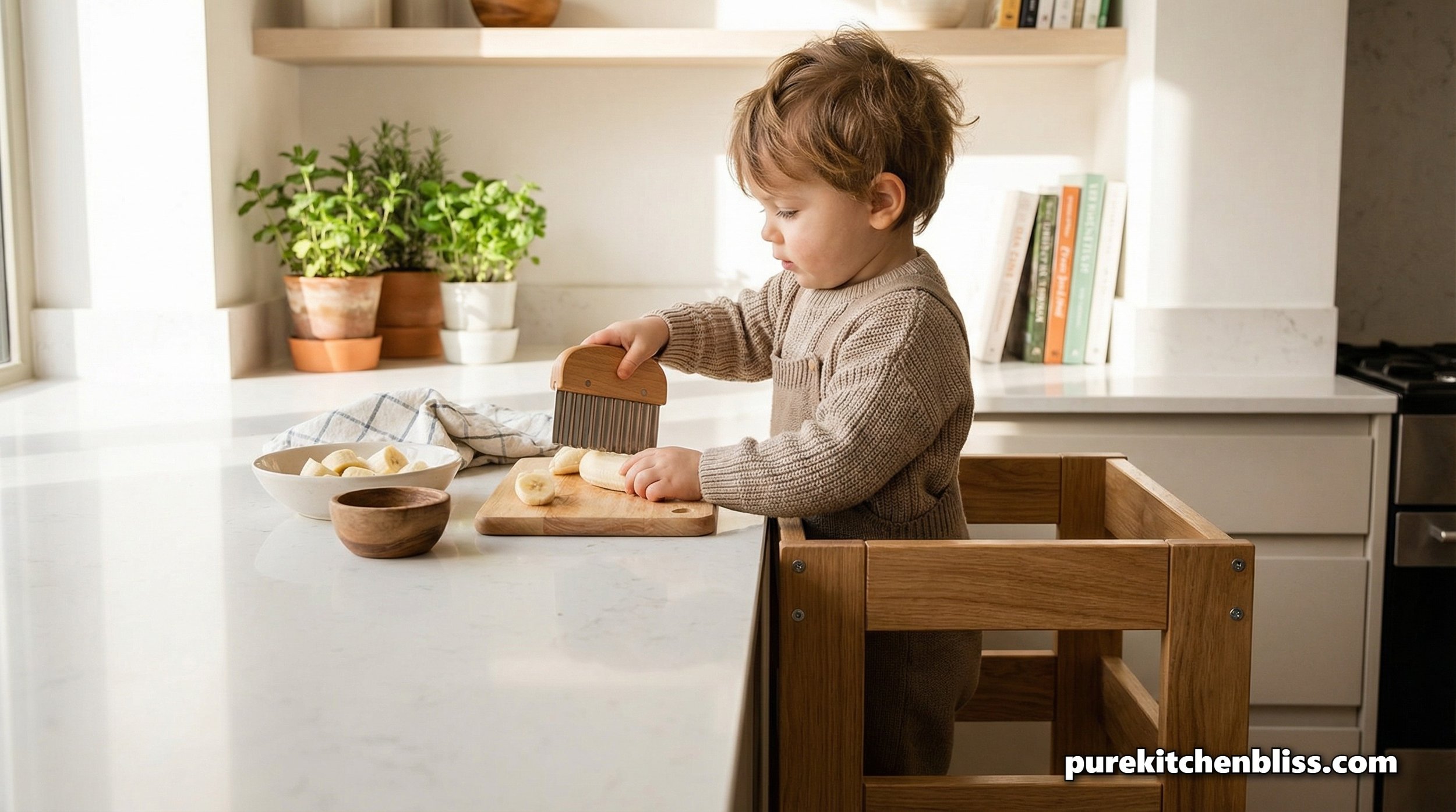
1. The Nylon "Safety Knife" Set
Traditional steel blades are a structural hazard, but a toddler’s instinct is to "cut like Mom." Denying that instinct leads to frustration; providing a safe alternative leads to mastery.
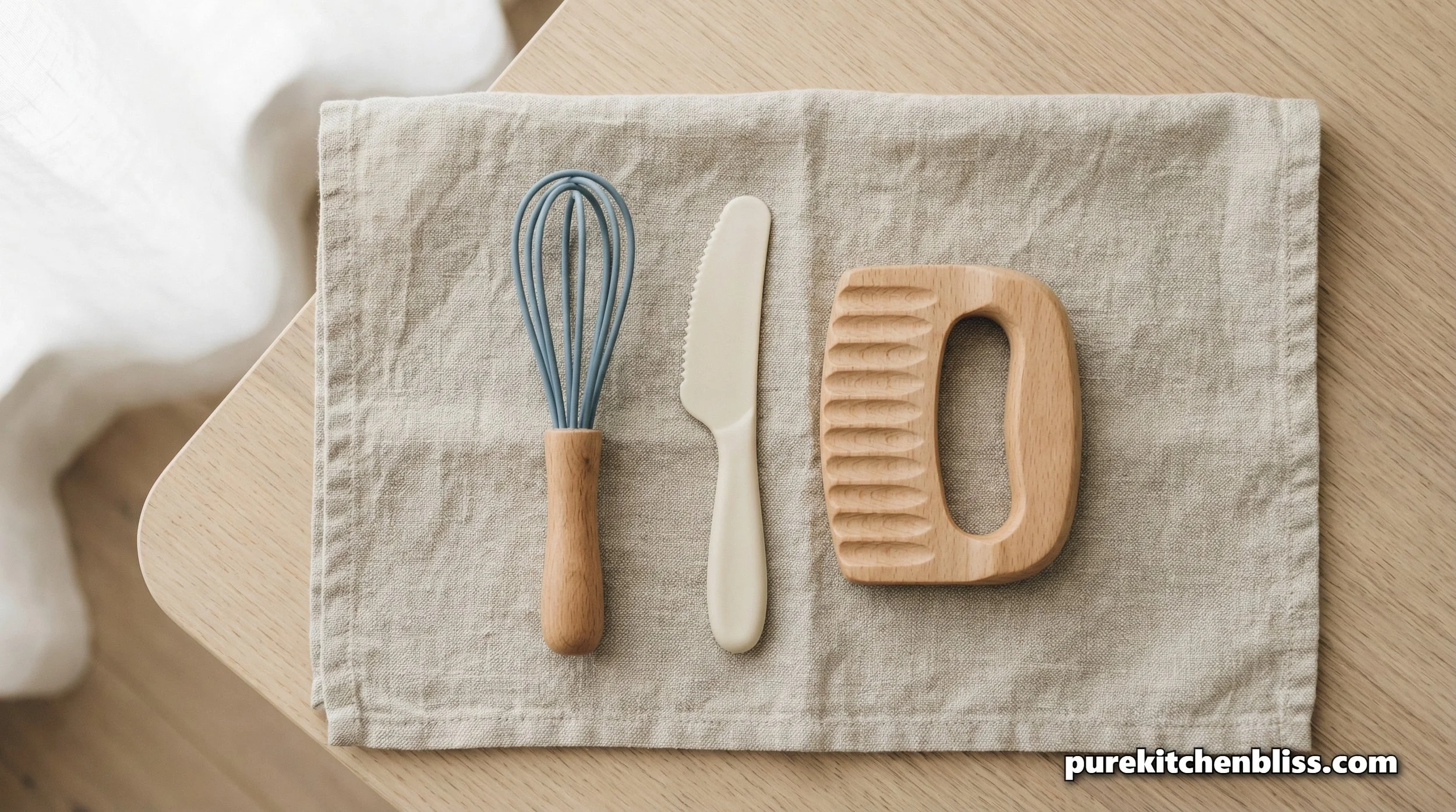
The Infrastructure: These are serrated nylon knives. They are engineered to slice through a cucumber or a sandwich but lack the "bite" to cut human skin.
The Lesson: It teaches the physical logic of slicing and the importance of finger placement (the "claw grip") before they ever graduate to a steel blade.
2. The Wooden "Wavy" Chopper
For the youngest apprentices, even a nylon knife might be too complex for their grip strength.
The Tool: A wooden-handled stainless steel wavy blade designed for a "push-down" vertical motion.
The Benefit: It uses the child’s body weight rather than fine motor "slicing" skills. It’s the perfect "starter tool" for prepping soft vegetables during a Sunday Night Countertop Reset.
3. The "Learning Tower" (Stationary Infrastructure)
As a carpenter, I know that a toddler perched on a dining chair or a standard step stool is a structural collapse waiting to happen.
The Spec: A "learning tower" is a four-sided, enclosed platform that brings the child to counter height safely.
The Safety Factor: It creates a "safe zone" where they can work without the risk of falling backward. This allows you to focus on the stove while they focus on their "job."
BUILDER TIP: THE "ZONE" BOUNDARY
Use a piece of low-tack painter's tape to mark a "Safe Square" on the countertop for your toddler’s tools. This visual infrastructure helps them understand where their "Job Site" ends and the "Danger Zone" (near the stove or sink) begins.
4. Mini Silicone Spatulas and Whisks
Toddlers often struggle with the "mechanical load" of adult-sized tools. A heavy metal whisk is cumbersome for a three-year-old.
The Tool: 6-inch silicone tools designed specifically for small palms.
The Purity Spec: Ensure they are BPA-free, food-grade silicone. They are heat-resistant and won’t scratch your Non-Toxic Cookware.
5. The "Manual" Egg Beater (Mechanical Logic)
Skip the electric mixer. A hand-crank eggbeater is a masterclass in physics and a favorite in my house.
The Lesson: It teaches "rotational force" and hand-eye coordination. It is much safer (and quieter) than a high-speed electric motor, allowing the child to feel the resistance of the batter as they work.
Conclusion: Cultivating the Next Generation
A toddler in the kitchen is only "beautiful chaos" if you don't have the right systems in place. By providing them with safe, age-appropriate infrastructure, you turn a chore into a ritual of connection. You aren't just making a meal; you are building a capable human.
Explore More in Your Living Sanctuary:
To clean up after your apprentice: 5 Uses for Castile Soap (Safe for Kids!)
To safeguard your kitchen further: Why Toaster Placement Must Be Considered
To manage the air quality in their workspace: 7 Unkillable Plants for Air Purification