Cutting Board Stewardship: How to Protect the "Workhorse" of Your Kitchen
In any high-performance kitchen, the cutting board is more than a tool; it is the primary Worksurface Infrastructure. Whether you have a massive end-grain butcher block or a simple edge-grain board, the wood is a living, breathing material. It reacts to humidity, absorbs liquids, and requires a specific maintenance ritual to stay pure.
As a builder, I see many homeowners treat their boards like disposable plastic, soaking them in the sink or, even worse, putting them through the dishwasher. This destroys the "bones" of the wood, leading to warping and the opening of "micro-cavities" that harbor bacteria. Proper stewardship ensures your board remains a non-toxic, heirloom-quality surface for decades.
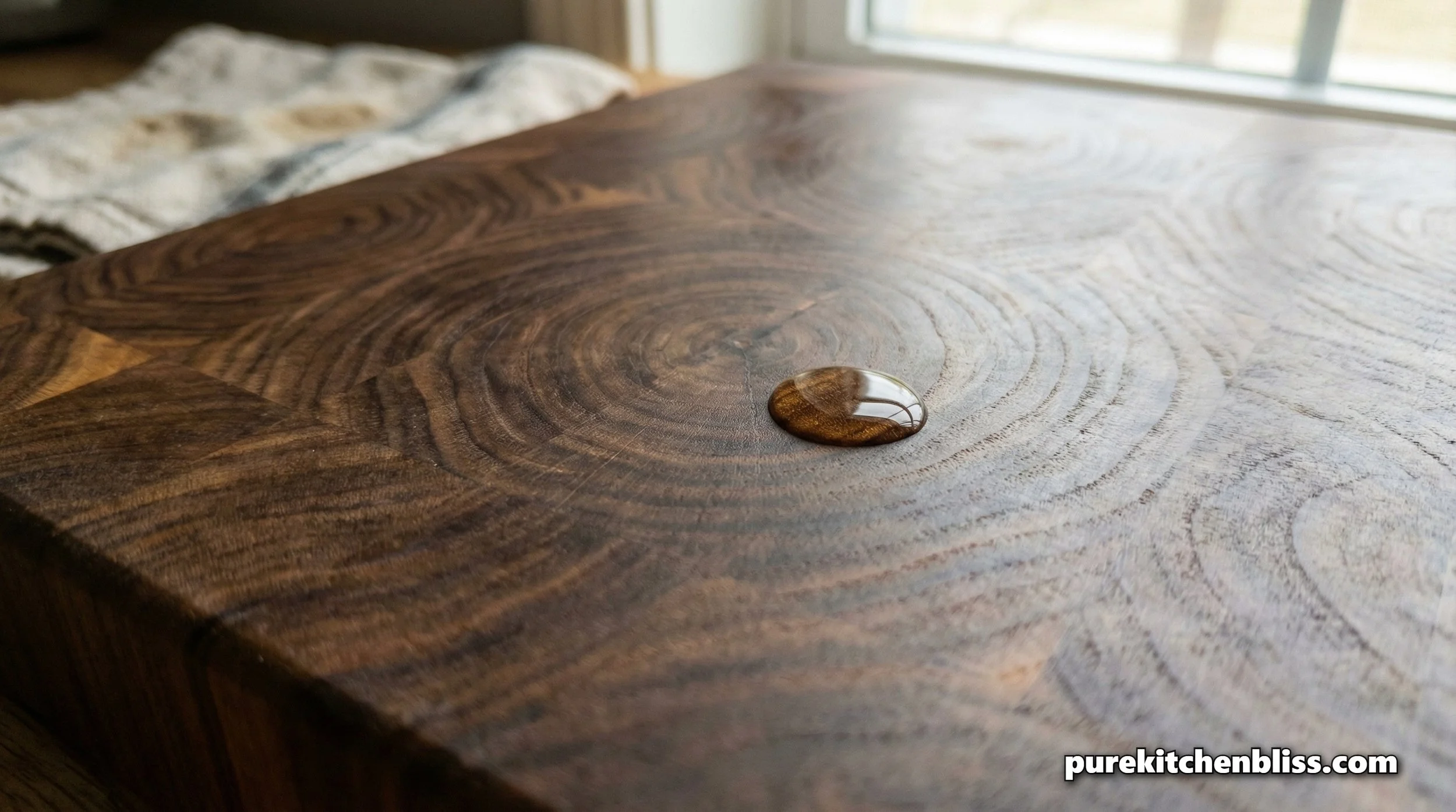
1. The Science of Wood Porosity
Wood is naturally antimicrobial. It "wicks" bacteria down into the center of the board where the microorganisms eventually suffocate. However, this only works if the wood fibers are "plump" and healthy.
If the wood becomes "thirsty" (dry), the fibers shrink and pull apart. These cracks become hidden reservoirs where food particles and moisture trap bacteria away from the air. Stewardship is about keeping those fibers saturated with food-grade oils to prevent this structural failure.
2. The Daily Reset: Cleaning Without Destruction
The goal is to clean the surface without stripping the applied oils that protect the wood's internal structure.
The Rule: Never submerge wood in water.
The Protocol: Use warm water and a small amount of 5 Uses for Castile Soap. Scrub with a stiff brush to lift organic debris.
The Rinse: Rinse quickly and towel dry immediately.
The Drying Position: Always dry your board standing on its edge. This allows air to flow around both sides equally, preventing the "cupping" or warping that happens when one side dries faster than the other.
3. The "Deep Sanitize" Ritual: Salt and Lemon
Twice a month, your board needs a "chemical-free" deep reset to neutralize odors and stains.
The Abrasive: Sprinkle a generous layer of coarse sea salt over the board.
The Acid: Cut a lemon in half and use it as a "scrub brush" to rub the salt into the grain.
The Result: The salt acts as a mechanical abrasive to lift stains, while the citric acid acts as a mild disinfectant. Let the paste sit for 10 minutes before rinsing.
4. Seasoning the "Bones": The Oil and Wax Protocol
Once a month, your board requires an Infrastructure Infusion. If the wood looks dull or pale, it is vulnerable to water damage.
Phase 1: The Oil (The Hydration)
Use food-grade Fractionated Coconut Oil or Mineral Oil. Unlike vegetable oils, these will not go rancid.
The Action: Apply a heavy coat and let it sit overnight. The wood will drink what it needs. Wipe off the excess in the morning.
Phase 2: The Wax (The Sealant)
To create a truly high-performance surface, you need a "Hermetic Seal."
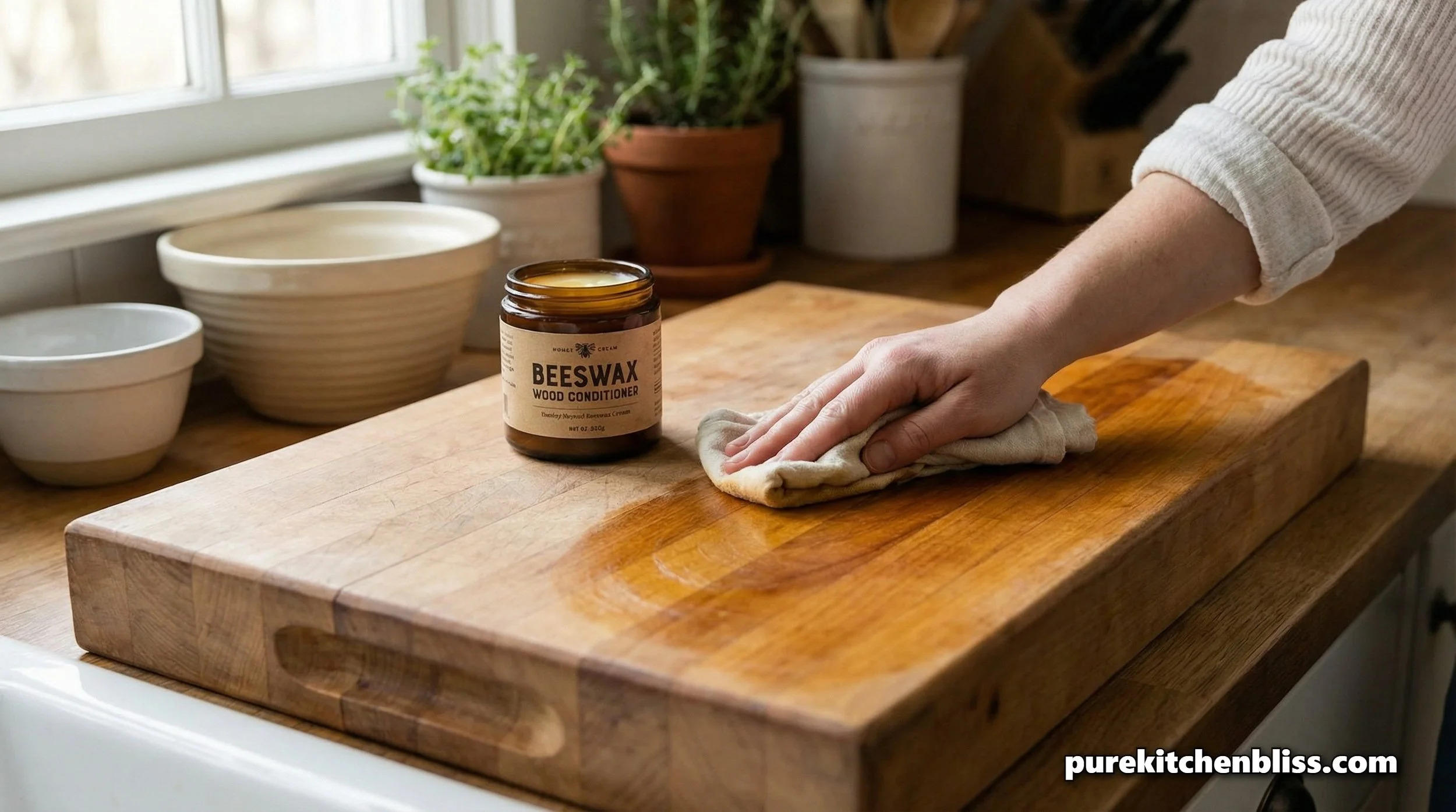
The Action: Rub a Beeswax and Mineral Oil Cream into the grain. This fills the microscopic pores and creates a "hydrophobic" barrier that prevents water from penetrating the wood fibers.
BUILDER TIP: THE "END-GRAIN" ADVANTAGE
If you are looking to upgrade your kitchen infrastructure, always choose an End-Grain board. In an end-grain board, the wood fibers stand vertically (like the bristles of a brush). When your knife hits the board, it slides between the fibers rather than cutting across them. This protects your knife edge and allows the board to "self-heal" as the fibers spring back into place.
5. Maintenance: When to Sand
Even with perfect stewardship, your board will accumulate deep "scarring" from heavy chopping.
The Fix: Every 2-3 years, you can "resurface" your board. Use 120-grit sandpaper followed by 220-grit.
The Reset: After sanding, the wood will be raw. It will require 3 consecutive days of oiling to rebuild its internal moisture levels.
Conclusion: The Foundation of the Prep
In a Sustainable Sanctuary, we value the longevity of our tools. By following this stewardship ritual, you ensure that your cutting board remains a safe, beautiful foundation for your family’s meals. It is a small act of maintenance that yields a lifetime of utility.