7 Brilliant Uses for Vinegar in Your Kitchen Sanctuary
In the arsenal of a Builder-Curator, distilled white vinegar is the "acidic workhorse." As a Red Seal Carpenter, I appreciate vinegar because it’s a low-pH solvent that breaks down mineral deposits and alkaline residues without compromising the structural integrity of your home's air quality. In a house with four daughters, we strictly avoid the harsh, synthetic fumes of commercial cleaners.
Vinegar is the ultimate tool for maintaining a sustainable sanctuary because it’s edible, biodegradable, and incredibly effective at a molecular level. It consists of roughly 5% acetic acid, which makes it a natural "chemical extraction" tool. It doesn't just mask odors; it physically dissolves the bonds of hard water minerals, grease, and even the stubborn "biofilm" we discussed in the Smelly Sink Guide.
1. The "Scale" Extraction (Coffee & Kettles)
If you have hard water, calcium and magnesium deposits build up inside your appliances. In the trades, we call this "mechanical friction"; it makes your tools work harder, run hotter, and die younger.
The Ritual: Fill your kettle or coffee reservoir with a 50/50 mix of vinegar and H₂O. Run one full cycle, then rinse twice with plain water.
The Result: The acetic acid dissolves the limescale, restoring the thermal efficiency and "flow rate" of your Internal Link: Coffee Station.
2. The Glass & Stainless "Polish"
Most commercial glass cleaners contain ammonia, which can irritate the respiratory "soft infrastructure" of children and pets.
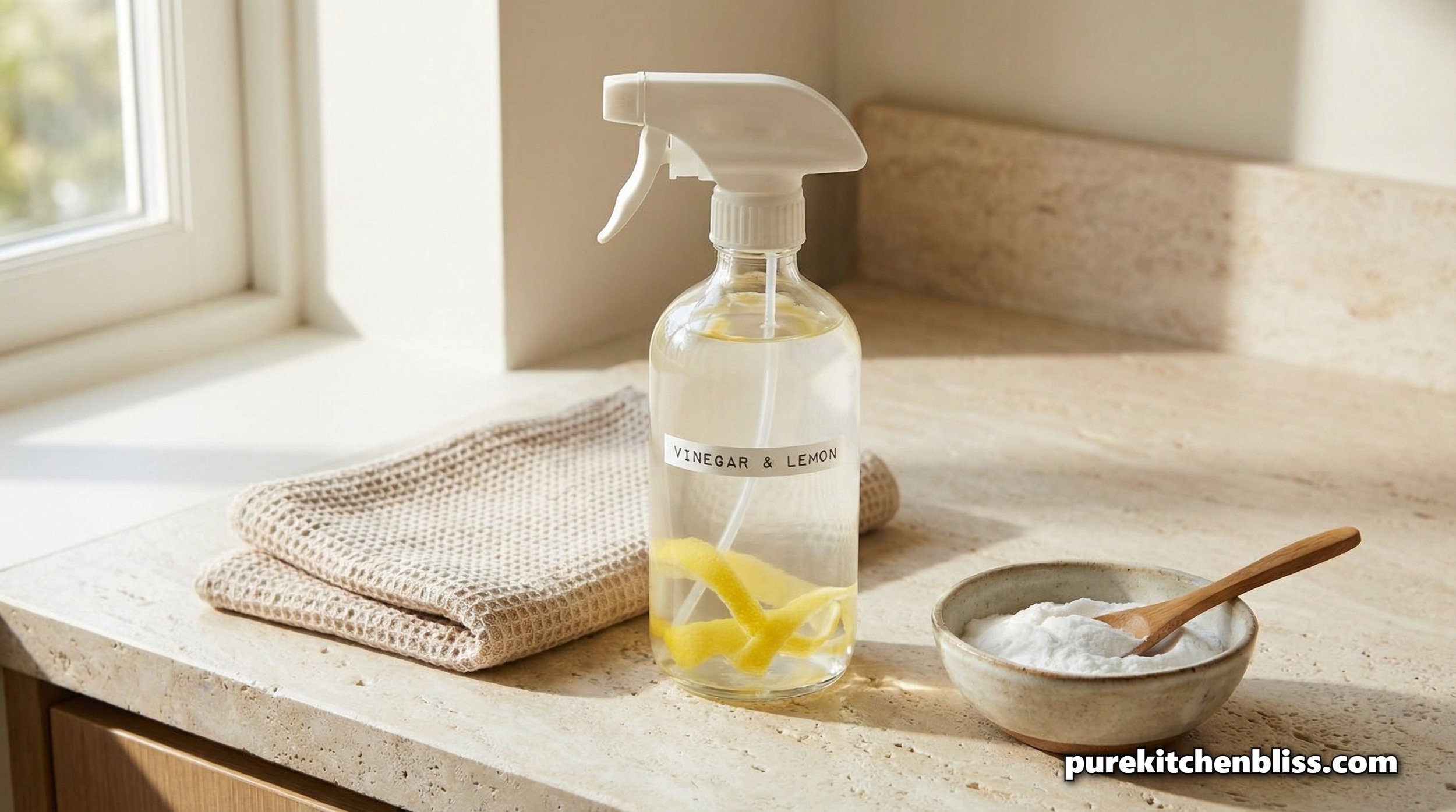
The Hack: Mix 1 part vinegar with 4 parts H₂O in a glass spray bottle.
The Science: The acid cuts through the "aerosolized grease" that settles on surfaces, leaving a streak-free shine on windows and stainless steel appliances without leaving a chemical film behind.
3. The "Mechanical Flush" for Drains
A slow drain is rarely a total blockage; it’s usually a buildup of soap scum and organic "sludge."
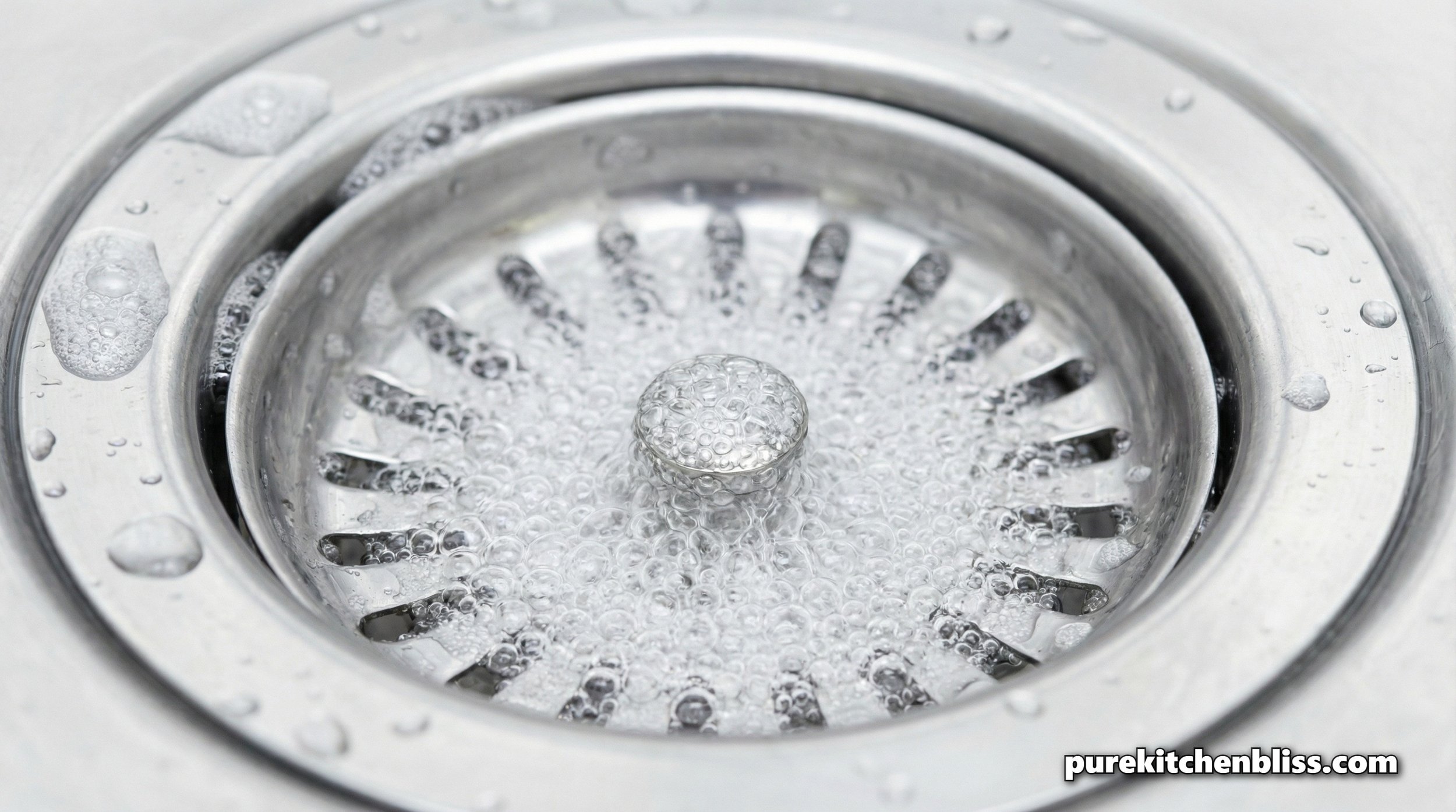
The Protocol: Pour 1/2 cup of baking soda followed by 1 cup of vinegar down the sink.
The Action: The volcanic CO₂ reaction creates "turbulence" inside the pipes, physically scouring the walls of the drain. It’s a non-toxic way to reset your Smelly Sink without using corrosive lye.
BUILDER TIP: THE NATURAL SEALER WARNING
Never use vinegar on natural stone like Marble, Granite, or Limestone. The acid will "etch" the surface, permanently dulling the finish of your expensive countertops. For stone, stick to our Castile Soap Protocol to protect the sealer.
4. The Produce "Purity" Soak
Store-bought produce often carries a "structural coating" of wax or pesticide residue designed to survive shipping.
The Hack: Fill your sink with water and 1 cup of vinegar. Soak your vegetables for 10 minutes.
The Benefit: Vinegar helps break down the wax and kills lingering bacteria, ensuring the contents of your Fruit Bowl stay fresh for significantly longer.
5. The Dishwasher "Rinse Aid" Replacement
Commercial rinse aids often contain synthetic surfactants that remain on your plates.
The Protocol: Fill the rinse-aid compartment of your dishwasher with straight distilled white vinegar.
The Result: It breaks the surface tension of the water, allowing it to sheet off during the drying cycle. This prevents "hard water spotting" on your glassware.
6. The Microwave "Steam Clean"
Food splatters in the microwave become "Petrified" over time, making them a nightmare to scrub without scratching the interior finish.
The Hack: Place a bowl with 1 cup H₂O and 2 tablespoons of vinegar inside. Microwave for 5 minutes.
The Action: The vinegar-infused steam softens the "Beautiful Chaos" of food spills, allowing you to wipe the interior clean with a single pass of a cloth.
7. The Fridge "Bio-Film" Wipe
As we noted in the Thermal Zoning Protocol, refrigerators can harbor dormant mold spores in the shelf tracks.
The Ritual: Use a vinegar-water solution to wipe down the "bones" (shelves and walls) of your fridge during your weekly audit.
The Benefit: It neutralizes odors at the molecular level and acts as a natural antifungal, protecting your produce from premature decay.
Conclusion: Acidic Integrity
Vinegar is the ultimate "invisible infrastructure" tool. By mastering its acidic properties, you can maintain a sparkling, high-performance kitchen while protecting the health of your family and the longevity of your appliances.
Explore More:
To clean the stone counters vinegar can't touch: 5 Brilliant Uses for Castile Soap
To reset your kitchen every week: The Sunday Night Countertop Reset
To manage the air quality in your sanctuary: 7 Unkillable Kitchen Plants