Professional Fridge Organization: The Thermal Zoning Protocol
To a builder-curator, a refrigerator is a controlled atmosphere infrastructure. It is a specialized machine designed to manage the "thermal load" of your household’s food supply. Most people treat their fridge like a closet—stuffing items wherever they fit. But in a high-output home with four daughters, a disorganized fridge is a structural failure that leads to "Forgotten Zones," cross-contamination, and massive food waste.
In a Sustainable Sanctuary, we don't just "organize"; we implement thermal zoning. This is the professional strategy of matching the biological needs of your food to the specific temperature gradients within the machine. By treating your fridge as a decision-support system, you protect both your family’s health and your grocery budget.
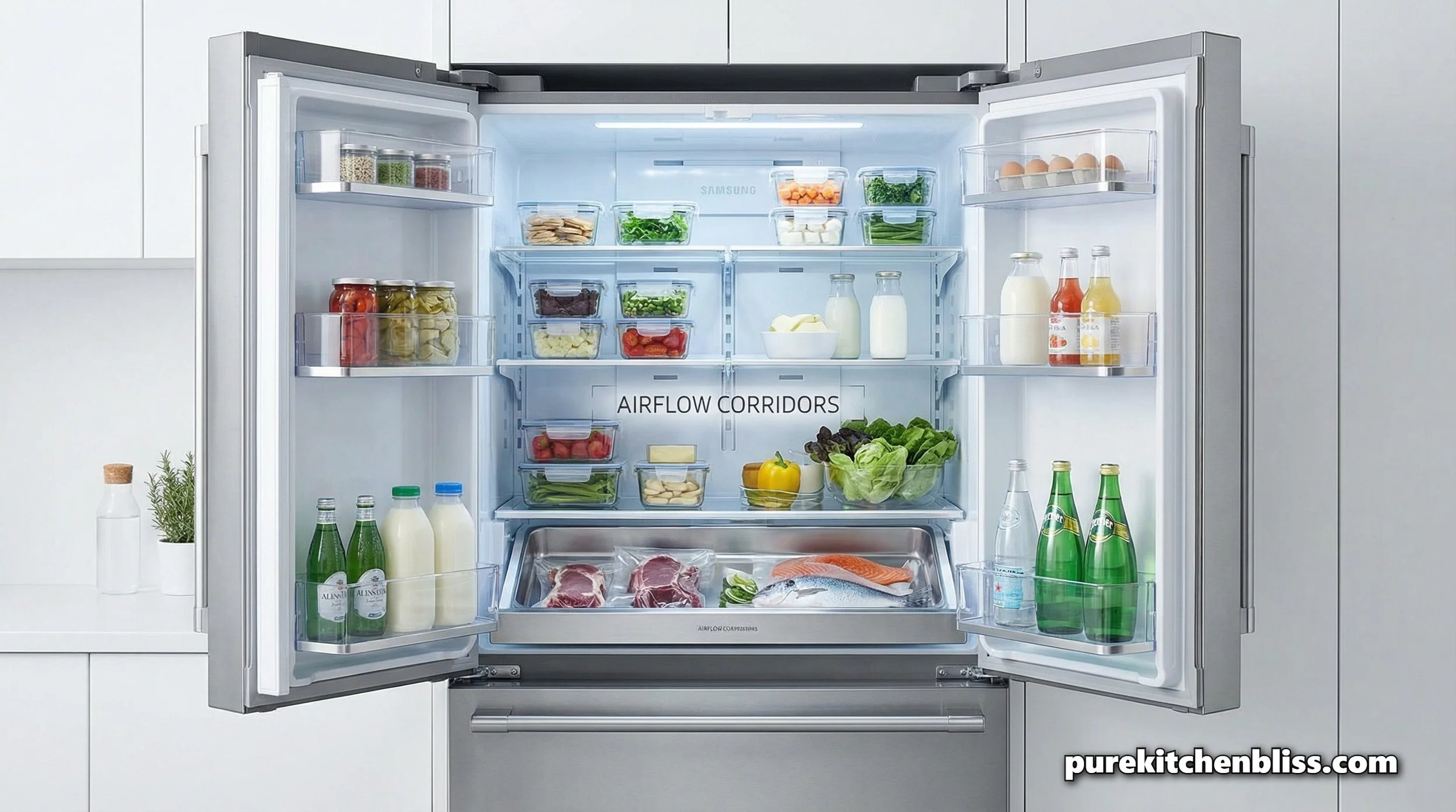
1. The Physics of the "Cold Stack"
A refrigerator is not a uniform block of cold. Because of the way air circulates and the proximity to the door, different "Zones" carry different risks.
The Top Shelf (The "Ready-to-Eat" Zone): This is the warmest area of the main body (usually around 3°C to 4°C). It is the eye-level "Decision Zone." Reserve this for leftovers, prepped salads, and snacks that need to be grabbed quickly during the Monday Morning Momentum.
The Bottom Shelf (The "Cold Sump"): Cold air sinks. This is the coldest part of your fridge. As we discussed in Kitchen Safety Items, this is the only place for raw proteins.
The Door (The "Fluctuation Zone"): Every time a daughter opens the door for a snack, the temperature here spikes. Never store milk or eggs in the door. It is for condiments and shelf-stable beverages only.
2. The "Cross-Contamination" Barrier
In my 20 years in the trades, I’ve learned that a leak in a building's envelope is a disaster. In a fridge, a leak from a raw chicken package is a biological disaster.
The Structural Fix: Always store raw meat, poultry, and fish on a Stainless Steel or Glass Tray on the bottom shelf.
The Logic: If a package fails, the tray catches the liquid, preventing it from dripping onto the produce below. This simple piece of "Hardware" turns a potential bio-hazard into a 30-second cleanup.
3. The Humidity Infrastructure: Crisper Drawers
Most fridges have two drawers, and most people use them as "miscellaneous junk drawers." To maintain Unkillable Plant Purity, your produce needs specific humidity logic.
High Humidity (Closed Vent): For thin-skinned "Wilters." Think leafy greens, broccoli, and herbs. The closed vent traps the moisture released by the plants, keeping them turgid and crisp.
Low Humidity (Open Vent): For "Gassers." Think apples and pears. As we noted in Why Is My Fruit Molding?, these release ethylene gas. The open vent allows the gas to escape so the fruit doesn't rot itself from the inside out.
BUILDER TIP: THE 20% AIRFLOW RULE
A refrigerator works through convection. If you pack your shelves 100% full, you "choke" the infrastructure. The fan has to work twice as hard, and you’ll find "Warm Pockets" where food spoils prematurely. Aim for 80% capacity. If you can’t see the back wall of your fridge, you are over-taxing the system.
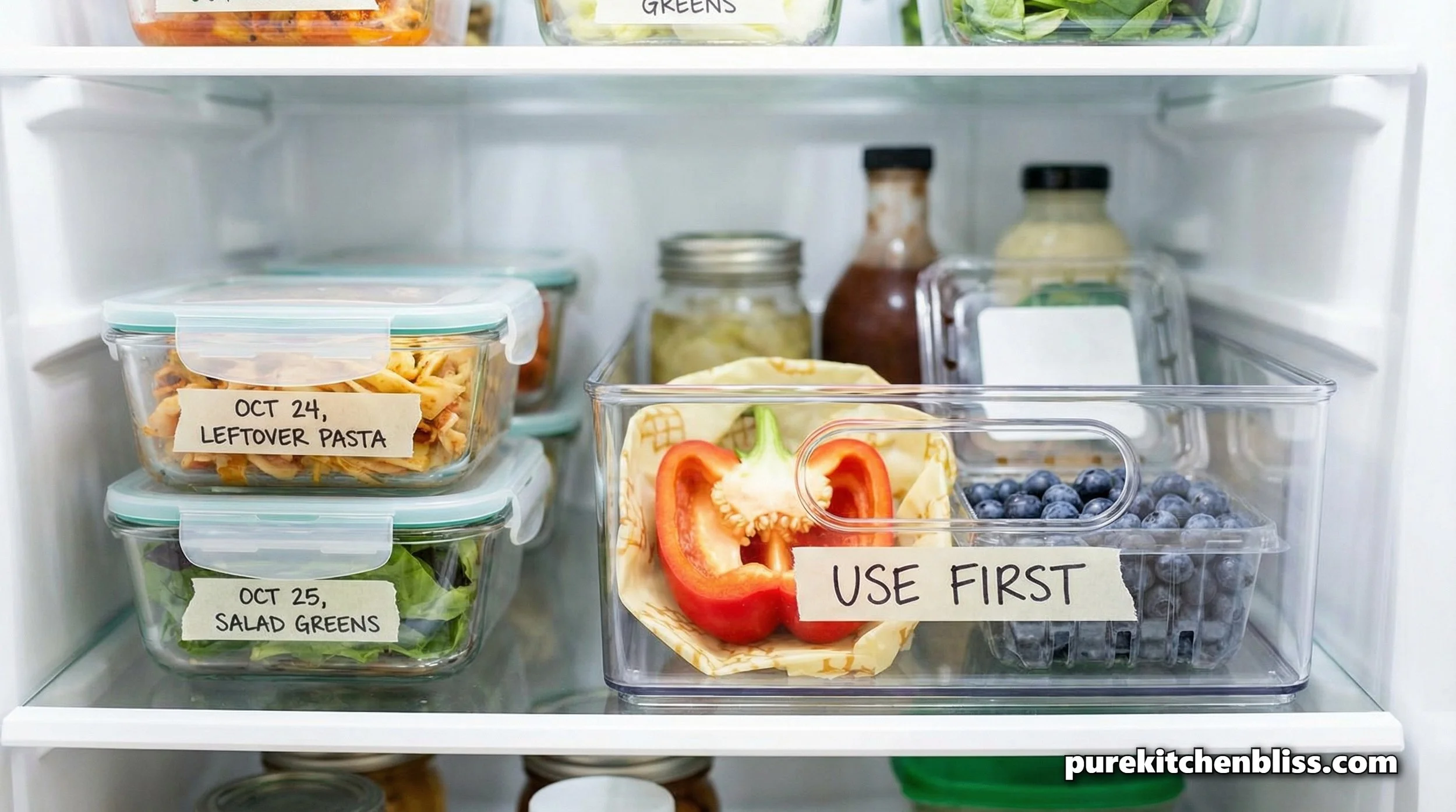
4. The "FIFO" Inventory Protocol
"First In, First Out" isn't just for restaurants; it’s a stewardship ritual.
The System: When you get home from the store, move the "Older" yogurt and eggs to the front and place the "New" stock in the back.
The "Eat Me First" Bin: Designate one clear bin at eye level for items that are approaching their expiration. This reduces the mental load of meal planning, when you’re tired, the fridge literally tells you what needs to be cooked.
5. The Maintenance Reset
An organized fridge is only as good as its last cleaning.
The Ritual: During your Sunday Night Countertop Reset, do a 60-second "Fridge Sweep." Toss anything that has turned into a "science project," and wipe down the "Shelf Bones" with a Castile Soap solution. This prevents the buildup of the "biofilms" we discussed in the Smelly Sink Guide.
Conclusion: Engineering Your Diet
Your refrigerator is the most important "tool" in your sustainable sanctuary. By implementing thermal zoning and protecting your airflow infrastructure, you are engineering a kitchen that supports your health and respects your resources. When the bones are right, the "Beautiful Chaos" of family life is much easier to manage.
Explore More:
To clean the shelves safely: 5 Brilliant Uses for Castile Soap
To manage the air quality in your kitchen: 7 Unkillable Plants for Air Purification
To reset your sanctuary every week: The Sunday Night Countertop Reset