If you walk into a high-end showroom in 2026, you’ll notice something immediately: the "jewelry" of the kitchen has changed. For years, we were told that gold was a fleeting trend, a flashy choice that would date a home as quickly as the polished brass of the 1980s. But as we settle into the high-performance sanctuary aesthetic, gold hasn't just returned; it has matured.
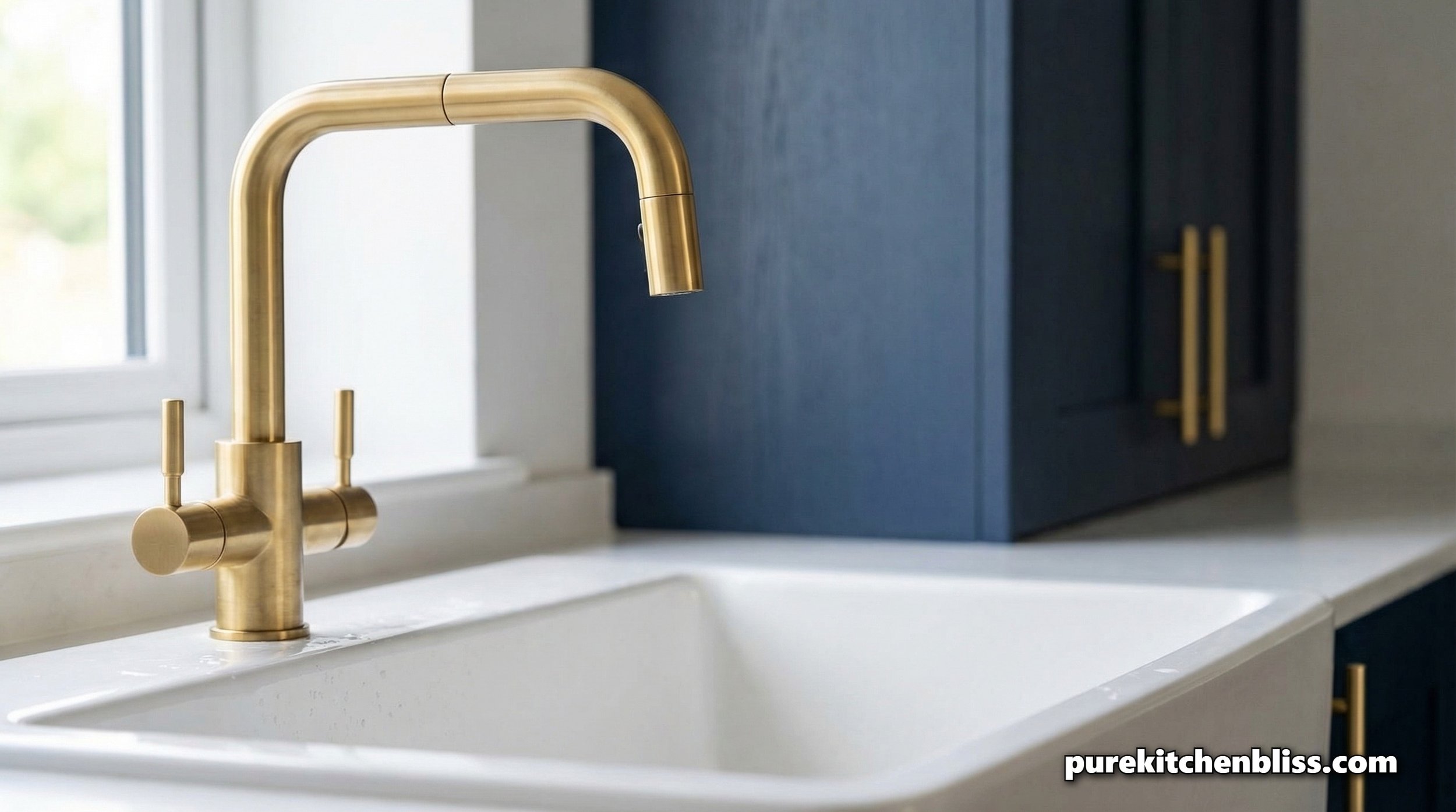
The "New Gold" of 2026 isn't the yellow, reflective plating of the past. It has evolved into soft, muted tones like Champagne Bronze, Honey Brass, and Aged Gold. These finishes are now being treated as "warm neutrals" rather than accent colors. They provide the necessary warmth to balance the deeper, moody cabinet colors, like forest green and navy, that are currently dominating modern design.
1. From "Flashy" to "Quiet Luxury"
In previous years, gold was used to make a statement. In 2026, it is used to create cohesion. This shift is part of the "Quiet Luxury" movement, where materials are chosen for their feel and longevity rather than their ability to grab attention.
Unlike polished chrome, which can feel cold and clinical, brushed gold finishes have a "soft" visual texture. They diffuse light rather than reflecting it, which helps a kitchen feel more like a living space and less like an industrial workspace. This aligns perfectly with the rise of Grandma’s decor trends, which prioritizes comfort and "soulful" materials.
2. The Rise of "Living" Gold
One of the most interesting developments in 2026 is the popularity of Unlacquered Brass. This is a "living finish" that starts as a bright gold but naturally darkens and develops a patina over time.
Much like the soapstone surfaces we maintain, unlacquered brass requires a homeowner who appreciates a material that changes. It tells the story of the kitchen’s use, the areas of the faucet you touch the most will stay bright, while the rest will deepen into a rich, antique bronze.
3. The 70/30 Rule: How to Mix Metals
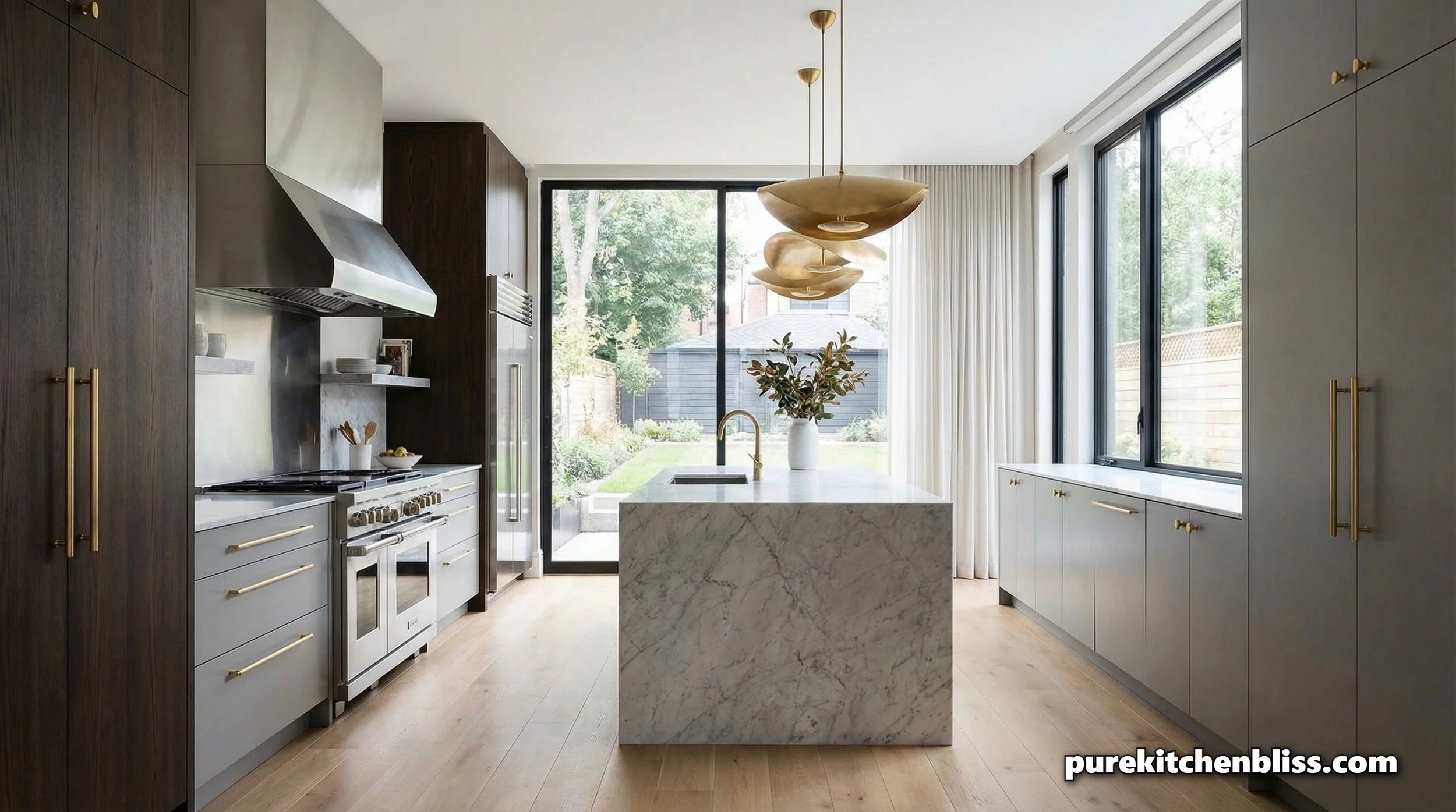
The "one-metal rule" is officially dead. In 2026, the most sophisticated kitchens use a mix of warm and cool tones. If you are worried that "too much gold" will look dated, use the 70/30 Ratio:
70% Dominant Metal: Choose a cool metal (like Stainless Steel or Brushed Nickel) for your large-scale items like appliances and sinks.
30% Accent Metal: Use Gold or Brass for your "touch points"—cabinet pulls, light fixtures, and the kitchen faucet.
This creates a look that feels "collected over time" rather than a matching set from a big-box store.
| Finish Name | The Look | Best For... |
|---|---|---|
| Champagne Bronze | Muted, pink-undertone gold. | White or Light Wood cabinets. |
| Brushed Brass | Classic, warm, matte yellow. | Navy, Charcoal, or Dark Green. |
| Aged/Antique Gold | Deep, brownish-gold patina. | "Grandmacore" or Rustic styles. |
4. Technical Tip: Fingerprints and Maintenance
One reason the gold trend has stayed alive is that brushed finishes are incredibly practical. Unlike polished chrome or matte black, which show every water spot and oily fingerprint, brushed gold is very forgiving.
To keep your hardware looking its best, avoid harsh chemical cleaners that can eat through the PVD (Physical Vapor Deposition) coating. Instead, stick to the versatile uses for Castile soapfor a gentle, effective clean that preserves the finish.
Conclusion: A Timeless Investment
Gold isn't "back" because it never really left, it just got a promotion. By choosing muted, brushed finishes and mixing them with classic metals, you can create a kitchen that feels both current in 2026 and timeless for years to come. It is the easiest way to add a layer of warmth and "soul" to the modern home.
Ready to upgrade your kitchen's infrastructure?
Prevent food spoilage: food storage rules we discussed
Keep it clean: how to deep clean your range hood
Grow your own: growing trend of indoor herbs