Open Shelves vs. Upper Cabinets: The Ultimate Kitchen Infrastructure Debate
In the "Beautiful Chaos" of a family kitchen, storage is our most valuable asset. It is the hidden framework that allows the room to function. However, how we "stage" that storage determines the entire vibe of the sanctuary. I’m often asked if open shelving is a "practical" choice for a high output home or just a fleeting design trend that leads to a lifetime of dusting and regret.
The truth is, both have a place in a Sustainable Sanctuary, but they serve very different structural purposes. To decide which is right for your home, we have to look beyond the aesthetic and examine your kitchen’s Airflow, your Maintenance Rituals, and your Spatial Flow.
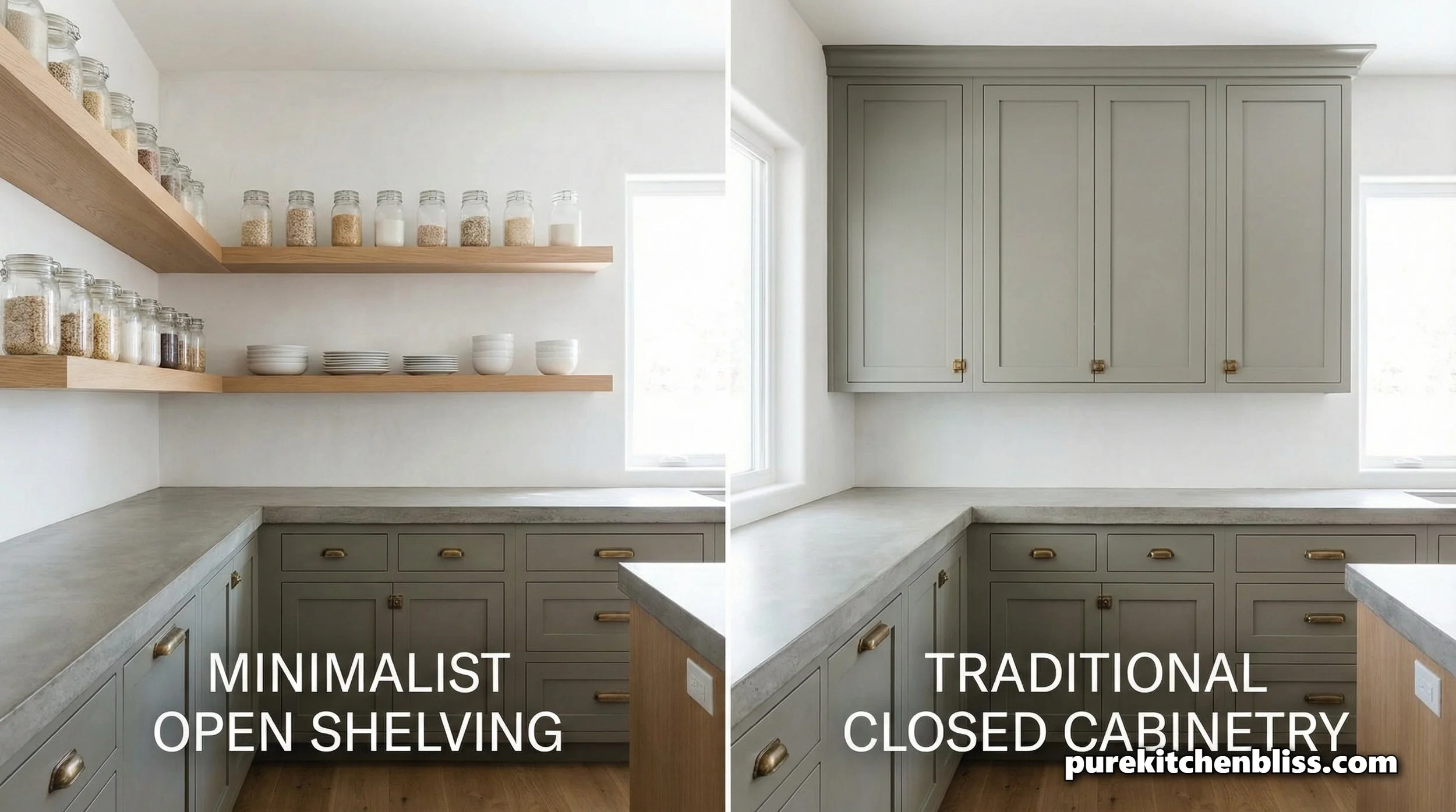
1. Open Shelving: The "Frictionless" Workflow
Open shelves are the darling of the Monday Morning Momentum. When your most-used items are visible and reachable, the "friction" of making breakfast, packing lunches, or setting the table disappears. From a lifestyle perspective, open shelving promotes a "Ready State" kitchen.
The Psychology of Sightlines
Removing upper cabinets does more than just free up wall space; it changes the volume of the room. In smaller kitchens, upper cabinets can create a "tunnel effect," making the cook feel boxed in. Open shelving breaks this vertical weight, allowing the eye to travel all the way to the backsplash. This makes a standard kitchen feel expansive and airy. It lets the light from your windows hit the Zero-VOC Paint on your walls, brightening the sanctuary naturally.
The "Visual Discipline" Requirement
The most common argument against open shelving is the clutter. This infrastructure requires a level of "curation." If your dishes are a mismatched collection of plastic stadium cups and chipped ceramic, open shelves will look like a job site rather than a sanctuary. For open shelving to work, you must commit to a uniform palette, think clear Glass Jars and neutral ceramics.
The Atmospheric Grease Factor
As someone who looks at the "lungs" of a house, I have to be honest: if you don't have a high-performance Range Hood Restoration protocol or a powerful ventilation system, open shelves can be a challenge. In a kitchen, grease becomes aerosolized during cooking. Without proper extraction, that grease settles on exposed plates, creating a "tacky" film that traps dust.
2. Upper Cabinets: The "Safe Harbor"
Traditional cabinets are the "Heavy Infrastructure" of the kitchen. They are designed to protect your items from the environment, and they do this better than any other system.
Hiding the Chaos
The primary benefit of cabinets is their ability to provide "Visual Silence." In a home with four daughters, there will always be items that are functional but not beautiful, the mismatched Tupperware, the bulky stand mixer, or the neon-colored kid's plates. Cabinets act as a safe harbor for this chaos, keeping the visual noise at zero and allowing the kitchen to feel "reset" even when the cupboards are full.
Protection from the Elements
Cabinets offer a sealed environment. This is vital for items you don't use every day. While a plate on an open shelf stays clean if used daily, a crystal platter used once a year will stay pristine behind a cabinet door, protected from dust and the "bioload" of the kitchen air. However, poorly made cabinets can trap moisture and harbor stale odors if the Air Quality of the home isn't managed.
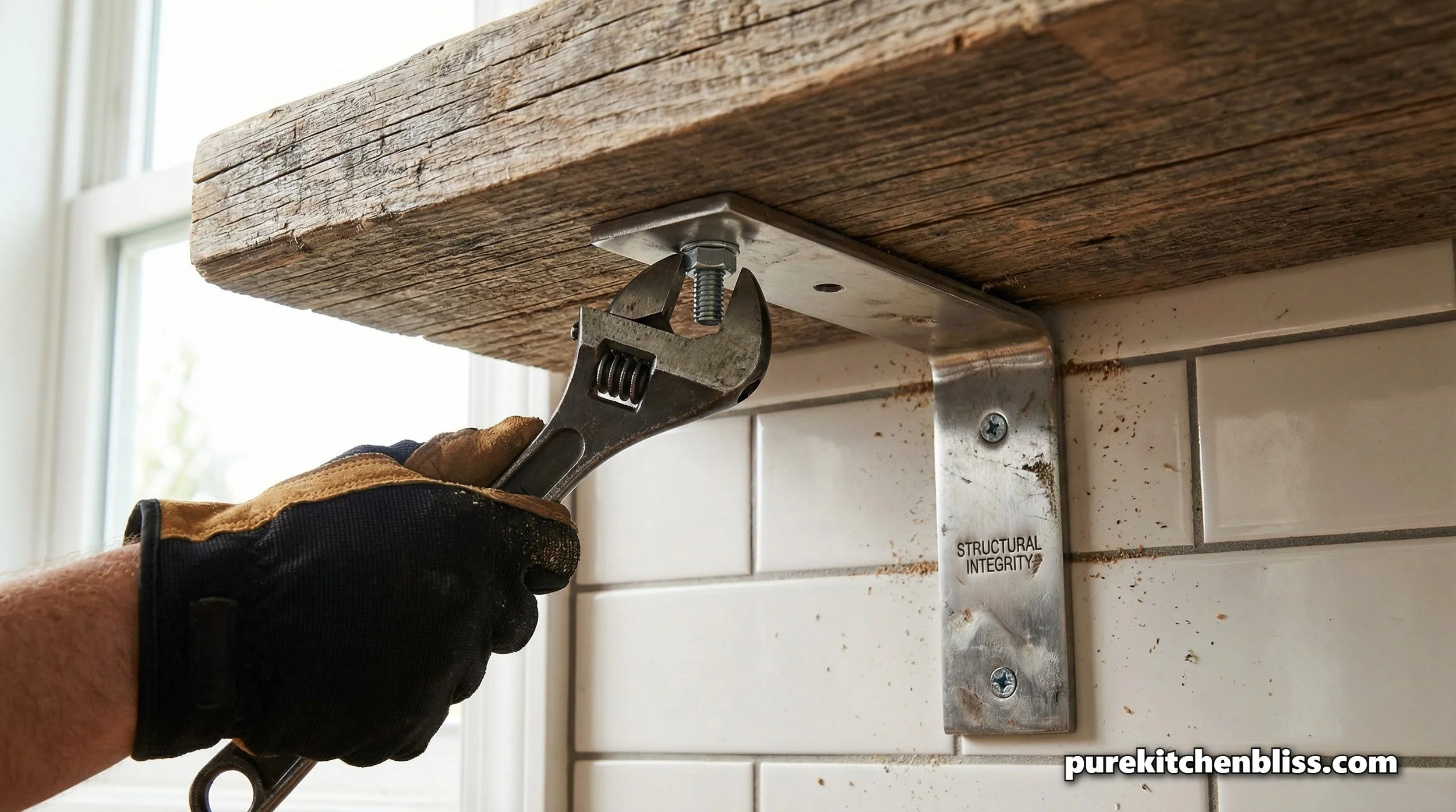
BUILDER TIP: THE STRUCTURAL LOAD
If you choose open shelves, they must be anchored into the "bones" of the house. A standard 36 inch shelf full of ceramic dinnerware can easily exceed 60 lbs (27 kg). Using simple "drywall anchors" is a recipe for structural failure. You must locate the timber studs and use a minimum of 2.5 inch stainless steel screws to ensure the shelf becomes part of the wall's infrastructure.
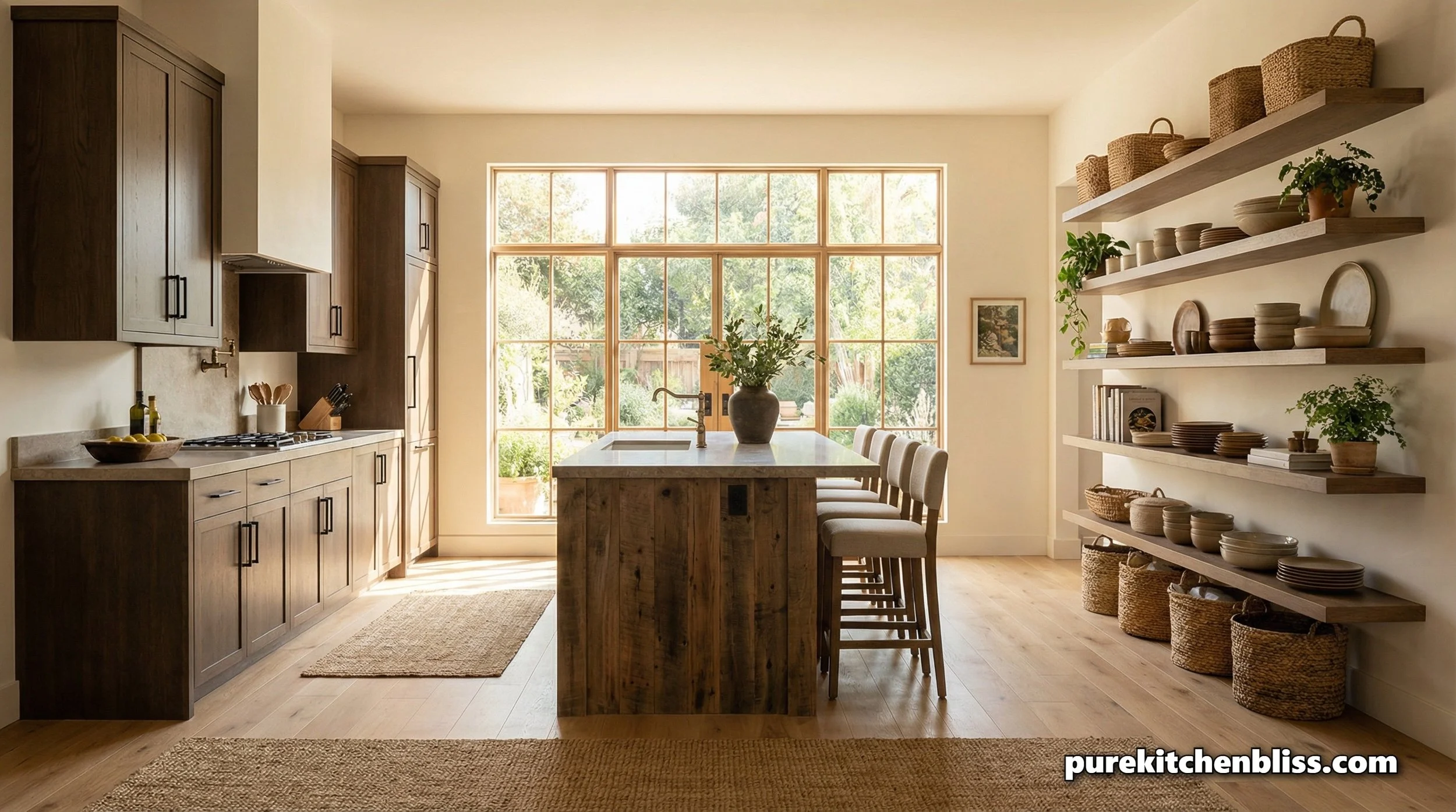
3. The "Hybrid" Solution: The 70/30 Split
In many high-performance homes, the answer isn't "either/or,” it’s a calculated hybrid. We often recommend a 70/30 Split: 70% closed cabinetry for deep storage and 30% open shelving for "Active Recovery."
The Ergonomics of Reach
Place open shelves in the "Golden Triangle,” the area between the sink, the stove, and the dishwasher. Storing your "daily drivers" (plates, bowls, and coffee mugs) on open shelves near the dishwasher makes the Sunday Night Countertop Reset incredibly fast. You are essentially "rotating the stock" every 24 hours, which naturally prevents dust from ever settling.
Creating a Focal Point
Use open shelving as a "Curator's Zone." A few well-placed shelves can showcase a collection of [Internal Link: Unkillable Kitchen Plants] or your most beautiful cookbooks, adding a layer of soul to the room that solid cabinetry often lacks.
4. Maintenance Rituals: The Dust Reset
Whether you choose open or closed, every kitchen requires an "Infrastructure Reset." Grease and dust are the inevitable byproducts of a living kitchen.
The "Vapor Wipe"
Even with the best ventilation, open shelves need a monthly "Vapor Wipe."
The Protocol: Remove the items from one shelf at a time.
The Solution: Use your Non-Toxic Kitchen Degreaser.
The Action: Wipe the shelf and the "shoulders" of the jars. Because you’ve chosen open shelving for high use items, the plates themselves are likely already clean from being cycled through the dishwasher.
The Cabinet "Deep Clean"
Don't assume the inside of your cabinets are clean just because they have doors. Once a season, perform a "Pantry Audit." Crumbs and dust can settle in the corners of cabinets, attracting pests. A quick vacuum and a wipedown with a damp tea towel ensures your hidden storage stays as pure as your visible surfaces.
5. Conclusion: Function Follows Flow
So, will you regret the dust? Not if you have the right ventilation and the right ritual. Open shelving is for the items you love and use every day; cabinets are for the "infrastructure" that keeps the chaos contained.
By balancing the two, you create a high-performance kitchen that respects the "Beautiful Chaos" of family life while maintaining the peace of a Sustainable Sanctuary. Choose the flow that serves your morning coffee ritual and your evening reset, and you'll never regret the decision.
Next Steps for Your Kitchen Sanctuary:
To brighten those new open shelves: 7 Unkillable Plants That Thrive in Your Busy Kitchen
To keep your cleaning tools ready for the "Vapor Wipe": How Often Should You Wash Tea Towels?
To ensure your air is clean enough for open storage: Range Hood Restoration: Deep Cleaning Your Kitchen's Lungs