Designing the 5 Culinary Zones: Beyond the Kitchen Triangle
For decades, the "Kitchen Triangle" was the gold standard of kitchen design. The idea was simple: minimize the steps between the sink, the refrigerator, and the stove. However, as our kitchens have evolved into high-performance sanctuaries, the triangle has collapsed under the weight of modern appliances, specialty coffee stations, and multi-cook households.
In 2026, professional designers utilize Zone-Based Infrastructure. By dividing the kitchen into five distinct functional areas, you eliminate the "traffic jams" that occur when one person is trying to chop vegetables while another is trying to unload the dishwasher. Whether you have a massive island or a compact galley, these zones dictate the success of your culinary workflow.
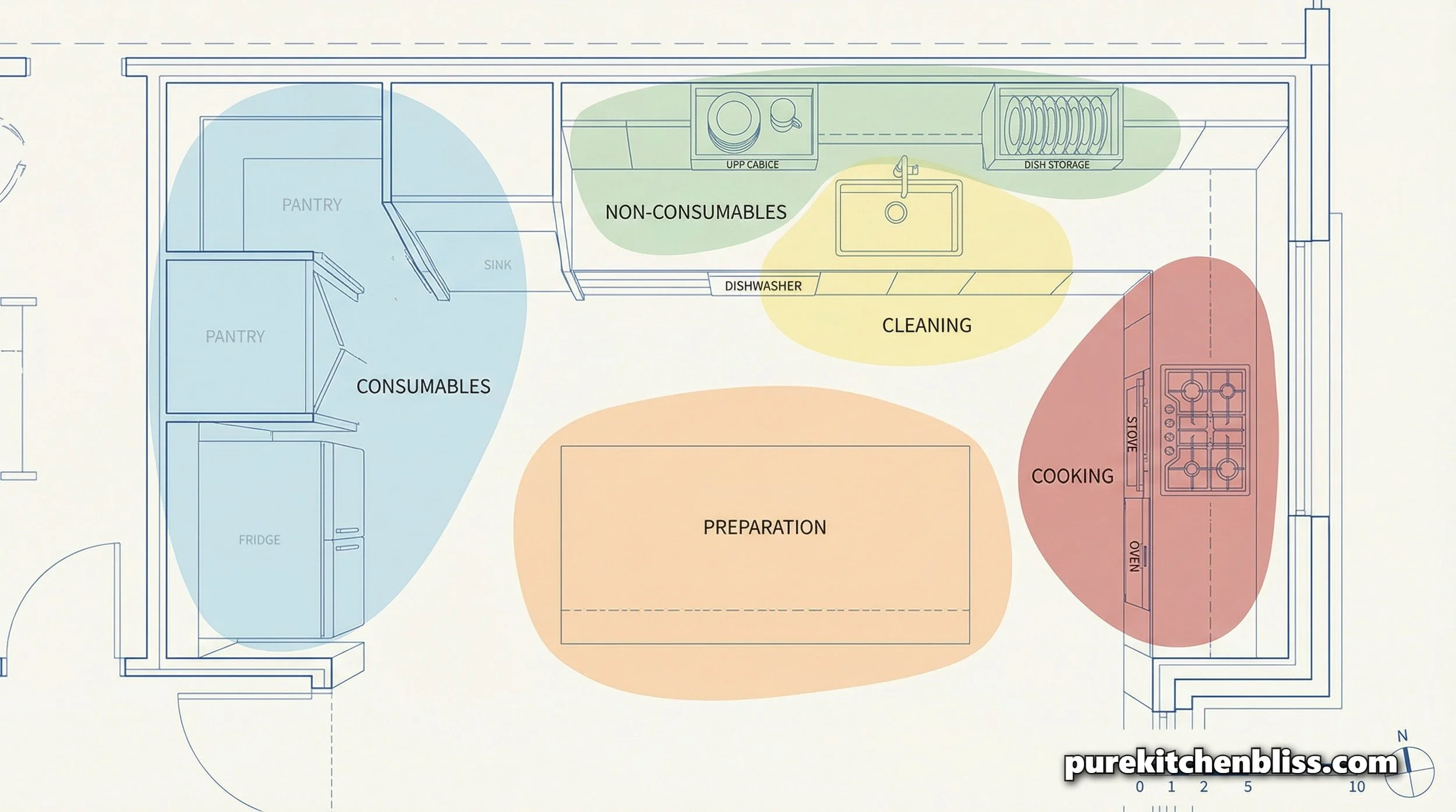
1. The Consumables Zone (Storage)
This is your "Input" station. It consists of your refrigerator and your high-functioning pantry.
The Logic: This zone should be located closest to the kitchen entry point. When you come home with groceries, you want to be able to "dock" them immediately without walking across the entire kitchen.
Infrastructure Tip: Ensure there is a "Landing Strip", a section of light or dark countertop, directly next to the fridge for loading and unloading bags.
2. The Non-Consumables Zone (Tools)
This is the "Hardware" zone where you store your daily-use items: plates, bowls, cutlery, and glasses.
The Logic: This zone should overlap with the Cleaning Zone. You want your most-used dishes to be stored within one step of the dishwasher.
The 2026 Shift: We are seeing more "Point-of-Use" storage. For example, storing coffee mugs directly above the espresso machine rather than across the room with the water glasses.
3. The Cleaning Zone (The Hub)
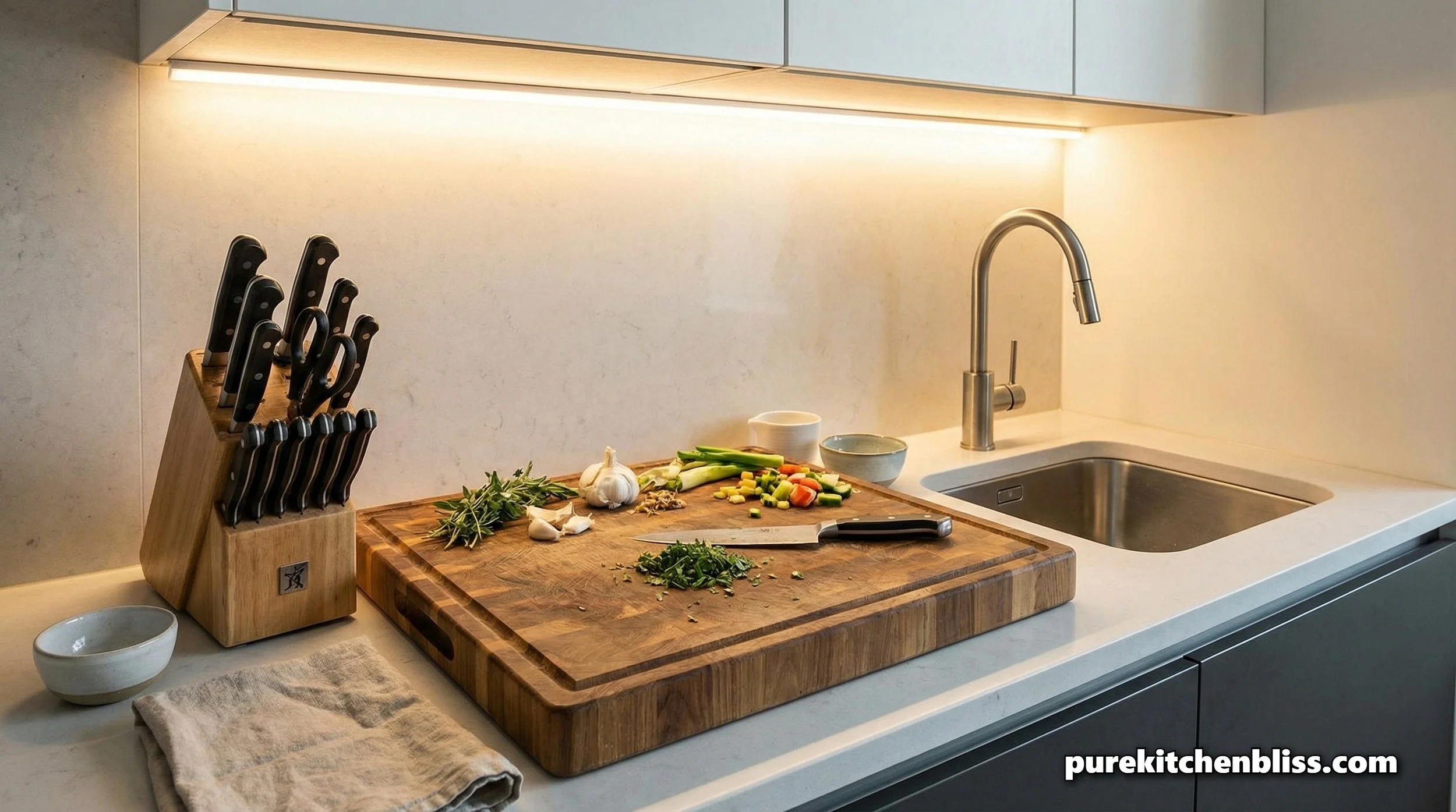
Centered around your workstation sink and dishwasher, this is the most high-traffic area in the room.
The Hygiene Rule: This zone must be kept isolated from the Cooking Zone to prevent cross-contamination. As we learned in our Listeria protection guide, keeping dirty dishes and "wet" waste away from your heat sources is key to a healthy infrastructure.
Waste Management: Your trash and recycling pull-outs should live here, directly beneath or adjacent to the sink.
4. The Preparation Zone (The Workshop)
This is your primary workspace. It requires the most "uninterrupted" countertop space—ideally a minimum of 36 inches.
The Tool Kit: This is where your best cutting boards and mixing bowls live.
Lighting Infrastructure: This zone requires the highest concentration of "Task Lighting" to ensure safety during precision knife work.
5. The Cooking Zone (The Engine)
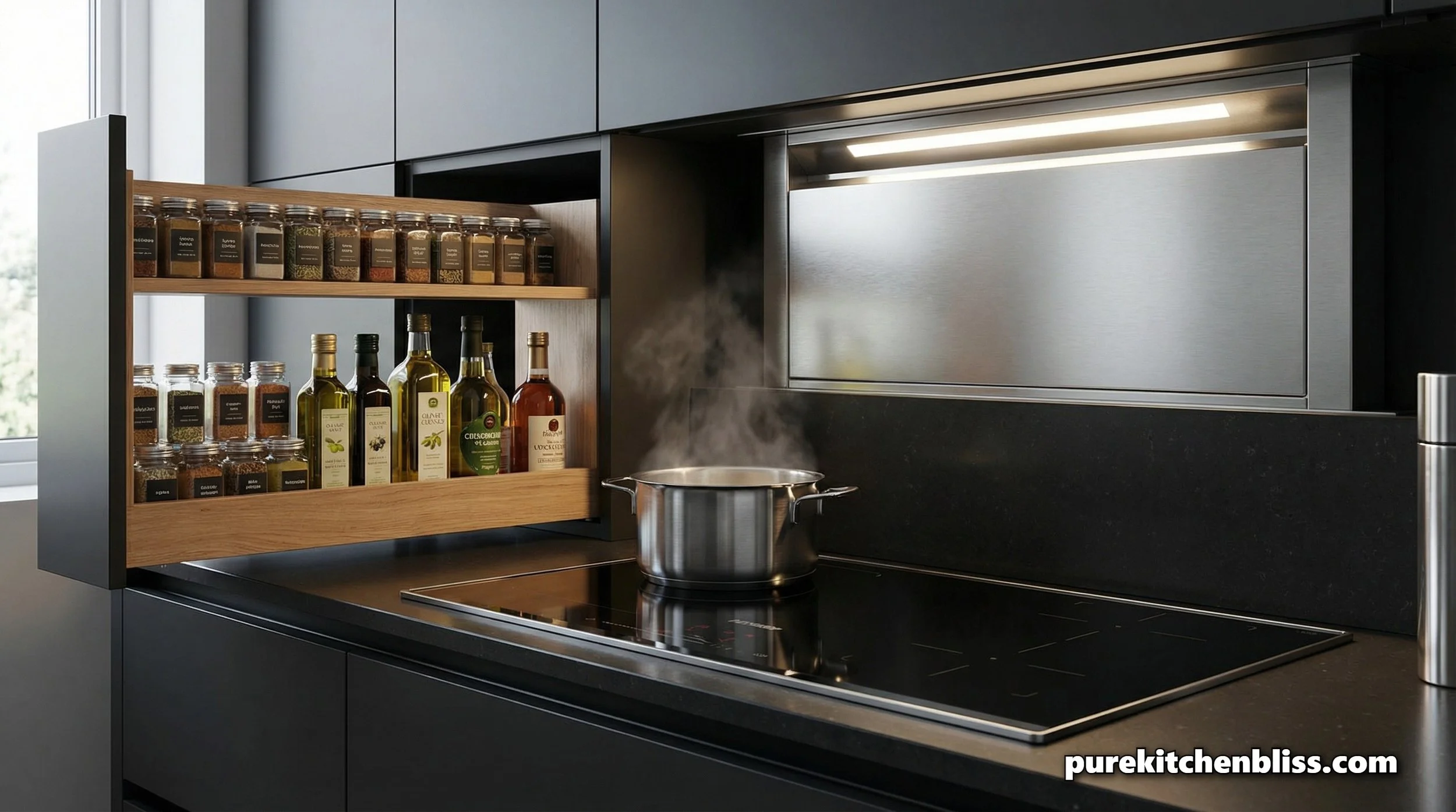
This zone contains your range, oven, and microwave.
Proximity: It should be directly adjacent to the Preparation Zone. You want to be able to pivot from the "Chop" to the "Sauté" without moving your feet.
The "Spice Infrastructure": Store your most-used oils and seasonings in a pull-out drawer next to the cooktop. Avoid storing them above the stove, as the heat will cause them to degrade, as we discussed in our best-before dates guide.
Summary: The Zone Layout Matrix
| Zone | Core Infrastructure | Key Benefit |
|---|---|---|
| Consumables | Fridge / Pantry | Fast grocery unloading. |
| Cleaning | Sink / Dishwasher / Trash | Efficient post-meal reset. |
| Preparation | Main Counter / Prep Sink | Ergonomic "Chopping" space. |
| Cooking | Range / Oven / Hood | Heat management and safety. |
6. Managing the "Overlap"
In many homes, these zones will overlap. The key is to manage the "Wet" vs. "Dry" infrastructure. Your Cleaning Zone (Wet) and Preparation Zone (Dry/Prep) should ideally be separated by at least 24 inches of countertop. This prevents dishwater from splashing onto your fresh ingredients and helps mitigate the kitchen mold risks associated with damp prep surfaces.
Conclusion: Mastery of Movement Designing for culinary zones is about respecting the "Physics of Cooking." When your infrastructure matches your movements, the kitchen ceases to be a place of labor and becomes a place of flow. By organizing your storage, cleaning, and prep around these five pillars, you build a kitchen that truly performs.
Next Up: Learn how to manage your Cleaning Zone by Decoding the Anatomy of a High-Performance Kitchen Sink.