The Best Type of Flooring for a Modern Kitchen
Choosing the right flooring for a 2026 modern kitchen is about balancing high-performance infrastructure with the "Tactile Sanctuary" aesthetic. In a space where spills, heavy foot traffic, and dropped cast-iron pans are a reality, your flooring needs to be more than just a visual backdrop, it needs to be resilient.
The modern kitchen has moved away from the "all-white, all-gloss" look of the early 2020s. Today, we prioritize materials that age gracefully and provide a sensory experience. Whether you are looking for the warmth of wood or the industrial permanence of stone, your floor is the largest surface area in the room, and it dictates the ergonomic comfort of your entire cooking workflow.
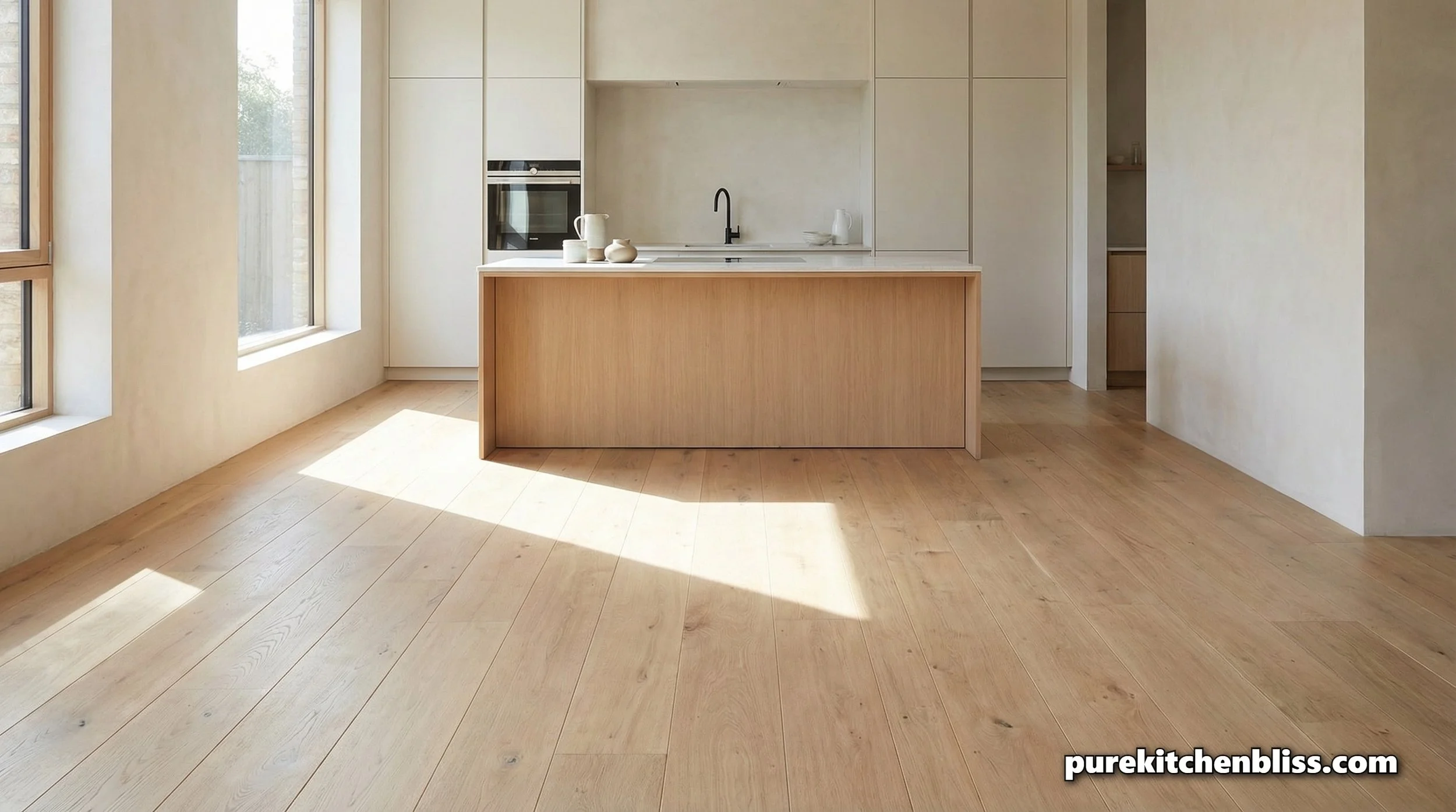
1. Engineered Hardwood: The "Warm" Choice
Engineered hardwood has become the gold standard for the modern kitchen because it bridges the gap between the cold, sterile kitchens of the past and Grandma’s decor trends
The Technical Anatomy
Unlike solid wood, which is a single piece of timber prone to expanding and contracting, engineered planks are built with a "Cross-Grain" infrastructure. A thin "wear layer" of real premium wood (like White Oak or Walnut) is bonded to multiple layers of high-density plywood or HDF. This creates a floor that looks identical to solid wood but resists the warping and gapping caused by the high humidity and temperature swings common in a kitchen.
2.0 Aesthetic: The Matte Finish
In 2026, we are seeing a shift away from high-gloss polyurethane. Homeowners are opting for UV-Oiled finishes. These finishes soak into the wood fibers rather than sitting on top like plastic. The result is a floor that feels like real wood underfoot and hides micro-scratches from pets or sliding chairs far better than a shiny surface.
2. Large-Format Porcelain Tile: The "Indestructible" Choice
If your kitchen is a high-volume workshop, porcelain tile is your best infrastructure investment. In 2026, the trend is "Large Format" (30x30 inches or larger), which minimizes grout lines for a seamless look.
The Performance Edge
Porcelain is fired at significantly higher temperatures than standard ceramic tile, making it denser and less porous. This is critical for the kitchen environment because it means the tile has a water absorption rate of less than 0.5%. Whether it's a red wine spill or a leaking dishwasher, porcelain is fundamentally impervious to liquid damage.
Visual Mimicry
Modern digital printing technology allows porcelain to mimic the look of more temperamental materials. In 2026, we are seeing a massive surge in porcelain that looks like "Honed Limestone" or "Poured Concrete." This allows you to achieve the Top 5 Kitchen Trends of 2026 aesthetic without the high-maintenance sealing required by natural stone or concrete.
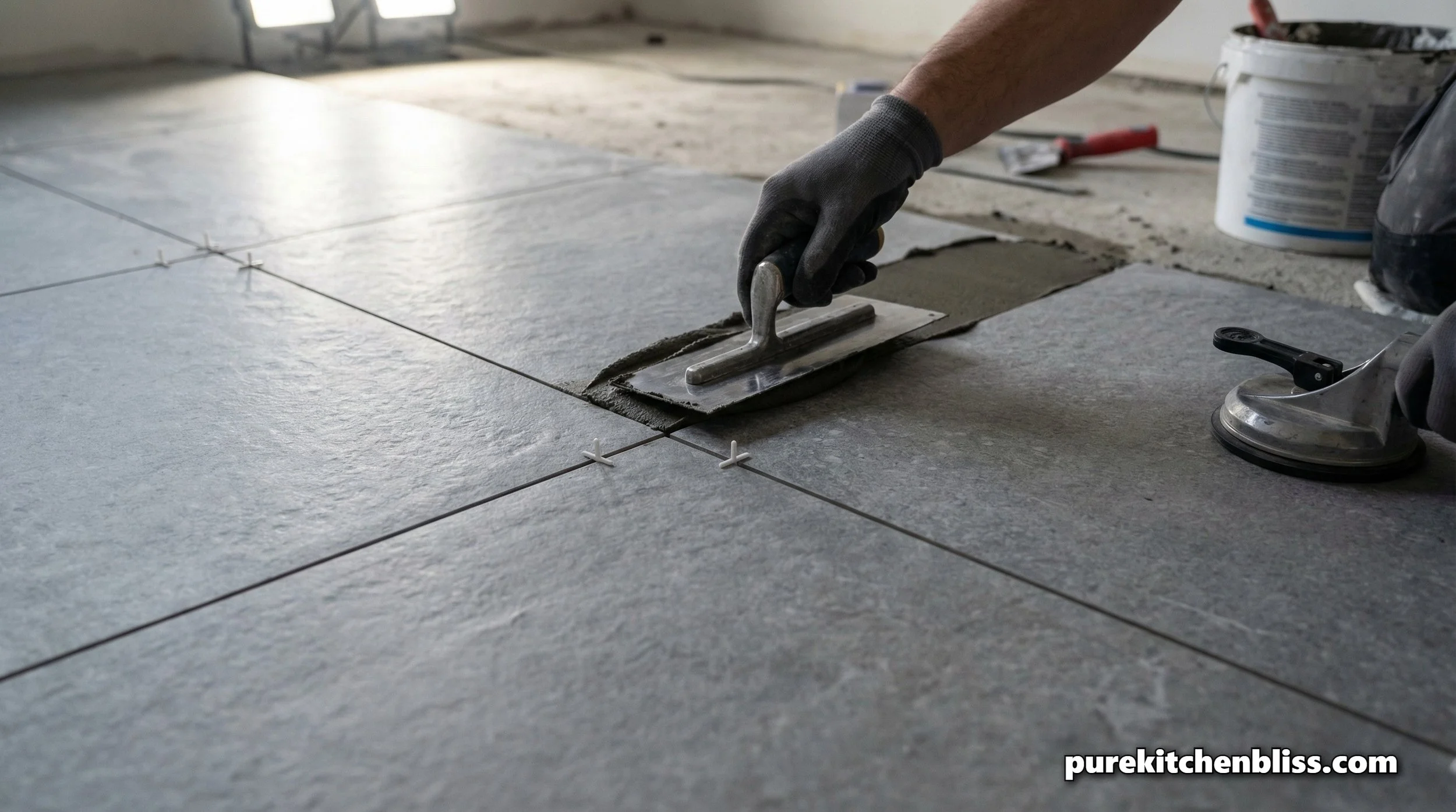
3. The Installation Infrastructure: Underlayment and Subfloors
A floor is only as good as the infrastructure beneath it. Before choosing your surface, you must audit your subfloor.
For Porcelain: You require a completely rigid subfloor (usually cement backer board). Any flex in the wooden joists will cause the grout—and eventually the tiles—to crack.
For Engineered Wood: A moisture barrier is non-negotiable. Even though engineered wood is stable, moisture rising from a concrete slab can eventually degrade the adhesive bond.
The Comfort Factor: If choosing Tile or Concrete, we highly recommend installing Electric Radiant Heating. This turns a "cold" industrial material into a luxury wellness feature, making those early morning coffee runs much more comfortable.
4. Comparison of Performance
To help you decide which material fits your specific kitchen workflow, use the comparison table below.
| Material | Durability | Water Resistance | Comfort | Maintenance |
|---|---|---|---|---|
| Engineered Wood | Medium | Moderate | High | Moderate |
| Porcelain Tile | Extreme | High | Low | Low |
| Polished Concrete | High | Moderate (Sealed) | Low | Low |
| Luxury Vinyl | High | High | Medium | Very Low |
5. Ergonomics: Standing Time and Joint Health
One often overlooked aspect of kitchen flooring is "Stand-time." If you are an avid cook who spends 3–4 hours a day on your feet, the hardness of your floor matters.
Soft Infrastructure: Engineered wood and Luxury Vinyl (LVP) have a natural "give" that absorbs impact.
Hard Infrastructure: Tile and Concrete offer zero shock absorption. If you choose these, we recommend integrating "Workstation Zones" where you place high-quality, aesthetically pleasing anti-fatigue mats at the sink and the range.
6. Maintenance Tip: Preserving the Patina
Regardless of the material you choose, the key to longevity is avoiding harsh chemicals. Many commercial floor cleaners contain ammonia or bleach, which can eat through the protective sealants on wood or the finish of luxury vinyl.
For most modern surfaces, you should rely on the versatile uses for Castile soap to clean without stripping the finish. A simple mixture of warm water and a teaspoon of Castile soap is enough to lift grease without leaving a film.
Conclusion: How to Decide? The choice between wood, tile, and stone isn't just a design decision—it's a lifestyle one. If you want your kitchen to feel like a cozy extension of your living room, go with Engineered Hardwood. If you prioritize a "set it and forget it" workshop environment that can handle heavy spills and high-impact cooking, Porcelain Tile is the superior choice.
Planning your next kitchen infrastructure project?
Update your hardware: Is Gold hardware back?
Deep clean your space: How to degrease your range hood
Manage your storage: food storage rules we discussed