In the evolution of the high-performance sanctuary, lighting has moved from a functional afterthought to a primary architectural element. In 2026, we no longer rely on a single row of recessed "pot lights" to do all the work. That "Operating Room" aesthetic is dead; in its place is a sophisticated, layered approach that mimics the lighting design of a high-end art gallery or a luxury spa.
Lighting is the "Invisible Infrastructure" of your kitchen. It dictates your mood, your safety during prep work, and even how the colors of your gold hardware or dark countertops appear to the eye. To achieve a professional result, you must design in three distinct layers: Task, Ambient, and Accent.
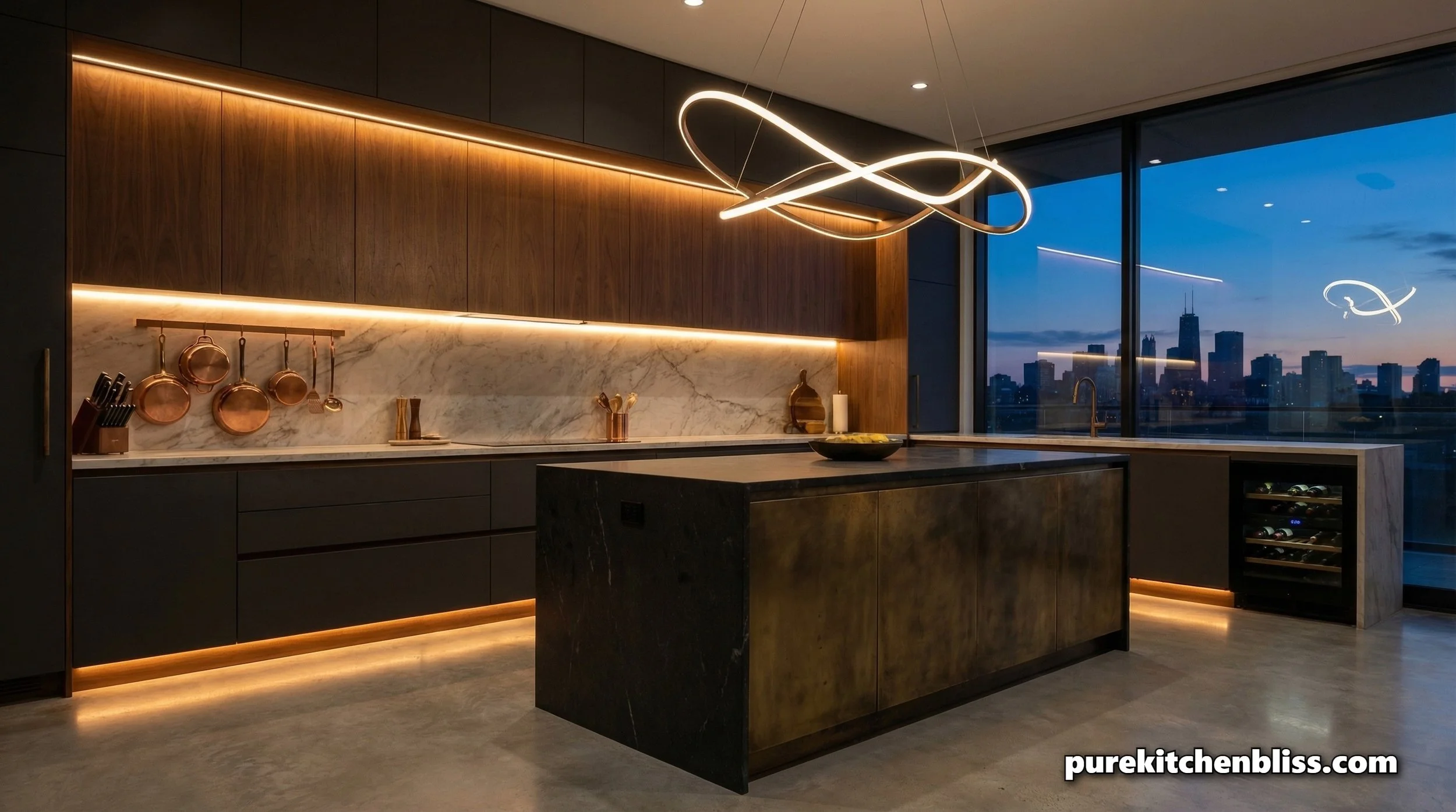
1. Task Lighting: The "Workshop" Layer
Task lighting is the most critical layer for safety. This is the light that illuminates your "active" zones, the sink, the range, and the primary prep area.
Under-Cabinet LEDs: These are non-negotiable in 2026. They eliminate the shadows cast by your upper cabinets, providing a clear, bright field for knife work. For the best result, use "COB" (Chip on Board) LED strips, which provide a continuous "neon" glow rather than individual dots reflected in your stone.
The "Cool" Factor: For task lighting, we recommend a "Neutral White" (around 3500K to 4000K). This provides high contrast for food prep without feeling like a hospital.
Maintenance: Ensure these fixtures are sealed. As we noted in our range hood deep-clean guide, grease rises and sticks to every horizontal surface, including your expensive LED tracks.
2. Ambient Lighting: The "Sanctuary" Layer
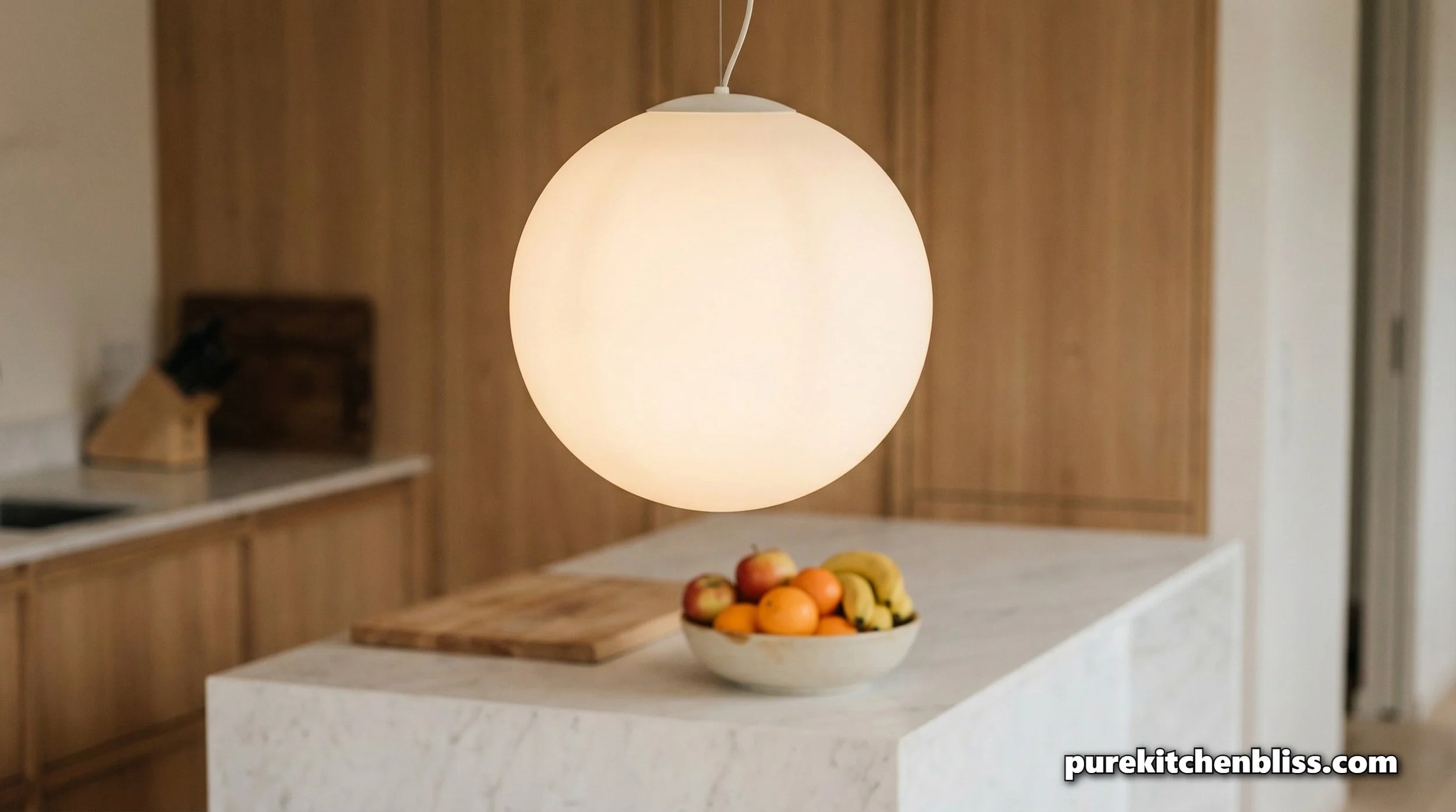
Ambient lighting is the general illumination of the room. Its job is to fill the space with a soft, even glow that eliminates dark corners without being "glary."
Oversized Pendants: In 2026, the trend is moving toward fewer, larger fixtures over the island rather than three small ones. These act as the "sculptural anchor" of the room.
Dimmers are Infrastructure: Every ambient light source must be on a dimmer. This allows you to transition the kitchen from a "bright morning workshop" to a "dim evening sanctuary" for wine and conversation.
Warmth: Ambient light should be warmer than task light (2700K to 3000K) to create a welcoming atmosphere that aligns with Grandma’s decor trends.
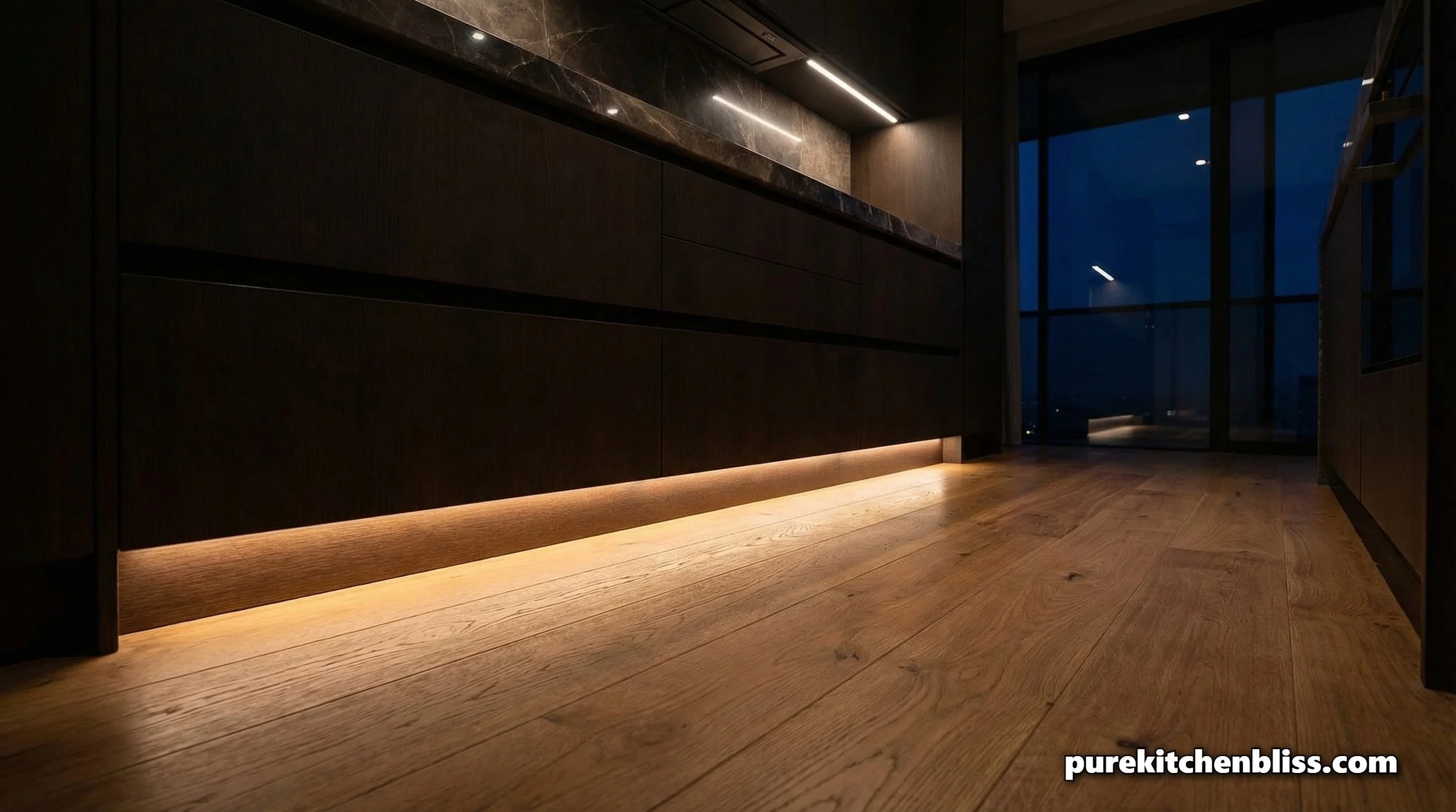
3. Accent Lighting: The "Aesthetic" Layer
This is where you add the "soul" to the kitchen. Accent lighting highlights specific architectural features or creates a sense of depth in the room.
Toe-Kick Lighting: Placing LED strips at the very bottom of your base cabinets creates a "floating" effect. This is also highly practical as a "night-light" for midnight water runs.
In-Cabinet Lighting: If you have glass-fronted cabinets or open shelving, internal puck lights turn your glassware into a design feature.
The "Mood" Highlight: This layer is where you can experiment with color-tuning LEDs to match the mood of your kitchen flooring.
Summary: The Lighting Infrastructure Matrix
| Light Layer | Color Temp | Primary Goal | Key Fixture |
|---|---|---|---|
| Task | 3500K - 4000K | Safety & Precision | Under-cabinet LED strips |
| Ambient | 2700K - 3000K | General Glow | Island Pendants / Recessed |
| Accent | 2200K - 2700K | Mood & Depth | Toe-kick / In-cabinet lights |
4. Technical Tip: The CRI Factor
When buying LEDs for your kitchen, look for a CRI (Color Rendering Index) of 90 or higher. A low CRI will make your fresh produce and beautifully cooked meats look gray or unappetizing. High CRI lighting ensures that the vibrant colors of the potatoes and onions look as fresh as the day you bought them.
Conclusion: Lighting as a Tool In a high-performance kitchen, lighting is just as important as your chef's knife or your range. By layering your light sources, you create a space that is as functional at 10:00 AM for prep as it is beautiful at 8:00 PM for dinner.
Refine your kitchen’s infrastructure further:
Identify moisture risks: Kitchen mold hot spots
Upgrade your prep: guide on kitchen cutting boards
Clean the air: How to deep clean your range hood