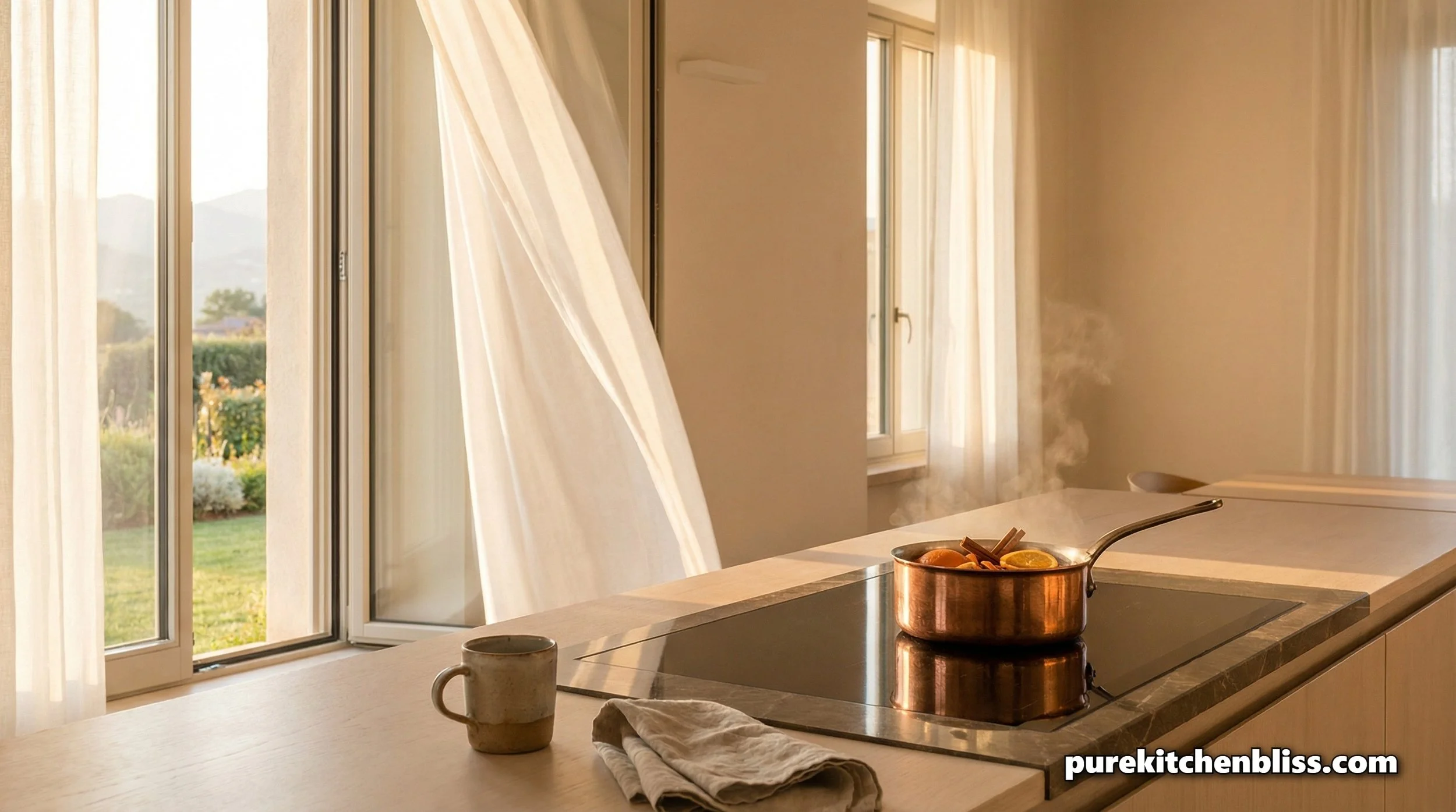
How to Get Rid of Fried Food Smell: A Professional 3-Step Protocol
We’ve all been there. You treat the family to a "beautiful chaos" Friday night fish fry or homemade donuts, only to wake up Saturday morning feeling like you’re living inside a fast-food restaurant.
While common advice sites suggest a simple pot of boiling vinegar, as a professional who understands the "bones" of a home, I know that isn't enough. Fried food smells are carried by aerosolized lipids (fats). These fats are heavy and "tacky", they don't just float; they bond to your cabinetry finishes and your kitchen’s airflow systems. To truly restore your Sustainable Sanctuary, you need to address the odor at the structural level. Here is my professional protocol for a total olfactory reset.
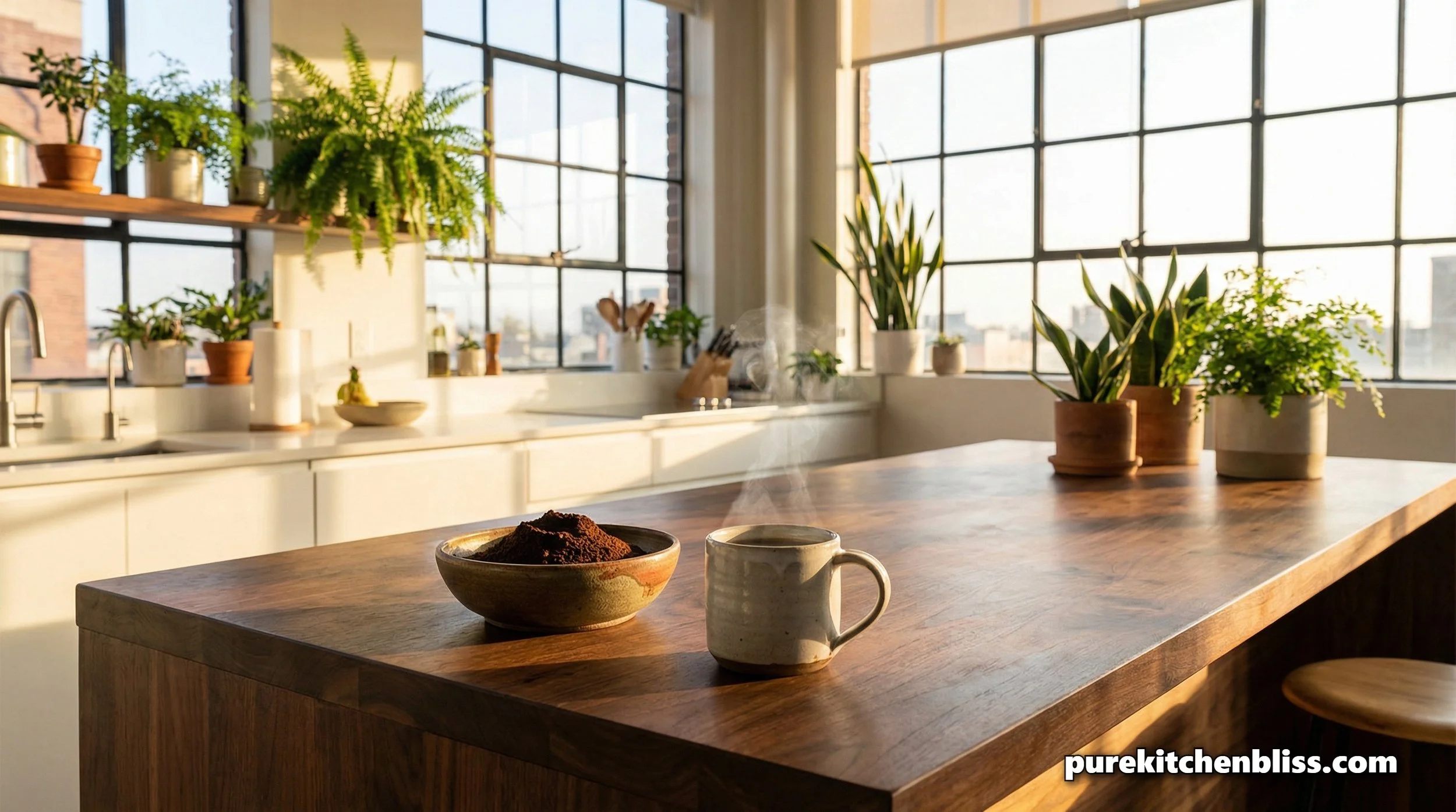
5 Brilliant Uses for Coffee Grounds in Your Kitchen Sanctuary
In a house with four daughters, the morning coffee isn't just a luxury; it’s the fuel that powers the start of our "beautiful chaos." For years, I made the mistake of seeing the leftover grounds as a waste product, something to be tossed into the bin without a second thought.
As I shifted toward building a Sustainable Sanctuary, I realized that coffee grounds are a multi-purpose tool with a unique "material spec." They are nitrogen-rich, naturally abrasive, and highly porous—making them perfect for maintaining the purity and performance of your kitchen without reaching for synthetic chemicals. By repurposing this daily byproduct, you aren't just being "green"; you're utilizing high-performance organic matter to protect your home’s infrastructure.
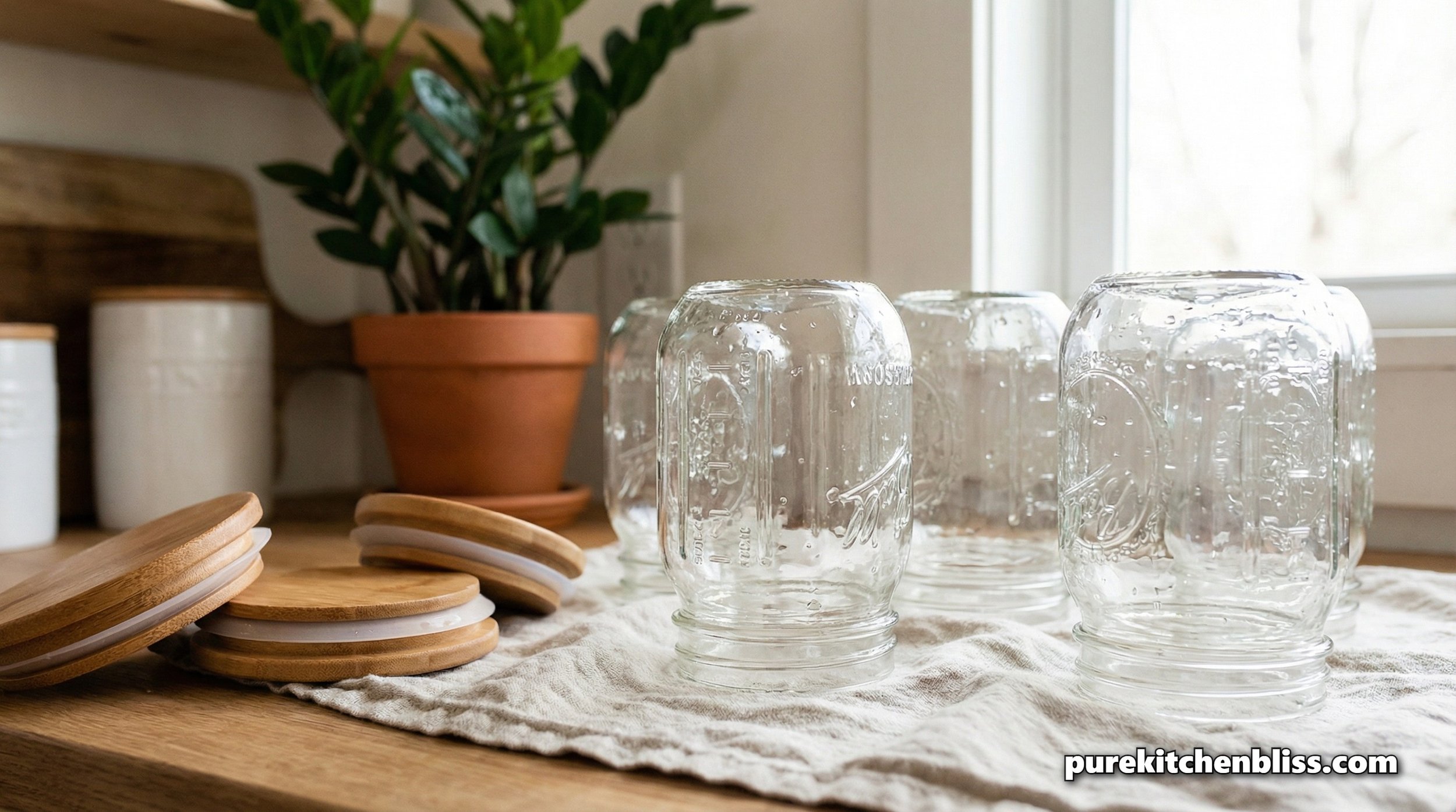
How to Clean Glass Jars Without Harsh Chemicals
To a Builder-Curator, a glass jar is one of the most versatile pieces of "micro-infrastructure" in the kitchen. Whether you are decanting grains for your Small Kitchen Organization Hacks or prepping for a Monday Morning Momentum smoothie, your glass must be sterile, clear, and free from the chemical residues found in commercial soaps.
In a household with four daughters, we go through a lot of glass. Upcycling jars from the grocery store isn't just a sustainable habit; it’s a way to build a high-performance pantry on a budget. However, cleaning glass isn't just about removing visible dirt; it’s about neutralizing odors and stripping away the "polymerized" oils that can turn rancid over time. Here is the professional, non-toxic protocol for restoring glass to its original purity.
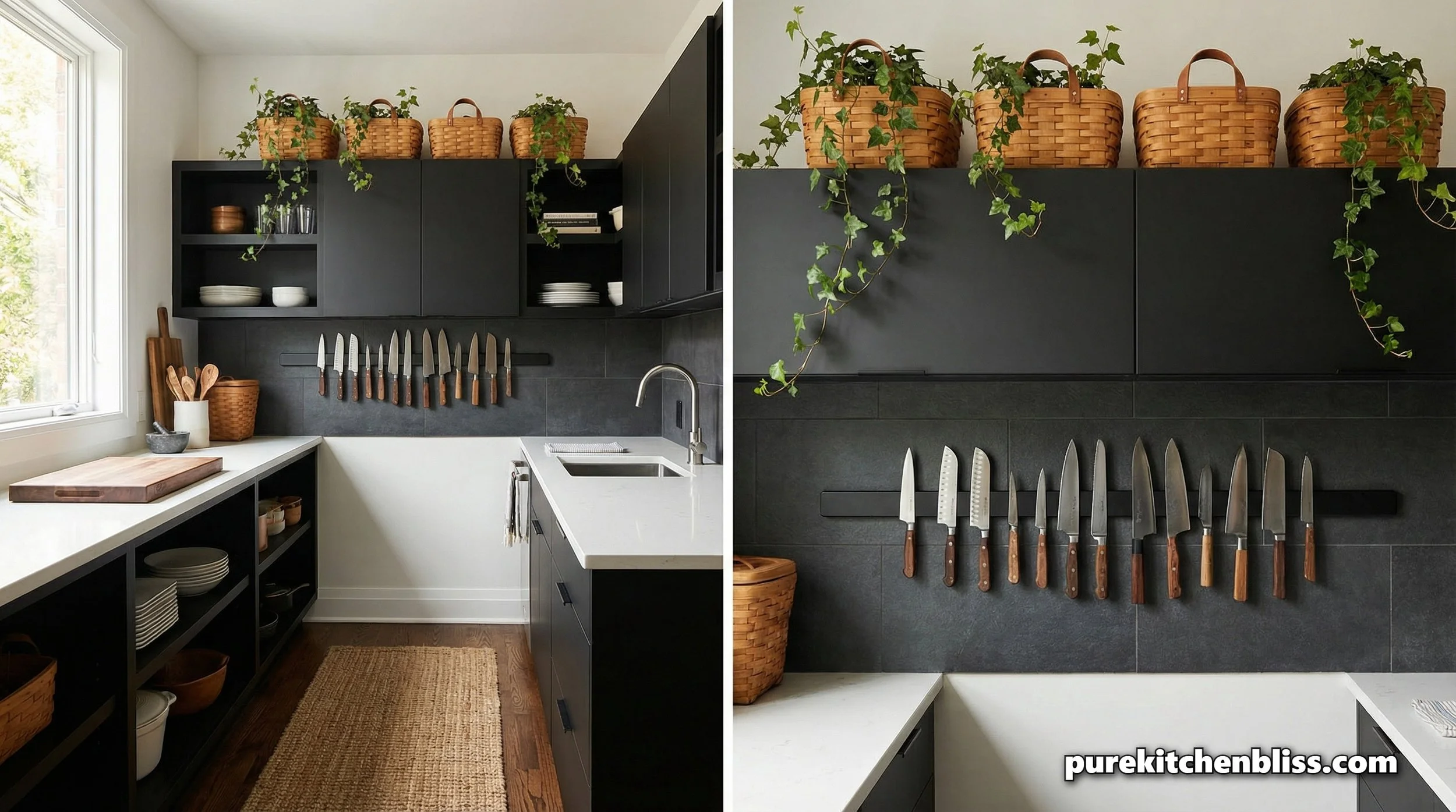
Small Kitchen Organization: Beyond the Plastic Bin
Most organization articles tell you to buy a label maker and call it a day. But in a small kitchen, especially one managing the "beautiful chaos" of a family of six, organization isn't a hobby. It is Infrastructure. When space is at a premium, every square inch must be "staged" for efficiency. If you have to move three things to get to one pan, your kitchen’s momentum is broken. As a Red Seal Carpenter, I look at a kitchen and see vertical real estate and weight loads. As a dad, I see friction points. To create a Sustainable Sanctuary, we need to organize for flow, material protection, and vertical density.
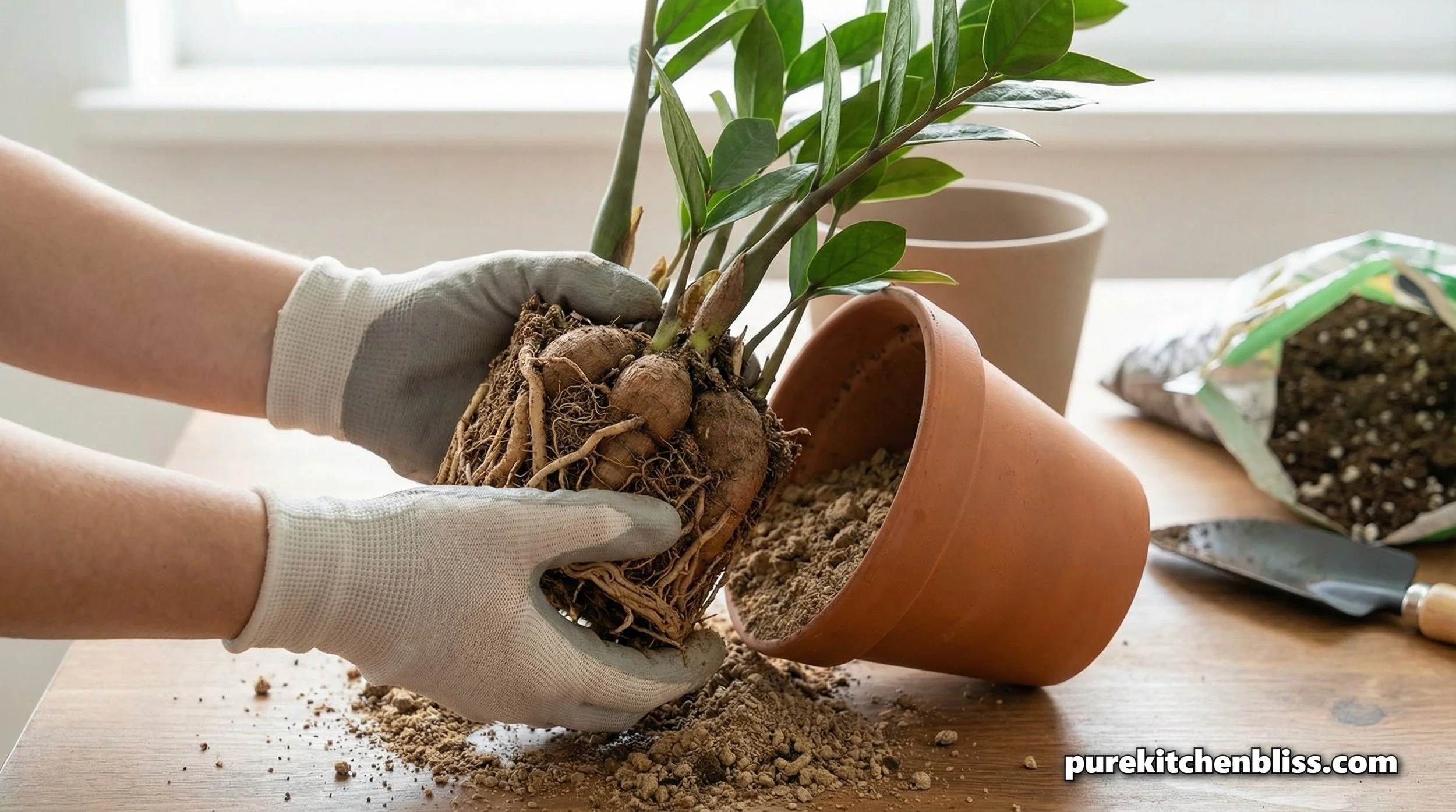
ZZ Plant Mastery: The Ultimate Low-Light Solution for Your Kitchen
Every home has that one spot, the "cave." It’s the kitchen corner farthest from the window, the internal pantry, or the prep area that never sees a direct ray of sun. In these spaces, most houseplants stage a slow, yellowing protest. But the ZZ Plant (Zamioculcas zamiifolia) is built for these exact challenges.
As a father of four, I’ve realized that the best additions to a home are the ones that give back more than they take. The ZZ Plant is the botanical equivalent of a high-end, low-maintenance appliance. It features glossy, architectural leaves that look like they’ve been polished with wax, yet it thrives on neglect. If you want the lush look of a Sustainable Sanctuary without adding another daily chore to your list, the ZZ is your primary ally.
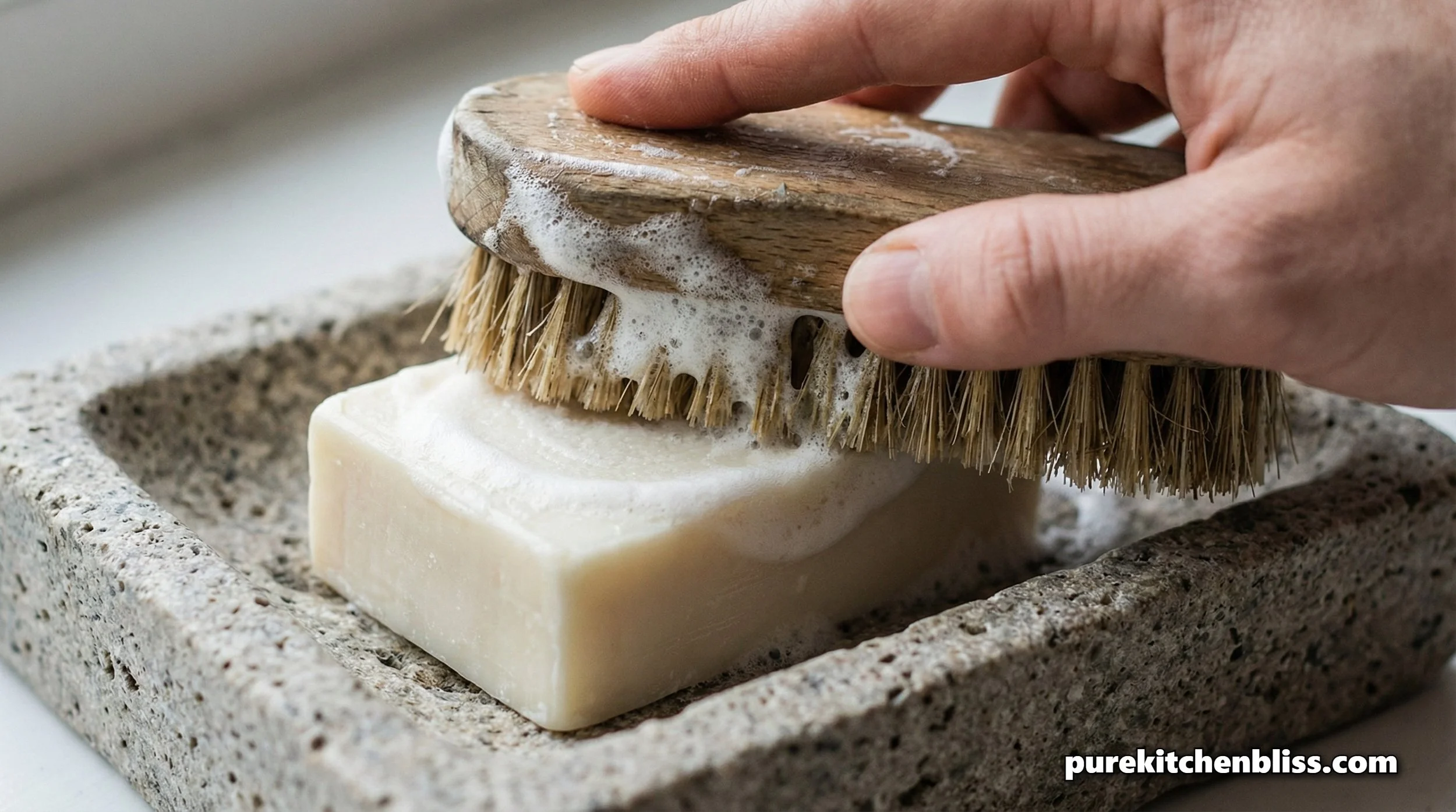
The Best Eco-Friendly Dish Soaps: Purity for Your Plates and Pipes
In a kitchen that manages the "beautiful chaos" of four kids, the dish soap is one of the most-used tools in the shed. From scrubbing oatmeal off morning bowls to degreasing the Sunday roast pan, it is a constant presence. However, as someone who cares about the "bones" of the home, I look at dish soap differently.
Many commercial soaps are loaded with petroleum-based surfactants and phthalates. These aren't just bad for the planet; they can be tough on your plumbing and leave a chemical film on your family's food-prep surfaces. Transitioning to an eco-friendly, non-toxic soap is one of the simplest ways to upgrade the purity of your sanctuary.
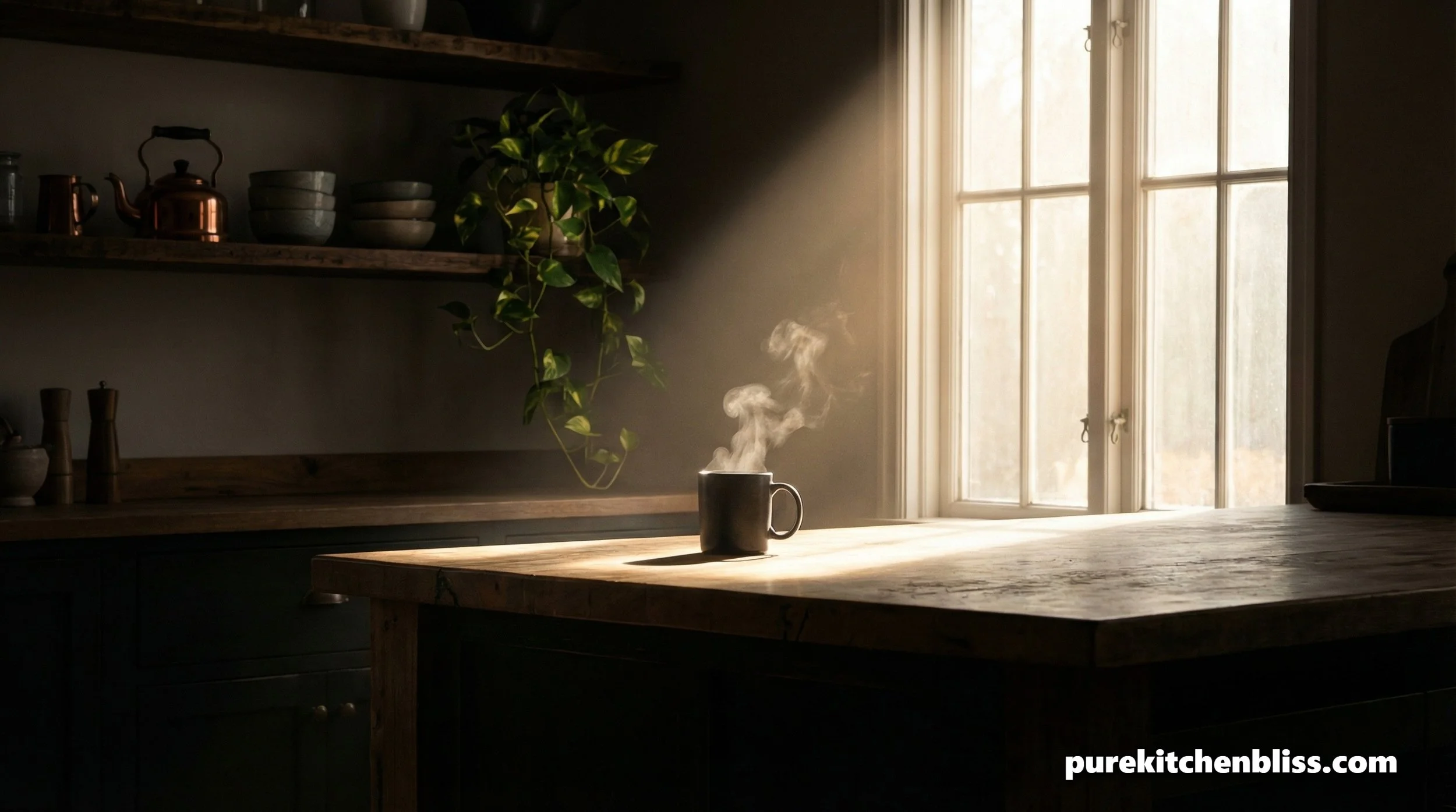
Monday Morning Momentum: A Ritual for the High-Performance Kitchen
There is a specific kind of silence in a kitchen at 6:00 AM. In our home, it’s the calm before the "beautiful chaos" of four kids hitting the floor. As a professional who has spent decades on job sites, I know that the first hour of the day determines the success of the next twelve.
The Monday Morning Momentum is about leveraging the work you did during your Sunday Night Countertop Reset. Because your horizontal lines are clear and your "infrastructure" is ready, you aren't fighting your kitchen; you are working with it.
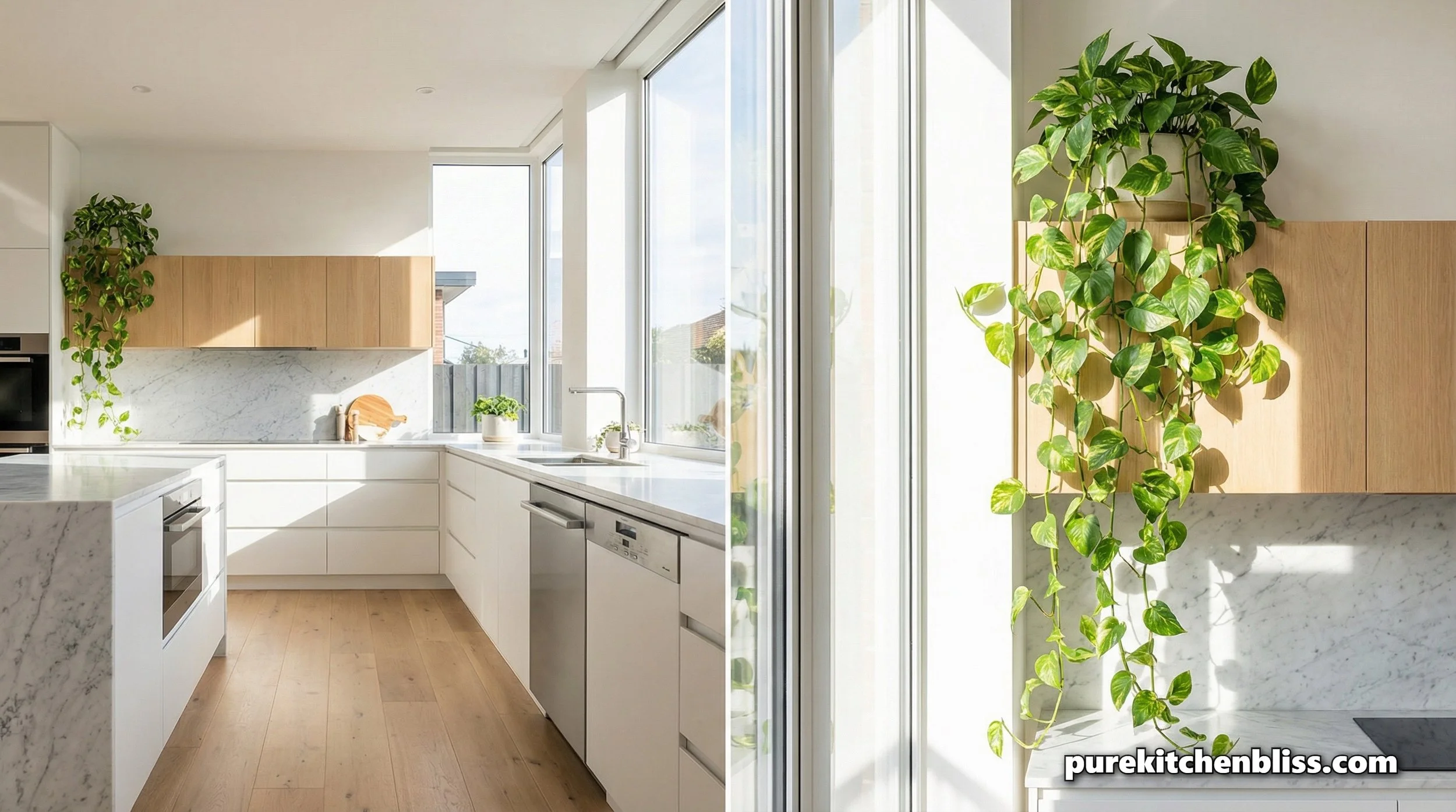
Golden Pothos Mastery: The Essential Kitchen Vine for Air Purity
If the Snake Plant is the "steel beam" of the kitchen sanctuary, the Golden Pothos (Epipremnum aureum) is the "living crown molding." As a Red Seal Carpenter, I’ve spent years finishing the tops of cabinets and installing high shelving. I’ve learned that the vertical space in a kitchen is often underutilized and prone to collecting stagnant heat and aerosolized grease.
The Golden Pothos is the perfect solution for these high-altitude zones. It is a resilient, fast-growing vine that softens the hard architectural lines of cabinetry while acting as a biological sponge for indoor pollutants. In a house with four kids, the Pothos is a favorite because it’s nearly impossible to kill, even when tucked away on a high shelf.
However, to get that lush, cascading "jungle" look without the vines becoming "leggy" or thin, you need a professional maintenance protocol. Here is how to master the Golden Pothos in the heart of your home.

Should You Eat Off the Kitchen Counter? The Professional Verdict
In the "Beautiful Chaos" of a busy home, the kitchen island is the ultimate multi-tool. It’s a homework station, a prep zone, and a buffet line. However, just because a surface is clean to the eye doesn't mean it’s safe for your food.
In my years of residential construction and home maintenance, I’ve seen what goes into (and onto) kitchen counters. Before you place that slice of pizza directly on the stone, we need to talk about Material Porosity, Chemical Residuals, and the "Bio-Load" of a family home.
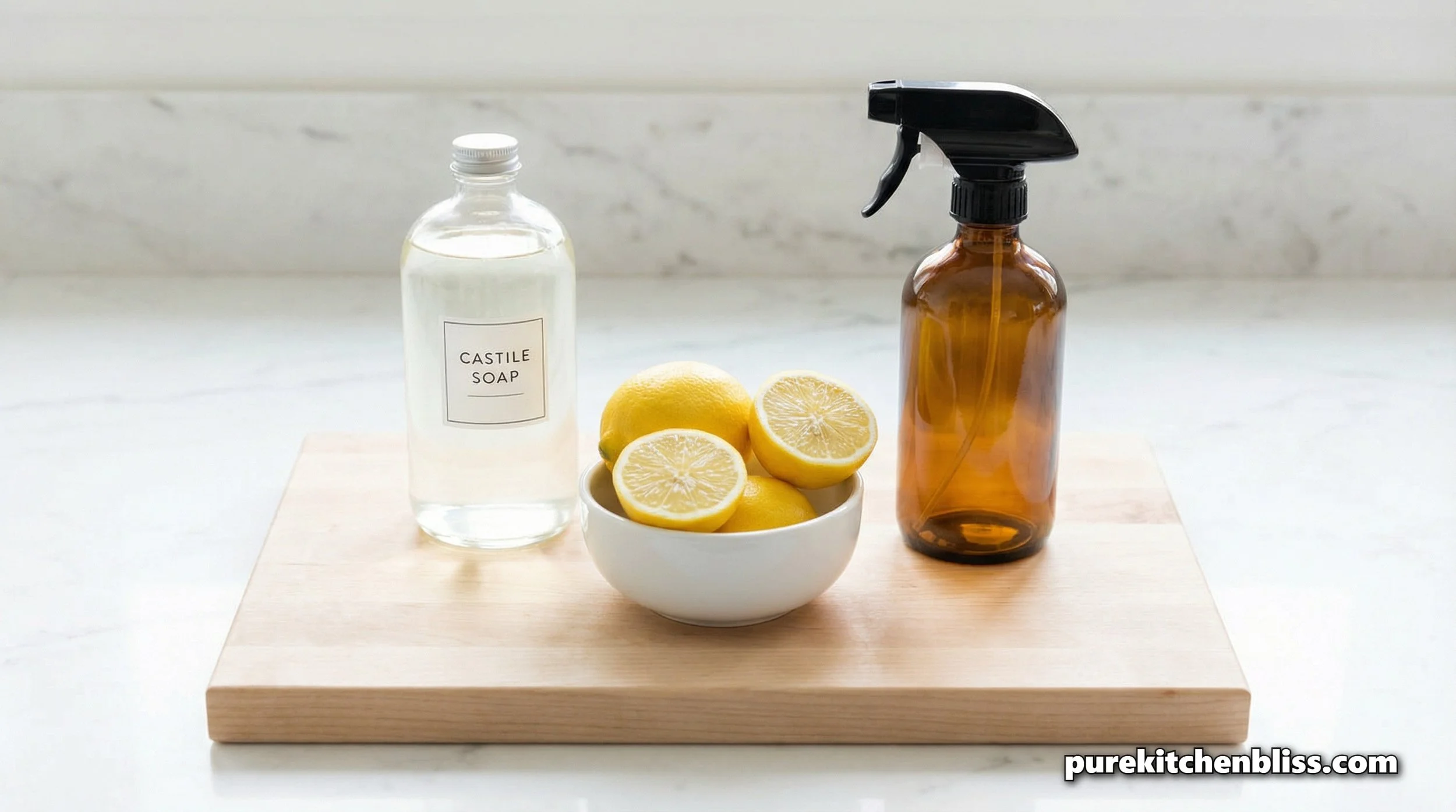
The Non-Toxic Kitchen Degreaser: How to Cut Through Grease Without Chemicals
If you’ve ever run your hand along the top of your kitchen cabinets or the back of your range hood and felt that sticky, "tacky" film, you’ve encountered aerosolized grease. In a busy kitchen, cooking oils become airborne, mix with household dust, and settle on every horizontal and vertical surface.
Most people reach for heavy-duty, "nuclear" degreasers to solve this. However, as a professional who understands the chemistry of home finishes, I avoid these. Harsh solvents can strip the topcoats off your cabinetry, etch your stone, and leave behind toxic residues that off-gas into your sanctuary.
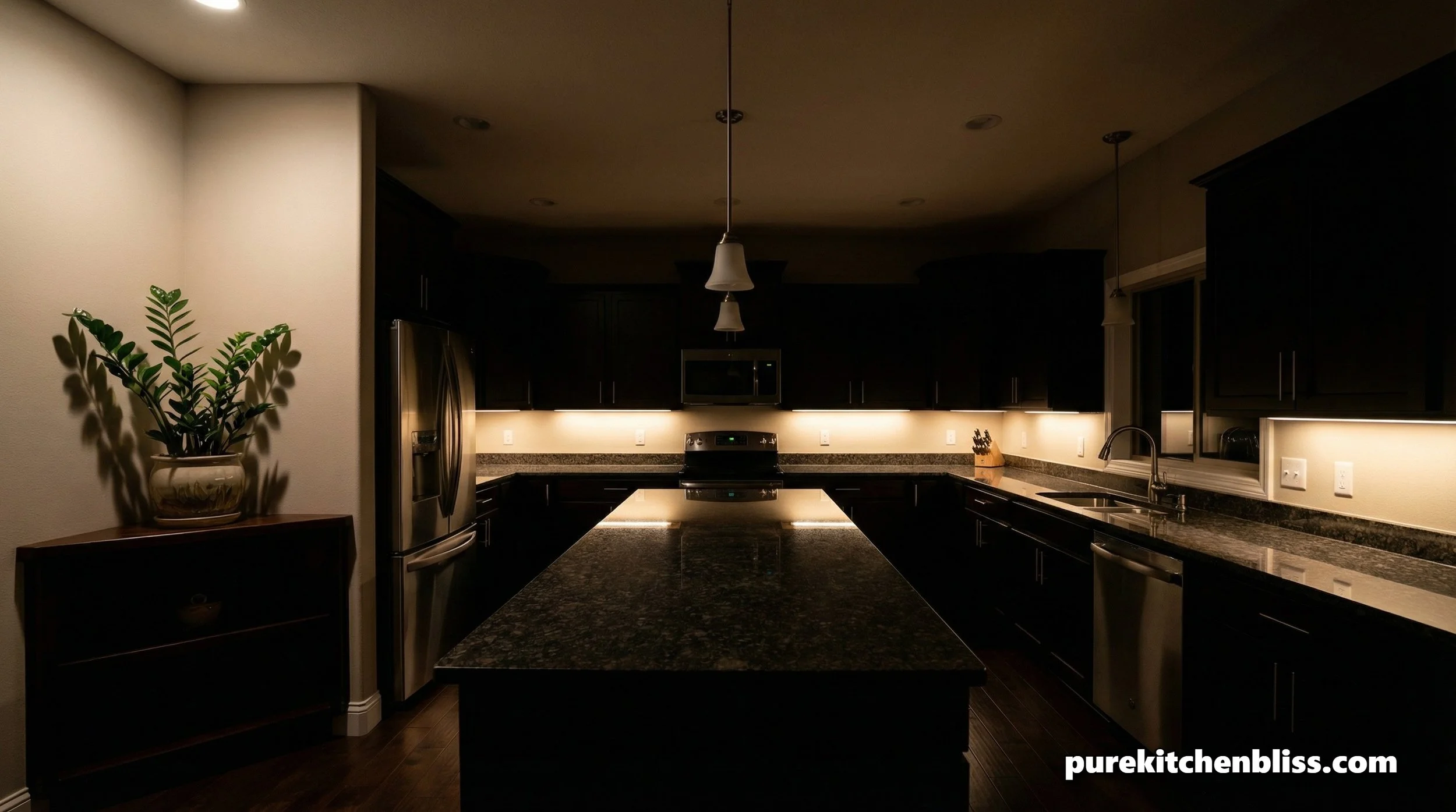
How Often Should You Clean Your Countertops? The Professional Maintenance Schedule
In my 20 years in the trades and as a father of four, I’ve realized that people generally fall into two camps when it comes to countertops: the "Compulsive Wipers" and the "Weekend Warriors." But to truly maintain a Sustainable Sanctuary, your cleaning frequency shouldn't be based on a whim, it should be based on material science and biological load.
If you clean too often with the wrong chemicals, you can etch your stone and strip your sealants. If you clean too rarely, you’re allowing your family’s meal-prep surfaces to become a breeding ground for bacteria and "Fatbergs" of aerosolized grease.
To maintain a "Pure Kitchen," you need a tiered maintenance schedule that addresses Biological Safety, Material Protection, and Visual Peace. Here is the professional breakdown of how often, and how, to treat your kitchen’s most important horizontal surfaces.
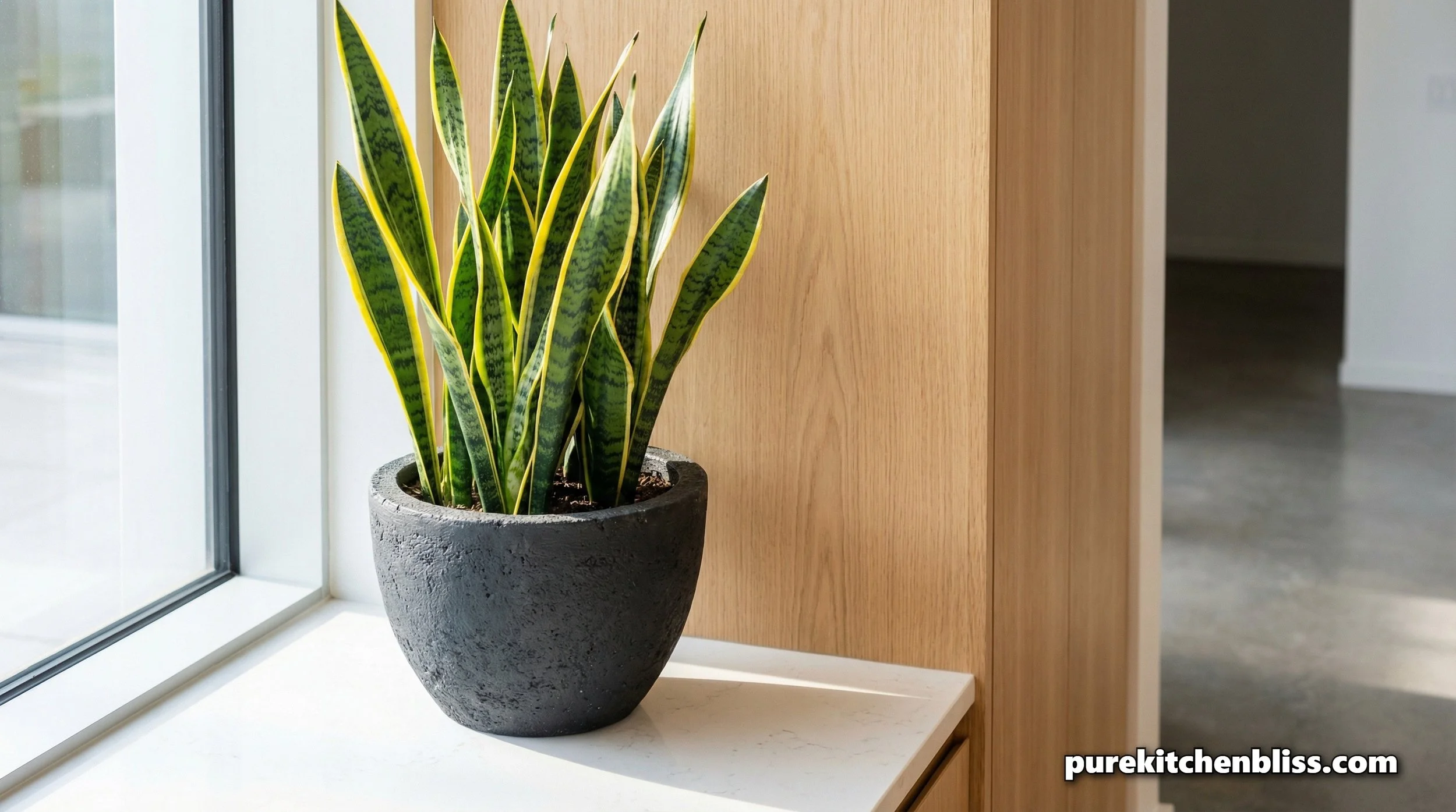
Snake Plant Mastery: The Best Unkillable Plant for the Busy Kitchen
In the world of residential construction, we look for materials that are "bulletproof", components that handle heat, neglect, and the test of time. In the botanical world, that role is filled by the Snake Plant (Dracaena trifasciata).1
As a professional who has spent decades in the trades and as a father of four, I’ve learned that a kitchen is the most demanding room in the house. It requires tools and lifeforms that can survive the "beautiful chaos." The Snake Plant is my top choice for a kitchen sanctuary; it is structurally sound, grows vertically to save valuable countertop real estate, and acts as a biological air-scrubber while the family sleeps.
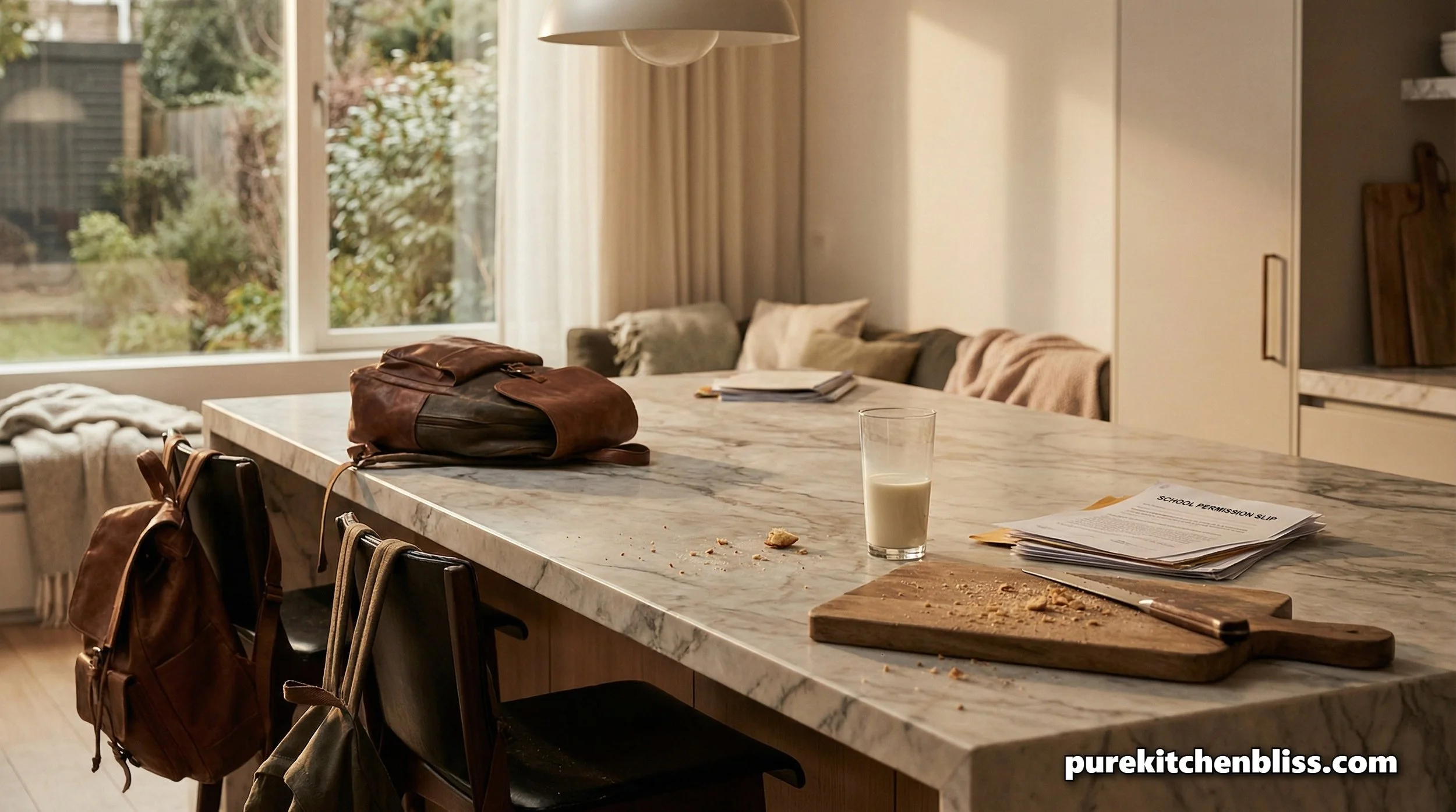
The Sunday Night Kitchen Reset: A Practical 20-Minute Routine
A clear counter on Monday morning is nice, but that's not actually why I run this routine every Sunday night. Twenty minutes of decluttering, cleaning, and a genuine maintenance check catches the small problems, standing water at a cabinet seam, a slow drain, grease building up on a finish, before they turn into repairs. Here's the actual routine, the reasoning behind each step, and why it's built the way it is.
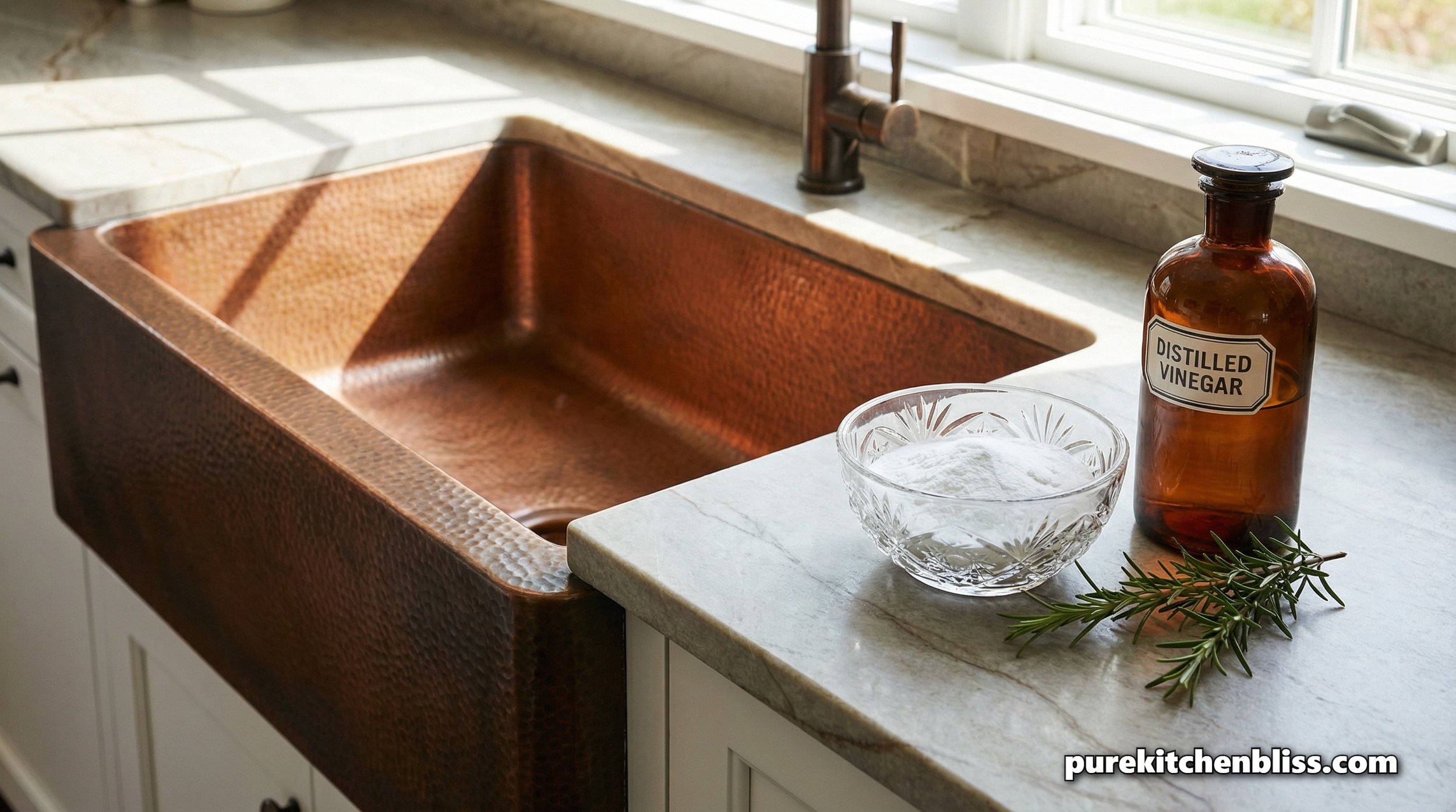
How to Unclog a Kitchen Drain With Baking Soda and Vinegar
Caustic drain cleaner works, but it also eats away at pipe seals and kills the bacteria your septic system depends on. A baking soda and vinegar flush is a genuine alternative, not a myth, but only if you understand the actual chemistry, check your pipe material first, and know when the clog is something baking soda was never going to touch.
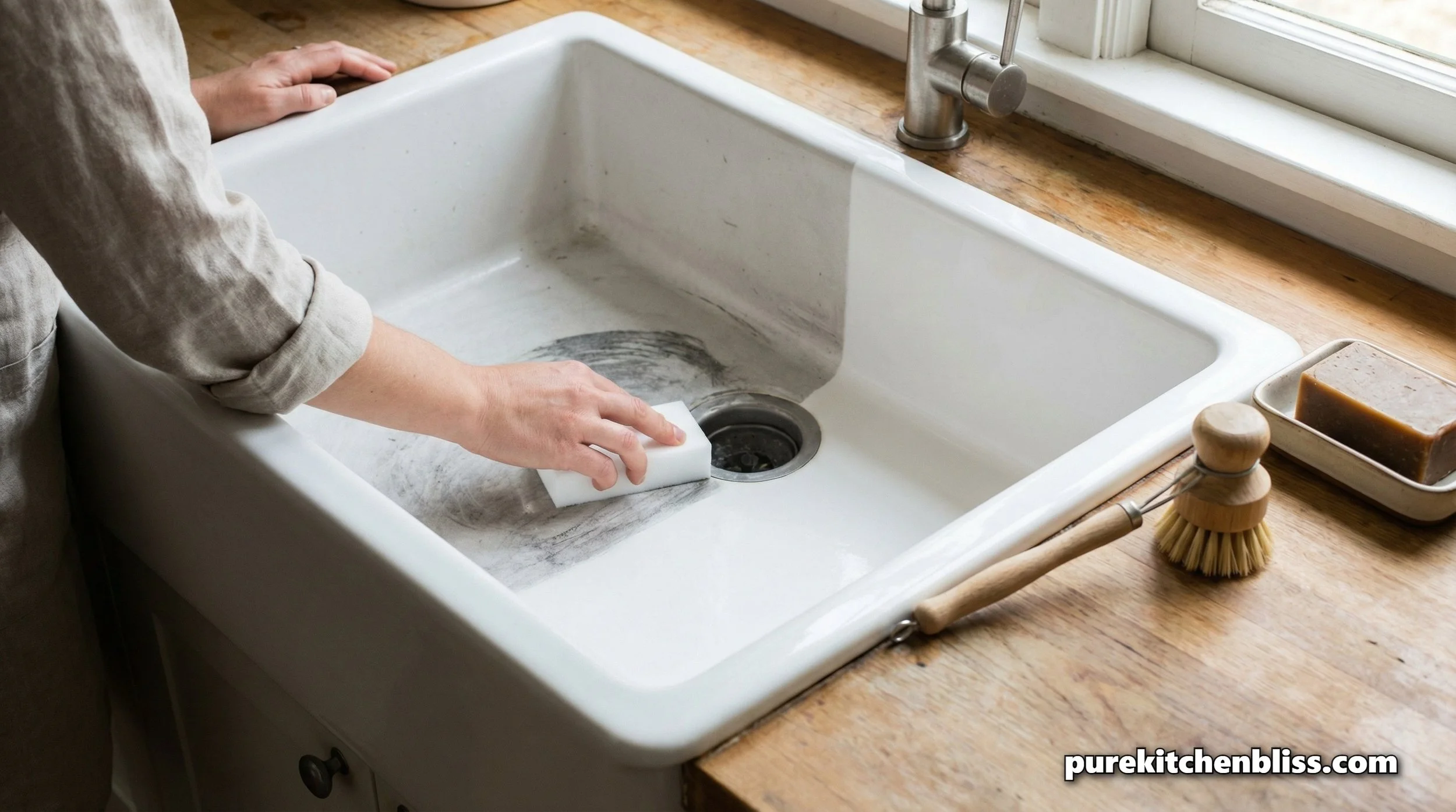
Magic Erasers in the Kitchen: What Actually Works and What They Ruin
To a homeowner, a Magic Eraser is a sponge. To a builder who's spent 20 years installing cabinetry and stone countertops, it's 3,000 grit sandpaper with a friendly name. Here's the actual material science behind melamine foam, exactly which kitchen surfaces it's safe on, which ones it will permanently damage, and what to reach for on a daily basis instead.
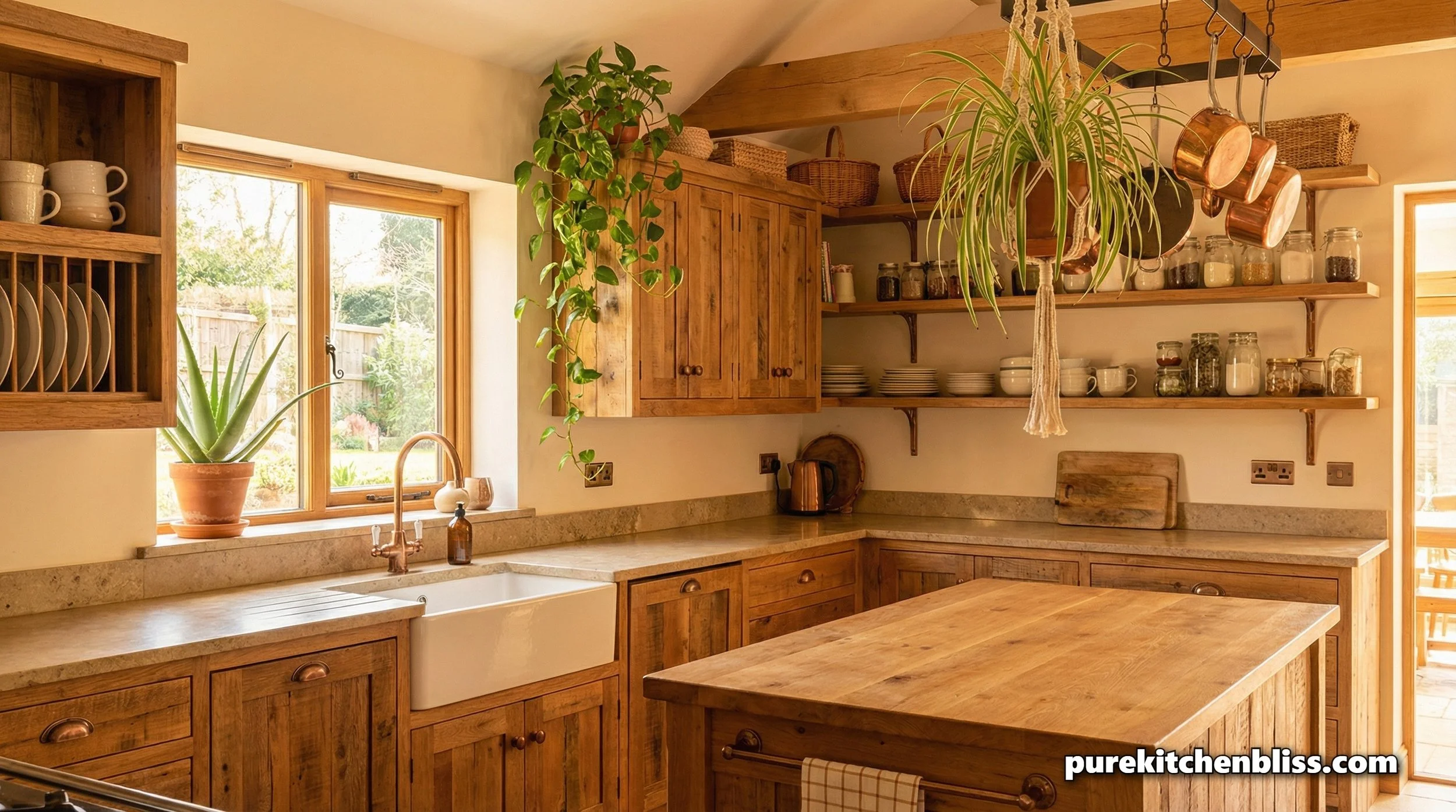
7 Unkillable Kitchen Plants That Actually Purify the Air
A kitchen is the hardest room in the house for a houseplant, heat swings, aerosolized grease, and humidity that changes by the hour. Most lists of "unkillable plants" are written for a living room. Here are seven species that actually hold up in a working kitchen, what the air-purifying research on them really shows, and the specific care details that matter once a plant is fighting a stove and a dishwasher instead of just sitting in a corner.