7 Unkillable Kitchen Plants That Actually Purify the Air
Originally published Feb 1, 2026 · Updated Aug 10, 2026
Transparency Note: We independently select these products based on research and user reviews. If you buy something through our links, we may earn a commission.
A kitchen is the hardest room in the house for a houseplant to survive in, and most "unkillable plant" lists are clearly written with a living room in mind, not a space with temperature swings from a 450-degree oven, aerosolized grease drifting off the stove, and humidity that shifts every time the dishwasher runs. As a carpenter and a father of four, I've killed my share of plants in this exact kitchen before landing on the seven that actually hold up to the daily wear a busy family puts on a room.
These aren't decoration picks. Each one earns its spot for a specific reason, tolerance for grease, resistance to temperature swings, or a genuine, research-backed role in filtering something out of the air. I'll also be straight about what that research actually shows and where it gets oversold, since a lot of houseplant content treats a small lab result like it's an established fact about your actual kitchen.
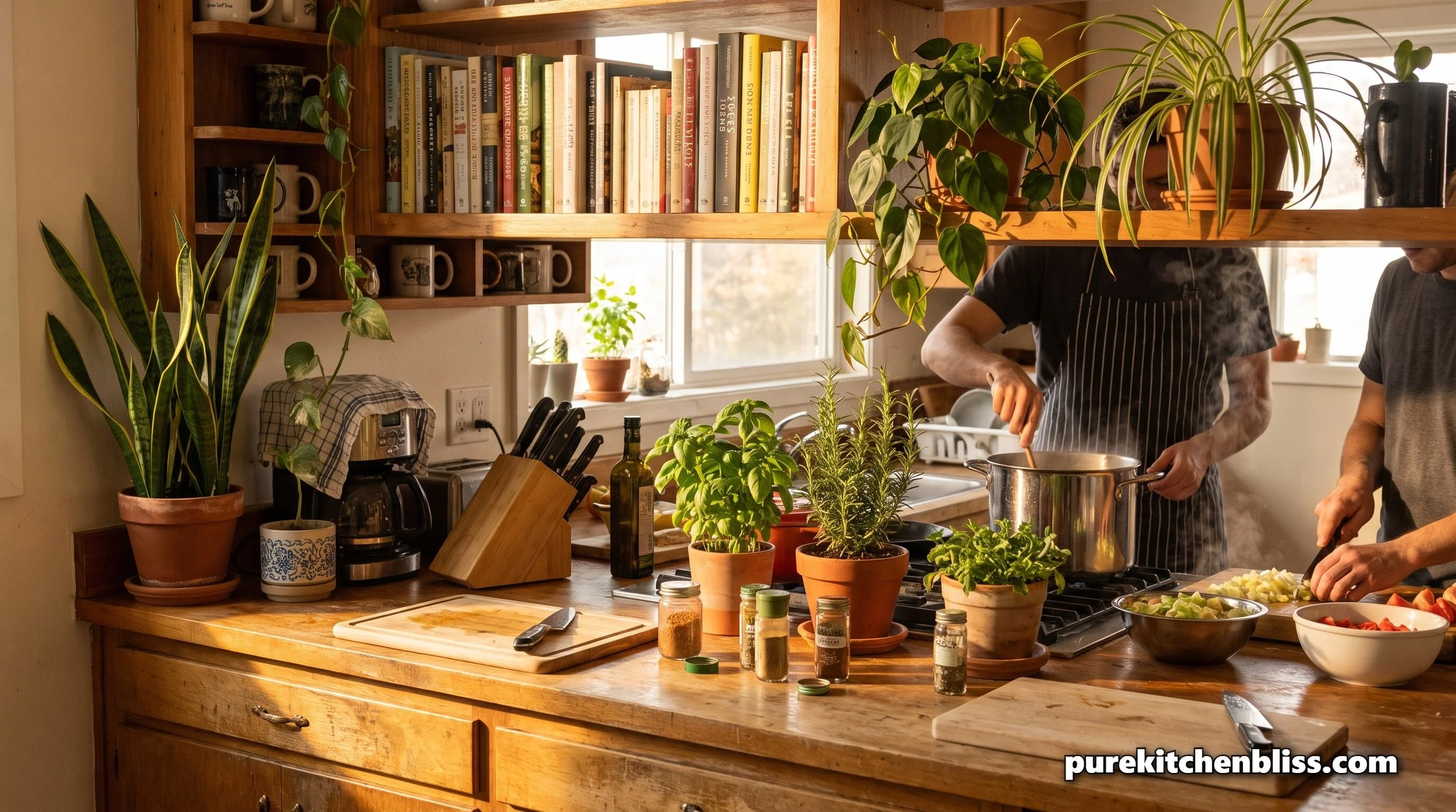
What the air quality research on houseplants actually says
The source almost every plant list traces back to is NASA's 1989 Clean Air Study, which tested how well several common houseplants removed volatile organic compounds like formaldehyde and benzene from a sealed test chamber. The results were genuinely impressive in that controlled environment, but the study has an important limitation that rarely makes it into the articles citing it, a sealed chamber isn't a kitchen with an open floor plan, a range hood running, and air moving constantly through doors and windows. A single plant in an actual room isn't going to replicate lab-scale VOC removal, which doesn't mean the effect is fake, it means the honest expectation is a modest, gradual improvement rather than a dramatic one.
That distinction matters for how you should think about every plant on this list. They're a genuine, low-cost contributor to air quality alongside proper ventilation, not a replacement for a working range hood or an open window. If you cook on gas without solid ventilation, no amount of houseplants substitutes for actually venting the carbon monoxide and nitrogen dioxide outside.
1. Snake Plant (Sansevieria): the low-light workhorse
If I could put one plant in every kitchen renovation, it's the Snake Plant. It grows upright rather than sprawling, which makes it genuinely useful in the tight, awkward corners next to a fridge where floor space is at a premium, and it tolerates the dry heat radiating off an oven better than almost anything else on this list. It's also a slow grower, so it won't outgrow a specific spot for years, which matters if you've built a plant into a fixed layout rather than a flexible one.
One detail worth knowing: unlike most plants, Snake Plants continue releasing oxygen at night through a process called CAM photosynthesis, rather than only during daylight like typical plants. Water it about once a month, and when in doubt, wait another week, overwatering is the more common way people kill this one, not neglect. For the full soil and drainage setup, see our Snake Plant care guide.
2. Golden Pothos: the grease-tolerant vine
Aerosolized grease is the real enemy of most kitchen plants, it settles on leaves and clogs the stomata they breathe through, and Golden Pothos handles it better than almost any other common houseplant. I like it trailing off the top of upper cabinets, where it softens a hard cabinet line without getting in the way of anything at counter height. It tolerates low light and forgives inconsistent watering, wilting leaves are a clear, honest signal that it needs water, not a mystery to diagnose.
If a vine gets too long and starts interfering with your workspace, just cut it back, the clippings root easily in a jar of water on a windowsill, which is a cheap way to propagate more without buying another plant. Full care details are in our Golden Pothos guide.
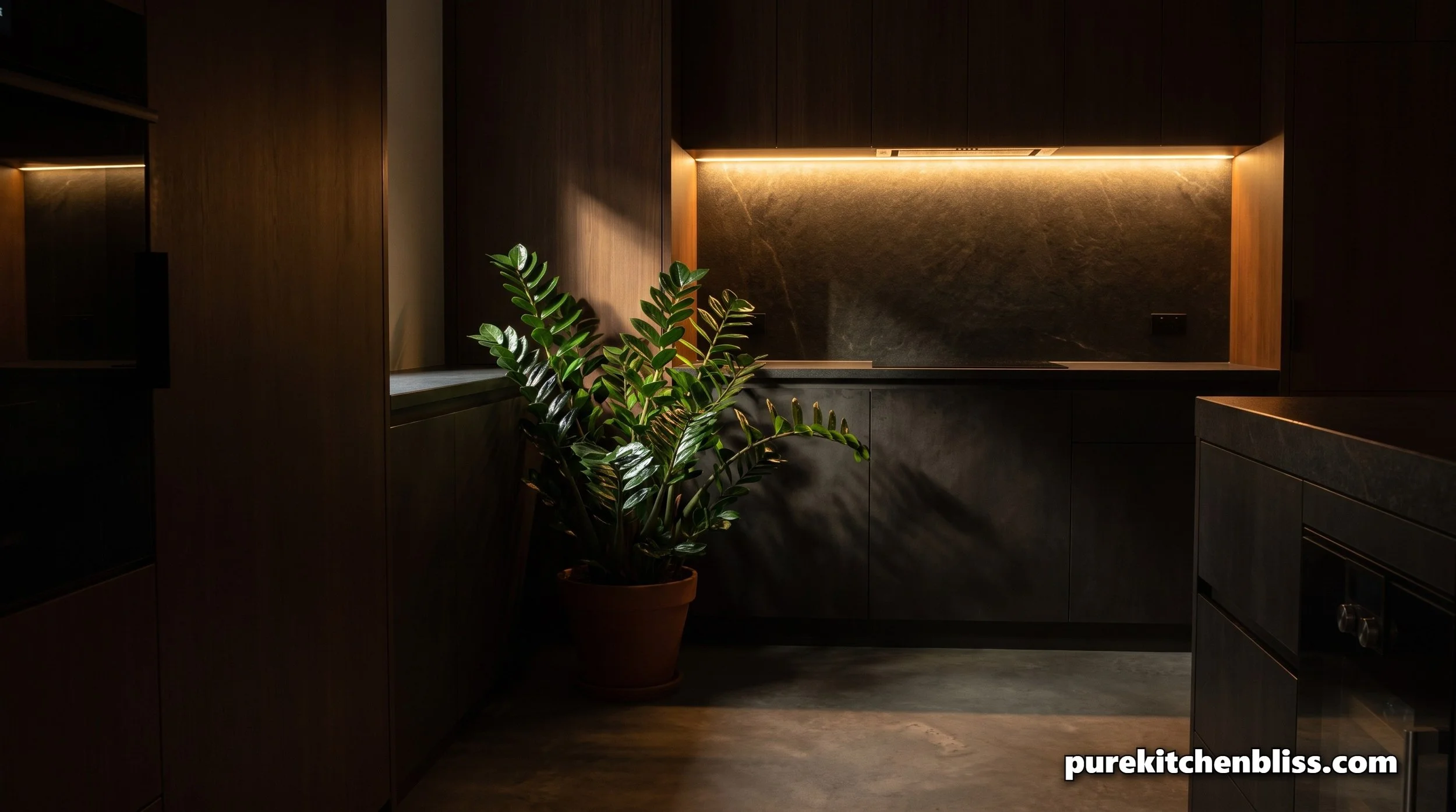
3. ZZ Plant: for kitchens with no direct window
A lot of modern kitchens are fully interior, no direct window at all, which kills most houseplants within a few weeks. The ZZ Plant is the real exception. Its waxy, leather-like leaves store water efficiently, and it can genuinely survive on nothing but the overhead task lighting most people already run during meal prep. It grows from underground rhizomes that hold water reserves, so it only needs watering every four to six weeks, which makes it close to foolproof for anyone who travels or just tends to forget.
The full watering schedule and light requirements are covered in our ZZ Plant care guide.
4. Aloe Vera: a functional plant, not just decor
With four kids and a lot of cooking happening in this house, minor burns are a fact of life, and Aloe is genuinely useful for that beyond looking nice on a windowsill. Keep it somewhere sunny near the stove or sink, and if someone touches a hot pan, snap off a bottom leaf and apply the gel directly rather than reaching for a store-bought aftercare product. It also gives a rough, informal signal about air quality, badly stressed or browning leaves can indicate the surrounding air is carrying more irritants than usual, though it's not a substitute for an actual air quality monitor if that's something you're tracking closely.
Full placement and watering notes are in our Aloe Vera care guide.
5. Spider Plant: the gas-stove companion
If you cook on gas, a Spider Plant is worth having specifically because of what the NASA study found it was particularly effective at removing in that controlled setting, carbon monoxide and xylene. Again, don't treat it as a substitute for real ventilation, but it's a reasonable, low-effort addition if you already cook on gas. It has a loose, trailing shape that reads well hanging from a ceiling hook, which also keeps it out of reach of toddlers and pets who might otherwise pull on it.
It also produces small plantlets, called spiderettes, that hang down on long stems and root easily if you want to propagate more for free. Details are in our Spider Plant care guide.
6. English Ivy: the mold-reduction plant, with real caveats
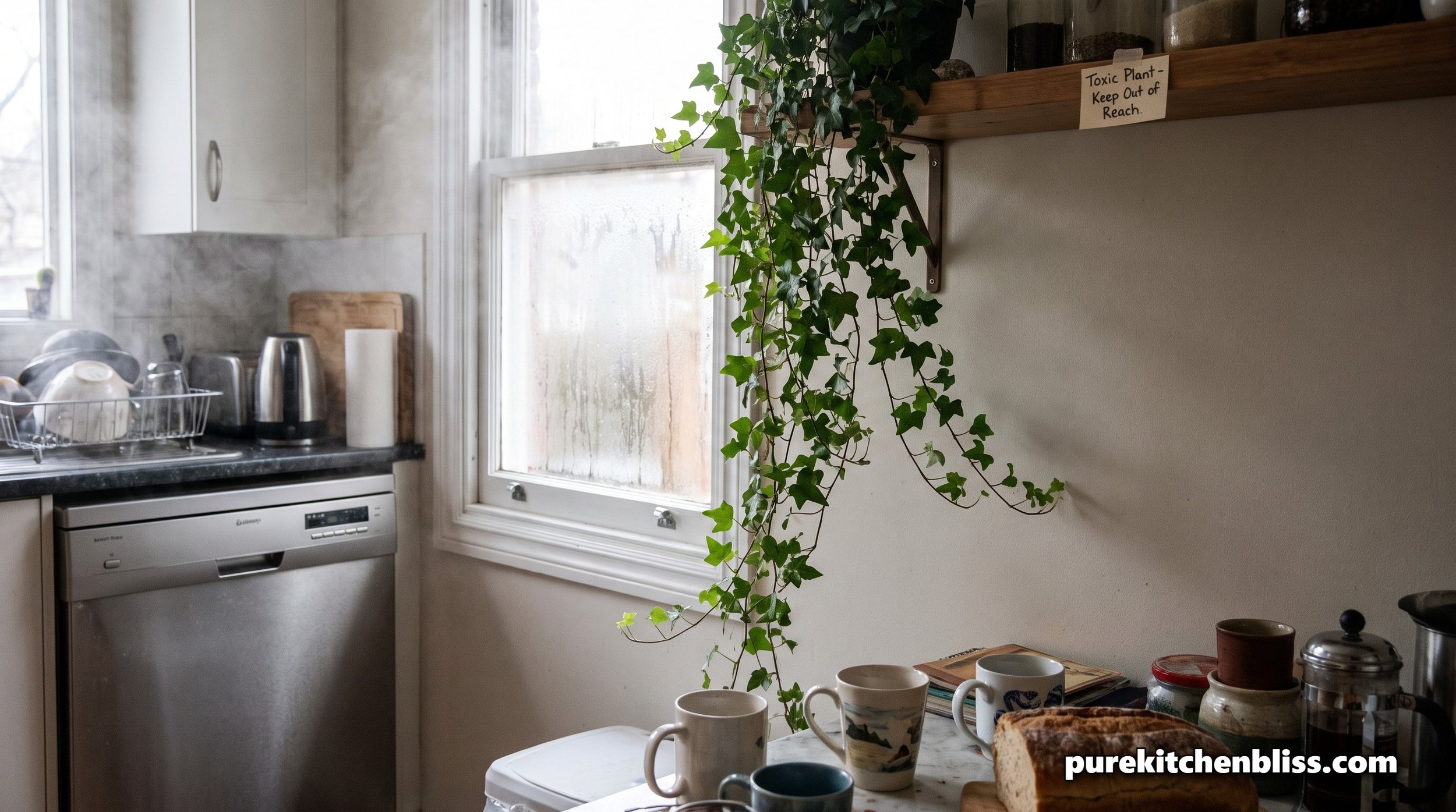
English Ivy gets cited constantly for mold reduction, and the number usually thrown around, roughly a 78 percent drop in airborne mold, comes from a real study, presented to the American College of Allergy, Asthma, and Immunology in 2005. The catch is the same one from the NASA study, that result came from a sealed test container with moldy bread, not an open kitchen with people walking through it. English Ivy is also toxic if ingested, so it needs to sit somewhere well out of reach of pets or young kids, high on a shelf or trailing along a curtain rod rather than at counter height.
With that context in place, it's still a reasonable pick for a consistently humid kitchen, steam from a dishwasher or stovetop creates exactly the kind of environment where any real mold-spore reduction would matter most. Full care instructions are in our English Ivy guide.
7. Cast Iron Plant: the one that survives real neglect
Cast Iron Plant earned its name honestly, it was a staple in Victorian homes specifically because it tolerated the soot and heat of coal-burning stoves better than almost anything else people tried growing indoors. It handles the temperature swings of a modern kitchen just as well, a 450-degree oven on one side of the room and a cold draft from a winter window on the other, without much complaint. It tolerates dust, low light, and an occasional missed watering better than any other plant on this list.
Its large, dark leaves work well as a floor plant in a corner rather than crowding counter space. Full details are in our Cast Iron Plant guide.
Keeping this group alive long term
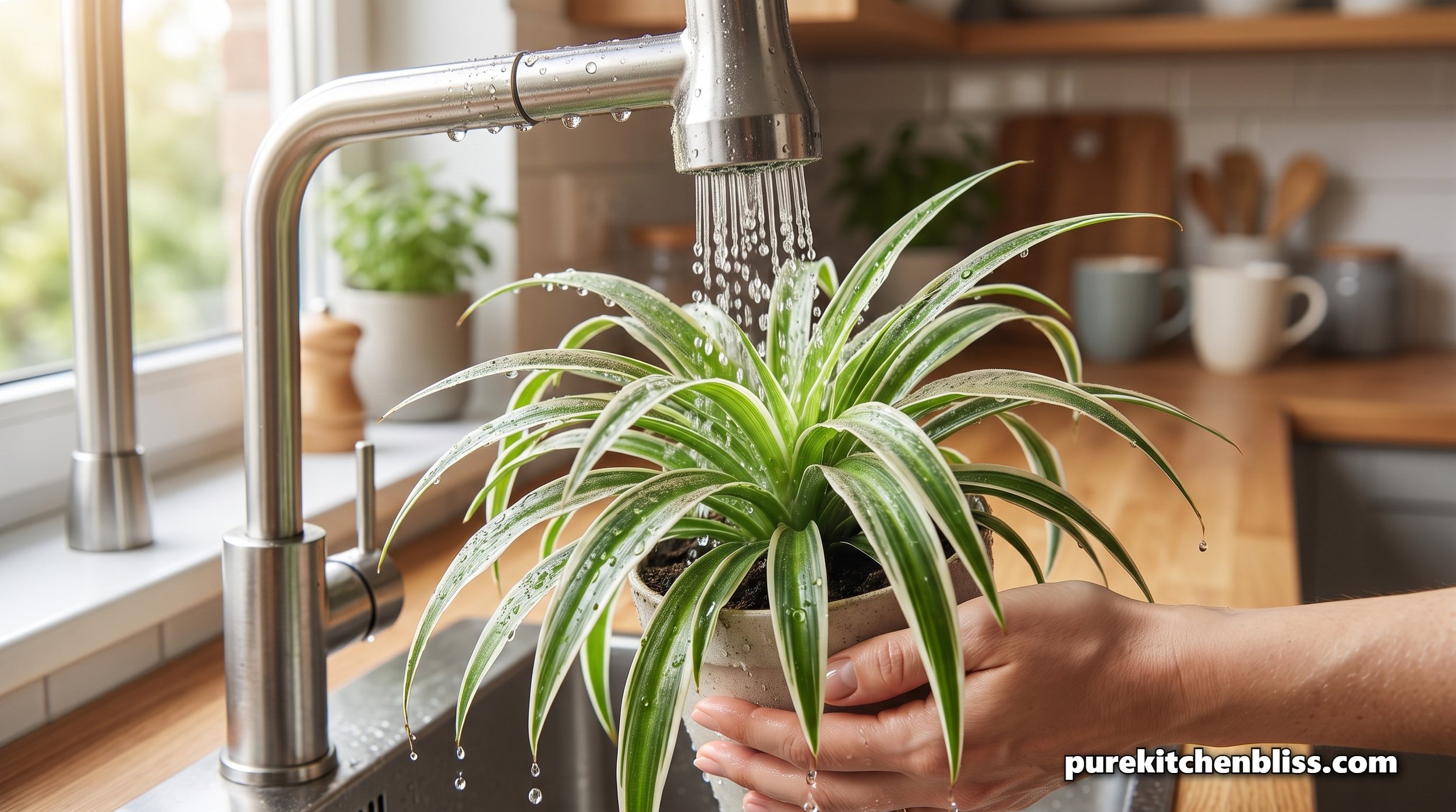
Kitchen dust is stickier than dust anywhere else in the house, since it's mixed with aerosolized grease and cooking residue, and it builds up on leaves in a way that blocks the stomata plants need for gas exchange. Once a month, I take these plants to the sink and give them a lukewarm rinse to clear that film off, which matters more for kitchen plants than for any other room in the house. Drainage matters just as much, standing water in a pot leads to root rot, so every pot needs actual drainage holes, and if you're using a decorative pot without one, keep the plant in its plastic nursery liner and set that inside the decorative pot instead.
Once a week, check the top two inches of soil before watering anything on this list. If it's dry, water it. If it's still damp, leave it alone, overwatering kills far more of these plants than neglect ever does, which is genuinely counterintuitive advice for most first-time plant owners used to erring on the side of more water rather than less.
What this actually comes down to
None of these seven plants are decoration first. Each one earns its spot through a specific tolerance, heat, grease, low light, humidity, or a genuine, research-backed contribution to air quality that's real but modest in an actual open kitchen rather than a sealed lab chamber. Start with whichever one matches your kitchen's biggest challenge, a windowless corner calls for a ZZ Plant, a humid space near the dishwasher calls for English Ivy, and build from there rather than trying to fit all seven into a kitchen that doesn't have room for them.