The Best Eco-Friendly Dish Soaps: Purity for Your Plates and Pipes
Transparency Note: We independently select these products based on research and user reviews. If you buy something through our links, we may earn a commission.
In a kitchen that manages the "beautiful chaos" of four kids, the dish soap is one of the most-used tools in the shed. From scrubbing oatmeal off morning bowls to degreasing the Sunday roast pan, it is a constant presence. However, as someone who cares about the "bones" of the home, I look at dish soap differently.
Many commercial soaps are loaded with petroleum-based surfactants and phthalates. These aren't just bad for the planet; they can be tough on your plumbing and leave a chemical film on your family's food-prep surfaces. Transitioning to an eco-friendly, non-toxic soap is one of the simplest ways to upgrade the purity of your sanctuary.
1. Why the "Spec" Matters
In the trades, we always check the Material Safety Data Sheet (MSDS). When you look at the ingredients of standard blue dish soap, you'll often find Sodium Lauryl Sulfate (SLS). While it creates a lot of bubbles, it’s a known skin irritant and can be toxic to aquatic life once it flushes through your system.
A "Pure" dish soap should be:
Plant-Based: Derived from coconut or olive oils.
Biodegradable: It should break down safely in the water system.
Scented with Essential Oils: No synthetic "Mountain Mist" fragrances.
BUILDER TIP: PROTECTING THE CIRCULATORY SYSTEM
Harsh, synthetic soaps can actually contribute to the buildup of "bio-film" inside your pipes. Switching to plant-based soaps helps keep your kitchen's plumbing free and clear.
Read More: How to Unclog a Drain With Baking Soda and Vinegar
2. Liquid vs. Solid: The Infrastructure of Choice
We’ve moved toward two different systems in our home to reduce plastic waste and maintain our Sunday Night Countertop Reset aesthetic.
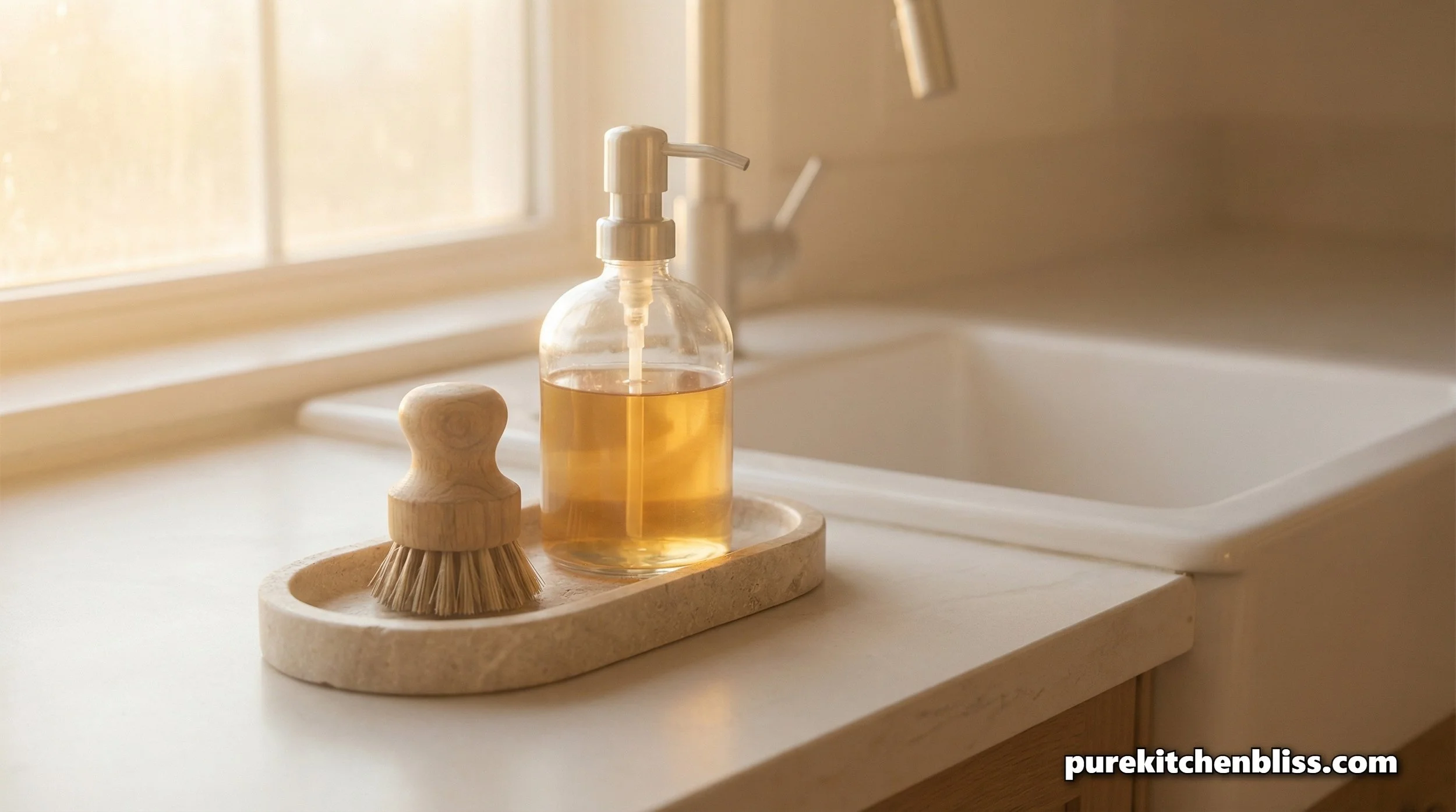
The Glass Dispenser (Liquid): Buy your soap in bulk (concentrated) and use high-quality amber glass dispensers. It eliminates visual clutter and plastic waste.
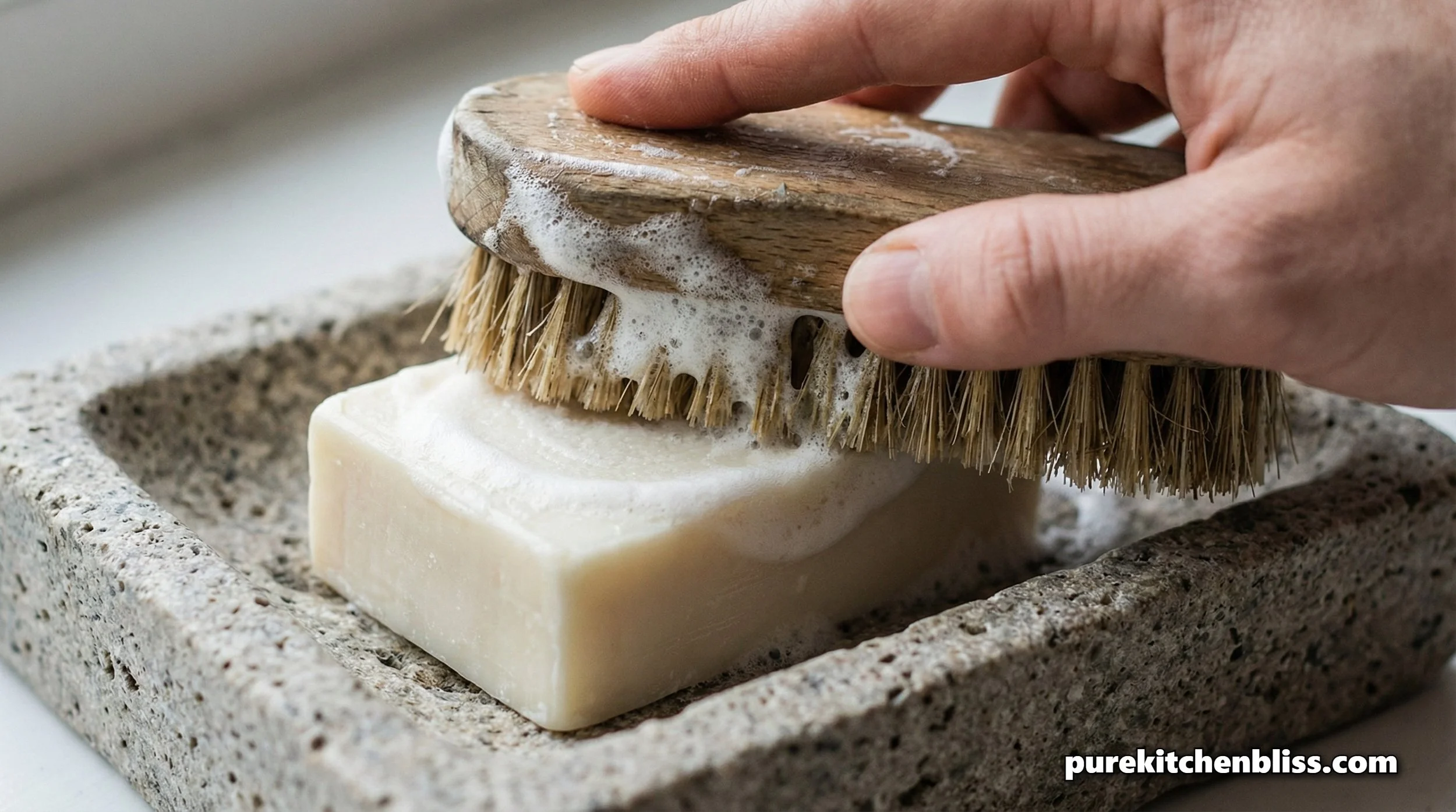
The Dish Block (Solid): A solid bar of dish soap is the ultimate "Curator" choice. It’s plastic-free, lasts for months, and has incredible degreasing power.
GET THE PURE WASH STATION
Ready to eliminate the plastic bottles from your sink? We’ve curated the best high-performance, plant-based soaps that actually cut through grease without the chemicals.
Check Price: Organic Plant-Based Dish Soap Block & Bamboo Scrubber Set - Shop on Amazon
3. Performance: Cutting Grease Naturally
A common myth is that eco-friendly soap "doesn't work" on heavy grease. In reality, plant-based surfactants are incredibly effective if you use them correctly.
The Dwell Time: For heavy grease, don't just scrub. Apply the soap and let it sit for two minutes. This allows the plant oils to emulsify the animal fats or cooking oils.
The Temperature: Use hot H₂O. Heat lowers the viscosity of grease, making it easier for the non-toxic surfactants to do their job.
MAINTENANCE RITUAL: THE MONDAY MOMENTUM
Efficiency in the morning starts with a clean sink. Using a high-quality soap makes the "Active Recovery" clean-up after breakfast fast and effortless.
Read More: Monday Morning Momentum: A Ritual for the High-Performance Kitchen
The Dish Purity Toolkit
To transition your sink into a sustainable powerhouse, equip yourself with these professional-grade, non-toxic essentials:
The Soap: Better Life Natural Dish Soap (Sulfate-Free)
The Sustainable Choice: Vegan Dish Washing Block (Zero-Waste)
The Infrastructure: Amber Glass Dish Soap Dispenser with Stainless Steel Pump
The Scrub: Natural Bamboo Dish Brushes (Replacement Heads)
Conclusion: Clean Dishes, Clear Conscience
Switching your dish soap is a small change that has a massive ripple effect. You’re protecting your skin, your plumbing infrastructure, and the health of the planet. When you use the right "Pure" tools, even the chore of doing the dishes becomes a moment of Bliss.