How to Get Rid of Fried Food Smell: A Professional 3-Step Protocol

We’ve all been there. You treat the family to a "beautiful chaos" Friday night fish fry or homemade donuts, only to wake up Saturday morning feeling like you’re living inside a fast-food restaurant.
While common advice sites suggest a simple pot of boiling vinegar, as a professional who understands the "bones" of a home, I know that isn't enough. Fried food smells are carried by aerosolized lipids (fats). These fats are heavy and "tacky", they don't just float; they bond to your cabinetry finishes and your kitchen’s airflow systems. To truly restore your Sustainable Sanctuary, you need to address the odor at the structural level. Here is my professional protocol for a total olfactory reset.
Stage 1: The "Active Extraction" (Before & During)
The best way to get rid of a smell is to never let it settle into your infrastructure. In a house of six, once that grease smell hits the living room upholstery, you’ve doubled your workload.
The Range Hood Ritual
Most people turn their fan on after the smell starts. A Builder’s secret? Turn your range hood on 5 minutes before you start frying. This establishes a "directional draft"—a column of moving air that pulls molecules toward the filters immediately, rather than letting them bloom into the rest of the house.
The Pressure Differential
Don't just open one window. Open a window in the kitchen and another on the opposite side of the house. This creates a "cross-breeze" pressure differential that flushes the air out of the building envelope rather than letting it circulate and cool (at which point the fat droplets drop onto your surfaces).
Stage 2: The Vapor-Phase Neutralizer (The Upgrade)
Vinegar (acetic acid) is excellent at neutralizing alkaline odors, but for heavy grease smells, we need a "biological boost" to break down the lipid chains in the air.
The Recipe:
2 Cups Water
1 Cup Distilled White Vinegar
2 Cinnamon Sticks or 1 Tablespoon Cloves
The peel of one organic lemon
The Protocol: Bring to a boil, then reduce to a simmer. The vinegar neutralizes the airborne grease molecules, while the lemon peel and spices release natural oils that "scrub" the remaining air.
Kitchen Odor Extraction Matrix
| Method | Effectiveness | Target Infrastructure | Builder's Note |
|---|---|---|---|
| Active Extraction | 10/10 | Airborne Aerosols | Run fans 5 mins early to establish directional draft. |
| Vinegar Simmer | 8/10 | Vapor-Phase VOCs | Acetic acid breaks down alkaline grease molecules. |
| Surface Degreasing | 9/10 | Cabinetry & Backsplash | Essential for removing "tacky" lipid buildup. |
| Charcoal Bags | 7/10 | Residual Odors | Passive adsorption for the 24 hours post-cooking. |
Stage 3: The "Surface Scrub" (Post-Cooking Reset)
Because fried food smells are lipid-bound, they literally "glue" themselves to your counters and cabinets. If you don't remove that microscopic film, the smell will linger for days regardless of how much vinegar you boil.
The Tactical Wipe
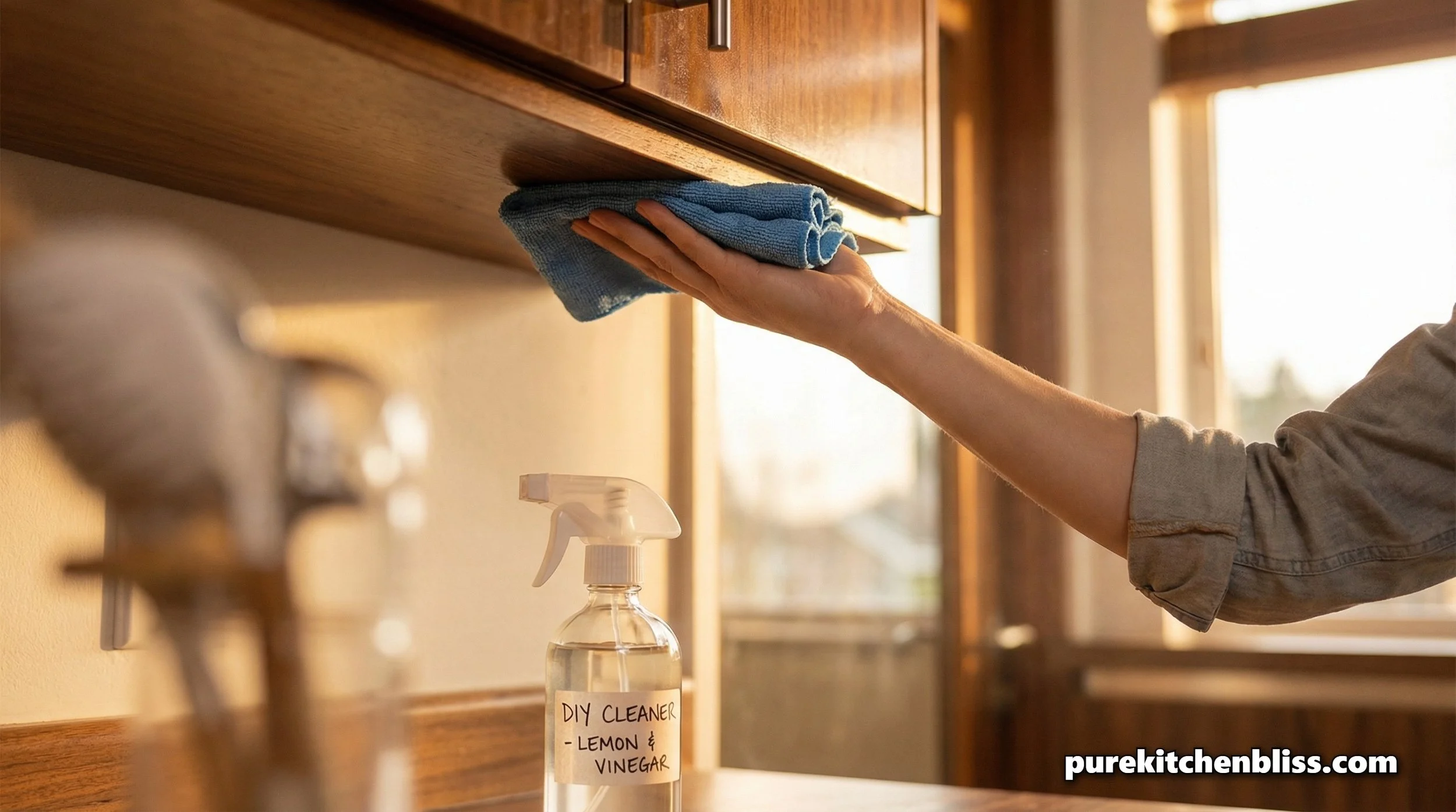
Use your Non-Toxic Kitchen Degreaser to wipe down the underside of your upper cabinets and the backsplash. These are the primary "landing zones" for grease droplets.
The Pro Tip: If you have an undermount microwave or range hood, wipe the underside of that unit specifically. It is the highest-density grease collector in the kitchen.
The Soft Infrastructure
Fabric absorbs odors like a sponge. In a house with four kids, their jackets or backpacks hanging near the kitchen are odor magnets. Give them a quick spray with a mixture of cheap vodka and essential oils. The alcohol neutralizes odors as it evaporates without leaving a chemical scent behind.
BUILDER TIP: FILTER MAINTENANCE
If your kitchen smells like fried food even after cleaning, your range hood filters are "saturated." These metal mesh filters trap grease, and if not cleaned, they become an odor-emitter every time the fan warms up. Read More: The Sunday Night Countertop Reset
4. The "Sump" Secret: Don't Forget the Coffee
As we discussed in 5 Uses for Coffee in Your Kitchen, coffee is a powerful "adsorbent." It doesn't just smell good; it pulls heavy molecules out of the air.
The Hack: After you’ve finished frying and cleaned the surfaces, leave a bowl of dry, used coffee grounds on the counter overnight. The grounds will pull the remaining heavy "fried" molecules out of the air like a biological magnet.
5. Troubleshooting: Why the Smell Won't Leave
If you've followed the protocol and the "fishy" scent remains, check these three "hidden" spots:
The Dishwasher Filter: Sometimes grease from the plates settles in the filter and "re-cooks" during the drying cycle.
The Trash Can Lid: Wipe the inside of the lid.
Ceiling Fan Blades: If you have a ceiling fan, the leading edges of the blades collect "tacky" grease dust that holds smells for weeks.
Conclusion: Restoring the Sanctuary
Getting rid of the fried food smell isn't about masking it with synthetic candles; it’s about understanding the "bones" of the problem. By using Active Extraction, Vapor Neutralization, and a Surface Reset, you ensure that your kitchen remains a pure, blissful environment for your family, even after "Fish Fry Friday."