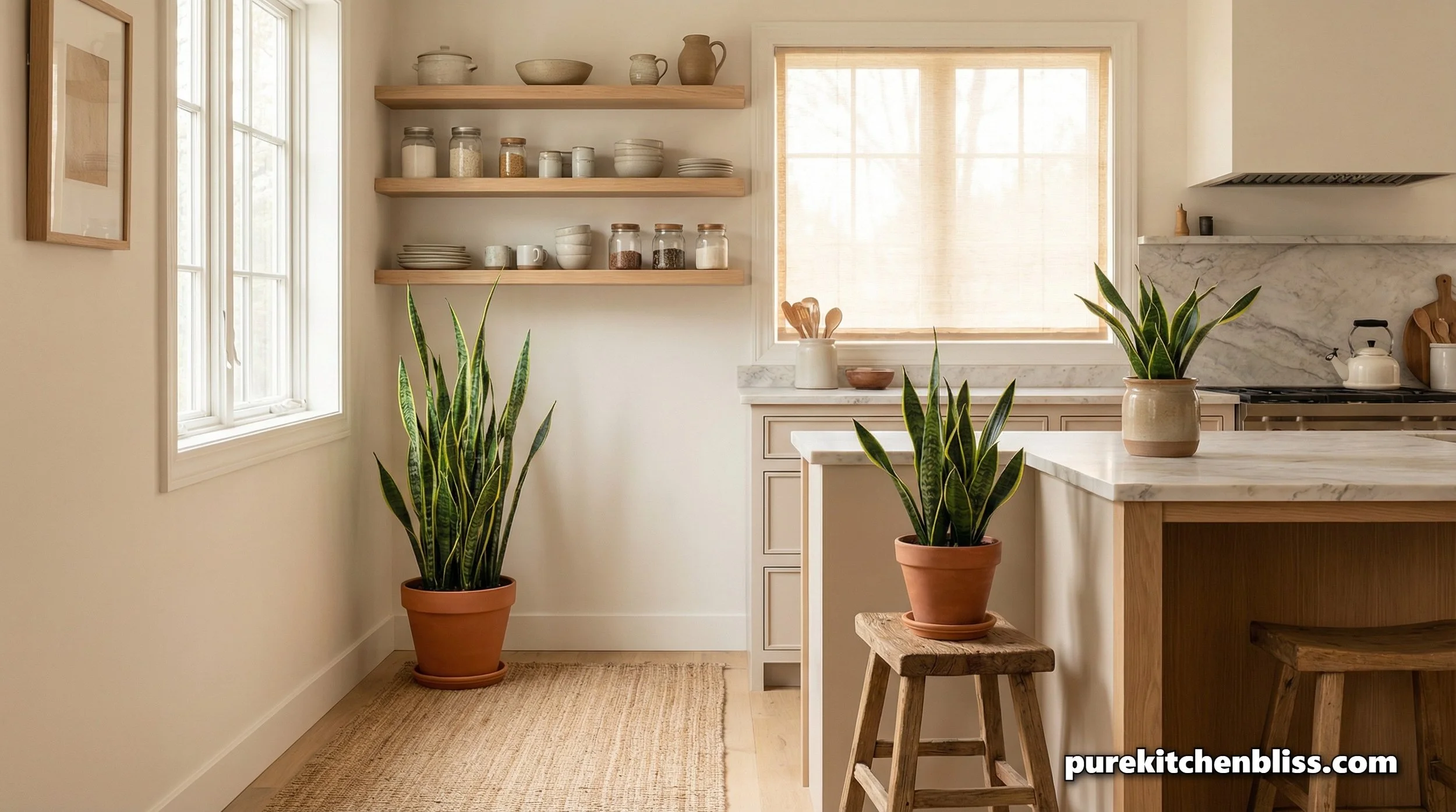
Snake Plant Mastery: The Best Unkillable Plant for the Busy Kitchen
Transparency Note: We independently select these products based on research and user reviews. If you buy something through our links, we may earn a commission.
In the world of residential construction, we look for materials that are "bulletproof", components that handle heat, neglect, and the test of time. In the botanical world, that role is filled by the Snake Plant (Dracaena trifasciata).
As a professional who has spent decades in the trades and as a father of four, I’ve learned that a kitchen is the most demanding room in the house. It requires tools and lifeforms that can survive the "beautiful chaos." The Snake Plant is my top choice for a kitchen sanctuary; it is structurally sound, grows vertically to save valuable countertop real estate, and acts as a biological air-scrubber while the family sleeps.
However, "unkillable" doesn't mean "unbreakable." To move from merely surviving to becoming a vibrant piece of living infrastructure, your Snake Plant needs a specific protocol. Here is how to master it.
The Foundation: Drainage as Infrastructure
If a building has a poor foundation, it will eventually fail. The same applies to the Snake Plant. The #1 reason these plants fail in kitchen environments isn't a lack of light, +it’s root rot caused by poor drainage.
The Soil Mix: Do not use standard potting soil; it retains far too much H₂O. Instead, utilize a Cactus or Succulent Mix.
The Expert Adjustment: I recommend mixing in 25% Perlite or Pumice to increase the "porosity" of the soil. This ensures that water flows through the root system and exits the pot immediately, preventing the stagnant water that destroys a plant’s "bones."
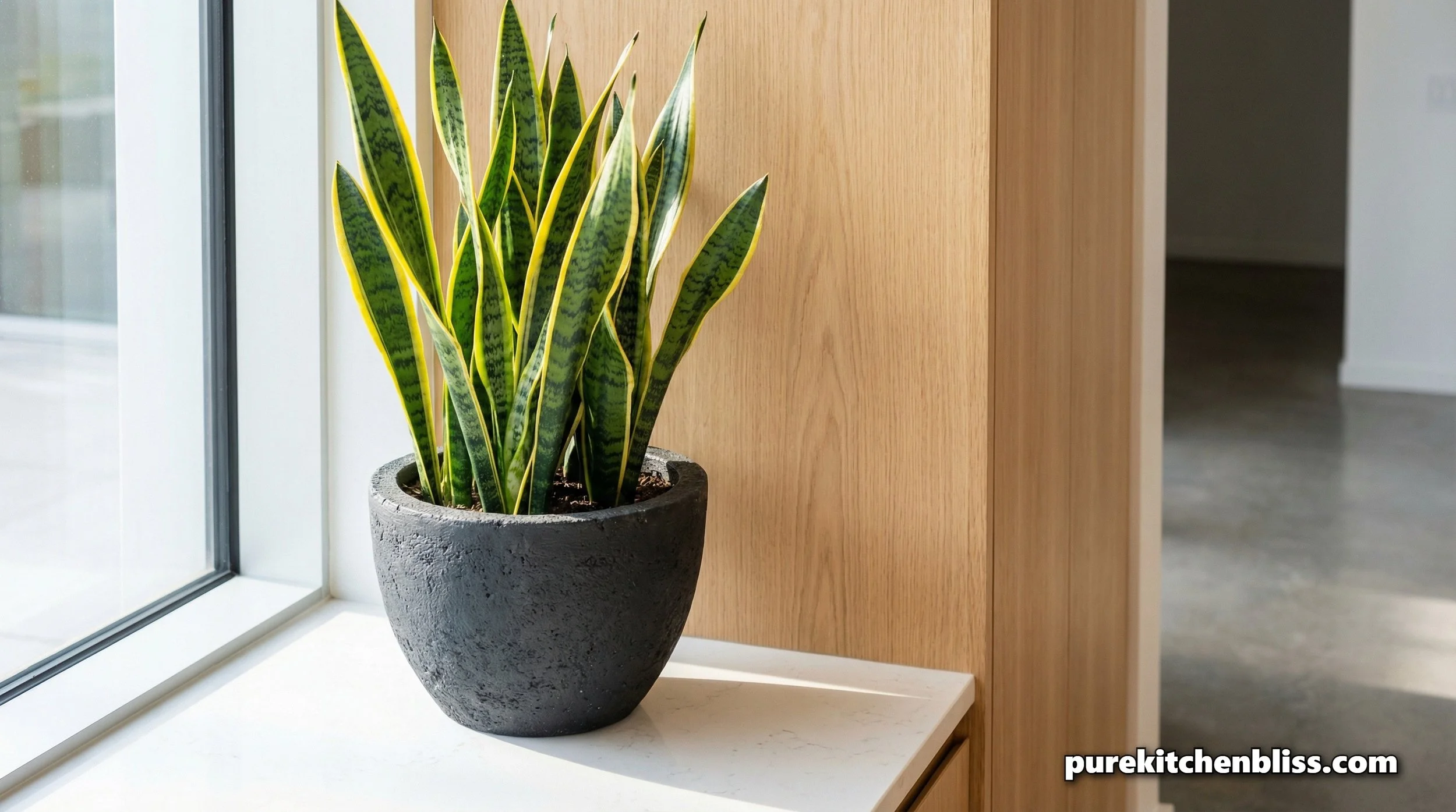
The Vessel: Always choose a pot with a drainage hole. For a "Bliss" aesthetic, I suggest Terra Cotta or Unglazed Ceramic. These materials are "breathable," allowing excess moisture to evaporate through the walls of the pot.
Curator’s Choice: Modern Terra Cotta Planter with Drainage Tray
Light: Navigating the Kitchen Layout
In my years of renovating homes, I’ve paid close attention to "orientation." Where the sun hits your kitchen determines where your Snake Plant will perform best.
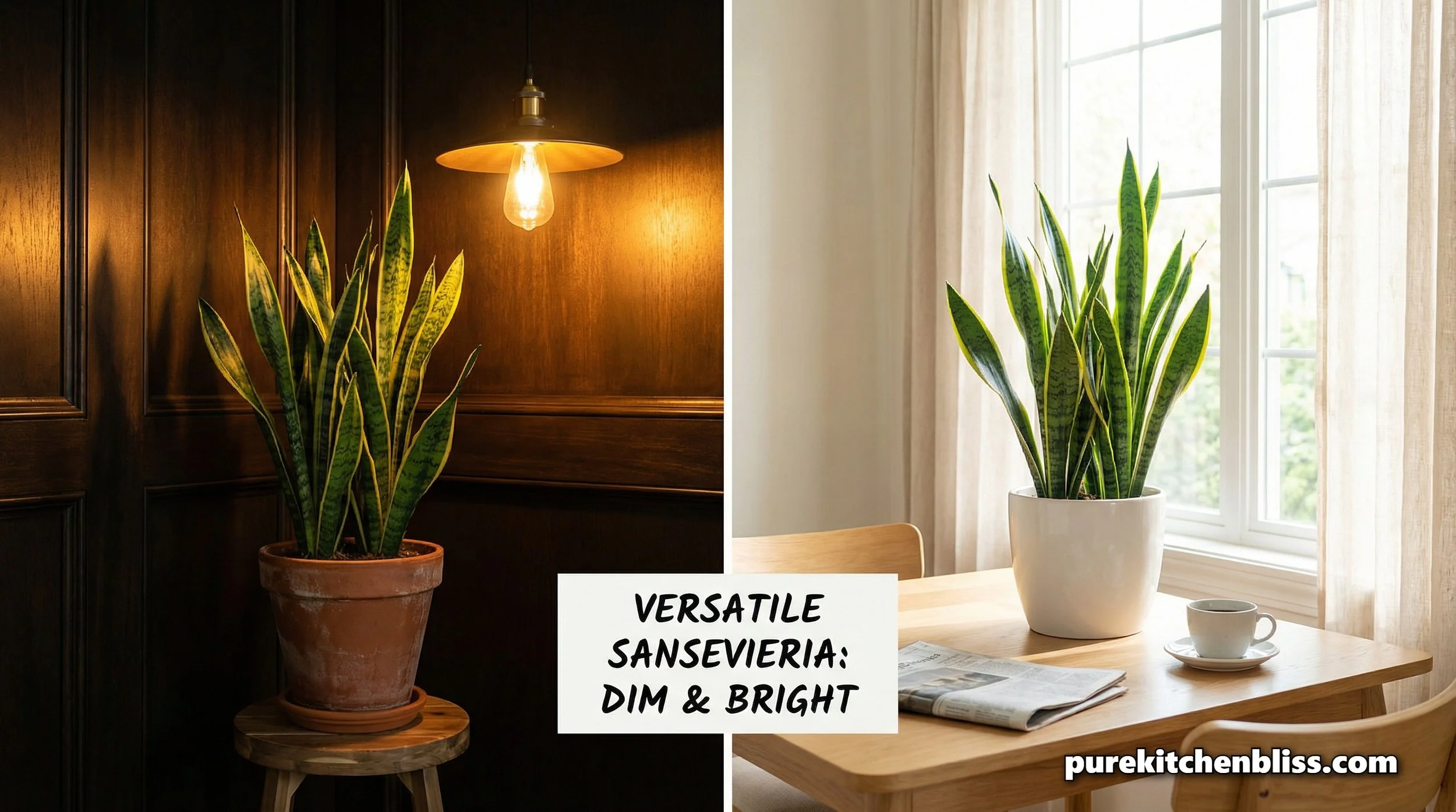
The Internal Kitchen (Low Light): The Snake Plant is famous for its resilience in windowless spaces. It will live in a windowless kitchen, but its metabolic rate will slow significantly.
The Sweet Spot (Indirect Bright Light): Positioning your plant 5–10 feet away from a South facing window will result in vibrant, deep green leaves and structural strength.
The "Burn" Zone: Avoid placing the plant directly on a windowsill that receives 6+ hours of intense, direct summer sun. It can "scorch" the leaves, leaving permanent brown scars on the plant’s silhouette.
Hydration Rituals: The "Dad" Rule of Watering
In a house with four daughters, "routine" is everything. However, the Snake Plant thrives on a lack of routine.
The Finger Test: Never water on a fixed schedule. Instead, stick your finger two inches into the soil. If you feel any moisture, walk away.
The Seasonal Reset: During the colder months, the plant’s metabolism slows. In our household, we often go 6–8 weeks without watering the kitchen Snake Plant.
The Technique: When you do water, do it deeply. Pour water until it runs out of the drainage hole, then empty the saucer. Never let the plant "sit in a puddle," as this leads to structural failure of the rhizomes.
Maintenance: The "Clean Leaf" Protocol
In the kitchen, aerosolized grease from cooking settles on everything, including your plants. This grease film acts like a biological plastic wrap, suffocating the plant's ability to "breathe" (exchange gases).
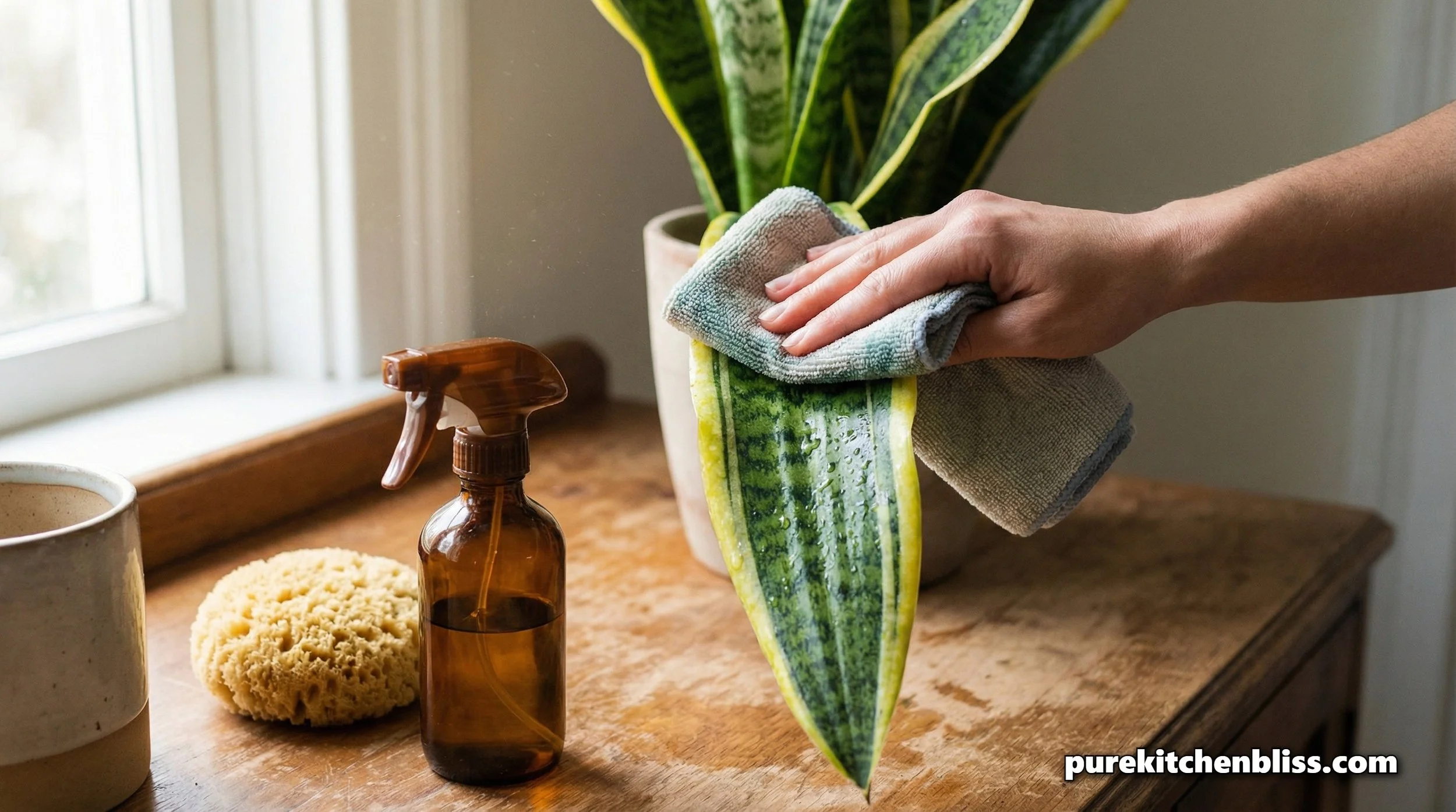
The Ritual: Once a month, take a damp microfiber cloth and gently wipe each leaf.
The Secret: Do not use chemical "Leaf Shine" products; they clog the stomata. Use a mixture of 90% H₂O and 10% organic lemon juice to cut through the kitchen grease and leave a natural, matte glow.
Propagation: Expanding Your Sanctuary
One of the best things about the Snake Plant is that it is a self-sustaining investment.
Division: When the plant becomes "pot-bound," you can use a clean garden knife to saw the root ball in half. You now have two architectural specimens for the price of one.
Leaf Clippings: You can even grow a new plant from a single leaf cutting. It’s a slow, rewarding process and a great way to involve the family in the home’s growth.
Conclusion: The Ultimate Kitchen Ally
The Snake Plant isn't just decor; it’s a high-performance biological tool that cleans your air and survives the "beautiful chaos" of family life. By following this Mastery guide, you’re ensuring that your kitchen sanctuary remains vibrant and life-filled for decades.