The Non-Toxic Kitchen Degreaser: How to Cut Through Grease Without Chemicals
Transparency Note: We independently select these products based on research and user reviews. If you buy something through our links, we may earn a commission.
If you’ve ever run your hand along the top of your kitchen cabinets or the back of your range hood and felt that sticky, "tacky" film, you’ve encountered aerosolized grease. In a busy kitchen, cooking oils become airborne, mix with household dust, and settle on every horizontal and vertical surface.
Most people reach for heavy-duty, "nuclear" degreasers to solve this. However, as a professional who understands the chemistry of home finishes, I avoid these. Harsh solvents can strip the topcoats off your cabinetry, etch your stone, and leave behind toxic residues that off-gas into your sanctuary.
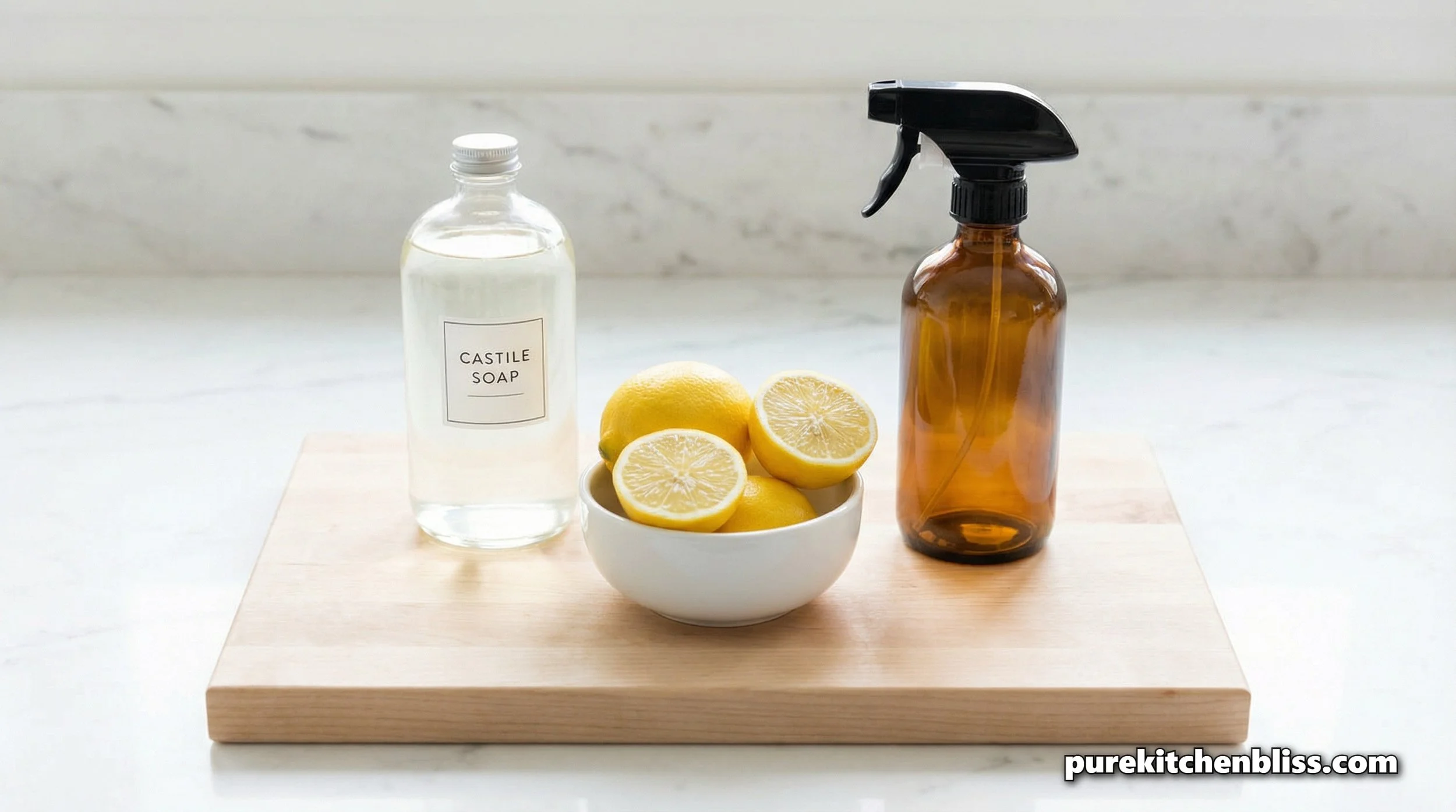
In our home, we use a Bio-Available Degreaser. It’s a simple, high-performance recipe that utilizes the power of surfactants and citrus to emulsify grease without compromising the "bones" of your kitchen.
Why Most Cleaners Fail the "Infrastructure Test"
Many "green" cleaners aren't strong enough to break the molecular bond of polymerized grease (the kind that’s been sitting for a while). On the other hand, industrial cleaners often contain phthalates and 2-butoxyethanol, which are effective but carry significant health risks for children and pets.
To create a professional-grade cleaner, we need to balance three components:
A Surfactant: To lift the grease from the surface.
An Emulsifier: To break the grease down into smaller droplets.
A Fragrance/Antiseptic: To leave the kitchen smelling like a sanctuary, not a lab.
BUILDER TIP: PROTECTING THE CABINETRY
Grease doesn't just look bad; it’s acidic and can actually soften the paint or varnish on your cabinets over time. Removing it weekly is a structural necessity, not just a cosmetic one.
Read More: How Often Should You Clean Your Countertops? The Professional Maintenance Schedule
The "Pure Kitchen" Degreaser Recipe
This is the exact formula we use for our Sunday Night Countertop Reset. It is safe for sealed stone, finished wood, and stainless steel.
Ingredients:
2 Cups Distilled H₂O: Using distilled water prevents mineral spotting on your fixtures.
2 Tablespoons Liquid Castile Soap: This is your surfactant.
10 Drops Lemon Essential Oil: Contains limonene, a natural solvent for oil.
1 Teaspoon Baking Soda: (Optional, for extra "scrubbing" power on stovetops).
The Protocol:
The Mix: Add the water first, then the soap and oils (to prevent excess suds). Shake gently.
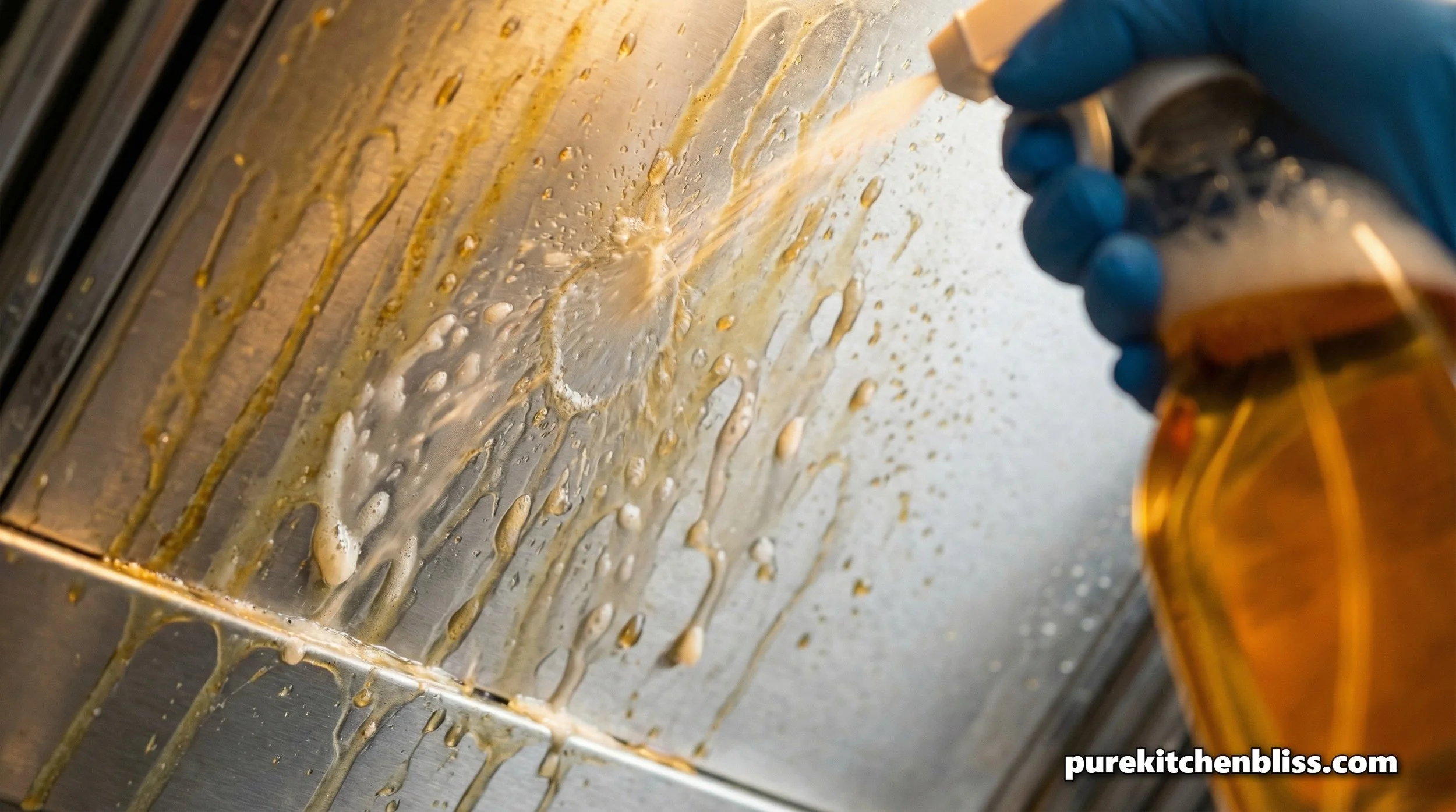
The Dwell Time: This is the secret. Spray the surface and walk away for 3 to 5 minutes. This allows the surfactants to get under the grease.
The Wipe: Use a warm, damp microfiber cloth. The grease should lift away with minimal scrubbing.
Mastering Different Surfaces
Not every surface in your kitchen reacts to cleaners the same way. As a "Curator" of your home, you must adjust your technique.
For Finished Wood/Cabinets: Never spray directly onto the wood. Spray your cloth first, then wipe. This prevents moisture from seeping into the joins of the wood and causing swelling.
For Natural Stone: This recipe is pH-neutral, making it safe for marble and granite. Avoid adding vinegar to this mix, as the acid will etch your stone.
For the "Cave" Corners: These areas often collect the most dust-grease mix. Use a soft-bristled brush to agitate the cleaner in the corners before wiping.
CURATOR’S TIP: THE LIVING FILTER
A clean kitchen stays clean longer when you have the right plants to help settle airborne dust before it can mix with cooking grease.
Read More: 7 Unkillable Plants That Thrive in Your Busy Kitchen
The Non-Toxic Cleaning Toolkit
To transition to a chemical-free kitchen, you need the right "infrastructure." These are the tools I personally use to keep our sanctuary pure:
The Vessel: Amber Glass Spray Bottles (2-Pack) - Eliminate Plastic Waste
The Soap: Dr. Bronner’s Pure-Castile Liquid Soap (Unscented)
The Oil: Organic Lemon Essential Oil (Therapeutic Grade)
The Cloths: Premium Microfiber Cloths (High-Absorbency for Grease)
Maintenance: The "Circulatory" Flush
While you are degreasing the surfaces, don't forget the grease you can't see. The fats and oils that go down your drain can create "Fatbergs" that eventually clog your plumbing.
MAINTENANCE RITUAL: THE DRAIN RESET
After a heavy session of degreasing your counters, it’s best practice to perform a natural flush of your pipes to ensure no grease is settling in the P-trap.
Read More: How to Unclog a Drain With Baking Soda and Vinegar
Conclusion: Purity Without Compromise
You don't need harsh, petroleum-based chemicals to have a clean kitchen. By understanding the mechanics of how grease bonds to surfaces, you can use simple, non-toxic ingredients to maintain your home’s infrastructure.
When you use the "Pure Kitchen" degreaser, you aren't just cleaning; you are protecting the health of your family and the longevity of your home’s "bones."