How Often Should You Clean Your Countertops? The Professional Maintenance Schedule
In my 20 years in the trades and as a father of four, I’ve realized that people generally fall into two camps when it comes to countertops: the "Compulsive Wipers" and the "Weekend Warriors." But to truly maintain a Sustainable Sanctuary, your cleaning frequency shouldn't be based on a whim, it should be based on material science and biological load.
If you clean too often with the wrong chemicals, you can etch your stone and strip your sealants. If you clean too rarely, you’re allowing your family’s meal-prep surfaces to become a breeding ground for bacteria and "Fatbergs" of aerosolized grease.
To maintain a "Pure Kitchen," you need a tiered maintenance schedule that addresses Biological Safety, Material Protection, and Visual Peace. Here is the professional breakdown of how often, and how, to treat your kitchen’s most important horizontal surfaces.
1. The Post-Prep Wipe (Multiple Times Daily)
Frequency: After every meal or snack preparation.
The Goal: Stain prevention and immediate biological safety.
In a house with four kids, the kitchen is a high-traffic "job site." Between morning toast and late-night snacks, the counters are constantly exposed to reactive substances.
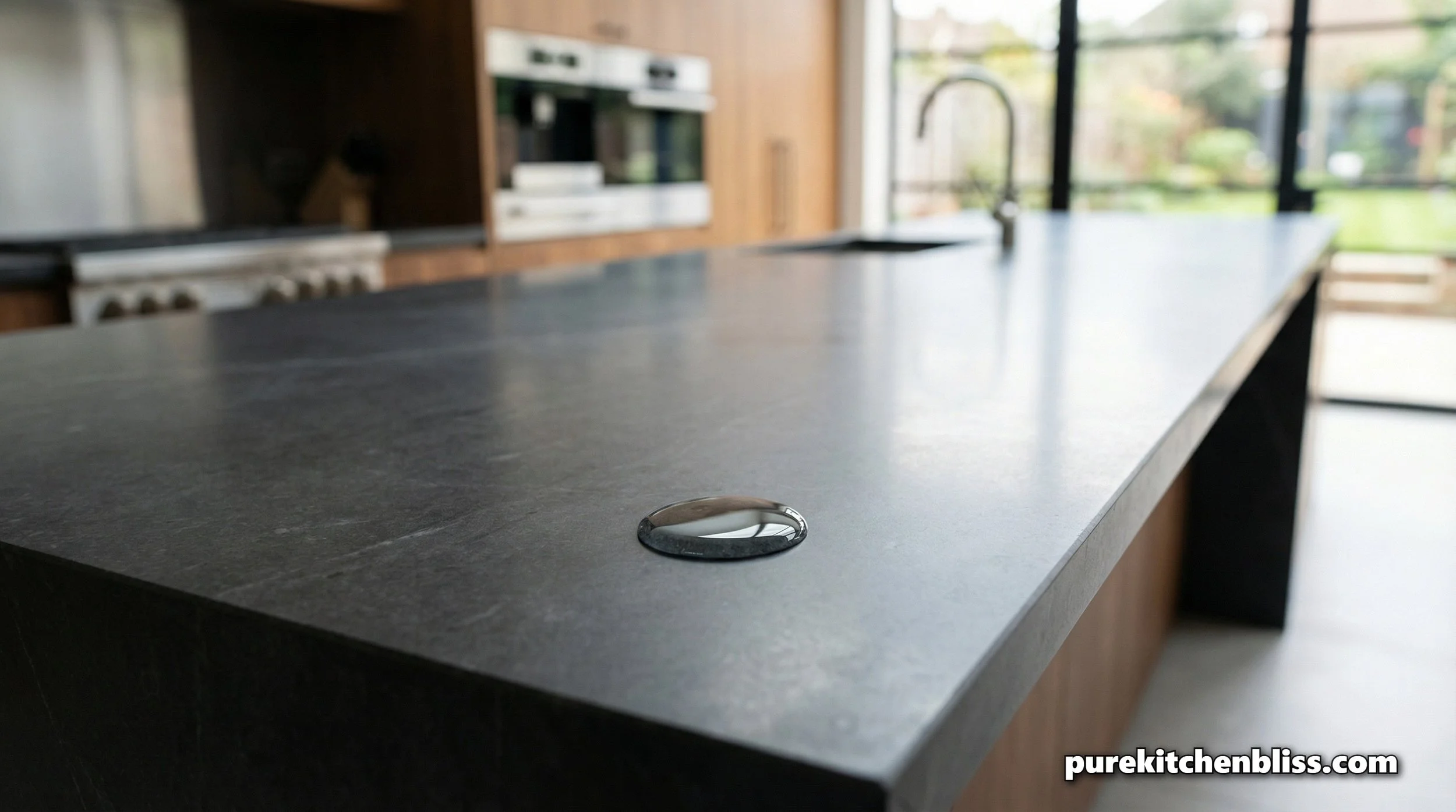
The "Acid" Alert: If you have natural stone like marble, limestone, or granite, you are on a clock. Acidic liquids like lemon juice, tomato sauce, and coffee will "etch" the calcium carbonate in the stone almost instantly. This isn't a stain; it’s a chemical burn on the stone's surface.
The Protocol: You don't need a full spray-down here. A simple, damp microfiber cloth is enough to remove the reactive substance before it can bond with the material or the sealer.
BUILDER TIP: BIOLOGICAL AIR FILTRATION
While you’re wiping down the surfaces, don't forget that the air above your counters matters just as much. Integrating "biological filters" can help capture the airborne particles that eventually settle as dust on your clean surfaces.
Read More: 7 Unkillable Plants That Thrive in Your Busy Kitchen
2. The Evening Sanitization (Daily)
Frequency: Every night after the final meal.
The Goal: Removing the daily bio-load and psychological "Reset."
This is the non-negotiable step for a healthy home. Over the course of 12+ hours, your counters accumulate a "bio-film" of skin oils, food particles, and household dust.
The Sanitization Strategy: Use a non-toxic, all-purpose cleaner. Avoid "nuclear" disinfectants containing bleach or ammonia, which can off-gas and irritate the respiratory systems of children and pets.
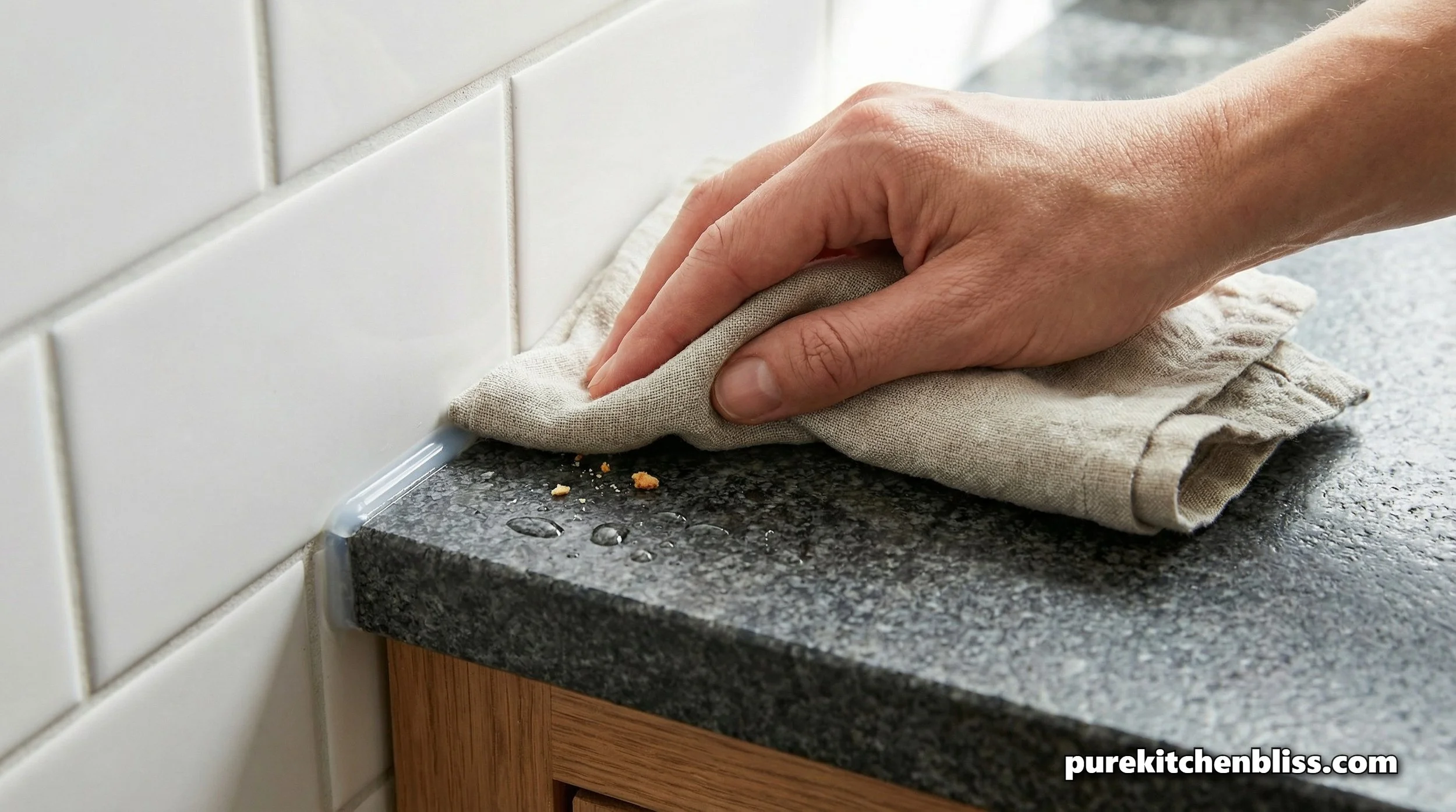
The "Wet Zone" Protocol: As a carpenter, I’ve seen thousands of dollars in cabinetry destroyed by a simple oversight: standing water. When you do your evening wipe, ensure you dry the area around the sink and the seams where the counter meets the backsplash. If water seeps behind the counter, it can cause the "bones" of your cabinets (the particle board or plywood) to swell and rot.
3. The Sunday Night Countertop Reset (Weekly)
Frequency: Once a week.
The Goal: Deep degreasing and reclaiming your horizontal lines.
Once a week, you need to go beyond the "surface wipe." This is when we address the aerosolized grease. Every time you sauté or fry, microscopic droplets of oil enter the air and eventually settle on your counters, making them feel "tacky" or sticky.
The Appliance Shift: You cannot properly clean a counter if you are wiping around the toaster and the espresso machine. Move everything.
The Deep Clean Solution: Use a warm water and Castile soap mixture. This is an emulsifier that breaks down the oil without damaging the finish of the stone or wood.
MAINTENANCE RITUAL: THE INFRASTRUCTURE RESET
A clean countertop is useless if the sink it serves is backed up with organic debris. Use your weekly reset to clear the kitchen's "circulatory system" using natural chemistry.
Read More: How to Unclog a Drain With Baking Soda and Vinegar
4. The Structural Seal Check (Quarterly)
Frequency: Every 3 to 4 months.
The Goal: Protecting the material "bones" of the home.
Cleaning only removes what is on the surface. Maintenance protects the surface itself. If you have natural stone or butcher block, the sealer is your only defense against permanent damage.
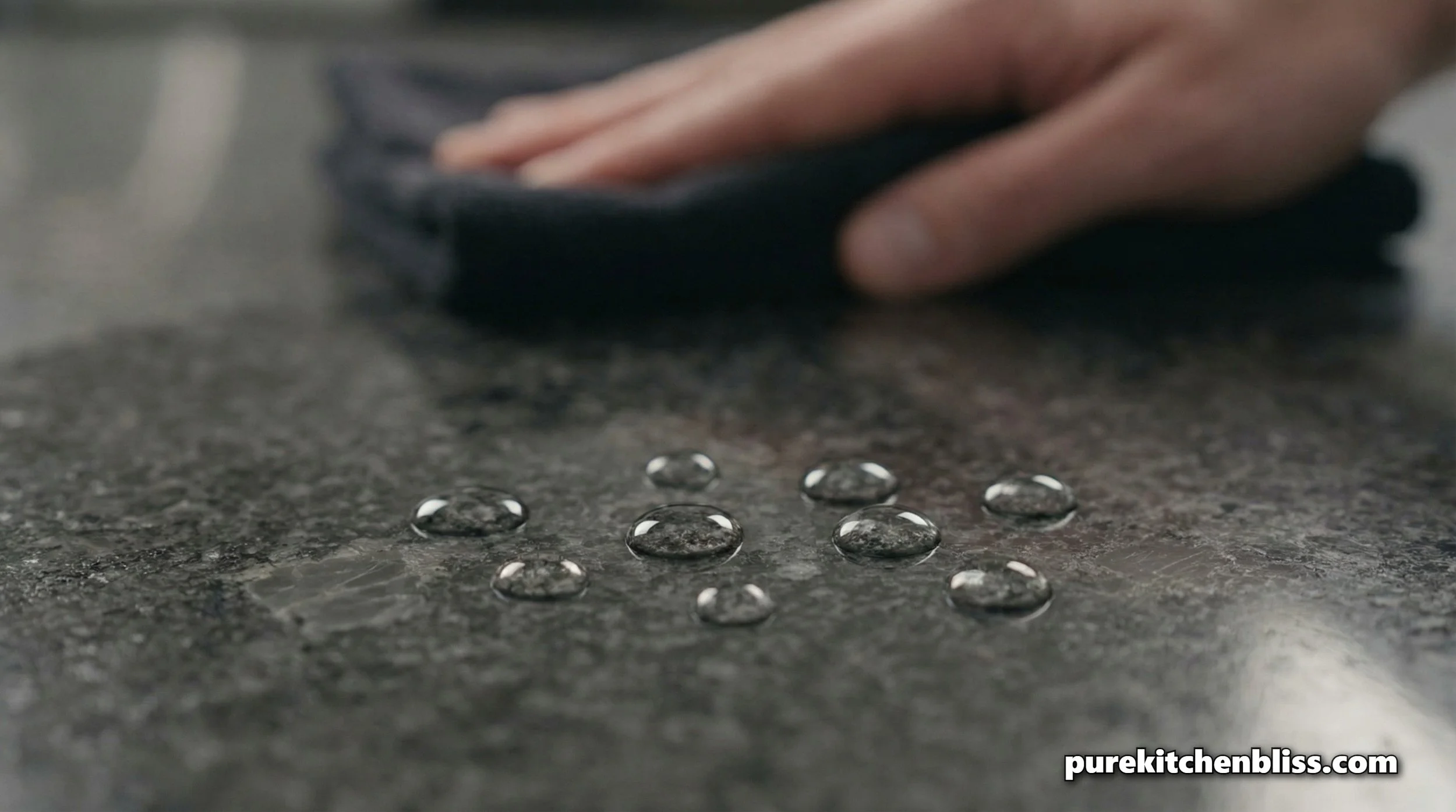
The "Water Bead" Test: Pour a tablespoon of H₂O on various parts of your counter (especially the high-use areas). Wait 10 minutes. If the water beads up, your sealer is intact. If it soaks in and leaves a dark spot, the stone is "thirsty."
The Action: This is when you apply a fresh coat of food-grade sealer or mineral oil. It is the ultimate "Builder-Curator" move to ensure your kitchen ages gracefully rather than degrading.
Conclusion: A Rhythm of Bliss
Cleaning your countertops isn't about achieving a "showroom" look; it's about respecting the materials of your home and the health of the people who live in it. By following this tiered frequency, daily wipes, evening resets, and quarterly structural checks, you create a kitchen that isn't just clean, but truly Pure.
When the counters are clear and the stone is protected, the "beautiful chaos" of family life feels manageable. You’ve staged the site for tomorrow’s success.