How to Unclog a Kitchen Drain With Baking Soda and Vinegar
Originally published Feb 3, 2026 · Updated Aug 10, 2026
Transparency Note: We independently select these products based on research and user reviews. If you buy something through our links, we may earn a commission.
A standing pool of greywater in the sink sends most people straight for a bottle of caustic drain cleaner, a mix of sodium hydroxide and bleach that dissolves a clog fast. As a carpenter, I've seen the cost of that shortcut plenty of times, that same chemical mix corrodes older pipe joints, degrades the rubber seals in a garbage disposal, and, if you're on a septic system, kills off the bacteria the whole system depends on to function.
Baking soda and vinegar is a real alternative, not an internet myth, but it only works reliably if you understand what's actually happening chemically, check your pipe material before you start, and know the difference between a clog this method can clear and one that genuinely needs a different tool.
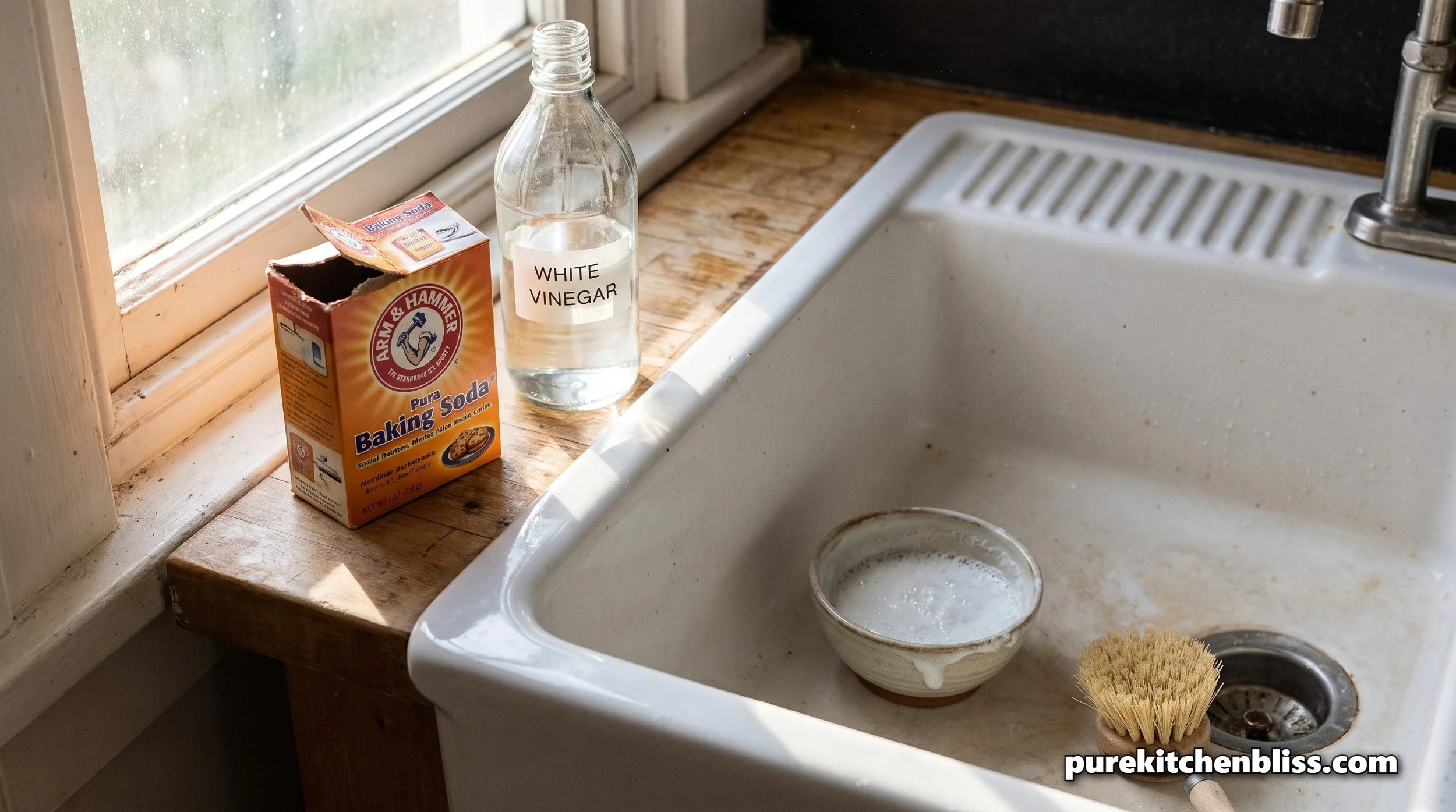
What's actually happening when it fizzes
To my four daughters, mixing baking soda and vinegar looks like a science fair volcano. To a carpenter, it's a mechanical process doing three separate jobs at once. When the alkaline baking soda, sodium bicarbonate, meets the acidic vinegar, acetic acid, the reaction produces a pressurized release of carbon dioxide gas. That expanding gas physically pushes against whatever's blocking the pipe, while the undissolved baking soda still sitting in the water acts as a mild abrasive against the interior pipe walls as it moves. At the same time, the reaction helps emulsify the fat, oil, and grease buildup that acts as the glue holding most kitchen clogs together in the first place.
None of this is dramatic the way a chemical drain cleaner is. It's a slower, gentler process, which is exactly why it works on the buildup that causes most routine slow drains and why it isn't going to move something solid, more on that later.
Check your pipe material before you start
Modern PVC and PEX plumbing handles this reaction without any issue, the chemistry doesn't interact with the pipe material itself. The one caveat is water temperature rather than the reaction, older PVC joints can soften under genuinely boiling water, so I use very hot tap water rather than water straight off a rolling boil if I know the pipes underneath are older PVC. Galvanized steel and copper pipes are more durable overall but are also more prone to mineral scaling inside the pipe over years of use, and the vinegar in this process actually helps by dissolving some of that scale as it works, a side benefit beyond just clearing the immediate clog.
If you genuinely don't know what's under your sink, a quick look at the P-trap, the U-shaped section of pipe, usually tells you. PVC is white or grey plastic, PEX is a flexible colored tubing, and older galvanized pipe has a distinct dull metallic look with visible threading at the joints.
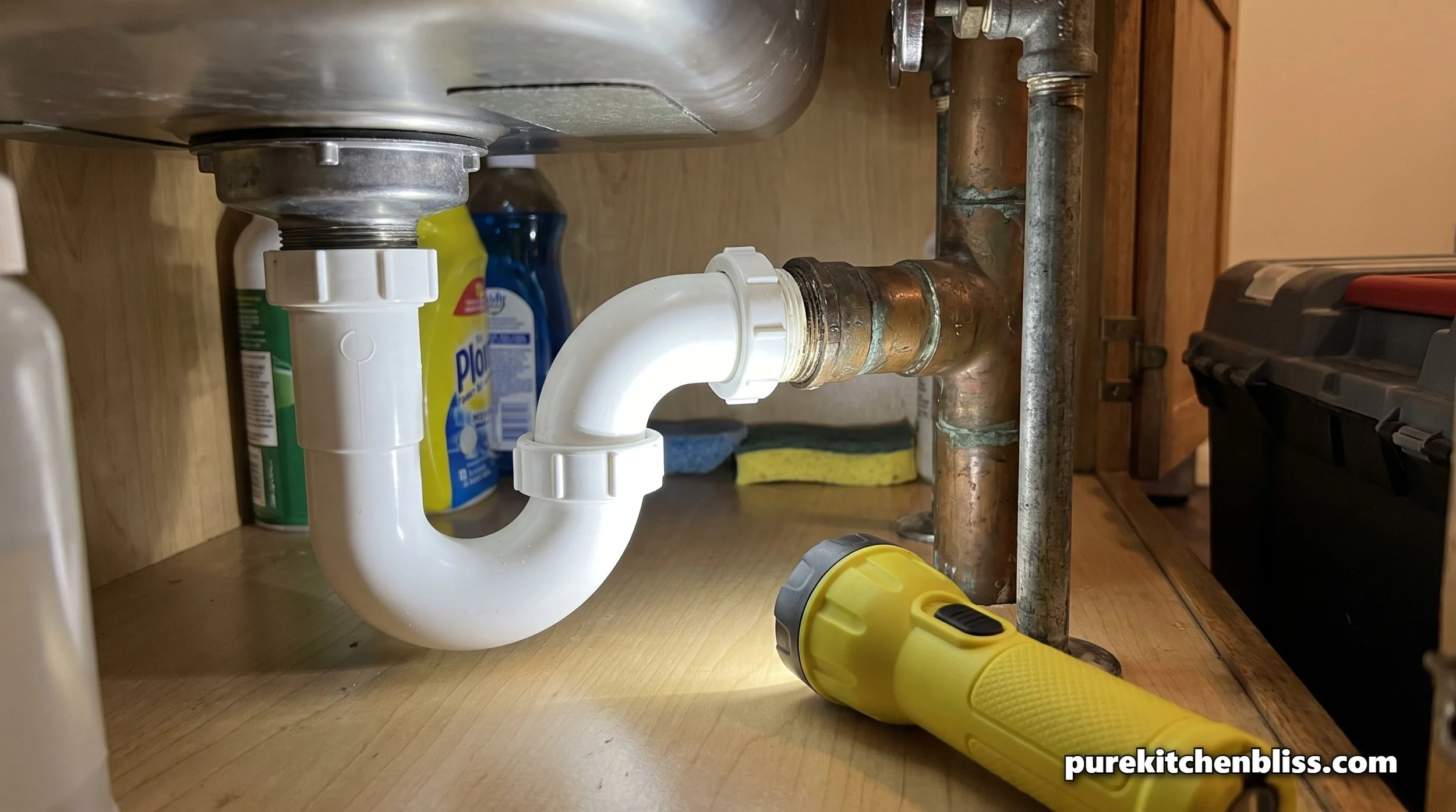
The actual process
Start with a kettle of genuinely hot water poured directly down the drain, this melts the top layer of congealed grease and warms the pipe enough that the coming reaction works faster. Follow that with a full cup of baking soda poured straight into the drain, using a funnel if your sink strainer makes it hard to get the powder past the opening and down into the P-trap where it actually needs to sit. Give it five to ten minutes before doing anything else, that pause lets the powder settle directly onto the grime coating the pipe walls rather than just passing through.
Next, pour a full cup of white distilled vinegar down the drain and immediately cover the opening with a sink stopper or a folded, heavy cloth. That cover matters more than it looks like it should, without it, the CO₂ gas escapes straight back up and out of the drain instead of building pressure downward against the clog, which meaningfully reduces how effective the whole process is. Let the covered mixture sit and work for a full 30 minutes, then finish with a second kettle of hot water flushed straight down. A clear pipe usually announces itself with an audible gulp as the water level drops and the pressure releases.
When baking soda genuinely isn't going to work
I want to be straight about the limits here, because a lot of natural-cleaning content oversells this method. Baking soda and vinegar dissolves grease and mineral buildup. It does not dissolve a hairball, a wad of food debris, or, in a house with kids, an object that's found its way down the drain that has no business being there. If the drain is still running slow after two attempts spaced a day apart, you're very likely dealing with a physical obstruction rather than a chemical one, and no amount of additional baking soda is going to change that outcome.
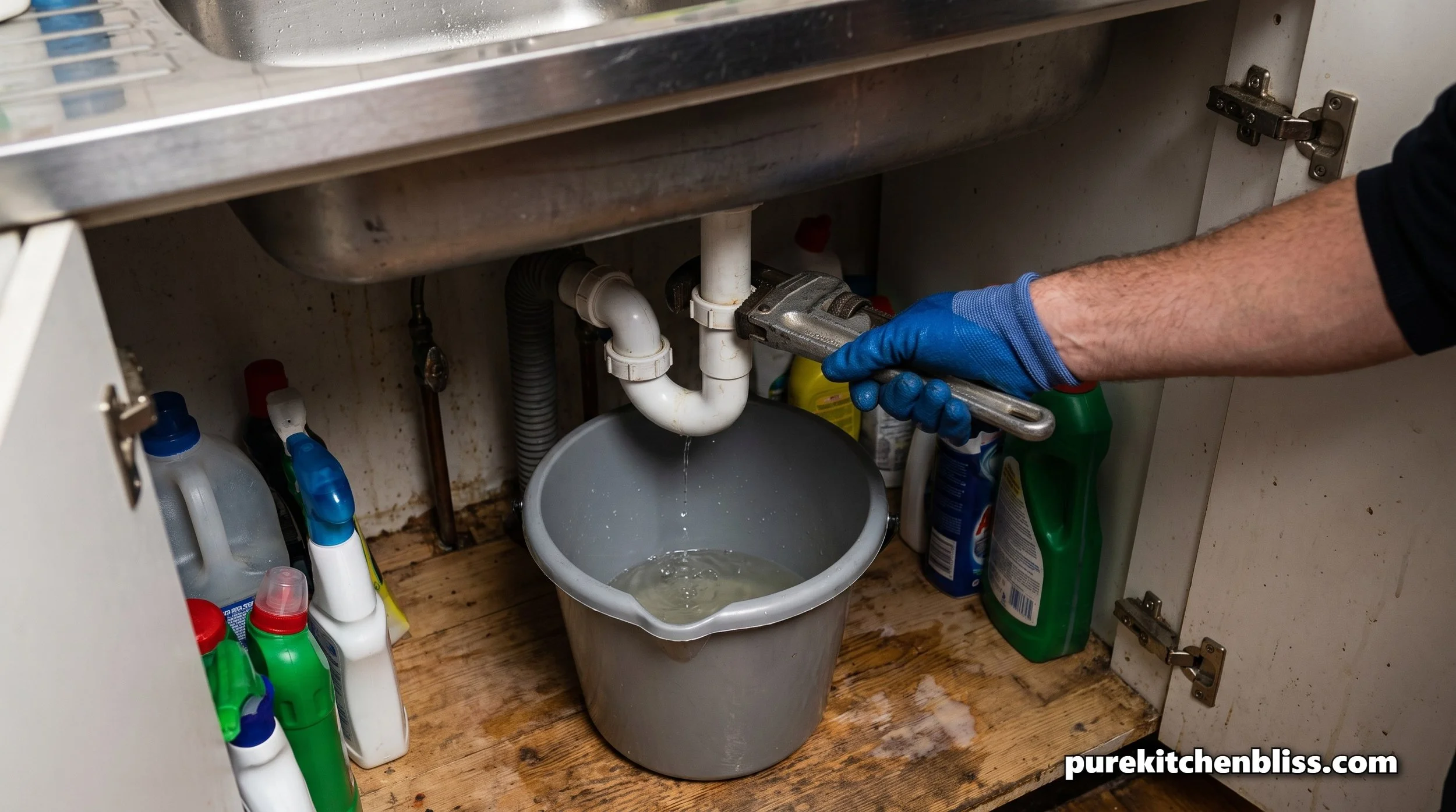
At that point, a cheap plastic barbed tool, sold under names like Zip-It, can be fed down past the strainer to hook and pull out hair and debris without any chemicals or tools involved. If that doesn't clear it, the more reliable fix is removing the P-trap itself. It's genuinely a beginner-friendly job, place a bucket underneath to catch the standing water, loosen the two slip nuts holding the trap in place by hand or with pliers, and once it's off, you can see and clear the obstruction directly rather than guessing at what's stuck where.
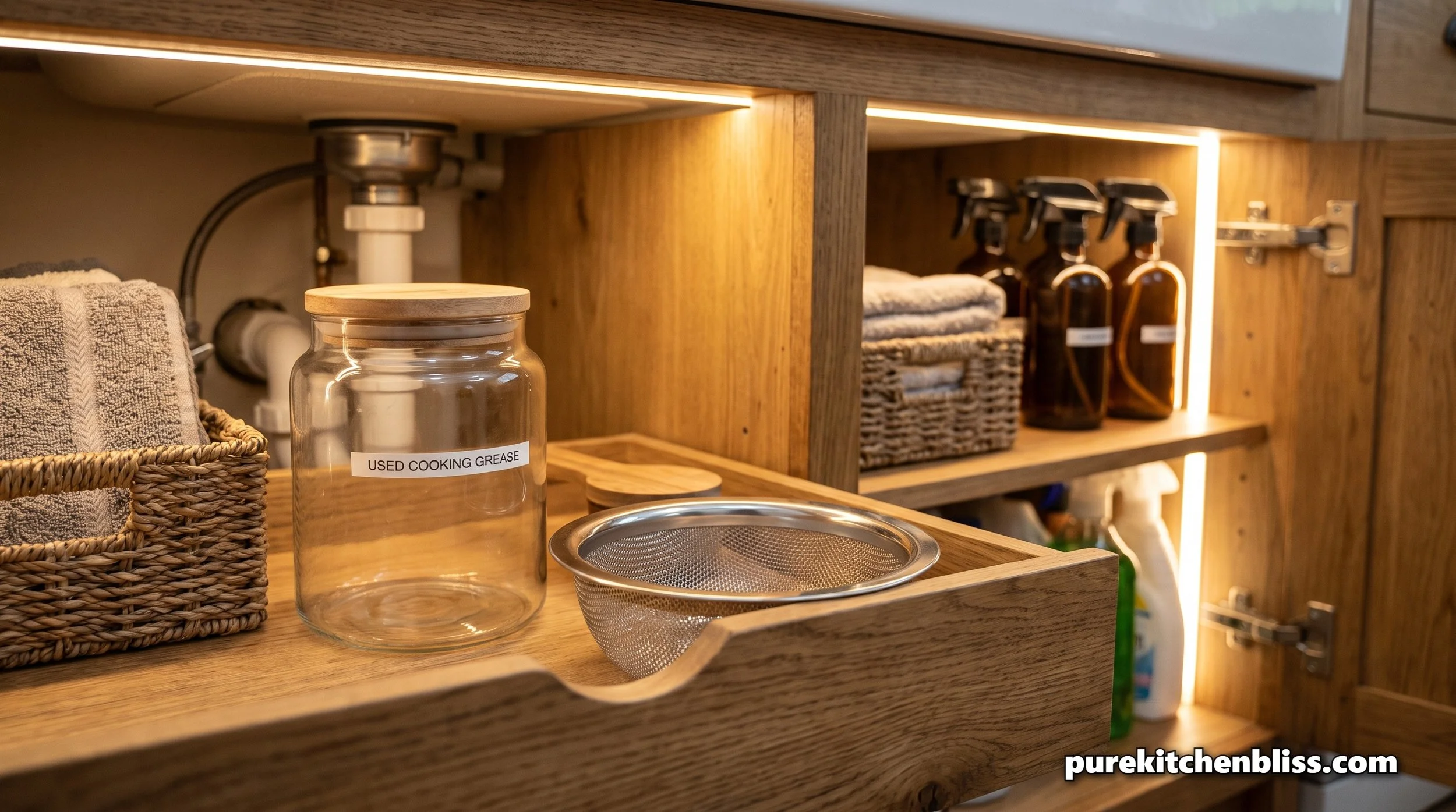
Preventing the clog before it starts
The best version of this whole process is the one you never need to run because a clog never formed. Grease is the single biggest contributor to kitchen drain clogs, and it should never go down the sink in liquid form, even briefly, since it re-solidifies inside the pipe as it cools and builds up in layers over time. Keeping a dedicated glass jar under the sink for cooking fat and oil, then wiping visibly greasy pans with a paper towel before washing them, keeps the bulk of that grease out of the pipe entirely rather than relying on a monthly flush to undo months of buildup.
A stainless mesh sink strainer catches food particles before they reach the drain at all, which matters more than people expect, since even small amounts of rice, coffee grounds, or vegetable peels accumulate into real blockages over weeks of daily use. Running this full baking soda and vinegar process once a month as routine maintenance, rather than waiting for a slow drain to force the issue, keeps mineral scale and grease from ever building up to the point where a physical tool becomes necessary.
If your home also deals with hard water scaling on fixtures more broadly, that's the same underlying mineral buildup showing up in a different spot, and our sister site's guide to hard water filtration covers the whole-house side of that problem beyond just the kitchen drain.
What I actually keep under the sink
A Zip-It style drain tool costs almost nothing and handles the hair and debris clogs that baking soda alone won't touch, worth keeping on hand before you ever need it. A stainless mesh sink strainer is the single easiest prevention step, catching debris before it becomes a problem in the first place. For grease storage, a simple glass grease jar with a lid keeps cooking fat contained and easy to dispose of in the trash rather than the sink. And if you do end up removing a P-trap, an adjustable pipe wrench makes loosening stubborn slip nuts far easier than trying to manage it by hand alone.
Keeping the rest of your kitchen maintenance in the same spirit
If you're already moving away from harsh chemical cleaners in one part of the kitchen, it's worth being consistent elsewhere too. We cover a similar material-by-material approach for cleaning tools in our Magic Eraser pros and cons guide, and if your dishwasher's drain has started smelling instead of your sink, our dishwasher deep clean guide walks through that specific fix. If you've ever accidentally sent cooking oil down the sink before reading this, our guide on handling a cooking oil sink spill covers the emergency version of the same underlying grease problem.
| Symptom | Likely cause | Right fix |
|---|---|---|
| Slow drain, no complete blockage | Grease and mineral buildup on pipe walls | Baking soda and vinegar flush |
| Still slow after two flushes | Hair or food debris caught near the strainer | Zip-It style barbed tool |
| Fully blocked, no water movement | Solid object or dense buildup in the P-trap | Remove and manually clear the P-trap |
| Recurring slow drains monthly | No prevention routine in place | Mesh strainer, grease jar, monthly flush |
What this actually comes down to
Baking soda and vinegar genuinely clears the grease and mineral buildup responsible for most slow kitchen drains, and it does it without corroding pipe seals or killing off septic bacteria the way commercial drain cleaner does. It has real limits too, it won't move a physical obstruction, and pretending otherwise just delays the actual fix. Know which situation you're dealing with, keep the prevention habits going so you need this less often, and reach for the Zip-It tool or the P-trap itself when the clog is something baking soda was never going to solve.