Magic Erasers in the Kitchen: What Actually Works and What They Ruin
Originally published Feb 2, 2026 · Updated Aug 10, 2026
Transparency Note: We independently select these products based on research and user reviews. If you buy something through our links, we may earn a commission.
The Magic Eraser gets treated like a miracle in most cleaning content, a white foam block that vanishes grease, scuff marks, and mystery stains with nothing but water. As a builder who's spent 20 years installing high-end cabinetry and stone countertops, I see it differently. To a homeowner, it's a sponge. To a professional, it's closer to 3,000 grit sandpaper, and treating it like a gentle everyday cleaner is exactly how people end up with permanent damage on their most expensive kitchen surfaces.
It's a genuinely useful tool when you understand what it actually is and where its abrasive nature works in your favor instead of against you. Here's the real material science behind it, the specific surfaces where it's safe, the ones where it causes damage that can't be undone, and what I actually reach for on a day-to-day basis instead.
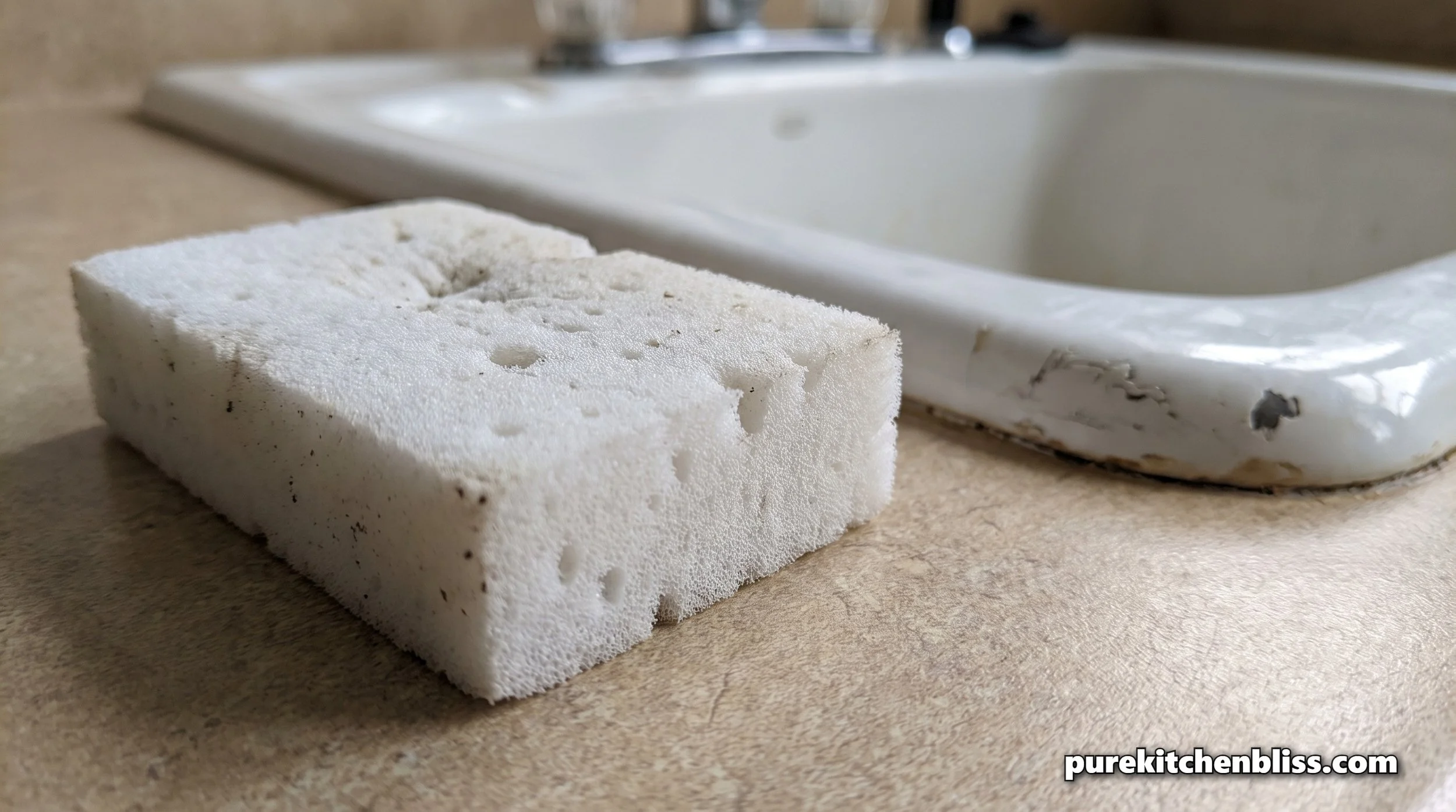
It's not a sponge, it's an abrasive
Melamine foam is made from a rigid polymer, poly(melamine-formaldehyde), formed into a lightweight, air-filled structure with countless microscopic strands. Those strands are hard, closer to glass than to a typical kitchen sponge, and when you rub the block against a surface, you're not dissolving dirt chemically the way soap does, you're physically sanding it off, one microscopic pass at a time. That's the entire mechanism behind why it removes stains nothing else touches, it's genuinely removing a thin layer of whatever surface it's rubbing against, dirt included.
This matters more than most cleaning content admits. A tool that works by micro-abrading a surface is a tool that can damage a surface just as easily as it cleans one, and the difference between the two outcomes comes down entirely to what material you're using it on.
The microplastic problem is real, and it's worth knowing about
As the block wears down with use, it isn't dissolving, it's shedding. Research published through the American Chemical Society found that melamine sponges release roughly 6.5 million microplastic fibers per gram of foam worn away, and estimated that global sponge use could be releasing over a trillion fibers into wastewater systems every month. The same research found that denser sponges shed fewer fibers than looser, cheaper ones, so if you're going to keep one in rotation, a denser block is a genuinely better choice on that front alone.
In a kitchen specifically, where food prep happens constantly and anything shed near a sink or counter has a direct path down the drain, this is worth factoring into how often you reach for one, not as a reason to ban it outright, but as a real argument for treating it as an occasional tool rather than a daily habit.
Where melamine actually earns its place in a kitchen
There are specific jobs where the abrasive quality is exactly what you need, and I keep one in the house for these situations specifically. Fireclay and cast iron sinks, the classic white farmhouse style, get grey metal transfer marks from pots and pans that build up over time. Because fireclay is fired at roughly 2000°F, it's genuinely harder than the melamine foam itself, so the eraser lifts the metal marks without scratching the glaze underneath, which is a rare case where the abrasive is softer than what it's cleaning rather than the other way around.
Textured floor tile is another good match. Grease settles into the valleys of textured ceramic or porcelain in a way a mop just glides over, and the microfilaments of a melamine block reach into that texture and lift grime a flat cloth can't touch. Painted baseboards work too, but with a real caveat, a light pass erases scuff marks on flat or matte paint fine, but if the paint carries any sheen, satin or semi-gloss especially, scrubbing too hard leaves a visibly dull spot where the sheen used to be. Test a hidden section first if you're not sure what finish you're dealing with.
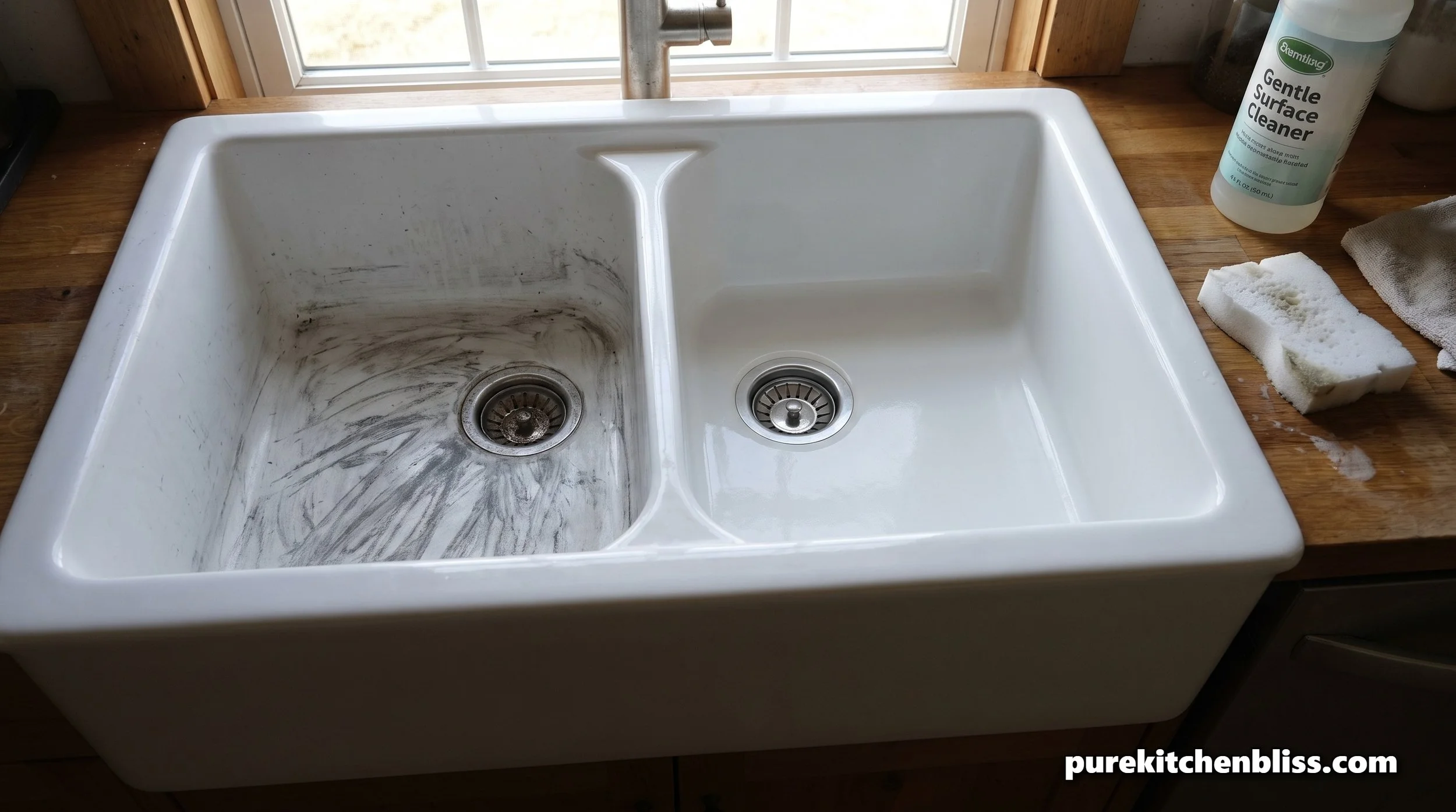
Where it causes damage that can't be undone
High-gloss cabinetry, whether lacquered wood or modern acrylic finishes, is the surface I'd never let a melamine block touch. The gloss depends on an intact, unbroken finish, and melamine's abrasive action etches that finish permanently on first contact, leaving a dull patch that professional refinishing is the only real fix for. There's no light-touch version of this one, even a gentle pass leaves a mark on true high-gloss surfaces.
Natural stone, marble and granite specifically, is the other hard no. These surfaces rely on a chemical sealer to stay stain-resistant, and the same abrasive action that lifts a stain also strips that sealer off the surface. Once the sealer's gone, the stone is exposed and will absorb red wine, lemon juice, or oil almost immediately, and that staining is often permanent since the porous stone underneath is now doing what it does naturally without any protective layer. Stainless steel appliances round out the list, most modern fridges and ranges carry a clear coat specifically to resist fingerprints, and sanding through that coat with melamine leaves visible swirl marks that catch light from every angle in a way that's genuinely hard to unsee once you notice it.
What I actually use for daily cleaning instead
For the vast majority of everyday kitchen messes, melamine isn't the right tool at all, and I keep it reserved for the specific jobs above rather than reaching for it as a general-purpose cleaner. A warm water and citrus-based castile soap mixture handles most grease and grime without any abrasion. For actual scrubbing power without the sanding risk, a natural fiber brush, agave or palmyra fiber specifically, is tough enough to move dirt but flexible enough that it won't dull a finish the way melamine will. For stainless steel specifically, a small amount of plain olive oil on a microfiber cloth restores shine without touching the protective clear coat at all.
If you're weighing the same trade-offs in a bathroom, where tile, grout, and fixtures carry a lot of the same risk-reward calculation, our sister site's guide to Magic Erasers in the bathroom covers that side of the house in the same material-by-material detail.
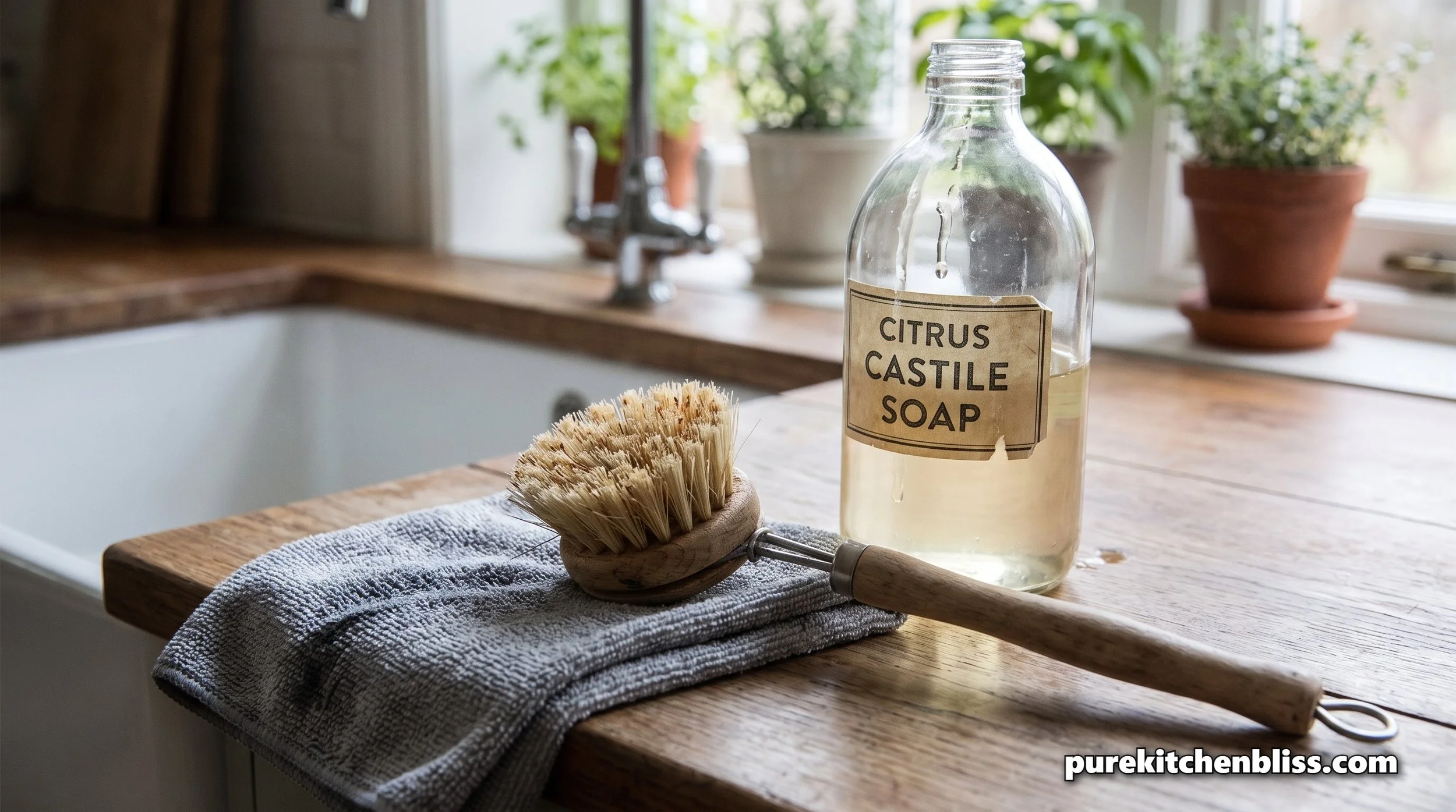
What I actually keep on hand
A natural palmyra fiber scrub brush handles the bulk of daily scrubbing without any risk to finishes, and it lasts far longer than a melamine block before needing replacement. A citrus-based castile soap cuts grease effectively as a base cleaner for counters and dishes. For stainless steel specifically, I keep a small bottle of plain organic olive oil and a dedicated microfiber cloth just for that job, separate from whatever cloth handles general counter wiping, since any lingering grease residue defeats the purpose of the polish.
A restoration tool, not a daily one
The honest way to think about a melamine block is as a restoration tool, not a cleaner. In my own kit, it sits next to fine-grit sandpaper and wood chisels, not next to the dish soap, something I reach for on the rare occasion I need to erase a specific, stubborn mark, not something I use for a routine wipe-down. For most of what actually needs cleaning day to day, a gentler tool and a little more elbow grease protects finishes that are genuinely expensive to replace or repair once they're damaged.
If you're setting up a broader cleaning routine and want to know which cutting boards and surfaces hold up best to regular scrubbing in the first place, our wood versus plastic cutting board guide covers material durability from the same angle. And for appliance-specific cleaning that doesn't risk the clear coat issue discussed above, our dishwasher deep clean guide is a useful companion piece.
| Surface | Verdict | Why |
|---|---|---|
| Fireclay / cast iron sink (metal marks) | Safe | Fireclay is harder than melamine (fired at ~2000°F) |
| Textured floor tile | Safe | Reaches grease trapped in surface texture |
| Flat / matte painted baseboards | Safe, light touch | Sheen finishes will dull under pressure |
| High-gloss cabinetry (lacquer / acrylic) | Never | Etches the finish permanently on contact |
| Natural stone (marble / granite) | Never | Strips the protective sealer, causes permanent staining |
| Stainless steel appliances | Never | Sands through the clear coat, leaves swirl marks |
What this actually comes down to
Melamine foam isn't a bad product, it's a misunderstood one. It's genuinely the right tool for metal marks on a fireclay sink, grease trapped in textured tile, and stubborn scuffs on flat-finish paint. It's the wrong tool, permanently, for high-gloss cabinetry, natural stone, and stainless steel with a clear coat. Know which category a surface falls into before the eraser ever touches it, and keep a gentler routine for everything else.