Small Kitchen Organization: Beyond the Plastic Bin
Small Kitchen Organization: Beyond the Plastic Bin
Most organization articles tell you to buy a label maker and call it a day. But in a small kitchen, especially one managing the "beautiful chaos" of a family of six, organization isn't a hobby. It is Infrastructure. When space is at a premium, every square inch must be "staged" for efficiency. If you have to move three things to get to one pan, your kitchen’s momentum is broken. As a Red Seal Carpenter, I look at a kitchen and see vertical real estate and weight loads. As a dad, I see friction points. To create a Sustainable Sanctuary, we need to organize for flow, material protection, and vertical density.
Here are 10 hacks to reclaim your kitchen’s "bones" and make even the smallest space feel expansive.
1. The Vertical Command: Magnetic Knife Rails
The traditional knife block is a "Countertop Colonizer." It claims 6 to 8 inches of valuable horizontal real estate, and, from a builder's perspective, it’s a notorious trap for dust, grease, and ambient kitchen moisture.
The Upgrade: Install a high-strength magnetic rail directly onto the backsplash. This moves your most-used tools onto the "Vertical Plane," keeping your prep zone clear and open.
The Family Win: In a house with four daughters, safety is paramount. A magnetic rail keeps sharp blades high and out of reach of curious toddlers who can easily grab a handle protruding from a counter-level block.
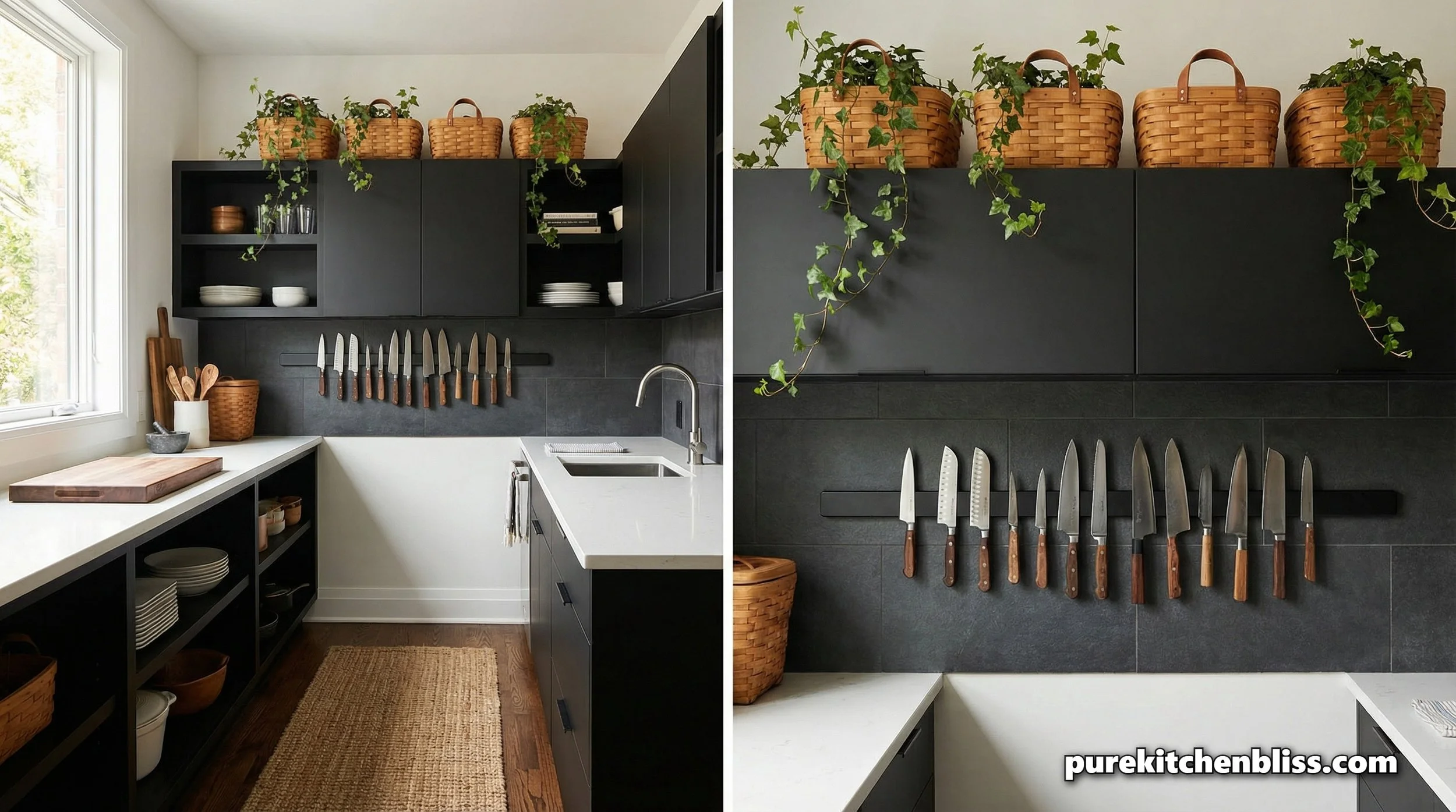
2. The "Living Crown Molding": High-Altitude Storage
The space between your upper cabinets and the ceiling is often a dead zone for dust. We call this "High-Altitude Infrastructure," and it's the most underutilized real estate in the room.
The Hack: Use uniform, breathable baskets to store the "Seasonals"—the turkey roaster, holiday platters, or oversized stockpots that only come out a few times a year.
The Curator’s Touch: Place a Golden Pothos Care up there. The trailing vines soften the hard lines of the cabinetry and turn a utility zone into a design feature that naturally purifies your kitchen air.
3. The "Sink Sump" Strategy: Under-Sink Elevators
The area under the sink is a high-risk zone for moisture and chemical buildup. Most people pile cleaning supplies directly on the cabinet floor, which hides problems until they become expensive.
The Builder’s Rule: Never let anything sit directly on the cabinet base. If a slow leak occurs, supplies sitting on the wood will trap moisture against the finish, accelerating rot and mold.
The Hack: Use tiered, pull-out metal drawers. They elevate your supplies, allow for airflow, and ensure you can see all your [Internal Link: Non-Toxic Cleaning Tools] at a glance.
MAINTENANCE CHECK: While you’re organizing under the sink, check the P-trap for slow leaks. A proactive 5-minute check prevents a $2,000 cabinet replacement.
4. Tension Rod Dividers for Sheet Pans
Storing baking sheets and cutting boards in a stack is a recipe for "clatter and chaos." It also leads to unnecessary wear on the surfaces of your gear.
The Hack: Install vertical tension rods inside a cabinet to create custom "slots." This allows you to pull out one board without a structural collapse of the entire pile. It protects the integrity of your by preventing them from grinding against each other.
5. The "Lazy Susan" for Corner Infrastructure
Corner cabinets are where kitchen momentum goes to die. They are the "Black Holes" of the home.
The Hack: If you can’t afford a full pull-out renovation, install a heavy-duty, stainless steel Lazy Susan. It brings "hidden" items to the front with one rotation. In a family of six, being able to find the salt or a specific spice in two seconds during a dinner rush is a massive win for the home's "flow."
Organization System Comparison: Plastic vs. Sustainable
| Organization Method | Infrastructure Benefit | Pure Living Impact | Builder's Note |
|---|---|---|---|
| Magnetic Rails | Vertical Density | Removes grease/dust traps. | Ensure you mount into a stud or use toggle bolts. |
| Under-Sink Tiers | Moisture Control | Prevents "invisible" mold growth. | Always check the P-trap when installing. |
| Glass Decanting | Space Optimization | Reduces PFAS & packaging toxins. | Glass adds weight; check shelf bracket capacity. |
| Toe-Kick Drawers | Hidden Real Estate | Utilizes the home's "dead space." | Best for flat, lightweight items (baking sheets). |
6. The Back-of-Door "Spice Protocol"
Spices take up an incredible amount of shelf real estate and are often buried three-deep in a dark cabinet.
The Hack: Use a slim, over-the-door rack on the pantry or a cabinet door. It utilizes the "dead space" behind the door and keeps your spices away from the heat of the stove.
The Pure Benefit: Heat and steam from the stovetop degrade the essential oils in spices. Keeping them on a door preserves their potency and prevents the "clumping" caused by kitchen humidity.
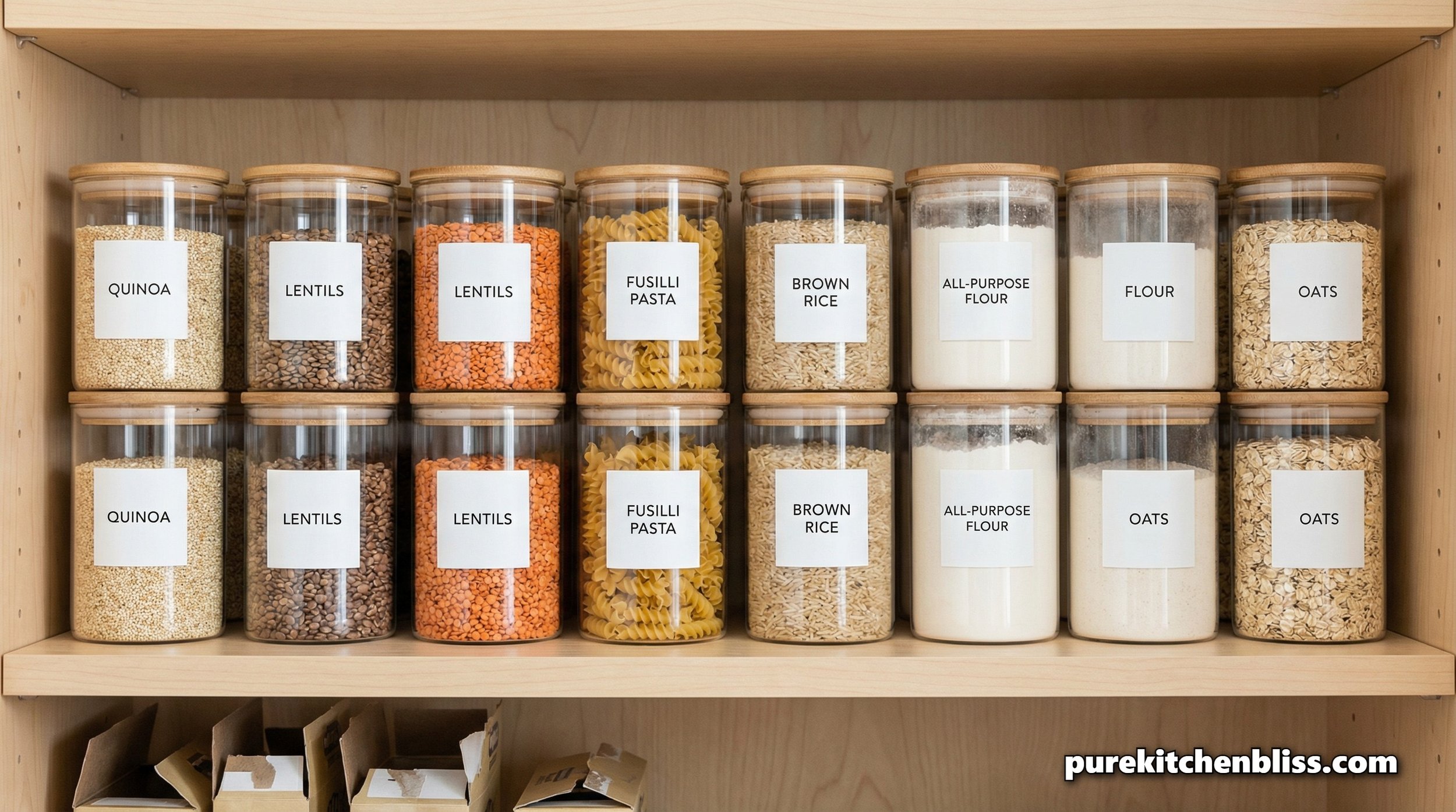
7. Decanting for Volume: The Clear-Bin Strategy
Boxed packaging is designed for marketing, not for your shelf. It is bulky, inefficient, and often contains plastic liners that can off-gas into your food.
The Hack: Decant dry goods into uniform, stackable glass containers. It reduces the physical footprint of your food by up to 30% and allows for an instant "visual check." This prevents "Double Buying" that clutters up a family pantry.
Internal Link: How to Clean Glass Jars Without Harsh Chemicals
8. The "Active Recovery" Rail
In a small kitchen, the dish drying rack is a major "Horizontal Colonizer."
The Hack: Install a wall-mounted drying rack above the sink. It utilizes vertical space and allows dishes to drip directly into the drain, keeping your Sunday Night Countertop Reset path clear. From a structural standpoint, this keeps standing water off your countertops, preserving the seal of your stone or wood.
9. Toe-Kick Drawers: The Ultimate Hidden Space
As a builder, I see the 4 inches under your bottom cabinets (the toe-kick) as wasted real estate.
The Pro Hack: If you're handy, you can install "toe-kick drawers." These are perfect for flat items like baking sheets, place mats, or even a hidden step-stool for the kids. It’s the ultimate "stealth" organization for a high-traffic family kitchen.
10. The "One-In, One-Out" Rule
Organization isn't a one-time event; it’s a maintenance ritual. This is how we maintain a "Pure" environment in a house with six people.
The Protocol: For every new gadget or appliance that enters the kitchen, one must leave. This prevents "Clutter Creep" and ensures your sanctuary remains a high-performance workspace rather than a storage unit for unused tech.
Conclusion: Organizing for Purity
A small kitchen doesn't have to feel cramped; it just has to be smarter. By focusing on vertical density and protecting your horizontal lines, you transform a tiny room into a high-performance sanctuary. When the infrastructure is organized, the "beautiful chaos" of family life becomes a blissful rhythm.