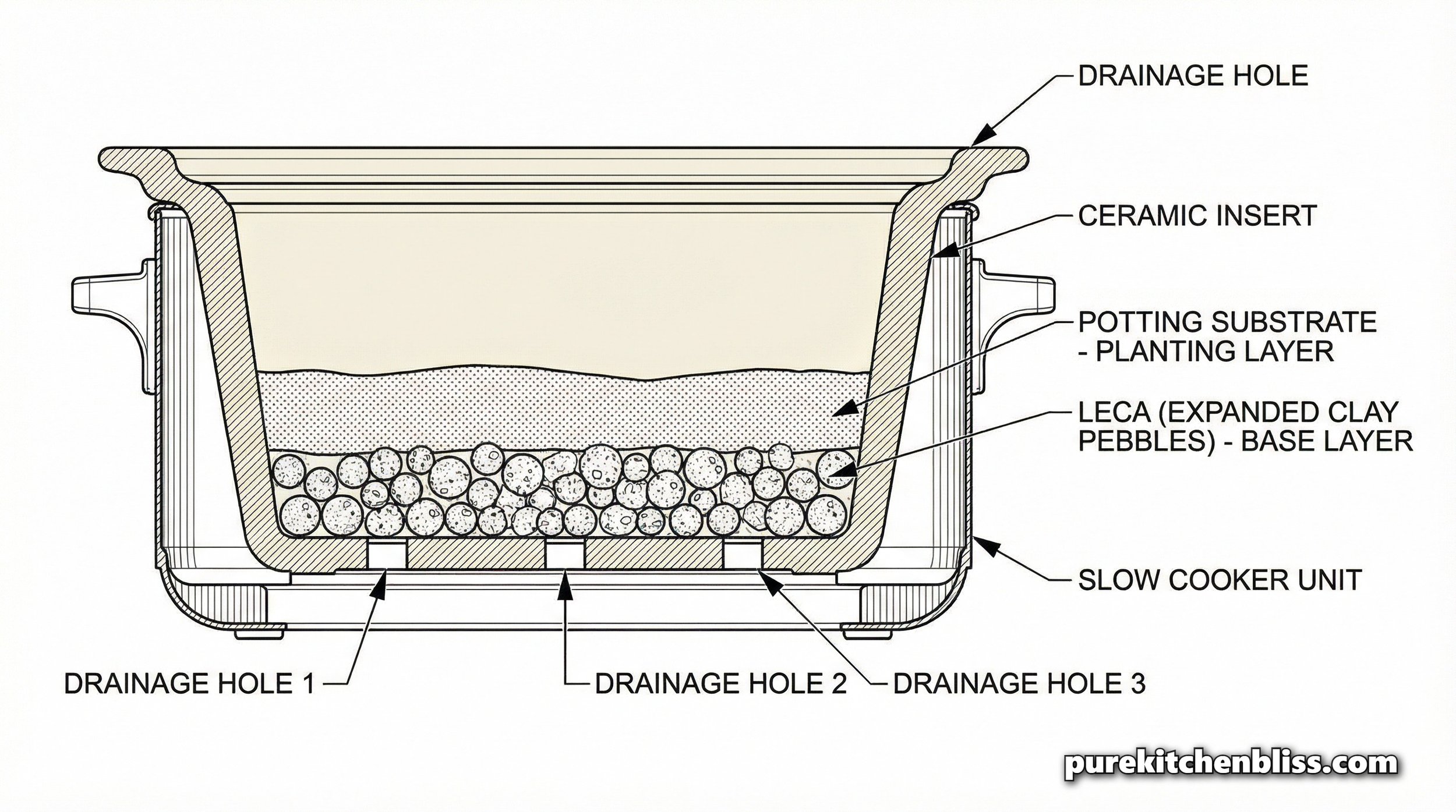
How to Turn an Old Slow Cooker into a Perfect Planter
Material efficiency is the hallmark of a functional kitchen. A ceramic slow cooker insert is often overlooked as a piece of equipment, but it is an ideal candidate for home infrastructure. It is heavy, non-reactive, and possesses excellent thermal mass, meaning it resists rapid temperature swings. These thermal properties are vital for stabilizing a plant’s root system, which is arguably the most sensitive part of any living organism in your kitchen.
Many standard upcycling guides suggest using these inserts as "cachepots”, hiding a plastic nursery pot inside. While this is simple, it creates a "dead zone" between the two vessels. This space acts as an incubator for trapped moisture, mold, and stagnant air, which can compromise the air quality of your sanctuary. Instead, this protocol builds a permanent extraction system directly into the vessel itself, turning it into a dedicated, high-performance home for your Unkillable Plants.
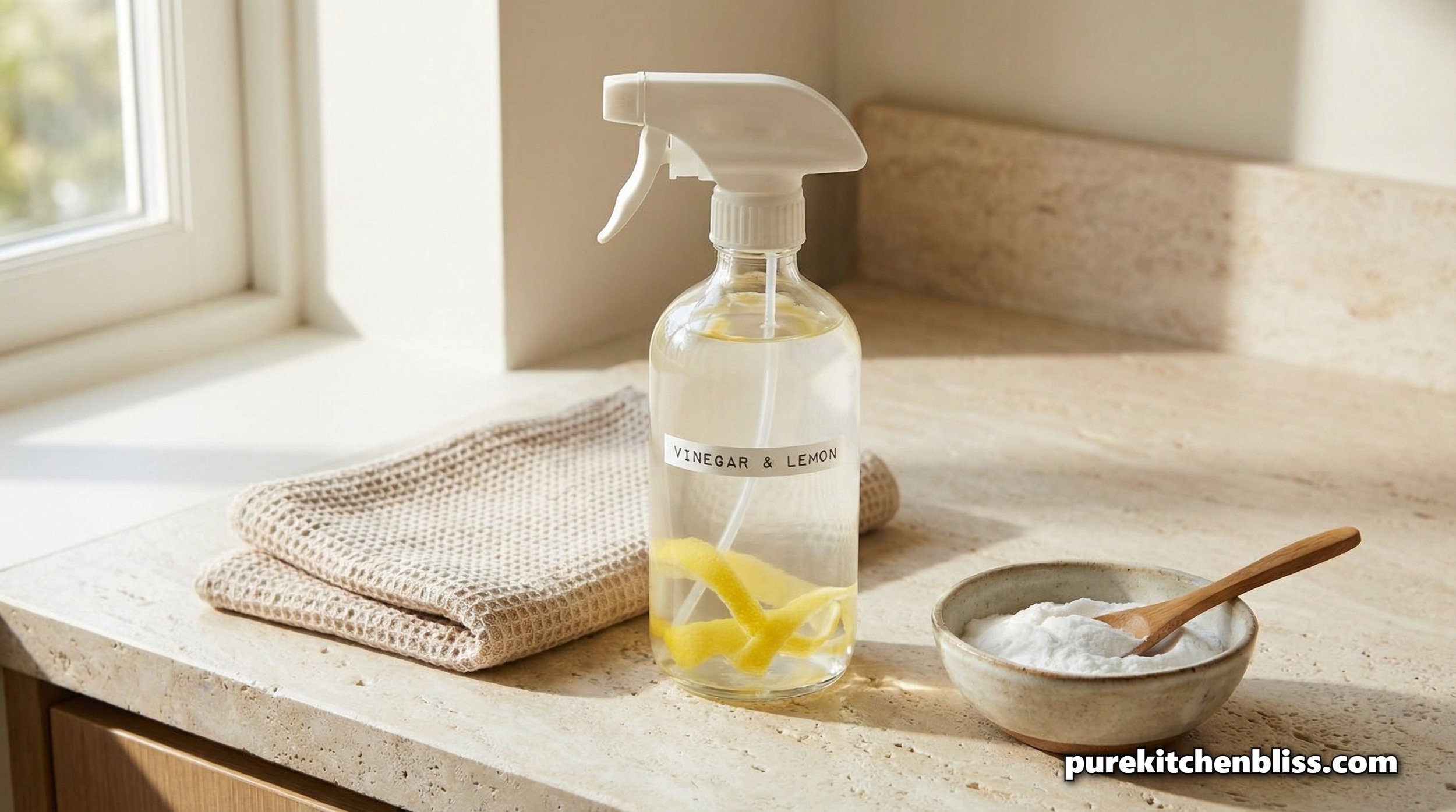
7 Brilliant Uses for Vinegar in Your Kitchen Sanctuary
In the arsenal of a Builder-Curator, distilled white vinegar is the "acidic workhorse." As a Red Seal Carpenter, I appreciate vinegar because it’s a low-pH solvent that breaks down mineral deposits and alkaline residues without compromising the structural integrity of your home's air quality. In a house with four daughters, we strictly avoid the harsh, synthetic fumes of commercial cleaners.
Vinegar is the ultimate tool for maintaining a sustainable sanctuary because it’s edible, biodegradable, and incredibly effective at a molecular level. It consists of roughly 5% acetic acid, which makes it a natural "chemical extraction" tool. It doesn't just mask odors; it physically dissolves the bonds of hard water minerals, grease, and even the stubborn "biofilm" we discussed in the Smelly Sink Guide.
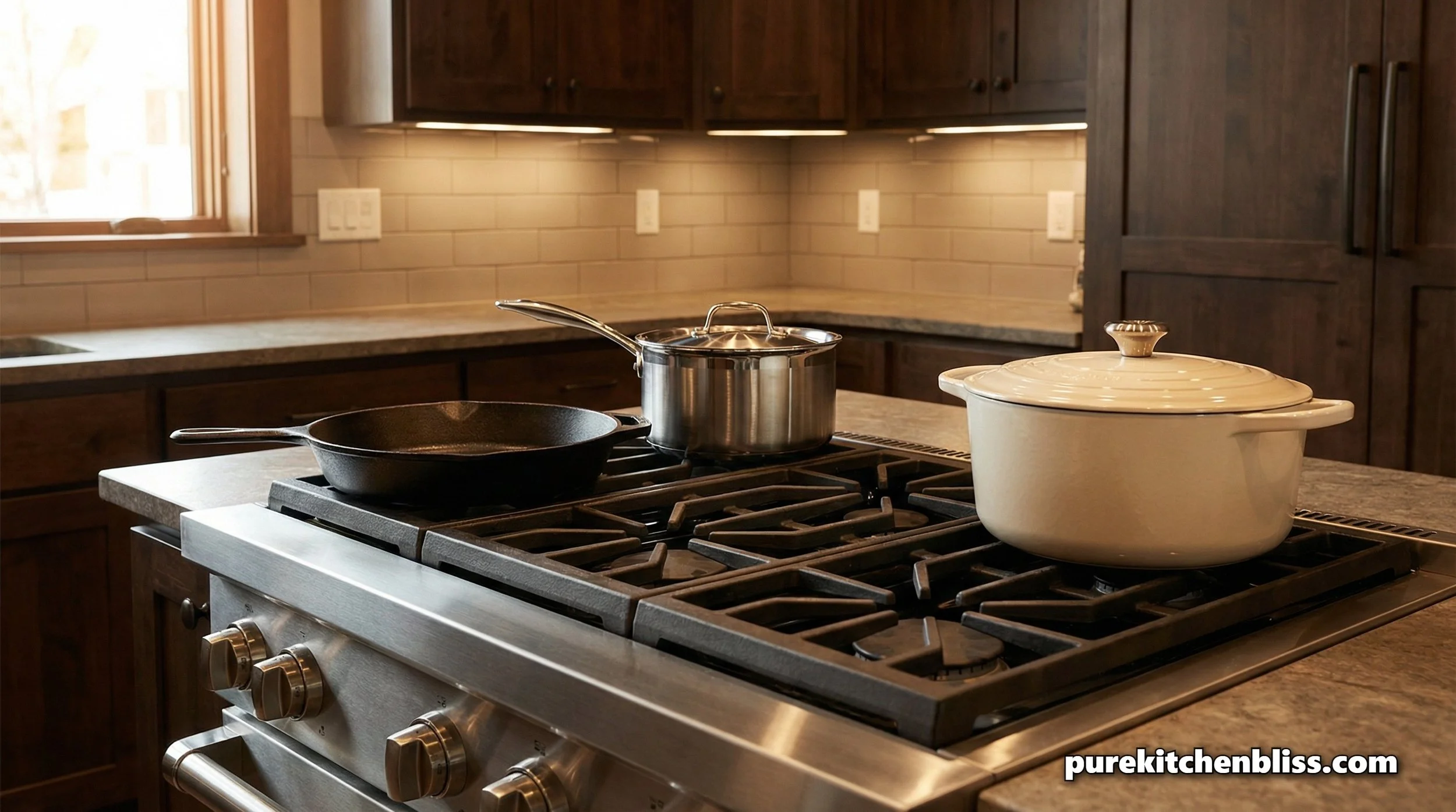
The Healthy Kitchen Audit: Choosing Non-Toxic Cookware
In my 20 years in the trades, I’ve learned that the quality of your finish is only as good as the substrate you apply it to. In the kitchen, your cookware is the substrate for every meal your family eats. If you are using pans coated in PFOAs or "forever chemicals" (PFAS), you are introducing a structural weakness into your Sustainable Sanctuary.
Most modern "non-stick" pans rely on a thin chemical film that begins to degrade the moment it is overheated or scratched. As a Builder-Curator, I prioritize materials that are inert, durable, and mechanically sound. To protect the "soft infrastructure" of your four daughters’ health, we need to transition to cookware that doesn't off-gas or leach toxins into your food.
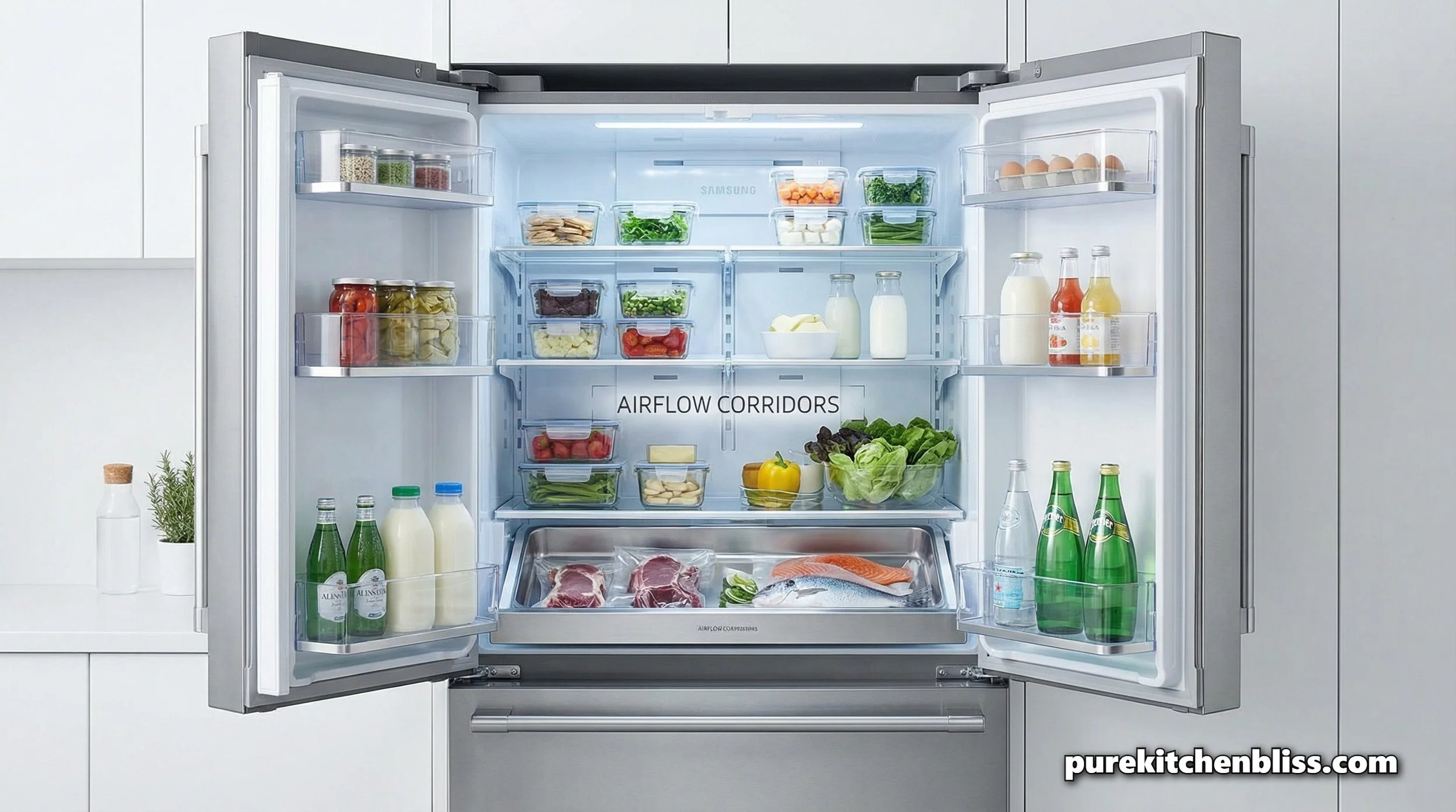
Professional Fridge Organization: The Thermal Zoning Protocol
To a builder-curator, a refrigerator is a controlled atmosphere infrastructure. It is a specialized machine designed to manage the "thermal load" of your household’s food supply. Most people treat their fridge like a closet—stuffing items wherever they fit. But in a high-output home with four daughters, a disorganized fridge is a structural failure that leads to "Forgotten Zones," cross-contamination, and massive food waste.
In a Sustainable Sanctuary, we don't just "organize"; we implement thermal zoning. This is the professional strategy of matching the biological needs of your food to the specific temperature gradients within the machine. By treating your fridge as a decision-support system, you protect both your family’s health and your grocery budget.
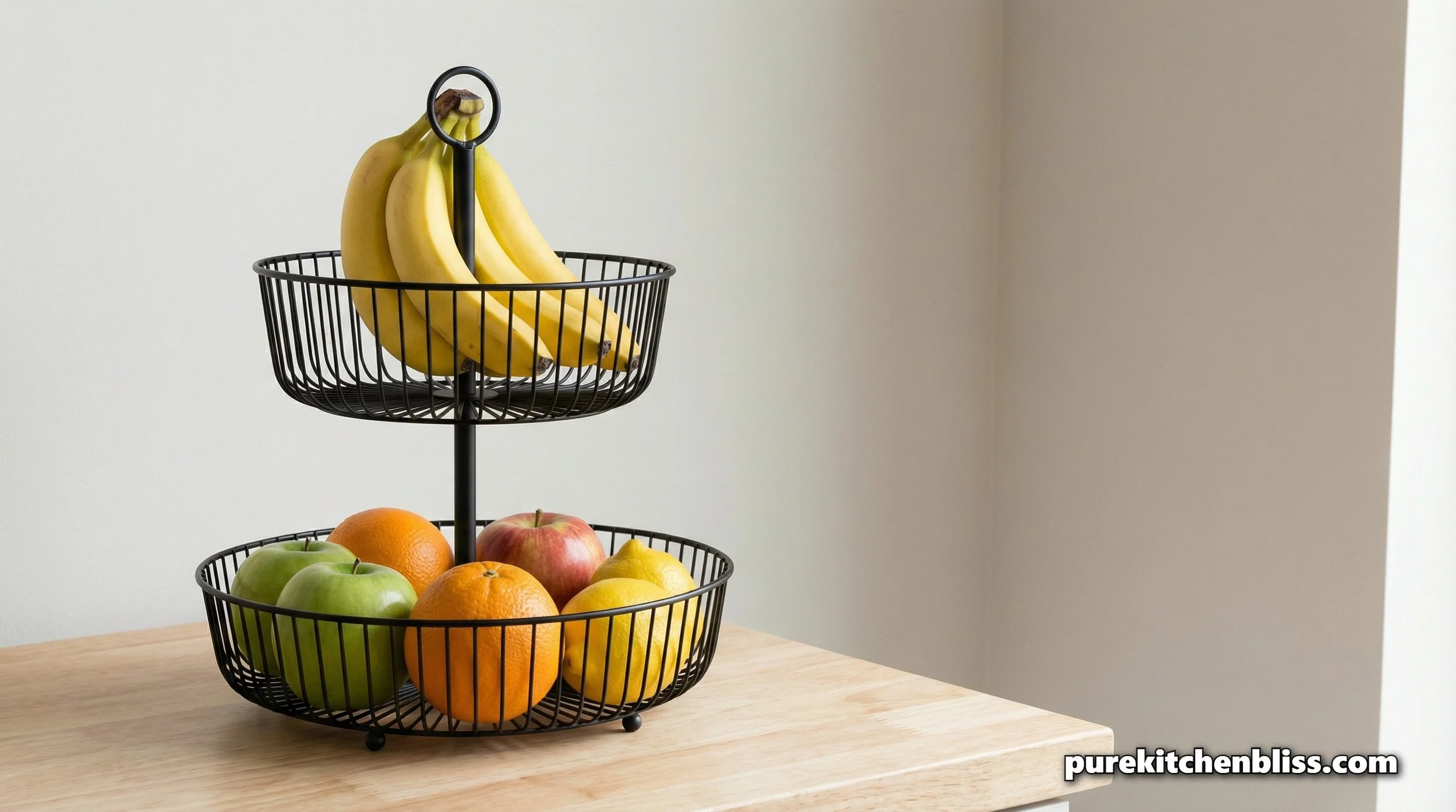
Why Is My Fruit Bowl Always Getting Moldy?
In a house with four daughters, the fruit bowl is the high-traffic fuel station. It’s the central hub where energy is grabbed between school and soccer. But as a builder curator, I look at that bowl and see more than a snack station; I see a storage system. If the "bones" of your setup are wrong, you aren't just storing apples, you’re essentially creating an incubator for fungal spores.
Mold is a scavenger that requires three specific environmental conditions to thrive: moisture, stagnant air, and ethylene gas. If your fruit bowl is a solid ceramic or glass basin, you are inadvertently building a "Bio-Dome" where these three factors collude to break down the cellular integrity of your produce. To maintain a sustainable sanctuary, we need to move from "static storage" to "active aeration."
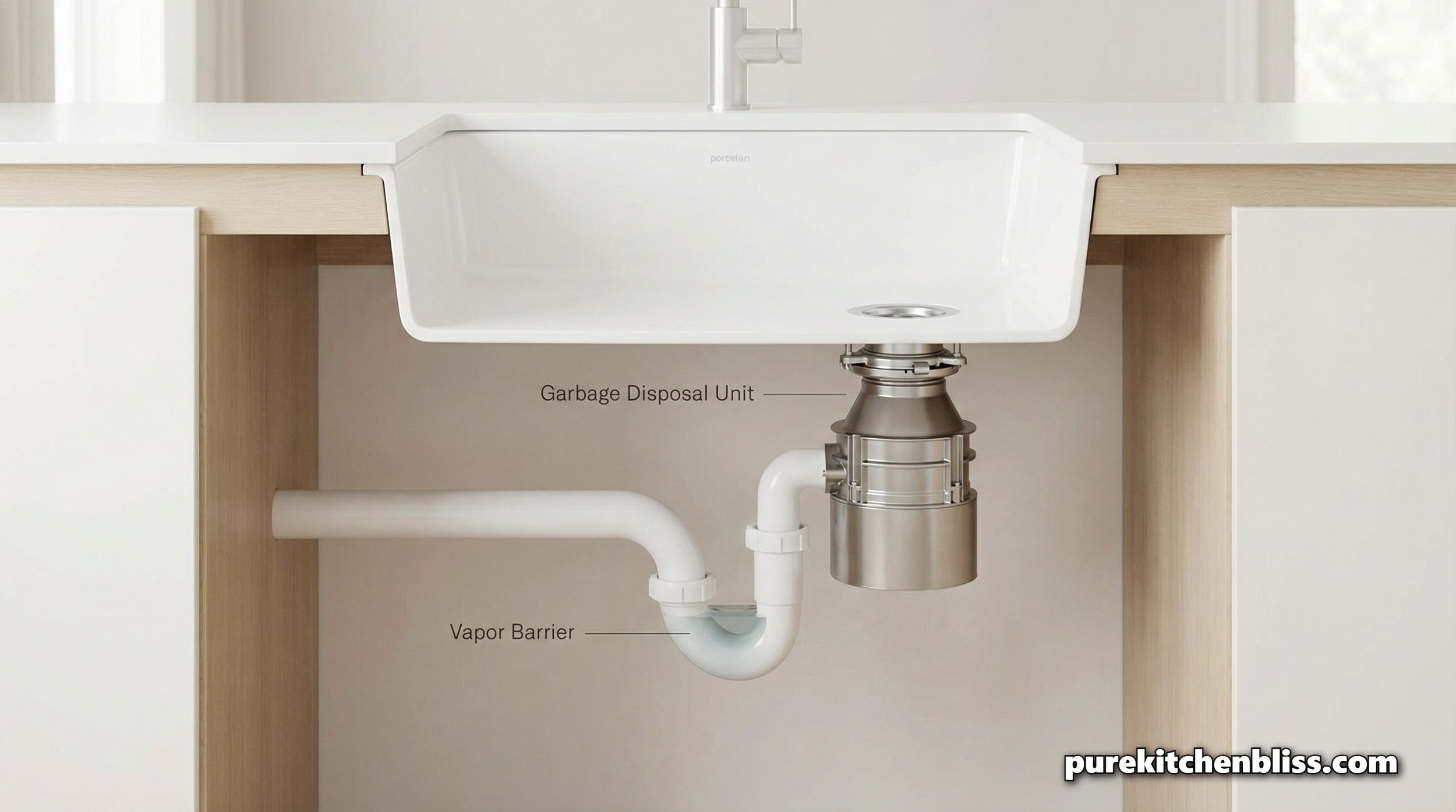
Why Does My Kitchen Sink Smell?
To me, a smelly sink is more than a minor annoyance, it’s a diagnostic signal that the biological extraction system of your home is failing. In a house with four daughters, the sink is the "Main Drain" for the beautiful chaos of family life. When that drain starts to emit an odor, it means a "biofilm" has colonized the infrastructure beneath your counters.
If you’ve already checked the Kitchen Garbage Schedule and the smell persists, the issue is likely lurking in the "Sump" of your plumbing. Odors are the byproduct of bacteria feeding on trapped organic matter. Because your kitchen plumbing is dark, wet, and warm, it acts as a natural incubator for the very things we try to eliminate from our Sustainable Sanctuary.
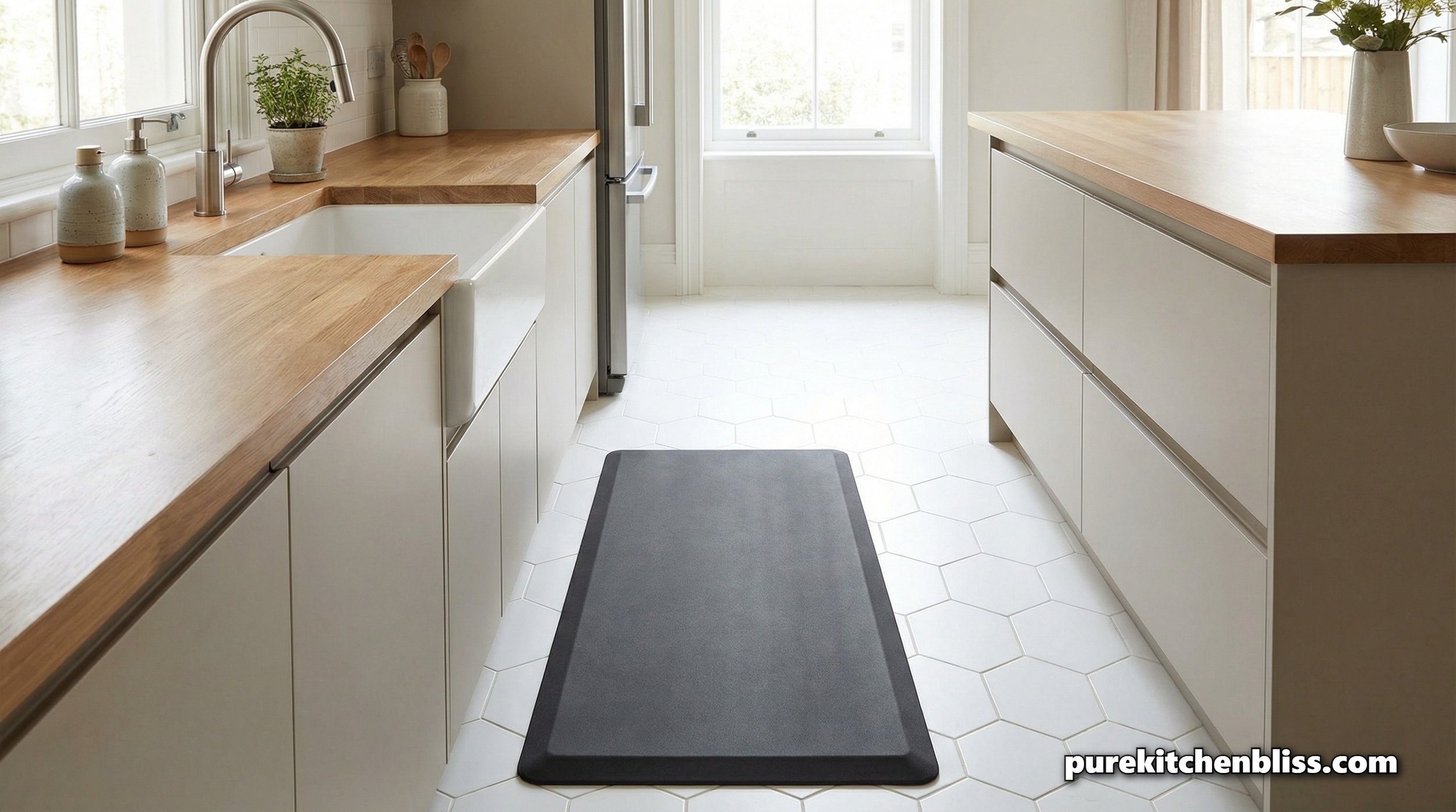
Do I Need a Kitchen Mat on My Tile Floors?
To a builder-curator, a kitchen mat is more than a decorative accessory; it is a piece of ergonomic infrastructure. In a house with four daughters, the kitchen is the "Primary Workspace," and standing on a hard, unyielding tile floor for hours is a structural stress test for your body. Tile is a "zero-flex" material. Unlike wood, which has a cellular structure that offers a microscopic amount of "give," tile is essentially stone.
When you stand on it while managing the Monday Morning Momentum, your joints, the "soft infrastructure" of your body, absorb 100% of the impact. However, from a "purity" standpoint, most kitchen mats are biological traps. To maintain a sustainable sanctuary, you must balance your orthopedic health with the cleanliness of your floor’s "bones."
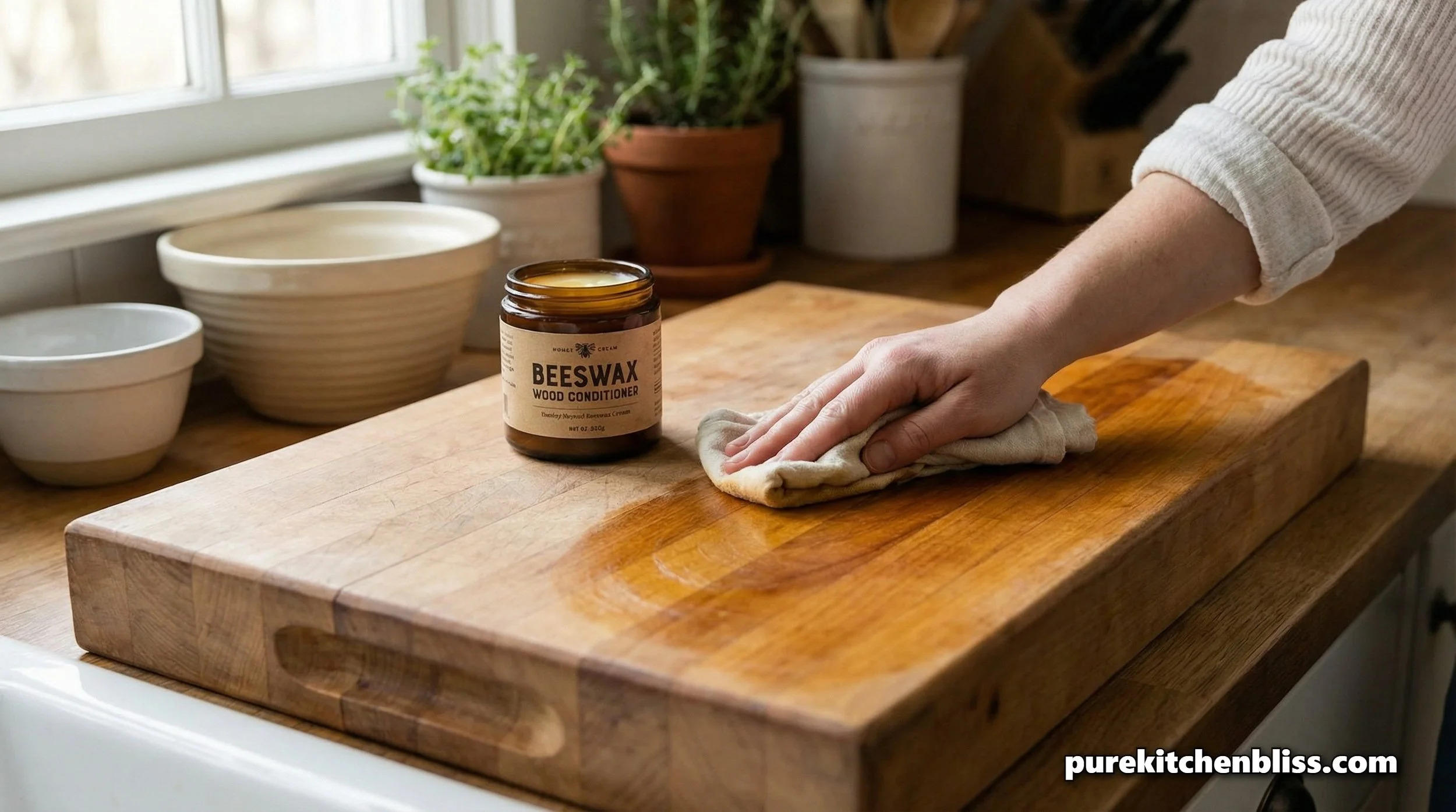
Cutting Board Stewardship: How to Protect the "Workhorse" of Your Kitchen
In any high-performance kitchen, the cutting board is more than a tool; it is the primary Worksurface Infrastructure. Whether you have a massive end-grain butcher block or a simple edge-grain board, the wood is a living, breathing material. It reacts to humidity, absorbs liquids, and requires a specific maintenance ritual to stay pure.
As a builder, I see many homeowners treat their boards like disposable plastic, soaking them in the sink or, even worse, putting them through the dishwasher. This destroys the "bones" of the wood, leading to warping and the opening of "micro-cavities" that harbor bacteria. Proper stewardship ensures your board remains a non-toxic, heirloom-quality surface for decades.
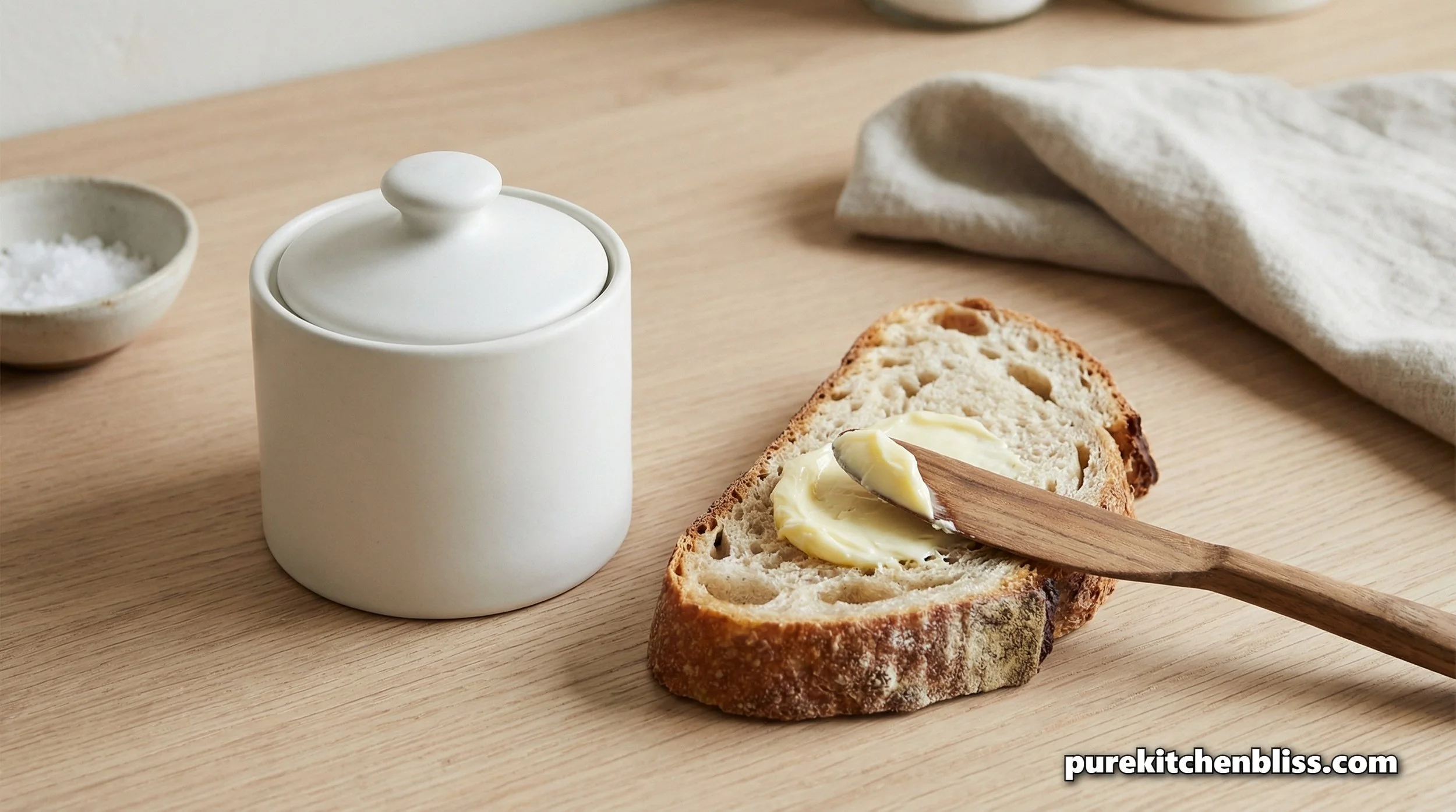
Where Should You Really Keep Your Butter?
In the "Beautiful Chaos" of a busy family kitchen, the butter dish is often the center of the breakfast table. But unlike most dairy products, butter has a unique "Infrastructure Spec." Because it is composed of roughly 80% fat and has a remarkably low water content, it is far more resistant to bacterial growth than liquid milk or cream.
However, butter is also a "Molecular Sponge." As we discussed in 5 Uses for Coffee in Your Kitchen, fats are highly efficient at absorbing odors and volatile organic compounds (VOCs) from the air. If your butter is sitting out unprotected, it isn't just softening; it’s absorbing the "bio load" of your kitchen environment. To maintain a Sustainable Sanctuary, we need to balance the convenience of spreadability with the science of preservation.
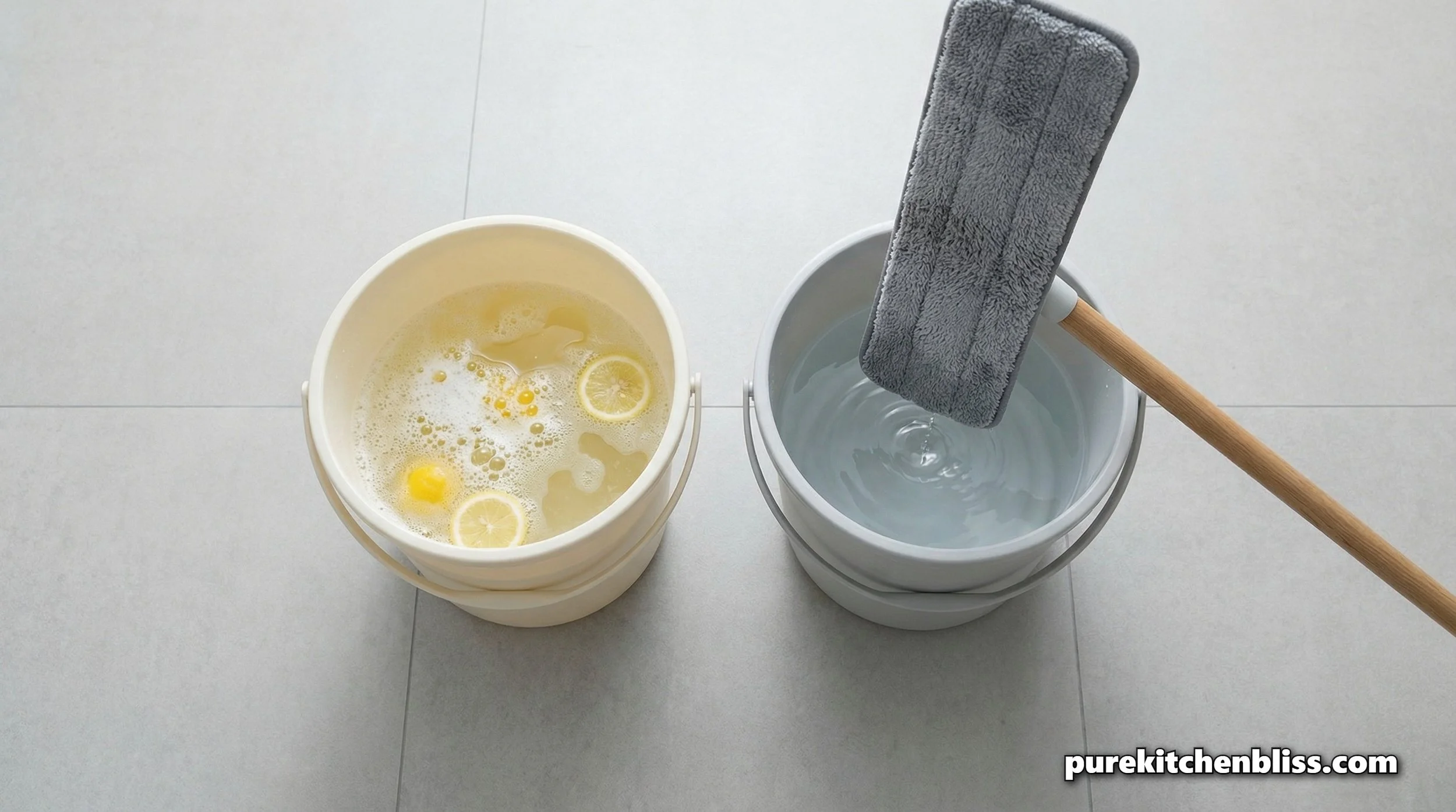
How Often Should You Mop Your Kitchen Floors?
Most homeowners approach floor care as a reactive chore: they mop when the surface looks dull or feels "tacky" underfoot. But as a builder who understands how "biofilm" and moisture interact with varying flooring materials, I can tell you that visual cleanliness is a lagging indicator. By the time you can see the dirt, it has already begun to bond with your grout lines or migrate into the joins of your hardwood.
In our home, we follow a tiered "Extraction Schedule." We move away from the idea of "cleaning" and toward the idea of "stewardship." We focus on high traffic flow and "Micro-Resets" to ensure the floor doesn't become a hidden source of toxins for our family.