How Often Should You Mop Your Kitchen Floors?
Transparency Note: We independently select these products based on research and user reviews. If you buy something through our links, we may earn a commission.
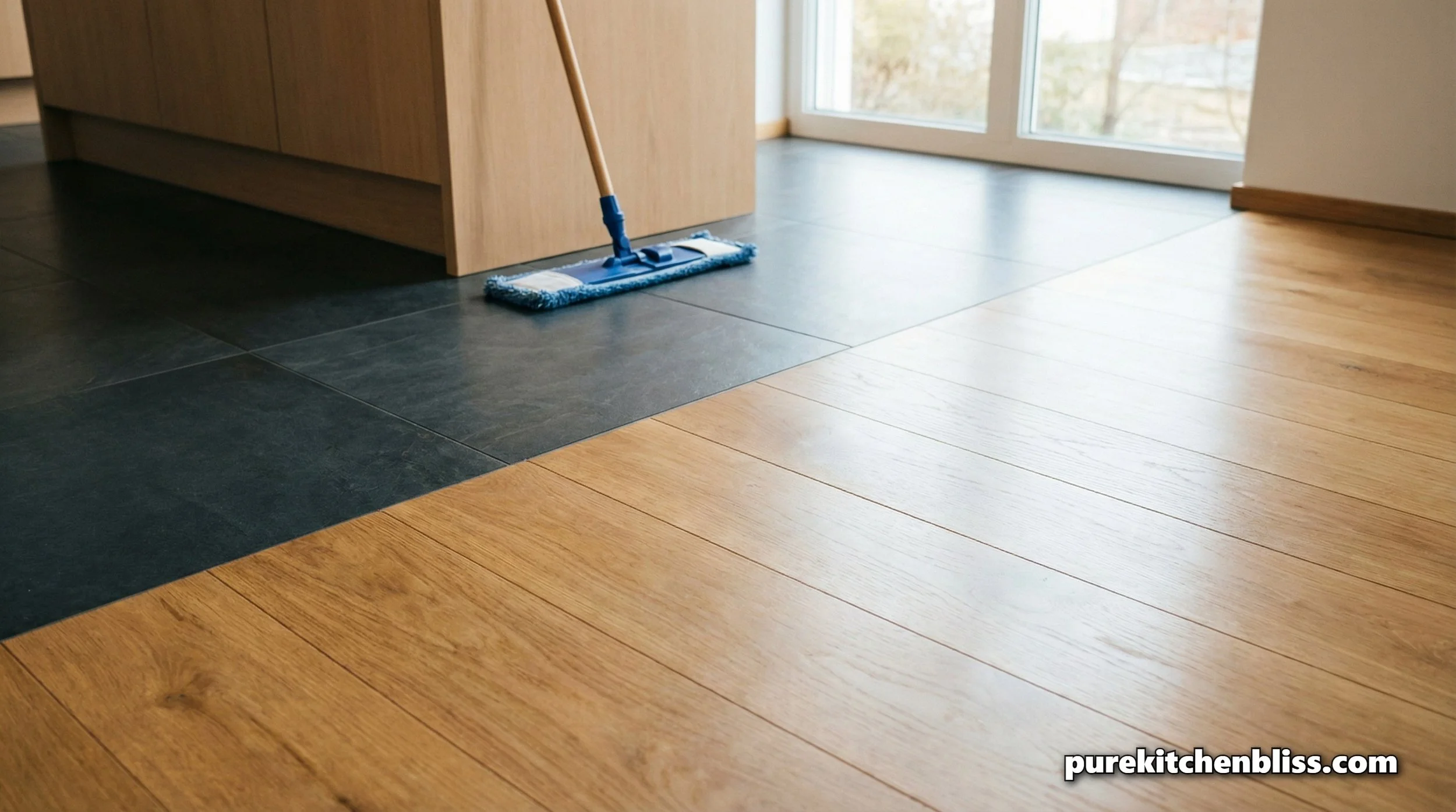
Most homeowners approach floor care as a reactive chore: they mop when the surface looks dull or feels "tacky" underfoot. But as a builder who understands how "biofilm" and moisture interact with varying flooring materials, I can tell you that visual cleanliness is a lagging indicator. By the time you can see the dirt, it has already begun to bond with your grout lines or migrate into the joints of your hardwood.
In our home, we follow a tiered "Extraction Schedule." We move away from the idea of "cleaning" and toward the idea of "stewardship." We focus on high traffic flow and "Micro-Resets" to ensure the floor doesn't become a hidden source of toxins for our family.
1. The Science of the "Biofilm"
Before we discuss frequency, we must understand the enemy: the biofilm. In a high-output kitchen, micro particles of food, aerosolized grease from cooking, and moisture from the dishwasher create a thin, invisible layer on your floor.
If left for more than 24 hours, this layer "polymerizes,” it hardens into a glue like substance. This is why some floors always feel slightly sticky no matter how much you "clean" them. You aren't removing the film; you’re just wetting it. Professional stewardship is about extraction: physically lifting that film off the substrate before it can cure.
2. The "High-Traffic" Micro-Mop (Daily)
If you have a busy household, the "Primary Flow" zones, specifically the triangular path between the sink, the stove, and the refrigerator, collect a massive amount of "bio-load" every day.
The Rule: Spot-mop these high-traffic zones every evening after the final kitchen reset.
The Reason: As noted in our Range Hood Restoration, cooking grease that escapes your ventilation acts like a magnet for dust and pet hair. If you don't hit these spots daily, you are allowing the "bones" of your floor to be coated in a gritty abrasive that scratches the finish every time you walk on it.
The Tool: Use a spray mop with a fresh, dry microfiber pad. This is a "zero friction" reset that takes less than five minutes but adds years to the life of your floor's sealant.
3. The "Infrastructure" Deep Mop (Weekly)
This is the "Full Site Sweep." This ritual is about reaching the stagnant zones: the corners, the edges along the baseboards, and the often-neglected areas under the toe-kicks of your cabinets.
The Rule: A full-floor extraction once a week, ideally integrated into your Sunday Night Countertop Reset.
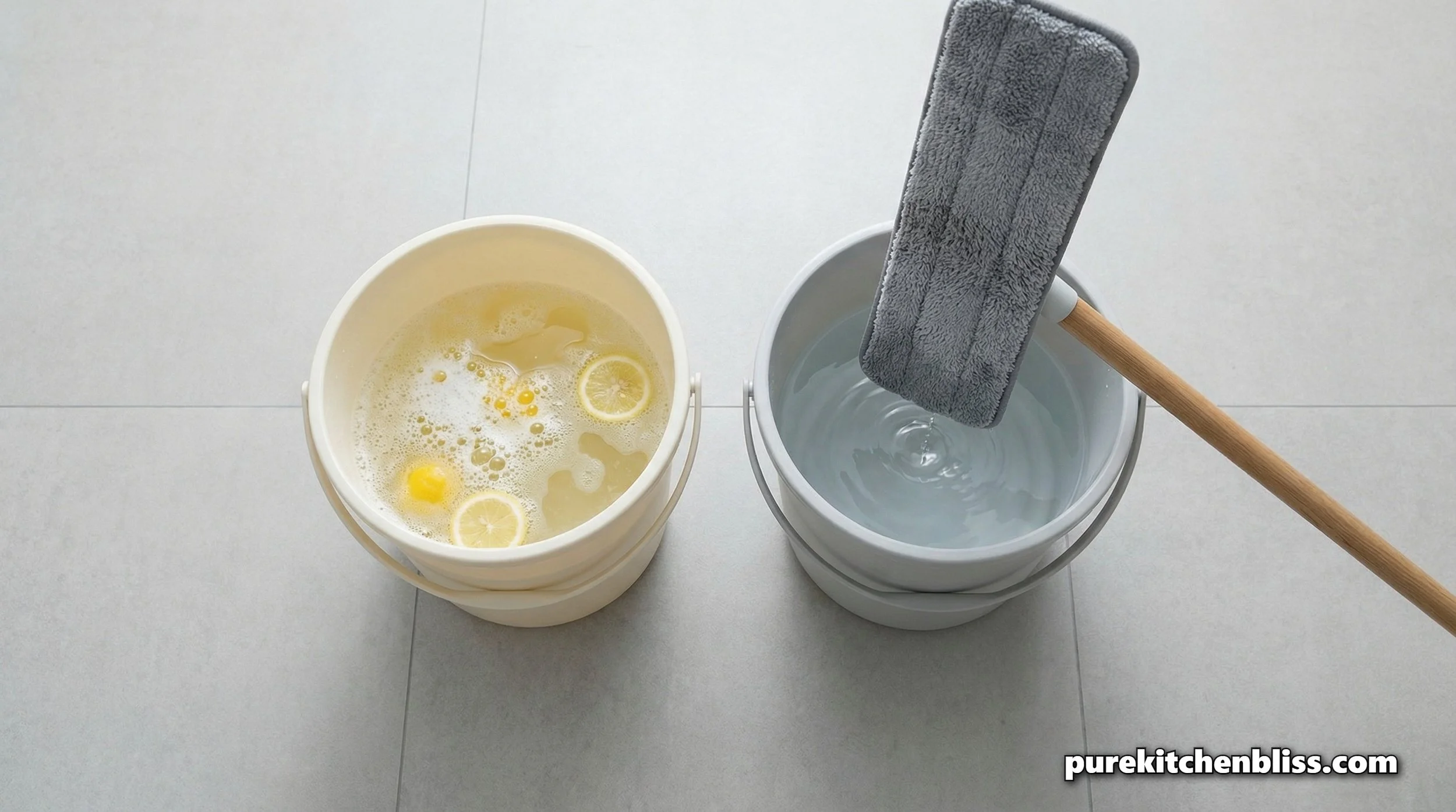
The Technique: The Two-Bucket Method. This is non-negotiable for a professional finish. One bucket holds your non-toxic cleaning solution; the other holds crystal clear rinse water.
The Logic: If you use a single bucket, by the third pass, you are simply spreading diluted grey water across your floor. The two-bucket method ensures that every time the mop touches the floor, it is truly clean.
BUILDER TIP: THE "JOIN" WARNING
If you have laminate, luxury vinyl plank (LVP), or engineered hardwood, "wet mopping" is the enemy of your home's structural integrity. Excessive H2O can seep into the micro-joins between planks, causing the core material to swell, a process known as "peaking." This damage is irreversible. Always use a "damp not dripping" protocol. If you see standing water on your floor after a pass, your mop is too wet.
4. The Non-Toxic "Sanctuary" Solution
We strictly avoid synthetic "floor shines" or "wax-infused" cleaners. These products contain petroleum based polymers that create a plastic like film. Over time, this film traps dirt underneath it, leading to a "yellowing" effect that can only be removed with harsh chemical strippers.
The Greg Barnaby "Sanctuary" Recipe:
1 Gallon of warm (not boiling) water.
1/2 Cup of distilled white vinegar (Note: Do not use on natural stone like marble or limestone, as the acid will etch the surface).
2 Drops of Eco-Friendly Dish Soap.
The Benefit: The vinegar acts as a mild descaler to neutralize alkaline residues (like dried milk or hard water spots), while the soap breaks the surface tension of oils. It leaves the floor "squeaky clean" with zero chemical off-gassing, keeping the Air Quality in your sanctuary pure.
5. Maintenance Ritual: The Monday Momentum
Starting the week with a "Zero Grit" floor changes the entire energy of the home. When the foundation of the room is clean, the air feels lighter and the kitchen feels prepared for the "Beautiful Chaos" of the coming week.
The Floor Purity Toolkit
To maintain your kitchen’s "bones," you need high-efficiency, low-waste tools:
The Solution: Organic Castile Soap (Unscented)
The Finish: Natural Carnauba Floor Wax for real wood restoration
Conclusion: Clean from the Ground Up
In a Sustainable Sanctuary, the floor is the foundation of your family's health. It is the surface where your children play and where your daily life unfolds. By shifting from "visual cleaning" to a disciplined "extraction schedule," you protect your home’s infrastructure and ensure that the environment is as pure as the food you serve.
Explore More in Your Kitchen Sanctuary:
To keep the air as clean as the floors: Range Hood Restoration: Deep-Cleaning Your Kitchen's Lungs
To manage the spills before they settle: How to Clean Spilled Coffee Off My Tiled Kitchen Floor
To brighten the space once the floors are clear: 7 Unkillable Plants That Thrive in Your Busy Kitchen