How to Degrease Kitchen Cabinets Naturally
If you run your finger along the top edge of your upper cabinets and it feels "tacky" or leaves a smudge, you are dealing with polymerized grease. This isn't just dust; it’s a mixture of aerosolized cooking oils and household particulates that have undergone a chemical change, effectively becoming a "natural glue" on your cabinet’s infrastructure.
In a house with four daughters, the kitchen is a high-output zone. Whether it’s Sunday night prep or a Monday Morning Momentum breakfast, grease happens. But you don’t need harsh, petroleum-based solvents to fix it. Here is the professional, non-toxic way to restore your cabinetry.
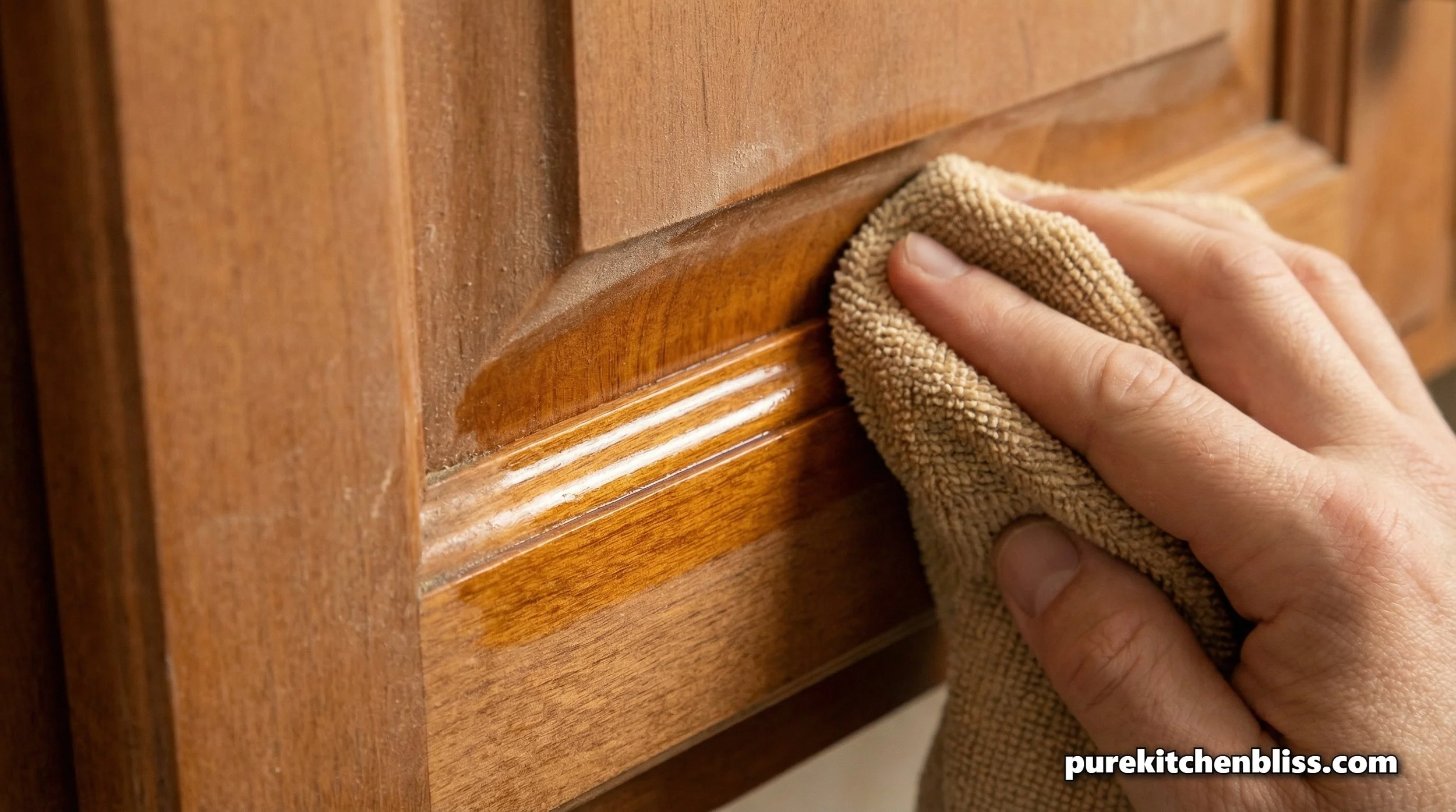
1. The "Heat First" Infrastructure
As a builder, I know that heat lowers the viscosity of oils. Before you reach for your cleaner, you should reach for the hot water tap.
The Protocol: Soak a microfiber cloth in very hot 120°F (49°C) water. Wring it out so it’s damp, not dripping.
The Action: Press the warm cloth against the greasiest areas (usually near the stove) for 30 seconds. This "softens the bond" of the polymerized oils, making the Non-Toxic Kitchen Degreaser much more effective.
2. The Non-Toxic "Two-Step"
We don't "scrub" cabinets; we "emulsify" the grease. Scrubbing with abrasive pads will destroy the sheen of your Zero-VOC Cabinet Paint.
Step A (The Emulsifier): Spray your plant-based degreaser liberally. Let it "dwell" for 3 to 5 minutes. You want the surfactants to physically lift the grease molecules away from the wood.
Step B (The Vertical Wipe): Wipe in the direction of the wood grain (or vertically for painted cabinets). This ensures you aren't pushing grease into the "pores" or joins of the cabinetry.
BUILDER TIP: THE "JOIN" WARNING
Never spray liquid directly into the "joins" of a cabinet door (where the center panel meets the frame). If moisture seeps into these unsealed crevices, the wood will swell, causing the paint to crack or the wood to warp. Always spray your cloth, then wipe the joins.
3. The "Hidden" Grease Landing Zones
To maintain a Sustainable Sanctuary, you have to clean the areas you can’t see. Grease travels on air currents and settles in "Dead Zones."
The Cabinet Tops: If your cabinets don't go to the ceiling, the tops are likely a "biofilm" disaster.
The Pro-Tip: Once cleaned, lay a sheet of parchment paper across the tops. Next time you clean, you simply roll up the grease-covered paper and replace it.
The Underside: The bottom of the upper cabinets, especially those flanking the stove, catches the most aerosolized oil. These should be part of your Sunday Night Countertop Reset.
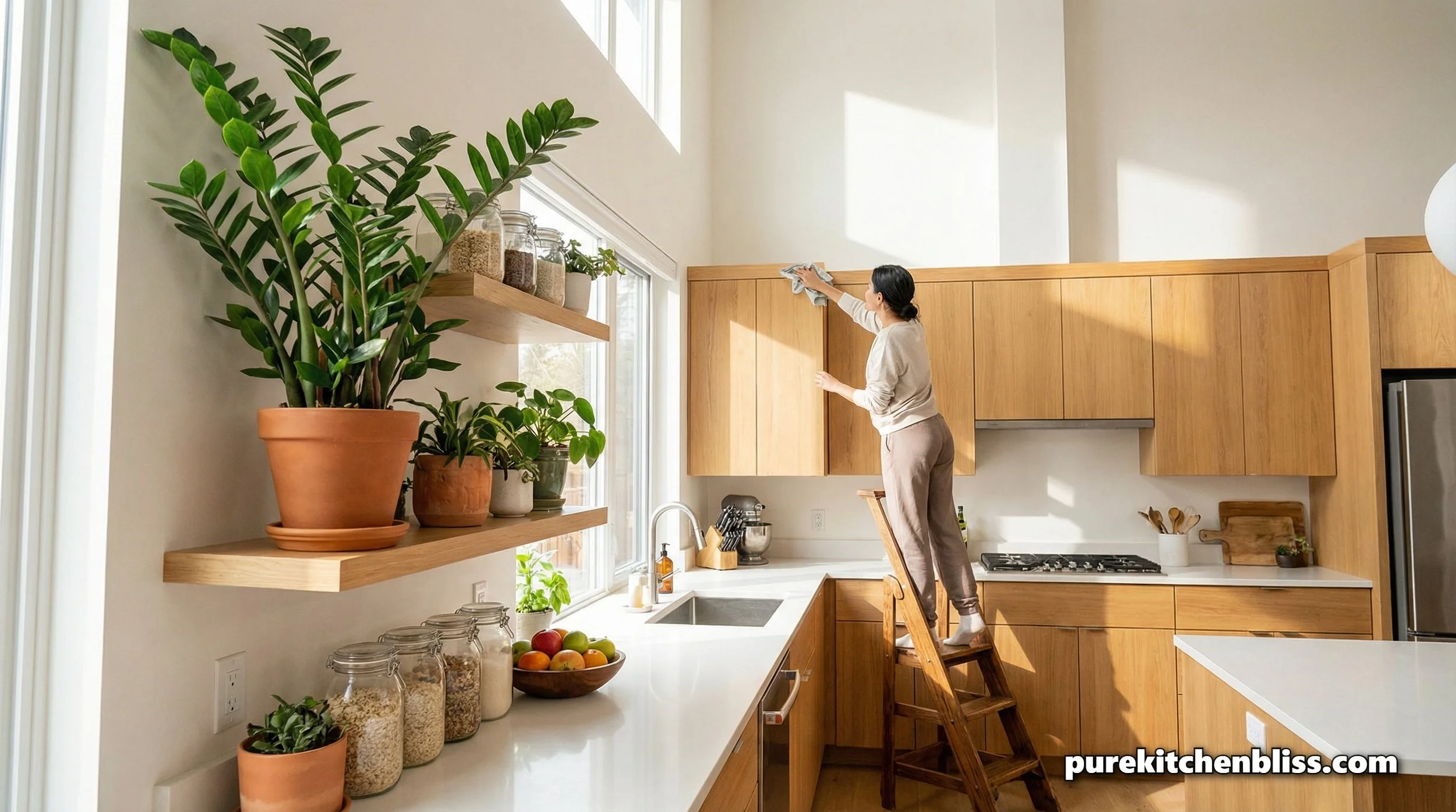
4. Restoring the "Supple" Finish
Once the grease is gone, the wood can sometimes look "thirsty" or dull.
The Restoration: Mix 2 parts olive oil with 1 part lemon juice.
The Buff: Rub a tiny amount into the wood with a soft Tea Towel. The lemon provides a final hit of grease-cutting acidity, while the olive oil nourishes the wood’s "infrastructure."
Conclusion: Purity from the Top Down
Degreasing your cabinets naturally isn't just about aesthetics; it’s about Infrastructure Preservation. By removing the acidic oils that eat away at your finishes, you are extending the life of your kitchen and ensuring your sanctuary stays blissful and toxin-free.