Do You Really Need a Double Sink?
Transparency Note: We independently select these products based on research and user reviews. If you buy something through our links, we may earn a commission.
In a busy home with four daughters, the kitchen sink is the most used piece of mechanical equipment you own. It’s the primary station for prepping organic meals, washing out DIY Glass Jars, and tackling the Sunday Night Countertop Reset.
The traditional double sink (the "50/50 split") was designed for a pre-dishwasher era when one side held the soapy water and the other held the rinse water. But in a modern kitchen equipped with a high-efficiency dishwasher and a Stone Dish Drying Mat, that middle divider often becomes a structural hurdle rather than a help. As a Red Seal Carpenter, I look at the sink as the "engine room" of your kitchen. If the engine isn't sized right, the whole system stalls.
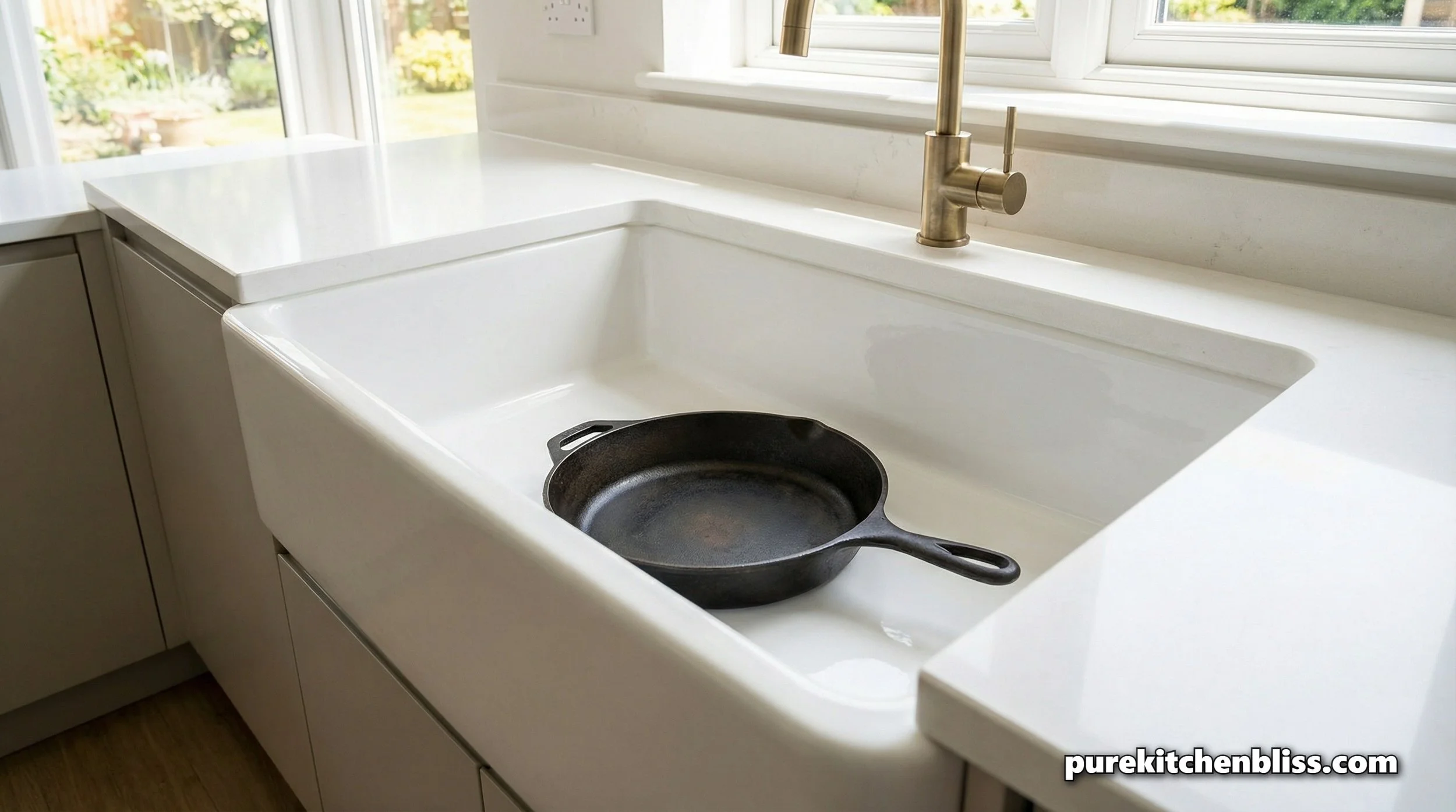
1. The "Big Pan" Problem (Structural Capacity)
The primary failure of the double sink in a modern family home is its inability to handle "Heavy Infrastructure" tasks.
The Divider Conflict: If you have a standard 33-inch cabinet with a double-basin sink, you effectively have two 14-inch holes. You cannot lay a 15-inch cookie sheet, a large roasting pan, or a 12-inch cast-iron skillet flat to soak.
The Splash Factor: When pans don't fit, you prop them against the divider. This creates a "water ramp" that sends splashes over your Zero-VOC Cabinet Paint and onto your hardwood floors. Over time, this repetitive moisture exposure leads to delamination of your cabinet gables, a costly structural fix.
The Single Basin Advantage: A large single basin (30 to 33 inches) allows you to submerge your largest pots, your Non-Toxic Cutting Boards, and even your refrigerator shelves with ease.
2. The Circulation Myth: "One for Prep, One for Scraps"
Proponents of the double sink argue that you need two basins to keep a "clean zone" and a "trash zone" (the disposal side).
The Builder’s Reality: In a Sustainable Sanctuary, we prioritize composting and "clean" plumbing. Having two drains means twice the surface area for "Bio-film" buildup, that slimy bacteria colony that creates "sink stink." It also means you have two P-traps under your cabinet that require maintenance.
The Workstation Solution: Modern single-basin sinks now come as "Workstations" with integrated ledges. You can drop in an over-the-sink colander or a cutting board to create "zones" when you need them, but you can remove them when you need the full volume of the sink for a "The Big One" cleaning session.
BUILDER TIP: PLUMBING INTEGRITY
Every time you add a second drain, you increase the risk of a leak by 50%. A single-drain system is simpler to maintain, easier to unclog, and provides significantly more storage space in your under-sink "Sump" area for your Eco-Friendly Dish Soaps. Read More: How to Unclog a Drain With Baking Soda and Vinegar
3. Under-Sink Efficiency: Reclaiming Your Square Footage
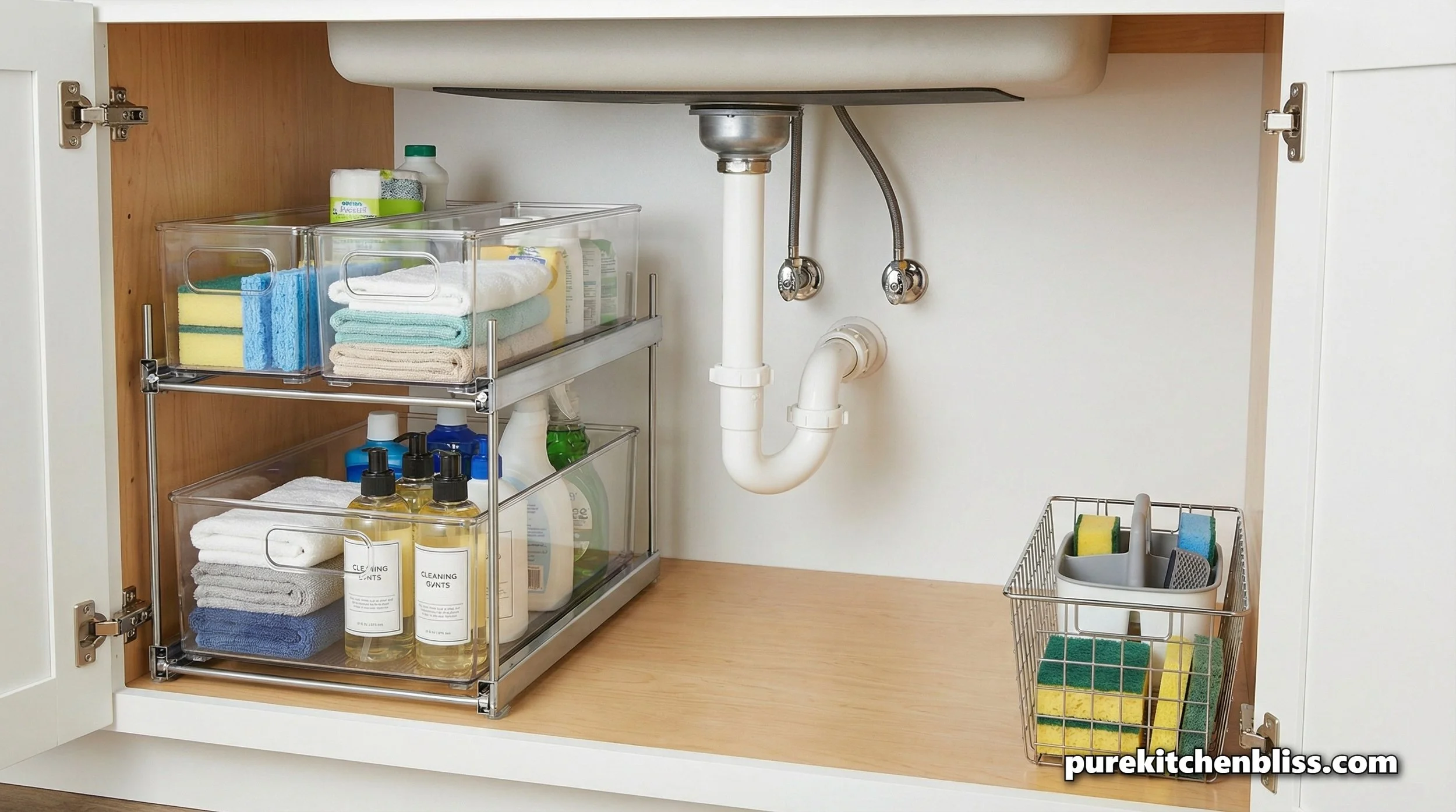
As a carpenter, I see the "guts" of the kitchen. A double sink requires a complex "T-junction" of pipes that eats up the most valuable storage real estate in your kitchen.
The Sump Space: With a single-drain sink (especially one with an offset drain to the rear), the plumbing is tucked neatly to the back. This allows you to install deep pull-out bins or even a small reverse-osmosis water filter without fighting a web of PVC pipes.
4. When the Double Sink Wins (The Edge Cases)
There are times when the double sink is the correct "spec" for your home’s infrastructure:
The Non-Dishwasher Home: If you do 100% of your dishes by hand, the "Wash/Rinse" stations are still highly efficient for water conservation.
The Kosher Kitchen: For families maintaining separate meat and dairy zones, a double sink is a functional necessity for spiritual and physical purity.
The "60/40" Compromise: If you must have two, look for an offset split. This gives you one larger 20-inch basin for pans while keeping a small 10-inch "Utility Sump" for the disposal or veggie rinsing.
5. Summary: Sink Configuration Matrix
| Feature | Single Basin (Large) | Double Basin (50/50) |
|---|---|---|
| Cleaning Large Pans | Elite (Fits everything flat) | Difficult (Requires propping) |
| Under-Sink Storage | Maximum (1 drain pipe) | Limited (Complex plumbing) |
| Maintenance | Simple (1 P-trap/1 Seal) | Double the leak potential |
| Multitasking | Use "Workstation" inserts | Fixed physical divider |
MAINTENANCE RITUAL: THE SINK RESET
Regardless of which sink you choose, the daily reset remains the same. A dry sink prevents mineral buildup (limescale) and keeps the "bones" of your kitchen healthy. Read More: Monday Morning Momentum: A Ritual for the High-Performance Kitchen
The Workstation Sink Toolkit
If you’re leaning toward the high-performance single-basin look, these are the "Builder-Curator" tools to make it work:
The Foundation: 33-Inch Stainless Steel Undermount Single-Basin Workstation Sink
The Infrastructure: Roll-Up Over-the-Sink Drying Rack
The Curator’s Pick: Carbonized Bamboo & Wooden Cutting Boards
The Protection: Silicone Bottom Grid - Essential to prevent scratches on your basin.
Conclusion: Organizing for Flow
The decision between a single and double sink should be based on how you actually move through your Sustainable Sanctuary. For most modern families of six, the single basin offers better capacity, easier maintenance, and a cleaner aesthetic. When you remove the divider, you remove the friction from your prep work. You’ve simplified the infrastructure so the "beautiful chaos" of family meals can flow without a hitch.
Next Steps for Your Kitchen: