In a high-performance kitchen sanctuary, the island has evolved from a simple prep surface into the home’s primary "Super Hub." To truly master this space, we have to look beyond the countertop and view the island as a complex piece of mechanical infrastructure. Engineering a single zone that functions as a home office, a dining table, and a professional cooking station simultaneously is a structural challenge that begins at the sub-floor.
When you ask an island to serve multiple masters, you increase the "load" on the space, not just the physical weight on the floor joists, but the electrical and thermodynamic demand on the room. A true multipurpose island requires a sophisticated rough-in strategy to ensure your digital workflow never interferes with your culinary extraction.
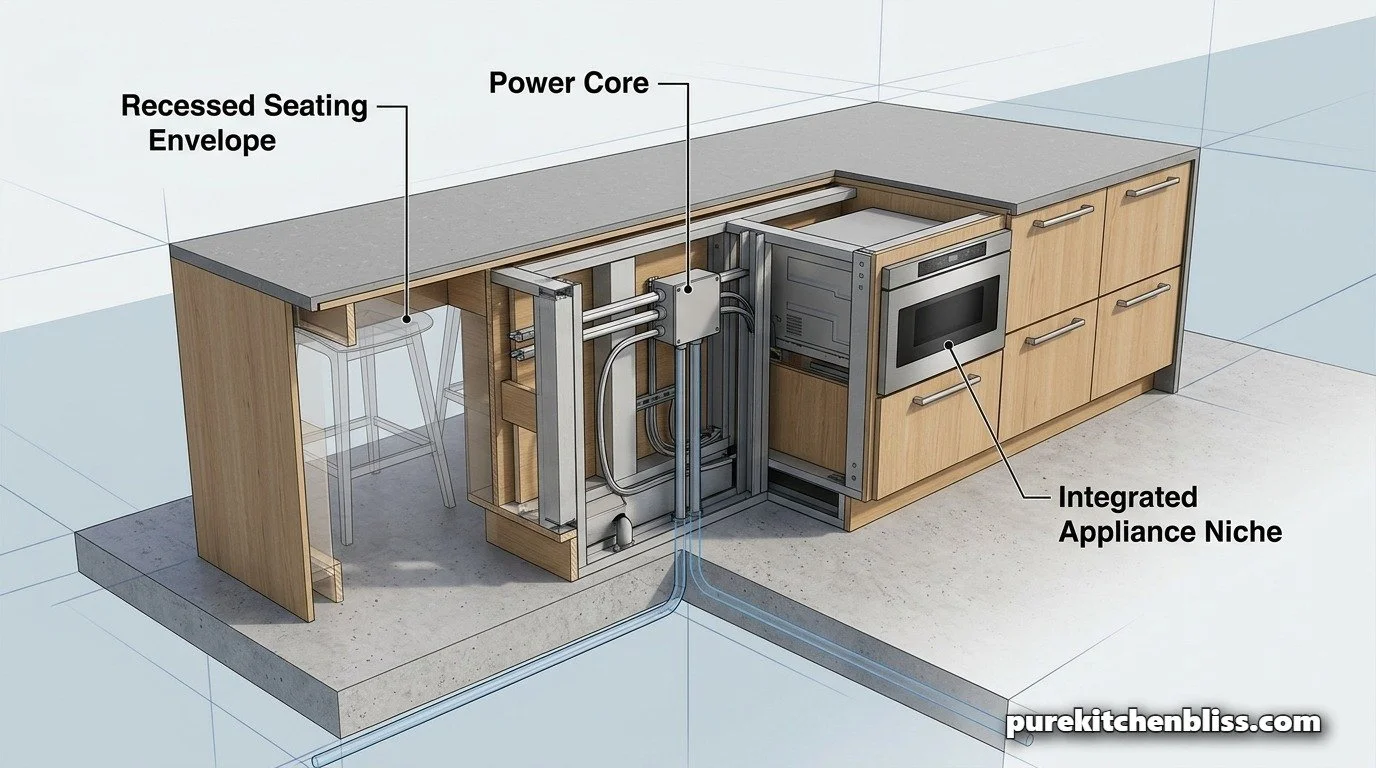
1. The Electrical "Command Center"
A multipurpose island is a high-voltage zone. If you are using it as a home office, you need more than just a single GFI outlet.
The Tech Rough-In: Integrate pop-up power towers that include USB-C PD (Power Delivery) ports for high-speed laptop charging. These should be recessed into the quartz or full-height slab to maintain a clean aesthetic.
Dedicated Circuits: A high-performance cooking zone (like an induction hob or microwave drawer) should be on a dedicated circuit to prevent a "breaker trip" when you’re running a blender and a MacBook simultaneously.
2. The Ergonomic "Envelope": Seating and Depth
The biggest failure of "Super Islands" is improper legroom. Most designers suggest a 12-inch overhang, but for a primary dining or work surface, that is insufficient for long-term comfort.
The 15-Inch Rule: For the island to function as a home office, you need at least 15 inches of clear knee space. This often requires hidden steel support brackets cantilevered from the cabinet carcass to support the weight of the stone without bulky corbels.
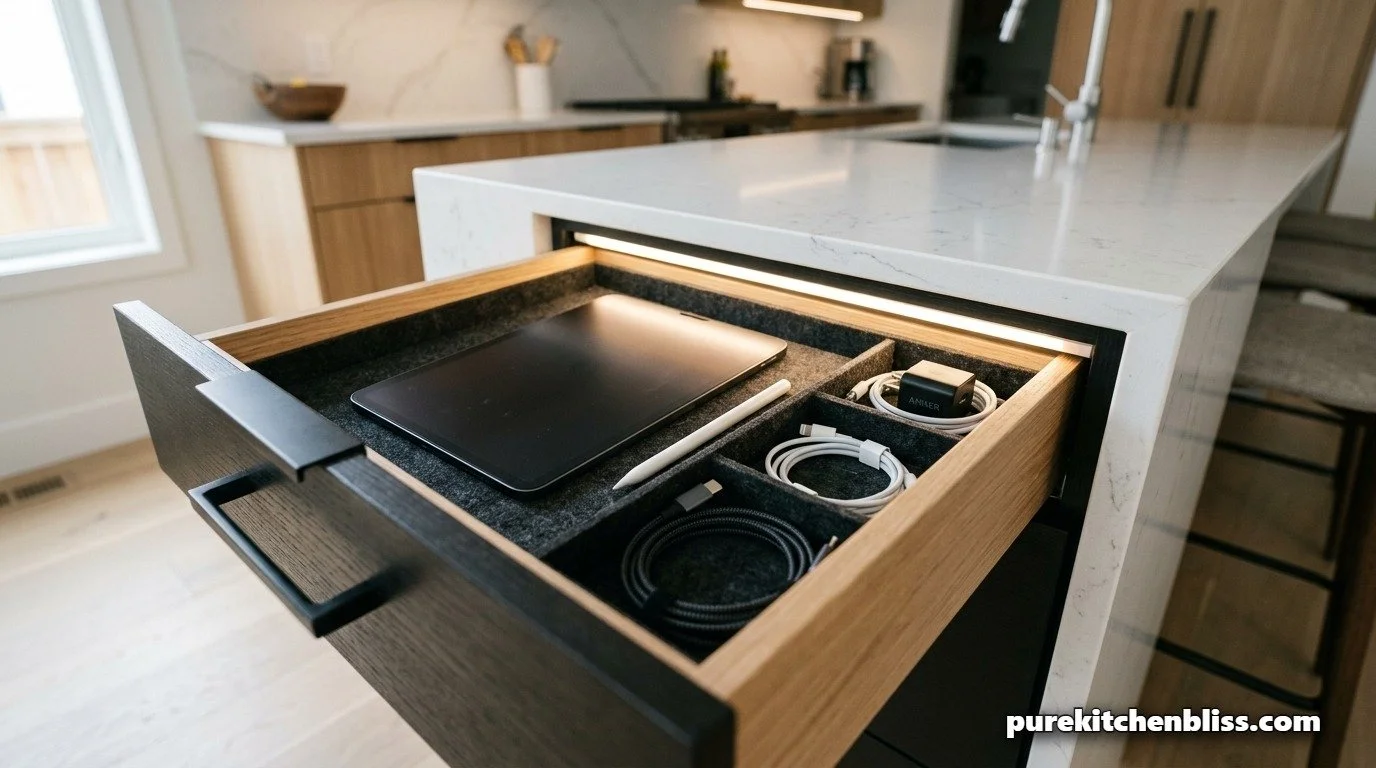
The "Zero-G" Connection: Ensure your seating area is equipped with soft-close drawer storage directly beneath the overhang for quick access to office supplies or table linens.
3. Comparison: Island Infrastructure Tiers
| Feature | Standard Island | Multipurpose Super Island |
|---|---|---|
| Power Access | Side-wall GFI | Surface-Integrated USB-C/AC |
| Structural Support | Wooden Corbels | Invisible Steel Cantilever |
| Workstation Flow | Prep Only | Zoned Office/Prep/Dining |
4. Thermodynamic Zoning: Heat vs. Tech
Integrating a cooking zone next to a tech zone is a recipe for disaster if not managed correctly.
The Induction Edge: We highly recommend induction for multipurpose islands. Because induction only heats the pan and not the surrounding surface, your "office" paperwork or laptop won't be damaged by ambient heat.
Ventilation Rough-In: A super island needs downdraft ventilation or a high-CFM ceiling hood to prevent cooking grease from coating your electronics. This is part of the same preventive maintenance that keeps the sanctuary clean.
5. Managing the "Wet" Zone
If your island includes a workstation sink, you must ensure the plumbing rough-in includes a proper "Air Admittance Valve" (Studor vent) if a traditional vent stack isn't possible. This prevents the smelly drain odors that would ruin a dinner party or a professional Zoom call.

Next Up: Protecting your sensitive tea collection is the next step in beverage organization. See our guide on The Tea Vault: Where Should You Store Your Tea in the Kitchen?.